

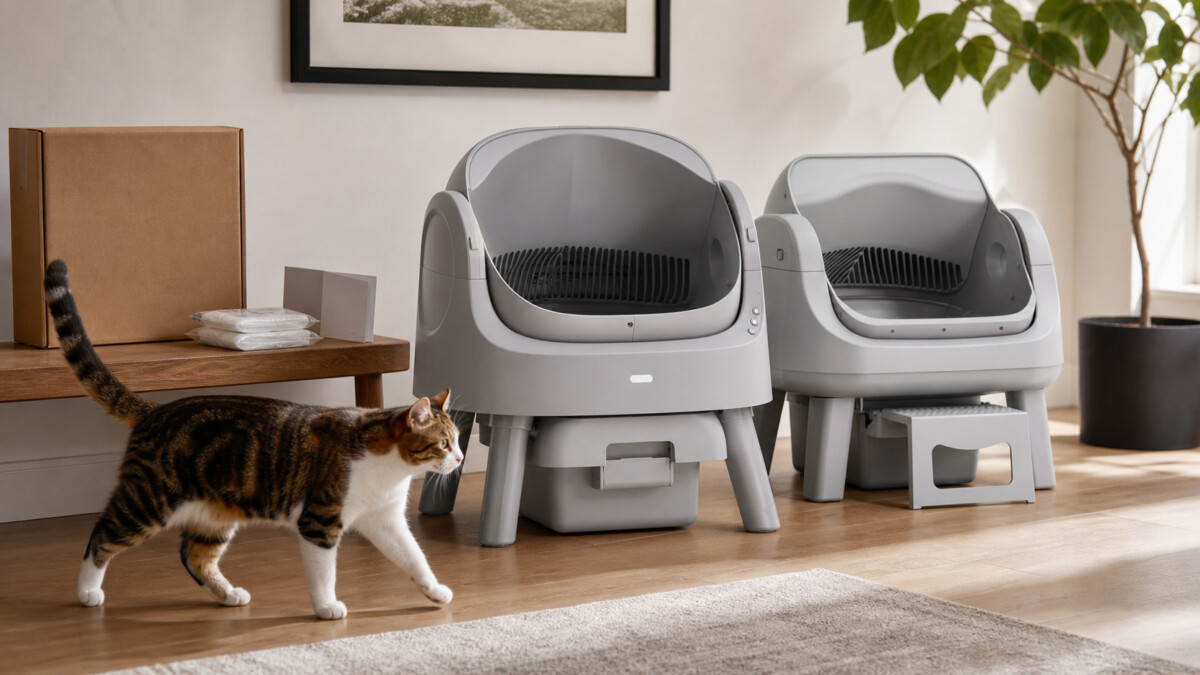
Feature restraint can sharpen a DTC product story, but it raises the need for clear proof, support, and education.
PetPivot offers a useful lesson in consumer-hardware positioning—but not yet a documented growth case study. The sharper question is what its appliance-first story clarifies, what trade-offs it creates, and what evidence the brand still owes the market.
The subscription reflex is understandable. Hardware revenue is lumpy; software revenue is legible. A recurring payment can improve forecasting, fund continued service, and deepen a customer relationship. But the business-model spreadsheet is not the customer’s value model.
A subscription works when value actually recurs: fresh analysis, remote monitoring, content, protection, storage, coordination, or another service the company must continue to deliver. The logic weakens when a basic device function is placed behind a monthly fee mainly because the company prefers monthly revenue.
For DTC hardware teams, the operator question should come before the pricing tactic: What value recurs, for which customer, and what must the company keep doing to earn the next payment? If that answer is vague, a fee can add purchase hesitation and cancellation anxiety without creating durable loyalty.
This does not make subscriptions a mistake. It makes them a product promise. And every recurring promise creates an ongoing proof burden.
Pet hardware has to satisfy three users at once: the buyer, the animal, and the room in which both live. The buyer wants relief from a recurring task. The animal may dislike a new entry, surface, sound, movement pattern, or location. The room imposes limits around floor space, power, cleaning access, noise, litter tracking, and odor.
That three-sided fit makes pet product ecommerce unusually dependent on trust assets. A feature list can say “automatic cleaning,” but a buyer still wants to see what moves, when it moves, what stops it, how the cat enters, how waste is removed, and what must be washed. A dimension diagram can state the product’s size, but real-home photography shows whether it overwhelms a bathroom or fits beneath shelving. A safety claim can sound reassuring, but a model-specific manual explains operating limits.
The strongest product page is therefore not the page with the most claims. It is the page that retires the most important anxieties without pretending they do not exist.
PetPivot provides a useful positioning example. Across its current AutoScooper presentation, the brand emphasizes automatic waste separation, open-top access, direct operation, and a simpler daily routine. Current model pages state that routine operation does not require app pairing. The visible proposition is closer to a household appliance than a pet-data platform: perform one unpleasant mechanical task, make the controls understandable, and keep the phone out of the center of the experience.
That is an observable positioning choice, not evidence of superior conversion, retention, reliability, or economics. PetPivot has not supplied the operating data needed to make those claims here. It is also not permission to treat every subtraction as a verified advantage. “No camera,” “no recurring software fee,” privacy outcomes, and model-level architecture should each be confirmed in current documentation before publication.
The maintenance reality belongs inside the proposition as well. Owners still choose compatible litter, monitor normal use, replace liners where applicable, empty waste, clean approved parts, and introduce the cat gradually. The credible promise is simpler ownership—not fewer responsibilities toward the animal.
Removing a layer can reduce customer friction, but it also changes what the business can deliver, measure, and monetize. That trade-off should be explicit.
| Removed layer | Customer friction reduced | Business trade-off | Proof required |
| App-centered use | Less pairing, account, and notification friction. | Fewer remote functions and less first-party usage data. | Clear local controls and reliable behavior. |
| Camera-led monitoring | Fewer footage, placement, and access decisions. | No camera-based monitoring story. | Safety and observation limits stated clearly. |
| Software subscription | Less billing and cancellation anxiety. | No software MRR by default. | Healthy hardware economics and legitimate repeat purchase. |
| Feature volume | Simpler message and comparison. | Fewer headline specs; easier to copy. | Reliability, support, design, and education. |
This is why feature restraint is not a moat by itself. Fewer features can sharpen a message, but competitors can copy a short specification list. The defensible layer has to come from product reliability, industrial design, supply-chain execution, education, support, brand trust, and a clear understanding of the customer who prefers the trade-off.
There is also a real counterargument. Some owners genuinely value remote alerts, video context, history, and multi-user access. Those features may resolve uncertainty that direct controls cannot. An appliance-first brand should not dismiss that buyer; it should define the buyer it serves best and state what the customer gives up.
For an operator, the thesis should be judged as a system rather than a slogan. Strength in the headline cannot compensate for weakness after checkout.
Can a buyer explain the core job, best-fit customer, and central trade-off in one sentence?
Do model-specific demonstrations, dimensions, manuals, and maintenance instructions show scale, motion, stop behavior, cleaning, and ownership limits?
Do product, collection, comparison, FAQ, and search pages retire risk with consistent claims instead of repeating the same promise?
Does onboarding turn the first week into successful use, and do support reasons feed back into merchandising and documentation?
Do contribution margin, return reasons, support volume, accessory demand, and cohort behavior validate the positioning after acquisition costs are included?
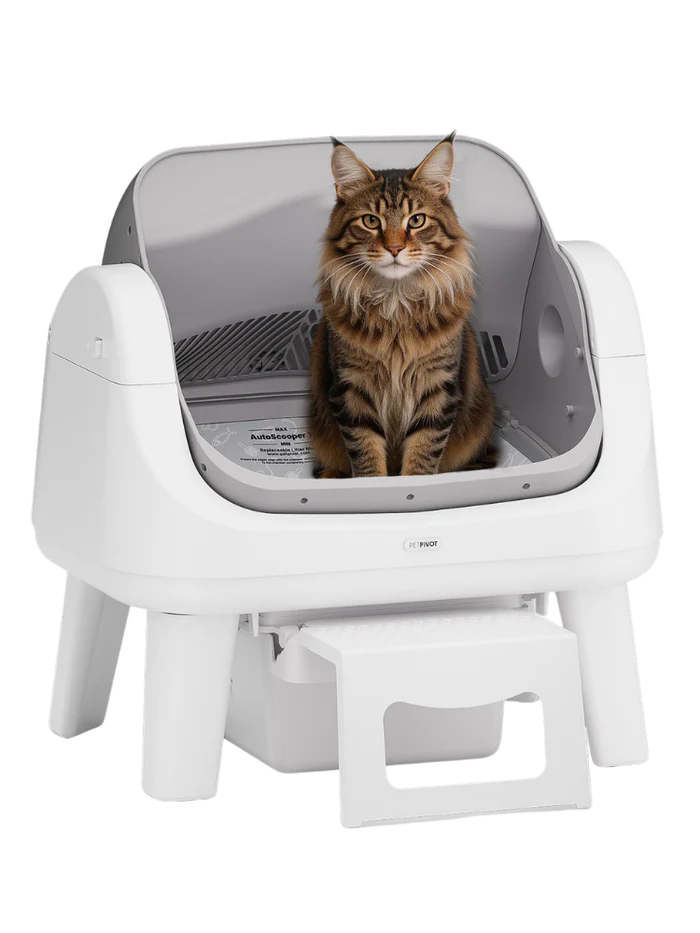
Pet hardware creative often begins and ends with the “after” image: a clean room and a relaxed owner. That is useful emotional shorthand, but it is not enough for conversion. Buyers need to understand the before-and-after routine in operational terms.
High-performing creative should show the interruption being removed, the product’s physical scale, the cat’s approach, a normal cleaning cycle, waste access, and the owner’s remaining tasks. The product page should then answer the anxieties that creative raises: What happens if the cat approaches during motion? Which litter works? How loud is a cycle? How does the unit come apart? Which components can be rinsed? How should a hesitant cat be introduced?
This content should not live in a forgotten support center. Product-page modules, short demonstrations, comparison pages, FAQs, search articles, and post-purchase instructions should use the same model-specific language. When claims, manuals, FAQs, and customer service give different answers, the positioning shifts from “simple” to “uncertain.”
The SEO implication is equally practical. Search demand around safety, size, litter compatibility, cleaning, odor, noise, and multi-cat use is not merely top-of-funnel traffic. It is pre-purchase risk resolution. A brand that ranks for those questions but answers them vaguely may acquire visits without earning confidence.
None of this permits a conversion-lift claim without controlled data. It does provide a more useful content hypothesis: show the resolved routine, then supply the proof required to believe it.
Retention is often discussed as if it lives inside a payment system. For hardware, it begins with successful adoption. The first week determines whether the customer understands the product, whether the cat accepts it, and whether normal behavior matches the expectations created before checkout.
That makes onboarding a retention asset. A concise setup path should cover placement, litter, controls, acclimation, normal-cycle behavior, waste checks, and first cleaning. Timely email or SMS guidance can still exist without turning the device into an app-centered service. Troubleshooting should be organized around observable symptoms rather than internal engineering terms.
Support data should then flow back into merchandising. If customers repeatedly ask whether one litter type works, that answer belongs on the product page and in the manual. If a cleaning step causes confusion, the next video should show that step closely. If two models serve different cats or rooms, the collection page should explain the distinction instead of making customers reverse-engineer it from scattered specifications.
Repeat purchase can come from compatible liners, litter, accessories, and replacement parts when those items create legitimate value and are priced transparently. But consumables are not a substitute for product satisfaction, and they should not be described as retention evidence without cohort data.
The current positioning is promising because the customer problem is easy to understand: routine litter scooping is repetitive, and app management is not inherently part of solving it. The hard part is proving that the simpler story survives real ownership.
First, specifications and operating guidance need to remain consistent across product pages, manuals, FAQs, and support responses. Model names and instructions must be unambiguous. A customer should not have to decide which waste interval, litter rule, or safety limit is authoritative.
Second, safety and maintenance claims need model-level precision. Broad phrases such as “designed for every cat” or long hands-free intervals can outrun the nuance in a manual. Age, weight, mobility, pregnancy, litter type, household size, and cleaning conditions matter.
Third, the proof assets must show ordinary use, not only ideal use. Accurate scale, unobstructed product geometry, normal cat behavior, full cleaning steps, indicator behavior, and support scenarios are more persuasive than lifestyle imagery alone.
Fourth, commercial trust must be visible. Warranty scope, returns, replacement parts, consumable availability, and support paths should be easy to find and consistent. Customer reviews can add texture, but isolated testimonials should not become universal performance claims.
Finally, the product family needs a clear reason for each model to exist. If an AutoScooper 11 and an AutoScooper 12 Lite appear beside each other, the buyer should immediately understand which cat, room, budget, or use case each one serves. A focused portfolio is an advantage only when the choice architecture is focused too.
PetPivot should be read as a positioning teardown, not a prediction about the future of pet DTC. Its appliance-first story creates a useful hypothesis: some customers may prefer a device that completes a local job without demanding a larger digital relationship. The hypothesis becomes a business advantage only if the hardware and support system earn trust.
The transferable framework is straightforward. Begin with the recurring job the customer is hiring the product to do. Add features when they improve that job for a defined buyer. Remove features intentionally and state the trade-off. Build the proof, onboarding, and support assets before scaling traffic. Add recurring revenue only where recurring customer value is visible and defensible.
Connected and appliance-like products can both win. One competes through remote visibility, data, and services; the other through predictable task completion and lower attention demand. The strategic mistake is treating either architecture as automatically superior.
Feature restraint can make a proposition easier to understand. It cannot replace execution. For PetPivot—and for any DTC hardware brand—the moat has to be the experience customers can verify after the headline has done its job.
No. It may reduce one source of purchase friction, but the company still needs healthy hardware economics, reliable support, clear replacement and consumable paths, and a product customers continue to value. A subscription is justified only when ongoing service creates ongoing customer value.
Only when the lost remote functions matter less than the reduced pairing, account, notification, and attention demands for the target customer. For another customer, remote history or alerts may be essential. The trade-off should be explicit rather than framed as a universal upgrade.
Inconsistent specifications, unreliable hardware, unclear support, weak model differentiation, or safety and maintenance claims that exceed available evidence would undermine the “simpler ownership” promise. The positioning is credible only when the operating experience confirms it.
Prioritize assets that retire the most expensive uncertainties: accurate dimensions in a real room, model-specific operating and safety demonstrations, full cleaning steps, litter compatibility, warranty and return terms, and a clear comparison between models. Traffic should scale only after those answers are consistent.
Retention can come from successful adoption, reliable support, replacement parts, transparent accessories, consumables that create legitimate value, and trust that carries into the next purchase. Measure repeat behavior and support outcomes; do not treat recurring emails or one-time accessory sales as proof by themselves.





