


You can have the best product and a loyal audience, but if your stock is a mess, your profit leaks fast.
After hundreds of conversations with founders and operators on the Ecommerce Fastlane podcast, the pattern is clear: the brands that scale treat inventory management fashion brands need as a core system, not an afterthought. They get the basics right early, then add tech and complexity only when the business demands it.
This guide walks through a practical way to set up inventory systems for a small fashion brand, whether you are working out of a spare bedroom or a small warehouse.
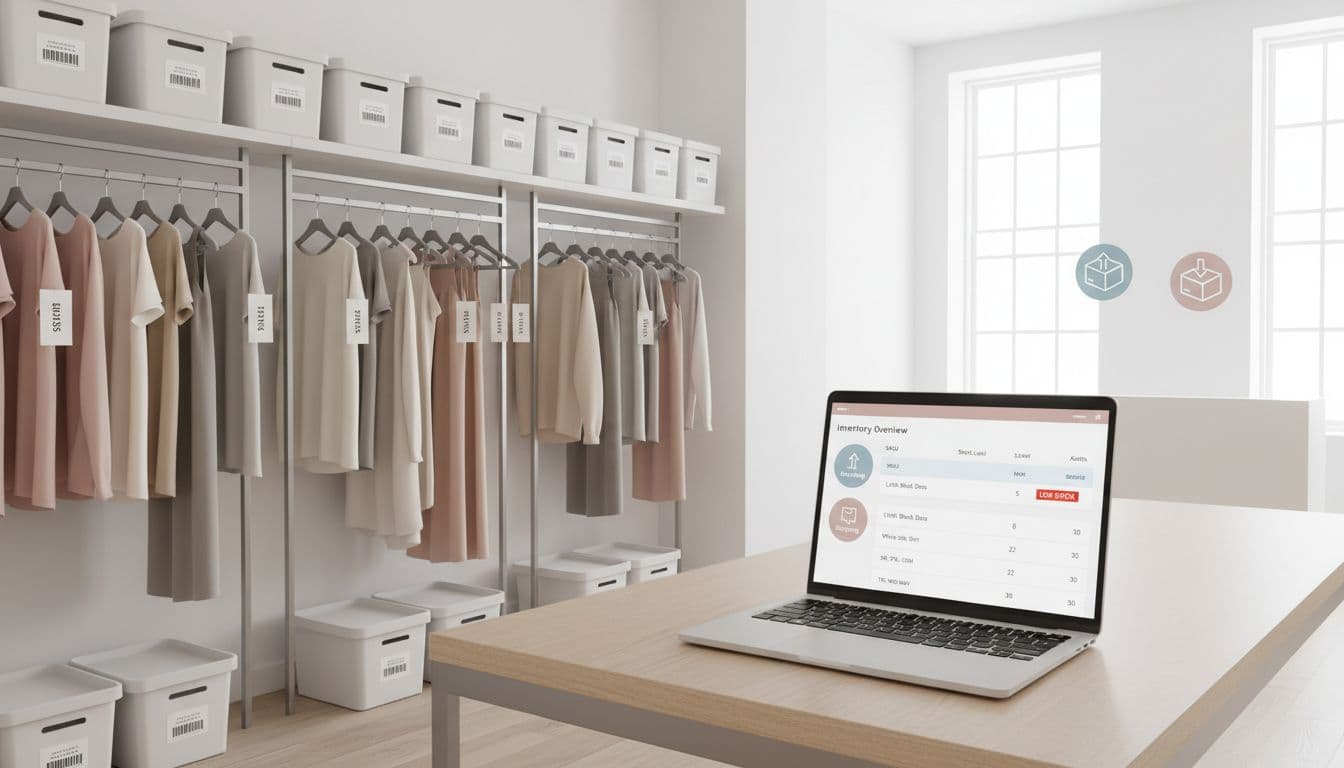
Inventory system view inside a small fashion boutique. Image created with AI.
Fashion inventory is harder than most categories. You are not just tracking “one black hoodie”. You are juggling size, color, fit, fabric, season, and often multiple sales channels.
If you overbuy in the wrong size run, you sit on dead cash. If you underbuy a winning style, you lose full-price sales and train customers to wait for restocks or discounts. That balance is tough, which is why so many brands start with guesswork and end up with racks of unsold mediums.
A solid system helps you:
If you want a quick primer on the basics of inventory management, Ecommerce Fastlane’s overview breaks down concepts like stock counts, reorder points, and carrying costs in plain language: inventory management fundamentals.
On the tactics side, apparel brands also face sharp seasonal swings and trend spikes. Guides like NetSuite’s breakdown of clothing inventory management strategies show how much timing and assortment planning matter once your catalog grows.
Most founders jump straight to “Which app should I use?” and skip the boring part that actually fixes 80 percent of inventory chaos: structure.
Structure means:
You can run this with a spreadsheet in the early days if the structure is tight.
Every product needs a clear Stock Keeping Unit (SKU) that tells you, at a glance, what it is.
For fashion, a simple format works well:
CATEGORY – STYLE – COLOR – SIZE
Example:DRS-MIA-BLK-S for the Mia dress, black, size small.
The exact format matters less than using it everywhere: website, warehouse labels, purchase orders, invoices. When SKUs line up, your team spends less time decoding “black dress, maybe the midi one?” and more time shipping orders correctly.
As you grow, you can layer in value-based thinking from methods like ABC analysis, where A items are high value and low volume, B items are mid-range, and C items are low value but high volume. That approach is covered in more depth in Fastlane’s guide to effective inventory management strategies.

Small warehouse with clear aisles and labeled shelving.
Photo by Tiger Lily
Whether you are using a storage unit, a garage, or a small warehouse, give every shelf, rack, and bin a location code.
For example:
R1-SHELF-A-BIN-1R2-HANGING-LEFTThen, pair each SKU with a home location. When new stock arrives, it goes straight to that home, not to a random pile near the loading door. When you pick orders, you follow a path by location, not by “vibe”.
The win here is speed and accuracy. In practice, brands that adopt simple location codes see picking errors drop and training time for new staff shrink from weeks to days.
If you want a broader view of how structure feeds into systems, Fastlane’s breakdown of an Inventory Management System Overview is a good reference point before you shop for tools.
Once your structure is in place, then it is time to choose tools.
I see three natural stages across hundreds of Shopify brands:
If you are in stage 1, keep it simple. A clear SKU list, a basic “on hand / committed / incoming” sheet, and weekly updates will beat a half-set-up app every time.
For stage 2, you want software that:
Retail-focused guides like Lightspeed’s article on managing apparel inventory for your boutique outline how even small shops benefit from real-time counts once walk-in and online traffic both rely on the same pool of stock.
For fashion-specific tooling, roundups such as EasyReplenish’s list of the best fashion inventory management software and Prediko’s overview of fashion inventory software for apparel brands give a solid sense of what is possible with forecasting, purchase order automation, and size curve planning.
Here is the insight I want you to keep: small fashion brands do not win by buying the biggest system, they win by fully using the system that fits their current stage. Upgrade when the pain of not upgrading is obvious, like frequent oversells or constant manual stock corrections.
A “system” is not software, it is habits.
The best operators I talk to run a few simple rituals that keep stock accurate without burning the team out.
Fastlane’s guide on e‑commerce inventory management best practices goes deeper on concepts like demand forecasting, safety stock, and reorder points. Even if you are small, adopting a light version of that discipline pays off fast.
After watching dozens of brands tighten these routines, the pattern is consistent: once counts are reliable and reorders are planned, founders stop firefighting stock issues and free up hours each week for product and marketing work.
To see how larger apparel operations structure all this, the AIMS360 guide to clothing inventory management for fashion brands is worth a read, especially if you have plans to add wholesale or more complex assortments later.
Once you have structure, tools, and rituals working, you can add more advanced plays.
For growth-stage fashion brands, this often means:
Many of the brands highlighted on Ecommerce Fastlane are already testing AI-driven forecasting and distributed inventory to keep shipping times low without drowning in stock. If you want to stay ahead of that curve, the breakdown of future trends in inventory management will give you a sense of where technology is headed and what to keep on your radar.
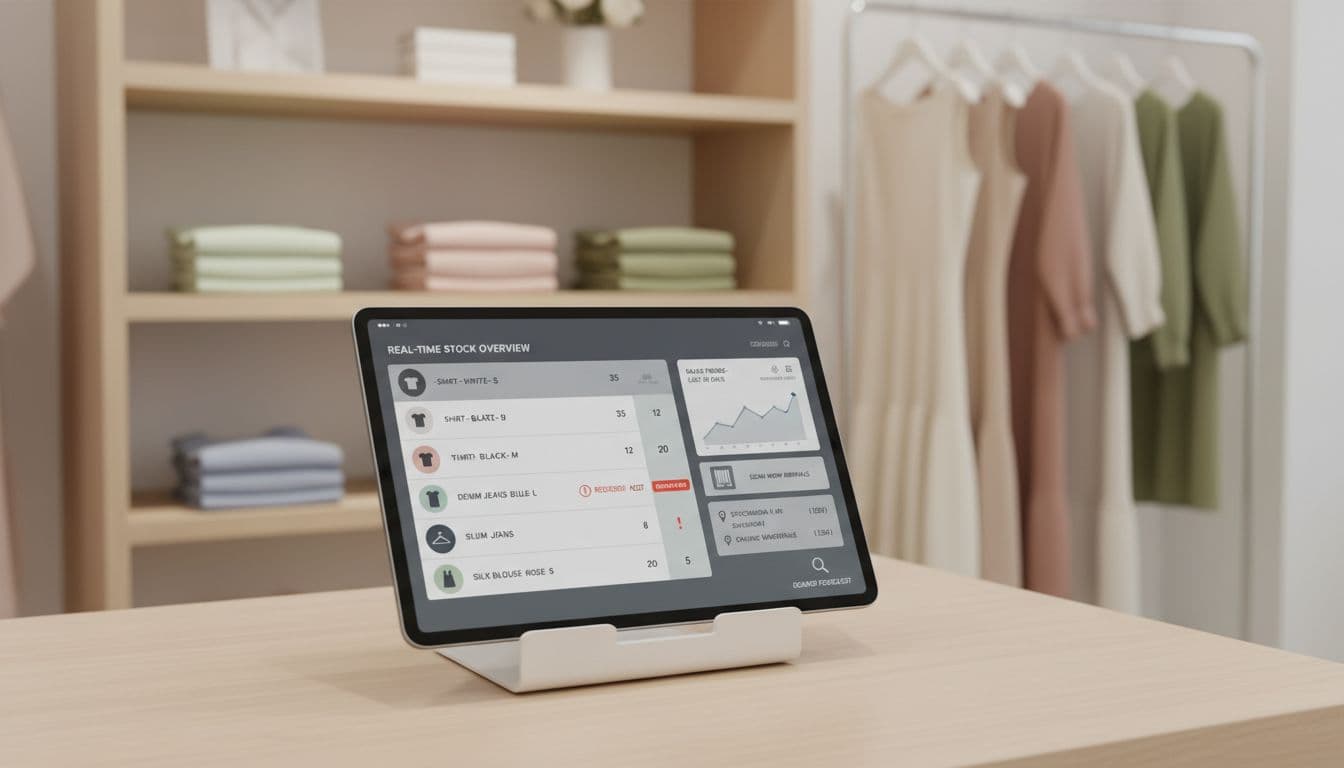
Inventory dashboard with real-time stock and alerts. Image created with AI.
A simple way to start is to forecast just your top 20 SKUs. Get those right, then expand.
Strong inventory systems are not only for 8‑figure brands. They start with clear SKUs, labeled locations, and a few boring habits that never get skipped.
If you are early stage, focus this month on structure and simple counts. If you are already in growth mode, tighten your rituals and push your tools harder before you shop for the next platform. Over time, this is how inventory management fashion brands rely on becomes a growth engine, not a constant fire drill.
Last thought: which part of your current setup causes the most stress, stockouts, dead stock, or constant recounts? Fix that one piece first, then keep building from there.





