

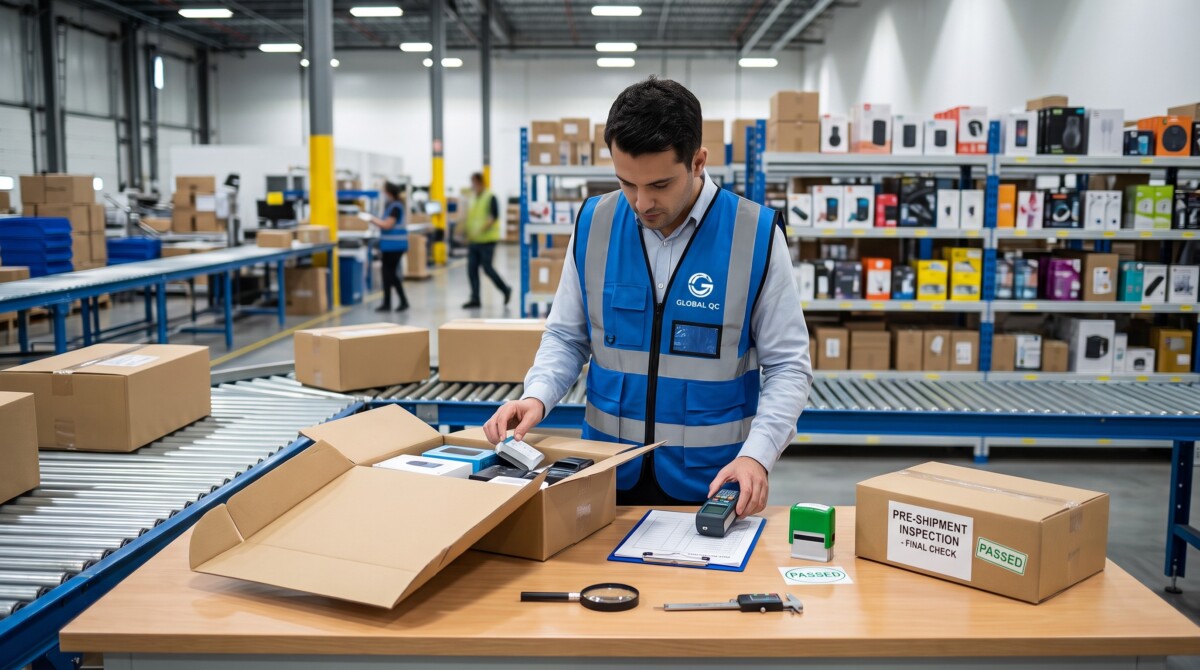
If you’re sourcing from China at scale, treat pre-shipment inspection as a non-negotiable gate that separates purchasing from verification, so bad batches stay the factory’s problem instead of becoming your customers’.
Scaling brands don’t win by finding perfect samples. They win by enforcing a quality system that makes perfect samples boringly normal, even when production ramps and deadlines bite.
Every scaling DTC founder knows the feeling of the golden sample. It arrives beautifully wrapped, perfectly to spec. You sign off, wire the deposit across the world, and wait. Weeks later, a truck backs up to your 3PL, you slice open a random carton — and the sinking feeling hits instantly.
The zipper sticks. The fabric weight is off. A finish that looked premium in the production photos feels cheap and plastic in your hand. And you’ve already paid for all of them.
Here’s the lesson most brands learn the expensive way: a sample isn’t a quality system. It’s a snapshot.
A factory can absolutely nail one sample. The real question is whether it can hold that standard across the full run — under deadline pressure, with your materials, your packaging, your labeling, at your reorder volume. A photo in a chat thread and a friendly update from a sales rep don’t answer that. Only a check of the actual goods does — before they ship.
When a flawed bulk order hits your inventory, you’re not just eating COGS. You get the whole avalanche: support tickets, reverse-logistics costs, blown ad efficiency on a product that now churns, and one-star reviews that outlive the batch. A bad run can look profitable on a landed-cost spreadsheet right up until it reaches the warehouse.
The step most brands skip is pre-shipment inspection — not after the container lands, not when the 3PL opens cartons, but before the final payment clears and the goods leave the factory. A sane China-sourcing process has three gates:
Qualify the supplier first. A slick Alibaba storefront isn’t a factory. Confirm they actually make what you’re buying rather than quietly subcontracting it, and that they can hold your standard at bulk volume — not just on a polished prototype.
Inspect the production batch. An independent check of the real units against your approved sample and written spec — dimensions, materials, color, workmanship, labeling, packaging — to an AQL you agree before production starts. A gate, not a formality.
Lock down the documents. Test reports and compliance paperwork are boring until an Amazon auditor or customs broker asks for them. Chasing a factory for certificates while your listing is suspended is a fast path to zero revenue.
The brands that scale without imploding separate purchasing from verification. Some route it through a China-side partner like Sinospect that qualifies the factory and inspects the run before payment changes hands — so a bad batch stays the factory’s problem, not your customer’s.
You might still get lucky sourcing without inspecting. But luck isn’t a repeatable operating model — and customers are very good at noticing when it runs out.
A pre-shipment inspection is an independent check of finished goods at the factory before final payment and before containers leave, verifying that bulk production matches your approved sample and written spec.
Inspectors pull random cartons from the completed batch, test functional elements like zippers and closures, and measure dimensions, materials, color, and labeling against your documented requirements.
The process runs to an agreed Acceptable Quality Limit (AQL) so everyone knows how many units will be sampled and what defect rates trigger a fail or rework.
Because it happens before the goods ship, you maintain leverage with the factory and can require fixes, replacements, or commercial concessions while the inventory is still under their control.
Most DTC brands should start using pre-shipment inspections once order volumes reach the point where a single bad batch would materially hurt cash flow, reputation, or ad performance.
If a flawed shipment would consume months of margin, overload support, or tank reviews on a hero product, you’re already past the threshold where inspections make sense.
For apparel, accessories, and hardgoods at 50K to 500K in annual revenue, even a modest PO can be high-risk if it’s concentrated in a few core SKUs.
At 500K to 2M and beyond, inspections shift from “nice to have” to basic operating hygiene, because the impact of quality failures compounds across channels and regions.
The right inspection partner in China combines on-the-ground presence, clear reporting, and a bias toward your brand’s standards instead of the factory’s convenience.
Start by looking for firms that specialize in your product category and can show sample reports, references, and case studies with brands at similar scale.
Validate that they operate independently of your factory, with inspectors trained to follow your spec and AQL rules rather than informal local norms.
Partners like Sinospect can also extend beyond inspection to factory qualification and document handling, which simplifies your stack as you grow.
A usable product spec for inspections translates your golden sample into measurable criteria across dimensions, materials, workmanship, labeling, and packaging.
Document exact measurements with tolerances, material composition, fabric weight or denier, color codes, and any functional performance expectations like zipper smoothness or seam strength.
Include required labeling content and placement, from hangtags to care labels to barcodes, plus packaging details like polybag type, insert cards, and carton markings.
The spec should be specific enough that an inspector who has never seen your product before can objectively decide whether each unit passes or fails without debating taste or opinion.
If a pre-shipment inspection fails, the shipment should not leave the factory until issues are resolved, reworked, or commercially addressed to your satisfaction.
Inspectors document the failure modes—such as stuck zippers, off-weight fabric, color mismatches, or labeling errors—with photos and defect counts tied to your AQL.
You then negotiate with the factory to fix the problems, remake the batch, sort and separate acceptable units, or adjust pricing if you decide to accept with known limitations.
The key is that you’re making that decision while the goods are still at the factory, with leverage intact, instead of discovering the problem only after inventory hits your 3PL and customers.





