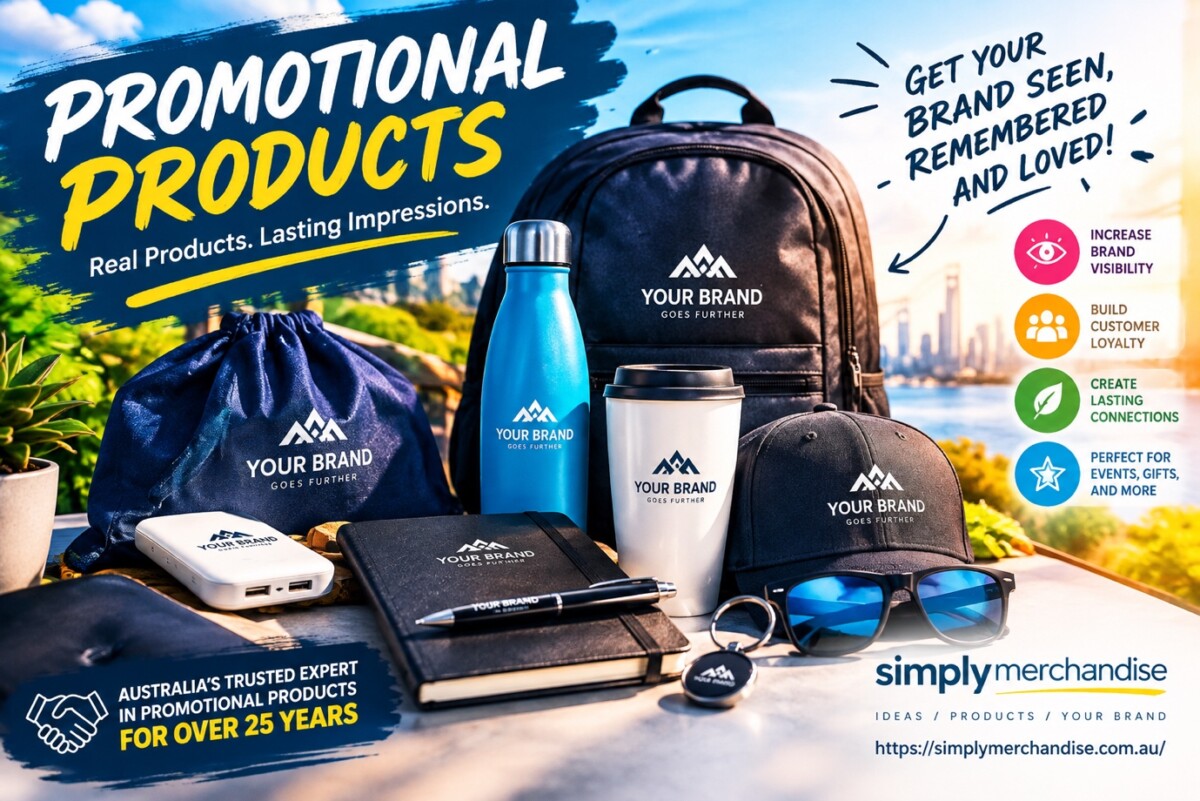
Promotional products make brands more memorable when they solve a real everyday need for a clearly defined audience, not when they simply carry a logo. Useful, durable merchandise can keep a brand visible long after a digital ad, event, or sales interaction ends.
A logo on a cheap giveaway is not a brand experience. A useful object that earns a place in someone’s daily routine can become one.
In a world where businesses are competing for attention across websites, social media and digital advertising, how do you make your brand genuinely memorable? The answer could be something people can see, touch and use every day: Promotional Products.
From branded drink bottles and coffee mugs to custom apparel, pens, tote bags and tech accessories, promotional merchandise gives your business a powerful way to put your brand directly into the hands of customers. When chosen strategically, these products can turn everyday moments into valuable brand interactions.
Digital marketing moves quickly. An online advertisement can disappear with a scroll, while a useful branded product can remain on a customer’s desk, in their car, at the gym or in their home for months or even years.
That makes Promotional Products more than simple giveaways. They are practical brand ambassadors that can help increase visibility, encourage recognition and create positive associations with your business.
Whether you’re preparing for a trade show, launching a new business, rewarding employees or thanking loyal customers, the right promotional merchandise can help your brand make a lasting impression.
The best promotional items aren’t necessarily the biggest or most expensive. They’re the products people genuinely enjoy receiving and using.
Popular choices include:
The key is matching the product to your audience. A useful, high-quality item is far more likely to be kept, used and remembered.
Choosing the right merchandise can feel overwhelming, particularly with thousands of products, branding methods and price points available. This is where experience makes a difference.
For over 25 years, Simply Merchandise has helped Australian businesses find, customise and deliver Promotional Products for marketing campaigns, events, corporate gifting, uniforms and more. With an extensive range of branded merchandise and expertise across printing, embroidery, engraving and other branding techniques, Simply Merchandise can help businesses turn an idea into a finished product that represents their brand professionally.
From budget-friendly promotional pens to premium corporate gifts, the goal is simple: find merchandise that fits your brand, audience and marketing objectives.
Great Promotional Products do more than display a logo. They create physical connections between businesses and the people they want to reach.
Imagine your logo travelling around town on a branded tote bag. Your customer’s morning coffee being enjoyed from a personalised mug. Your company name appearing every day on a water bottle, notebook or piece of apparel.
That’s the power of promotional merchandise: your brand becomes part of people’s everyday lives.
Ready to make your next marketing campaign more memorable? Explore the extensive range of Promotional Products available from Simply Merchandise and discover why businesses across Australia have trusted their expertise for more than 25 years.
Promotional products are most likely to be kept and used when they are practical, durable, visually appealing, and relevant to the recipient’s routine. Common high-retention choices include insulated drink bottles, coffee cups, quality notebooks, useful pens, tote bags, wearable apparel, cable organisers, chargers, and carefully chosen corporate gift sets. The best item depends on the context. An office audience may value desk and technology accessories, while an event audience may prefer compact, travel-friendly products. Start with what the recipient will genuinely use, then choose branding that supports the product rather than overwhelms it.
Choose promotional products for a trade show by starting with the audience, the event environment, and the post-event action you want to generate. Select an item that is useful, easy for attendees to carry, and relevant enough to support a conversation at your booth. For broad awareness, practical lower-cost products can work well. For qualified prospects or key accounts, use a higher-quality item tied to a meeting, demo, or follow-up experience. Track outcomes such as badge scans, qualified conversations, booked meetings, and post-event engagement rather than judging success by the number of items distributed.
Promotional products can support customer retention when they are used as thoughtful relationship moments rather than generic giveaways. A useful branded gift can work well for VIP milestones, customer anniversaries, referrals, community participation, major purchases, or recovery after a service issue. The product should fit the customer and feel proportionate to the relationship. Measure effectiveness by comparing repeat purchase rate, average order value, referral activity, reviews, and support sentiment between customers who received the gift and a comparable control group over a defined period.
A business should spend on promotional merchandise according to the recipient’s value, campaign objective, and expected return rather than using one universal budget. Broad event distribution may justify a lower per-item cost if the item is still useful. Qualified prospects, key accounts, employee onboarding, and customer-retention programs usually justify more investment because the relationship and intended outcome are more valuable. Include setup, branding, packaging, shipping, and distribution costs in the total budget. A smaller quantity of relevant, durable products often produces more value than a large quantity of disposable items.
Ecommerce brands can measure promotional product ROI by tying each distribution program to a defined audience and outcome, then comparing results with a similar group that did not receive the item. For retention campaigns, track repeat purchase rate, average order value, referrals, reviews, and customer lifetime value. For B2B outreach, track reply rates, meeting acceptance, deal velocity, and pipeline progression. For events, track qualified leads, follow-up meetings, and revenue influenced. QR codes or unique landing pages can connect physical products to digital activity when they offer a genuinely useful next step.