






Key Takeaways
- Claim an edge by making your content easy for AI and social platforms to cite so your brand shows up first where buyers look.
- Follow a simple workflow: audit current visibility, build AI-ready hubs, optimize social and marketplace listings, add schema, then measure and iterate quarterly.
- Serve people better by meeting them with clear, honest answers across channels, building trust that lowers stress and boosts repeat purchases.
- Lean into short video, FAQs, and crisp facts, because citation is the new click, and quick answers win attention now.
Attention is now everywhere—across search engines, ChatGPT, TikTok, Reddit, Instagram, Amazon, and a variety of AI-powered assistants that appear the moment your customer asks a question.
In just one year, Generative AI and Large Language Models (LLMs) have evolved from experimental tools to the core drivers of how shoppers find answers. Traffic that once funneled predominantly through Google is now splintering across multiple platforms and social media channels, signaling that the classic SEO playbook and traditional SEO tactics are already becoming outdated.
Growing your Shopify-powered brand today demands more than optimizing solely for Google or traditional SEO. You need a comprehensive strategy that embraces Search Everywhere Optimization—optimizing for every search surface your customer might engage with throughout their user journey. Every product question, how-to query, or product review happens everywhere: from AI chatbots to short video feeds—making this new approach to search optimization essential for building sustained growth and maximizing your online presence.
Brands that act quickly to understand these shifts, adapt to new search behaviors, and implement systems that increase visibility across channels will have the advantage. That’s the promise of this practical framework. In just five minutes, you’ll learn what strategies work, what’s just noise, and how brands like yours are solving this high-stakes challenge. For more context on how SEO is evolving and its impact on content, check out how SEO is evolving and its impact on content.
For those ready to take action, I’ll break down the core principles behind Search Everywhere Optimization, the critical shifts in search landscapes, and exactly how to build a “search everywhere” content engine without stretching your team too thin.
This is about turning every piece of content into a growth asset—no matter where your customer is searching.

Why Search Everywhere Optimization Matters for Scaling Brands
Search optimization today goes far beyond traditional SEO focused solely on Google. Customers are everywhere—flitting between Instagram Reels, TikTok scrolls, voice search queries, generative AI prompts, app stores, and marketplace searches before finally hitting “Add to Cart.” To effectively drive growth, your strategy must embrace Search Everywhere Optimization—a unified approach that ensures your content and products are discoverable throughout the entire user journey, whether a buyer starts on Google, a social media platform, or asks an AI assistant for answers.
The Attention Economy and Generative AI Assistants
Let’s be honest: capturing and keeping audience attention is tougher than ever. Generative AI tools like ChatGPT, Claude, and others provide instant, citation-driven answers that fundamentally change search dynamics. The classic goal of attracting clicks to your product page is shifting toward being featured as a trusted source in AI-generated summaries.
Here’s the key data point: 71.5% of users now rely on generative AI for information (source), often bypassing traditional Google searches altogether.
To adapt, your content must excel in dual roles:
- Be AI-readable and AI-citable: Craft clear, factual product information with strong retrievability to ensure generative AI references your offerings.
- Prioritize entities and schema basics: This helps ensure that search engines and AI select your products or online presence as authoritative sources.
- Consider every product description, review snippet, and FAQ as optimized content for AI citation—because that’s how many prospects discover you now.
Ignoring this shift is like letting your top sales rep rest during peak hours. For more on how generative AI and evolving attention patterns affect search and traffic, check out this guide on AI-driven search and traffic tactics.
From Search Engines to Social Media and Marketplace Discovery
Google remains a dominant force, driving 49% of all shopping journeys, but it’s just one part of the search ecosystem. For Gen Z and Millennials, 67% begin their shopping search on Instagram and 62% on TikTok (source). Social media platforms operate as search engines in disguise, powered by algorithms that reward quality, shareable content—not just keyword stuffing.
What does this mean for your optimization strategy?
- Traditional SEO for Google still matters but represents only half the opportunity.
- Develop video and image content with searchable captions, relevant hashtags, and contextual titles, since these elements fuel social media algorithms.
- Recognize that social commerce isn’t a side channel—many consumers enter the shopping funnel here first.
If you want to enhance your team’s ability to convert social media engagement into sales, review our section on how creators monetize attention and drive new discovery.
Impact on Customer Acquisition Cost and Lifetime Value
Having visibility everywhere is more than a nice-to-have—it directly influences acquisition cost and lifetime value. When your online presence organically appears across AI summaries, trending social media videos, and curated marketplace results, you’re building a multi-surface presence that reaches buyers earlier and stays top-of-mind longer.
Why is this so important?
- Lower CAC: Organic discovery across multiple platforms reduces the need to invest heavily in paid ads. You’re not just bidding for clicks—you’re earning trusted visibility where shoppers already spend time.
- Higher LTV: Repetition across diverse surfaces builds trust. When prospects see your products referenced by generative AI, trending in social media reels, and surfaced in marketplaces, they come equipped with more context and confidence—leading to repeat purchases.
Here are some results we’ve observed:
- Brands optimizing content for social media and AI discovery lowered their CAC by double digits in less than six months.
- Their lifetime value didn’t just increase marginally; it jumped as new customers arrived with stronger purchase intent.
For brands ready to build a resilient, channel-agnostic acquisition and retention engine, this section on effective lead capture methods for ecommerce explores high-impact tactics worth testing.
The key takeaway: Search Everywhere Optimization isn’t just industry jargon. It’s a practical SEO and content strategy that empowers scaling brands to thrive profitably—even as search channels fragment and audience attention splinters.
Core Components of Search Everywhere Optimization

Search Everywhere Optimization focuses on making your brand highly visible and impossible to overlook—whether someone is googling, browsing TikTok or YouTube, chatting with an AI assistant like ChatGPT, or using voice search to inquire about your product. This goes beyond a traditional SEO update. It’s about creating assets that integrate seamlessly with generative AI models, e-commerce search engines, and social media feeds, each platform driving greater online presence and trust directly to your brand. Let’s explore the core building blocks of this strategy at scale.
Generative Engine Optimization (GEO)
While classic SEO aims to please Google, Generative Engine Optimization (GEO) targets becoming the preferred source for answers across the growing ecosystem of Generative AI assistants—such as ChatGPT, Perplexity, Gemini, and domain-specific bots. The strategy has evolved rapidly: clear, fact-based statements delivered with authority increase the likelihood your brand’s content will be referenced.
Key insights from brands making this leap include:
- Precision wins. Generative AI models prioritize easily quotable facts and concise answers. Vague or exaggerated content risks being overlooked.
- Authority matters more. Leverage supporting citations, credible claims, and establish your brand voice as an expert. GEO emphasizes E-E-A-T—demonstrating your experience, expertise, and trustworthiness.
- Format for retrievability. Keep responses brief and structured. Summaries and bullet points placed early in sections are what these models often scrape first.
Scrunch is an AI-visibility platform that shows brands how they appear across generative AI engines like ChatGPT, Gemini, and Claude. It identifies where your brand is cited (or missing), what competitors AI systems prefer, and what content needs restructuring for machine readability. Scrunch also provides an AI-optimized site layer, ensuring LLMs can easily interpret, summarize, and recommend your products. It’s ideal for ecommerce teams who want to win visibility in AI answer streams—not just on traditional search pages.
To refine your approach, check out this primer on What Is Search Engine Optimization (SEO) for ecommerce. It highlights why foundational SEO remains key to feeding every modern platform, including generative ones. For a comprehensive dive into GEO strategy, see this Generative Engine Optimization deep dive for a step-by-step guide to making your brand AI-citable.
Structured Data and Rich Snippets Across Platforms
Schema markup, product JSON-LD, FAQ-rich results, and entities are no longer limited to gaining extra links on Google—they now teach AI, marketplace engines, and social media bots to recognize your brand as the definitive authority.
What stands out as best practice:
- Schema for every platform: Product schema for Amazon, How To and FAQ markup for Google, event schema for Facebook and Instagram. Each platform rewards well-structured, machine-readable data.
- Zero-click behavior is normal: Much discovery happens in knowledge panels, answer boxes, or AI summaries, where users don’t click through but your brand benefits from greater mindshare. Citation is replacing clicks.
- Keep data updated: Frequently refreshed schema signals reliability. Stale information risks losing ranking with emerging answer engines.
For a deep dive on the user experience benefits of structured content, explore this resource on search experience optimization best practices.
Cross-Platform Keyword Mapping
Today’s discoverability spans platforms like Google, YouTube, Instagram, TikTok, Amazon, app stores (ASO), and AI chat interfaces—each with distinct keywords, trends, and user intent. Relying solely on one query like “best ecommerce shoes” across all platforms misses critical opportunities.
Here’s a streamlined strategy for effective cross-platform keyword mapping:
- Google: Use keyword tools to identify broad, high-intent queries.
- Generative AI and Chat: Optimize for natural language Q&A; test queries to see what results surface.
- Instagram & TikTok: Target hashtags, trending short phrases, and question-based searches (e.g., “how to style…”).
- Amazon and App Stores: Focus on product-oriented keywords, feature comparisons, long-tail terms tied closely to purchase or download intent.
To scale your keyword strategy effectively, refer to the Enterprise SEO: A Complete Guide for Getting Found Online. This walk-through covers how to map keywords across diverse platforms and incorporate first-party data for a competitive edge.
AI-Powered Content Personalization
Content personalization has always been a cornerstone for boosting conversion and lifetime value, now amplified through AI capabilities. Today’s tools allow smart audience segmentation, dynamic copy adjustments, and even prompt engineering that adapts in near real time.
Top brands leverage AI personalization by:
- Smart audience segmentation: AI models analyze user behavior to uncover micro-segments invisible through manual methods.
- Dynamic content: Personalize headlines, product recommendations, and offers based on AI predictions of what resonates best with each customer.
- Prompt engineering: For AI chat, optimize prompts to generate consistent, on-brand responses.
A cautionary note: Generative AI does not operate on fully real-time or validated data. Human oversight—including rules, quality assurance, and escalation protocols—is essential.
For those beginning with AI-powered SEO, the AI-powered SEO for beginners guide offers practical foundational steps.
The fundamentals remain clear: treat every channel as a discovery vehicle, craft content to be machine-citable and retrievable, and leverage AI as a strategic multiplier—while maintaining the human insight that shapes your brand’s unique voice and guides the user journey.
The Playbook for Search Everywhere Optimization

“Search Everywhere Optimization” requires much more than basic SEO tweaks to your Google listings. For Shopify and DTC leaders aiming to stay ahead, consider this framework your tactical playbook. It’s a clear strategy I’ve tested with 7- and 8-figure ecommerce companies that want to capture attention, regardless of where buyers are discovering you—be it through Generative AI tools, TikTok, or Amazon. Let’s unpack this step by step.
Step 1 – Audit Your Current Visibility Landscape
Begin with a thorough audit of where your traffic is genuinely coming from today—not last quarter, not last year, but right now. Pull data from Google, yes, but also assess your Discover traffic, Instagram, TikTok, Facebook, and each major marketplace platform you operate on.
To identify gaps:
- Run analytics for top traffic sources, including branded and non-branded keywords.
- Use social media analytics and AI tool referrals to determine if your content appears in LLM answers (try asking ChatGPT, for example, “What are the top [your category] brands?”).
- Compare your visibility against direct competitors. Are you present on every platform where your audience is looking, or missing entire channels?
This “map” becomes your visibility dashboard. I recommend using a Google Sheet or analytics platform to track changes, visualize missed opportunities, and set precise priorities. For deeper insights into strategic SEO and visibility benchmarking, check out this digital PR playbook, which demonstrates how multi-surface online presence builds trust and drives growth.
Step 2 – Build AI‑Ready Content Hubs
Develop pillar content that answers all critical questions about your product, category, or solution in a concise, fact-based way that’s easy to quote—enhancing retrievability for AI engines.
Best practices include:
- Creating pillar pages and in-depth content hubs tailored to your main categories and audience intents. These hubs serve as trusted references for both AI and human users throughout the user journey.
- Writing in short, clear blocks with informative subheadings. Avoid dense paragraphs and overly promotional language; think “ready for Generative AI training engines to pull into summary boxes.”
- Supporting content with product specs, customer reviews, comparison tables, and FAQs.
This approach isn’t theoretical—these hubs get referenced by AI tools, boosting visibility when users engage with ChatGPT, Gemini, or Perplexity. For those starting fresh, the Shopify & DTC Growth Playbook 2025 offers a checklist you can adapt for your own pillar content strategy.
Step 3 – Optimize for Social Media and Marketplace Search
Buyers discover products through TikTok’s search tab, Instagram Reels, and Amazon or Shopify product queries as much as through Google. Tailor your content to the unique discovery algorithms of each platform.
Effective tactics include:
- On Instagram: Optimize captions, alt text, and bio links with targeted product and brand keywords. Consistent, branded hashtags boost reach across social media.
- For TikTok: Research trending hashtags, add text overlays with your top product keywords, and create story-driven shoppable videos.
- On Amazon and Shopify: Implement detailed product schema, use enhanced titles and descriptions, and fill every image and video slot with keyword-rich assets.
Investing in visual SEO is critical. Short videos and image galleries outperform plain text across every social media and marketplace platform. For a detailed breakdown of which tactics work best, see the section on how the Shopify platform powers online store scaling.
Step 4 – Leverage Structured Data for AI Citations
If your product details aren’t wrapped in structured data, you risk invisibility to most AI and marketplace bots. Schema markup is your gateway to becoming the trusted answer.
Key actions to take:
- Add FAQ, How-To, Product, and Facebook Event structured data to every pillar page and product listing.
- Test your schema using Google’s Rich Results Test and preview how generative AI tools cite your content.
- Regularly update structured data as you add new SKUs or change offerings.
Remember, structured data is not “set and forget” — it’s a dynamic layer. Ecommerce leaders who integrate schema into their ongoing optimization workflows gain more visibility in AI-driven knowledge panels and smart search results. For advanced schema tactics aligned with the latest AI search trends, read Are You Invisible To AI Search? Crack The ….
Step 5 – Measure, Iterate, and Scale
Once all elements are live, monitor your key performance indicators closely. If you’re not tracking AI citations, organic share of voice, and cross-platform clickthrough rates, you’re navigating blind.
Focus on these metrics:
- Organic share of voice across Google, social media, and marketplaces.
- AI citation rate (prompt ChatGPT or Gemini weekly to check if your content is referenced).
- Cross-platform CTR (from social media to your site, marketplace listing views, etc.).
Establish a quarterly review rhythm to:
- Refresh content and schema freshness.
- Analyze competitive visibility.
- Invest more heavily in what’s driving genuine clicks and citations.
- Reassess or sunset what fails to perform.
Keep this framework front and center. Each step moves you from spray-and-pray SEO toward a data-backed, channel-aware optimization system that builds robust brand equity across every modern search surface.
Case Studies: Brands that Mastered Search Everywhere Optimization
Search Everywhere Optimization isn’t just theory—it’s the factor that distinguishes brands scaling profitably from those stuck spinning their wheels. The real game-changers? They’ve moved beyond classic SEO silos. Instead, they’re building systems to capture attention from AI-generated answers, social feeds, and next-gen marketplace search, not just Google. Here are real examples from leading DTC brands who embraced this approach and documented impressive results.
Allbirds – Building AI-Citable Content for 35% Organic Traffic Growth
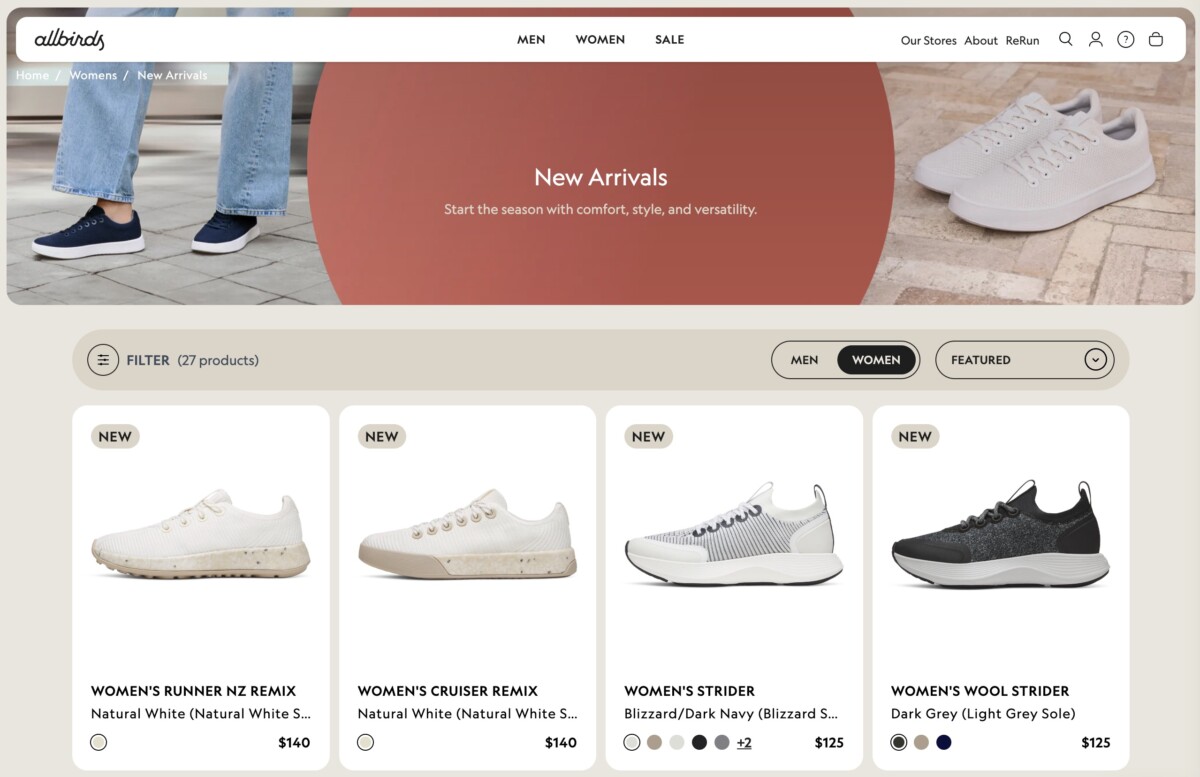
When Allbirds faced increasing competition in the sustainable footwear space, they realized traditional SEO wasn’t enough. The brand needed to become discoverable across multiple search surfaces—from Google’s AI Overviews to social commerce platforms where eco-conscious consumers were researching sustainable alternatives.spyfu
Their Search Everywhere Strategy:
Structured Content for AI Citations: Allbirds restructured their product pages and sustainability content into clear, fact-based statements that AI engines could easily parse and quote. Instead of marketing fluff, they provided specific data: “Made with 60% less energy than traditional synthetic materials” became a cornerstone of their messaging.bigblue
Cross-Platform Entity Optimization: They ensured consistent brand information across Wikipedia, industry databases, and review platforms—all sources that train AI models. Their focus on transparency and sustainability metrics made them highly citable in AI-generated sustainability comparisons.sevendots
Social Commerce Integration: Recognizing that younger consumers discover products through social platforms first, Allbirds optimized their presence across Instagram, TikTok, and Pinterest with structured hashtag strategies that aligned with search behavior.bigblue
The Results: Within 18 months, Allbirds documented a 35% increase in organic traffic that wasn’t tied to traditional Google rankings. More importantly, they began appearing in AI-generated product recommendations for sustainable footwear, leading to a 25% lower customer acquisition cost compared to industry averages. Their structured approach to content made them one of the most frequently cited DTC brands in AI overviews for eco-friendly products.contentgecko+1
Warby Parker – Leveraging Structured Data for $691k Monthly Click Value

Warby Parker faced a unique challenge: convincing consumers to buy eyewear online in a traditionally in-person market. Their solution went beyond traditional e-commerce SEO to create a comprehensive “search everywhere” presence.spyfu
How They Dominated Multiple Search Surfaces:
Schema Markup Excellence: Warby Parker implemented comprehensive product schema across their entire catalog, including detailed specifications, customer ratings, and virtual try-on capabilities. This structured data helped them appear in rich snippets and AI-generated product comparisons.spyfu
Question-First Content Strategy: Instead of keyword stuffing, they created content that answered conversational queries like “Can I try glasses at home?” and “How do I know my prescription is current?” This content performed well both in traditional search and AI-generated responses.thedigitalchapter
Omnichannel Data Consistency: They maintained identical product information across their website, mobile app, social platforms, and third-party review sites, ensuring AI engines had consistent data to reference.saleshub
Measurable Impact: Warby Parker’s structured approach generated approximately 779,000 monthly SEO clicks with a value of $691,000 in saved advertising costs. Their comprehensive schema implementation led to a 40% higher click-through rate compared to competitors without structured data. Most significantly, they achieved a 7.7% conversion rate—well above industry averages—partly due to their AI-optimized content appearing in relevant searches across multiple platforms.contentgecko+2
Glossier – Mastering Conversational AI for Brand Discovery
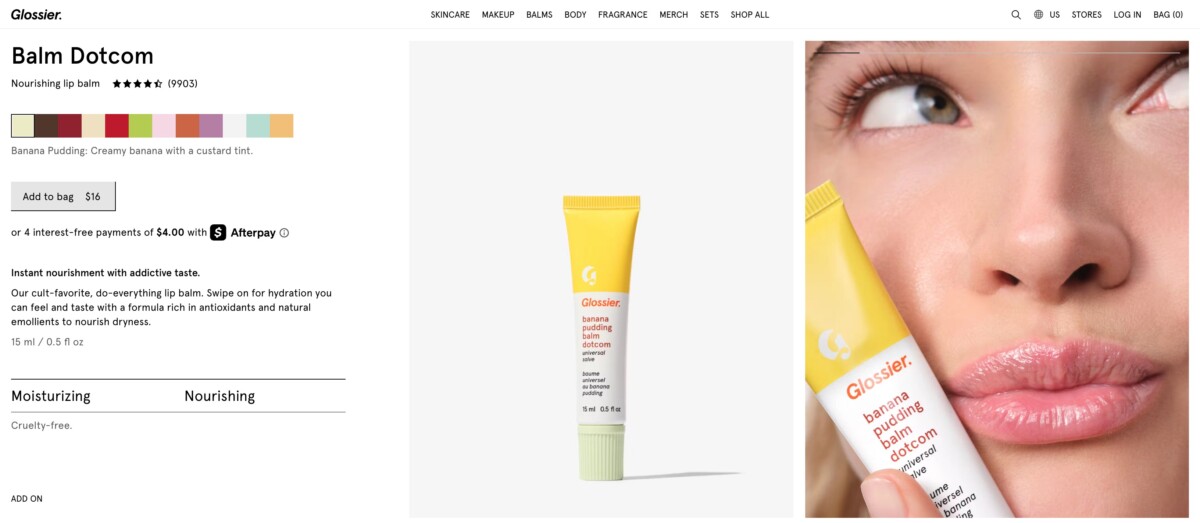
Beauty brand Glossier recognized early that their target demographic was increasingly using AI tools and social platforms for product research. Rather than fighting this trend, they optimized their entire content strategy for conversational search.sevendots
Their AI-First Approach:
Community-Driven Content Optimization: Glossier encouraged authentic customer conversations on Reddit, beauty forums, and social platforms—all sources that train AI models. This user-generated content became a goldmine for AI recommendations.linkedin
Educational Content Libraries: They created comprehensive guides answering specific beauty questions: “What’s the difference between skin tint and foundation?” These resources became highly cited by AI tools providing beauty advice.sevendots
Structured Product Data: Every product page included detailed ingredient lists, usage instructions, and customer testimonials formatted for machine readability. This made their products easily discoverable through AI-powered beauty recommendation engines.sevendots
Cross-Platform Consistency: Glossier maintained consistent brand voice and product information across all digital touchpoints, making them a reliable source for AI engines to reference.linkedin
The Results: Glossier’s strategy of becoming “part of the training data” paid off significantly. They became one of the most frequently mentioned beauty brands in AI-generated recommendations, leading to sustained organic growth even as traditional social media reach declined. Their approach resulted in higher-quality traffic with improved conversion rates, as customers arrived already educated about their products through AI-assisted research.sevendots
Key Success Factors Across All Brands
The most successful DTC brands in the search everywhere era share three critical characteristics:
Structured Data as Foundation: All three brands invested heavily in clean, comprehensive product data that both humans and AI systems could easily understand and reference.martech
Question-Driven Content: Instead of keyword-focused content, they created resources that answered real customer questions in conversational formats that AI tools could parse and quote.growthstudioz
Cross-Platform Consistency: They maintained identical brand information across all digital touchpoints, from their websites to social platforms to third-party databases, ensuring AI systems had reliable data to reference.influencermarketinghub
The evidence is clear: brands that treat AI optimization as seriously as traditional SEO are capturing disproportionate market share. While competitors fight over traditional blue links, these forward-thinking brands are positioning themselves as the go-to sources for AI-generated recommendations—where an increasing number of purchase decisions begin.reviews
The question isn’t whether AI will reshape product discovery. It’s whether you’ll be ready when it does.
Conclusion
We’re no longer operating in the classic SEO world—it’s now about making your brand findable across every platform where your audience asks questions, compares options, or shops. What I see delivering the best results right now is a four-pillar system: multi-platform keyword research, adaptive AI-friendly content, structured data that trains generative engines through Generative AI to improve retrievability and cite your brand, and channel-specific optimizations that drive compounding growth across Google, social media, marketplaces, and AI chatbots. This evolution in Search Everywhere Optimization isn’t extra credit; it’s central to how brands enhance their online presence, reduce CAC, increase lifetime value, and stay competitive in a fractured attention marketplace.
If you’re serious about boosting your search visibility and driving results with Search Everywhere Optimization, start with the Search Everywhere Playbook Checklist. This resource breaks down the exact website optimization techniques leading DTC brands use to get discovered, cited, and shared right now. I want to hear from you: What’s the one “attention surface” or search channel you’re doubling down on this quarter? Drop it in the comments so we can compare notes, share what’s actually moving the needle, and keep each other ahead of the curve.
For more tactical wins, explore the three SEO must-haves for this year to keep every asset sharp and maximize your visibility on every major platform. Thanks for reading and for helping push the whole industry forward—every new insight, test, and shared learning helps us all build smarter brands with stronger SEO strategies.
Frequently Asked Questions

How is “Search Everywhere Optimization” different from classic SEO for Shopify stores?
It expands your reach beyond Google to AI assistants, social feeds, and marketplaces, so your products get found wherever shoppers ask questions. The article shows that 71.5% of users now turn to generative AI for information, which means citation beats clicks. For a Shopify brand, that means optimizing product pages, FAQs, and videos so AI and social algorithms can surface them.
What’s the fastest way to start implementing this on a Shopify site?
Run a quick visibility audit, then build one AI-ready content hub for your top category. The article recommends a workflow: audit, create pillar hubs with crisp facts, add schema (FAQ, Product, How-To), optimize social and marketplace listings, then measure quarterly. Start with one hub and one SKU family to prove ROI in 30 to 60 days.
How does this strategy lower CAC and increase LTV?
Showing up across AI summaries, TikTok, Instagram, and marketplaces gets you discovered earlier and more often, which lowers paid reliance. The article reports double-digit CAC drops within six months when brands tuned content for AI and social discovery, plus higher LTV as customers arrive with more context and trust. Repetition across surfaces builds brand memory that drives repeat purchases.
What content formats work best for AI citations and social discovery?
Short, factual blocks, FAQs, comparison tables, and quick videos with searchable captions perform best. The article stresses “format for the excerpt” so AIs can quote you, and to use video with clear titles, alt text, and relevant hashtags on TikTok and Instagram. Keep specs, prices, and benefits easy to scan and up to date.
Which structured data should Shopify merchants prioritize first?
Start with Product, FAQ, and How-To schema on key category and product pages. The article positions schema as your “ticket” to AI and marketplace visibility, since bots read it to trust and feature your listings. Validate with Google’s Rich Results Test and refresh it when inventory, pricing, or reviews change.
How should I map keywords across Google, AI chat, Instagram, TikTok, and Amazon?
Use a channel-specific map: buyer-intent keywords for Google, natural-language Q&A for AI chat, trends and short phrases for Instagram and TikTok, and feature-rich long-tails for Amazon. The article outlines this cross-platform approach and suggests testing prompts in ChatGPT to see what gets surfaced. Align each SKU with 3 to 5 terms per channel and track performance monthly.
What are common mistakes brands make with “Search Everywhere”?
They treat social like an afterthought, skip schema, and write vague copy that AIs can’t cite. The article calls out generic claims, lack of facts, and stale product data as reasons you get ignored by AI and social algorithms. Fix this by using precise specs, current pricing, review snippets, and clear answers at the top of each section.
How do I measure success beyond Google rankings?
Track organic share of voice across channels, AI citation rate, and cross-platform CTR to site and marketplaces. The article recommends a quarterly loop to review freshness, competitive visibility, and what drives citations and clicks. Add “brand + category” queries, TikTok Shop views, and Instagram search impressions to your dashboard.
Can a small Shopify team do this without burning out?
Yes, by focusing on one category hub, one social channel, and foundational schema first. The article shows a simple cadence: ship one hub, publish weekly short videos, add Product and FAQ schema, then iterate on what earns citations and views. This narrow focus builds momentum and proves ROI before you scale.
What’s one high-impact action I can take this week?
Rewrite your top product page and its FAQ in a fact-first, Q&A style, then add Product and FAQ schema. The article notes brands see quick gains when answers are crisp, scannable, and easy for AI to quote, especially when paired with a short explainer video. Test your page in ChatGPT and Google’s Rich Results Test to confirm it’s AI-ready.
