

Amazon trained your customers to think that 1 to 2 day shipping is normal. In some cities, they now expect items in a few hours.
Shopify Plus merchants often feel like they are always playing catch up with a marketplace that owns planes, trucks, and warehouses.
Here is the shift I want you to lock in. Fast delivery is no longer Amazon’s exclusive edge. With tools like Uber Direct for Shopify and modern multi-node 3PLs, mid-market and enterprise DTC brands can match, and sometimes beat, marketplace speed in the cities that matter most.
Across hundreds of brands, I have seen the same pattern. When delivery time shortens and the promise is clear, conversion increases, repeat purchases improve, and your brand feels instantly more trustworthy.
This guide is a practical playbook, not theory. You will see how to use Shopify Plus, local inventory, and Uber Direct to turn rapid shipping into a growth lever you control.
Fast delivery is no longer a nice extra. It is a core part of the checkout experience and how shoppers judge your brand.
Amazon, Target, Walmart, grocery apps, and same-day services have set a new baseline. Many shoppers now expect clear delivery promises, real-time tracking, and at least one same-day or next-day option.
For smaller Plus brands, this shows up as weak conversion. Shoppers hit your PDP, see “Standard shipping, 5 to 7 business days,” and bounce to a marketplace.
For 7 to 8-figure brands, it shows up as a shrinking repeat rate, rising paid media costs, and fuzzy attribution. Your ads work, but slow or vague delivery quietly drags ROI, one lost order at a time. That is one of the classic invisible profit killers I discuss in “Identify invisible profit killers in your Shopify store.”
Prime changed the definition of “fast.” A few key shifts:
Retail consumers do not compare you to other mid-sized Shopify brands. They compare you to the last best experience they had, which was often Amazon or a large retailer.
So when a customer lands on your site, their brain is running a simple script:
“Can I get this as fast as I’d get it from Prime, and can I trust that date?”
If the answer feels like “no” or “not sure,” many will not even test your brand the first time.
Uber’s own research on same-day delivery and on-demand logistics points to a clear pattern. When shoppers see a same-day delivery option, they are far more likely to make spontaneous purchases, especially in urban areas and for time-sensitive categories.
In practice, shoppers now expect:
This is not just “CX hygiene.” It is a full-funnel performance lever.
In our work on full-funnel paid and retention strategies, I keep coming back to this idea from Full‑Funnel Secrets for Shopify Operators: every step from ad to unboxing is one story. If the delivery promise is slow or fuzzy, your funnel is leaking before the first purchase even lands.
If this all seems obvious and yet your delivery promise still feels “meh,” you are not alone. The common blockers look like this:
The painful part is that these issues rarely show up as one big fire. They show up as quiet drag: higher abandoned checkouts, lower repeat purchase, and more discounting to move volume. Slow or vague delivery is one of the quiet threats covered in Turn ghost traffic into revenue.
Here is the good news. You do not need your own fleet or a national warehouse network to compete on speed. The brands that win on Shopify Plus are using three building blocks together:
Across hundreds of conversations with operators, this pattern holds. The brands that treat fast delivery as a growth strategy, not a support project, typically see double-digit lifts in conversion in their target cities within the first 30 to 60 days.
Amazon’s real trick is not magic robots. It is proximity. Many small, close warehouses in a delivery network beat one giant center. You can copy the core of that idea without massive capex.
Simple version:
You do not need perfection on day one. If you can cover 20 to 30 percent of your orders with local or regional inventory, you suddenly unlock fast delivery for a meaningful slice of your base.
Many brands lean on logistics-focused partners and experts that we feature on the podcast to design this footprint. The pattern is the same: start narrow, prove impact, then scale the network.
This is where speed jumps from “better” to “Prime-level.”
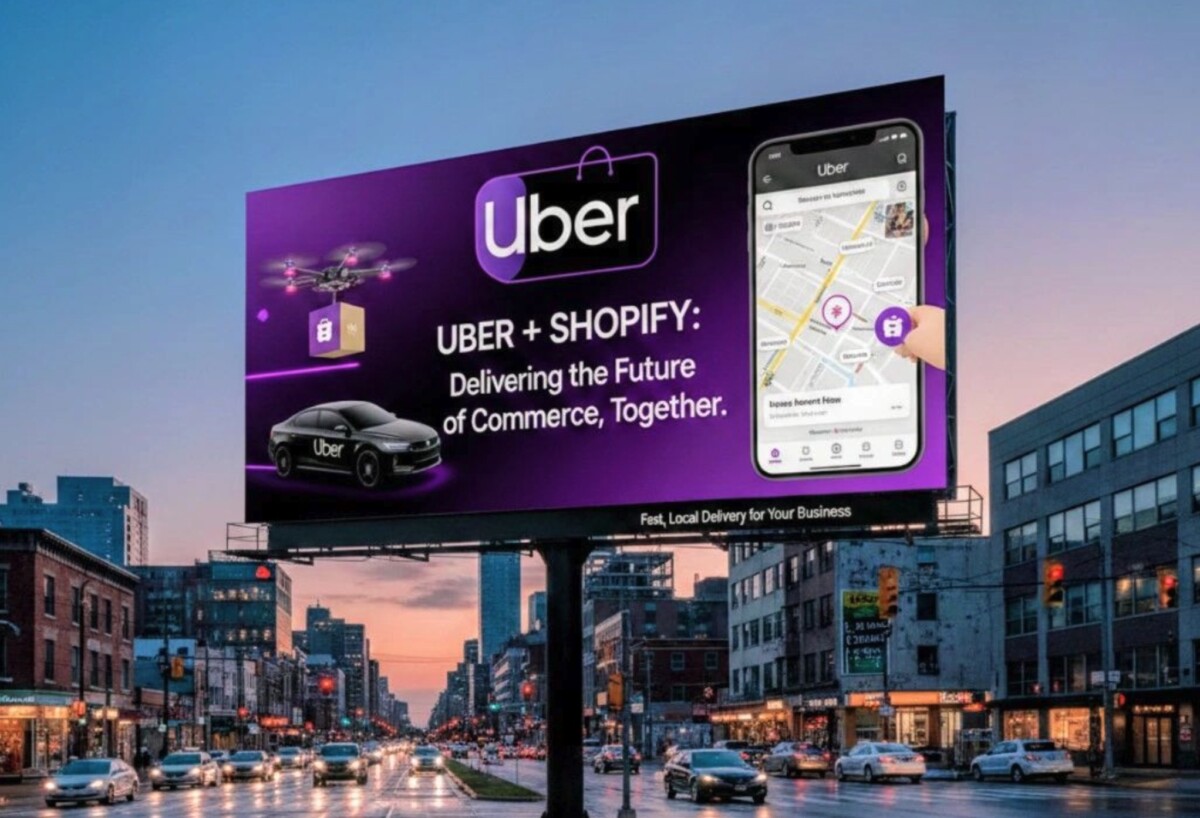
Uber Direct for Shopify Plus lets eligible merchants in the U.S., Canada, and France offer one-hour, same-day, and scheduled delivery directly in checkout and POS. You do not build your own dispatch system or hire drivers. You tap into Uber’s courier network.
At a basic level, it works like this:
The app is free to install from the Shopify App Store. Uber charges per delivery, starting from a base fee that shifts by market, distance, and speed.
Here is the key point. You get marketplace-level speed while keeping the direct connection. That fits the thesis in Discover the hidden growth lever: when you improve your owned experience, every other channel suddenly performs better.
After watching multiple Plus brands turn on Uber Direct in core cities, a clear pattern emerges. Same-day delivery options in high-intent regions typically lift conversion by 10 to 20 percent within the first 30 days, and repeat purchase in those zones climbs as customers “retrain” their habits away from marketplaces with same-day delivery.
Speed without profit is just an expensive stunt. The smart play is to shape when and how fast delivery appears.
A few practical levers:
Uber Direct gives you pricing control. You can absorb the fee, split it, or pass it through. Start simple:
This is where you tie fast delivery into your profit stack, not away from it.
Turning on Uber Direct in the backend is not enough. Customers need to see the promise and tracking tools.
Treat delivery like a core benefit, not a footnote:
One mistake I see a lot: brands quietly launch local delivery, then bury the details. They never get full value because the story is missing from the funnel.
Let’s get concrete. If you are on Shopify Plus and operate in the U.S., Canada, or France, Uber Direct is one of the fastest ways to fight Amazon on speed without rebuilding your tech stack.
In plain language, Uber Direct for Shopify:
Large retailers like Sephora and Best Buy already use Uber Direct and similar services in their mix. That is your signal that same-day is becoming standard in key categories.
For Plus merchants, the integration comes through the Shopify App Store, with a no-code setup inside your admin.
Here is a simple setup path that most teams can complete in a day:
No API builds, no six-month project. For most brands, the real work is operational, not technical: training staff and aligning inventory.
Uber Direct offers transparent pricing per delivery, with a base fee that varies by market, distance, and speed. There are no setup fees or required monthly minimums. Charges come from Uber, separate from your Shopify bill.
To keep this profitable, model a simple unit economics view:
A simple starting rule set could be:
Review the data after 30 days and adjust. You can afford to be generous in zones and segments where lift in AOV and repeat rate outweighs delivery cost.
You do not need to offer fast delivery on every SKU, in every region. Focus where speed creates a clear edge:
Shopify Plus merchants with strong urban demand or retail locations see the biggest gains.
Let’s turn this into a 90-day roadmap you can actually run.
First 2 weeks, your job is clarity, not action.
Look for 1 to 3 cities where you already have:
Those are your pilot markets. You do not need a perfect national plan before you start.
Next 30 to 45 days, run a focused test.
Train your team on delivery operations:
In the first month, track:
The goal of the pilot is not perfection. It is proof that speed moves the needle in your real numbers.
Final 30 to 45 days, scale the winners.
Then, integrate the story into your full funnel:
Amazon does not own fast delivery anymore. With the Shopify ecosystem, including Shopify Plus, local inventory, and Uber Direct for Shopify, you can match marketplace speed in the markets that matter most, without owning trucks or a massive warehouse network.
The big moves are simple:
If you take nothing else from this, take this: speed and reliable fulfillment are now growth levers, not just ops metrics. Pick one region, one location, and one offer to test in the next 30 days and let the data guide your next step.
Curated and synthesized by Steve Hutt | Updated December 2025
📋 Found these stats useful? Share this article or cite these stats in your work – we’d really appreciate it!




