Free every Thursday · 61,308 Readers
Fastlane Insider Newsletter: What's working for Shopify in the AI era?
Free every Thursday · 61,308 Readers
Fastlane Insider Newsletter: What's working for Shopify in the AI era?
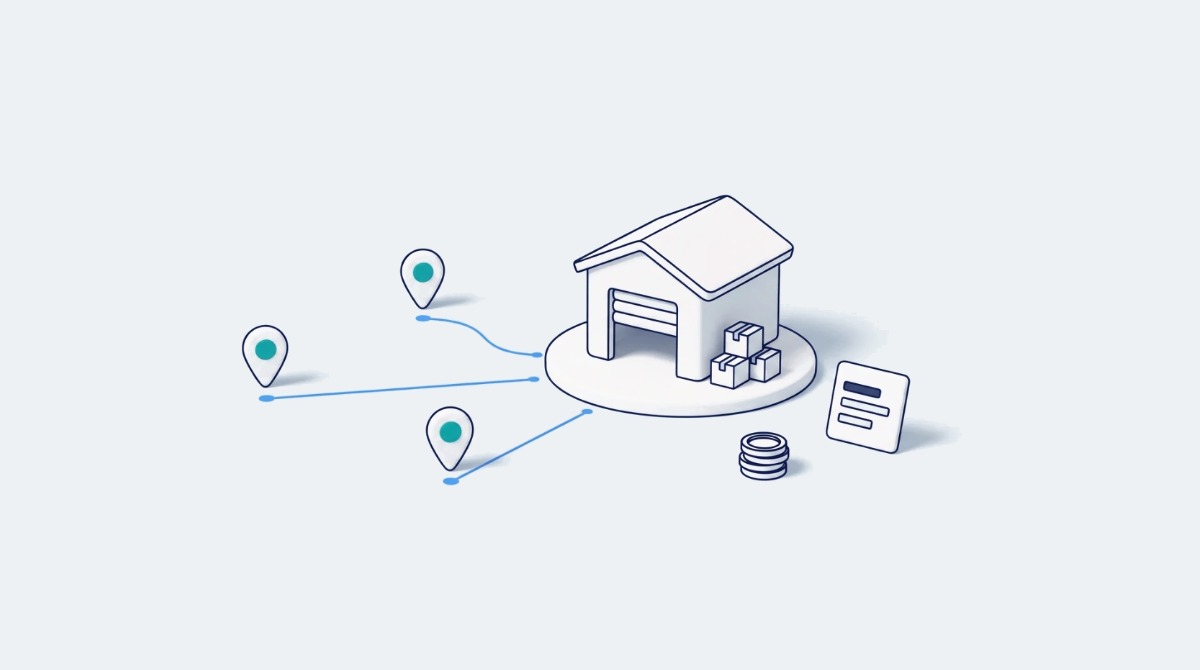
A Singapore company is a tool for a specific problem. If you cannot name the supplier contract, payout issue or delivery lane it fixes, it is overhead with a good address.
Starting an online business no longer requires a physical shop or a large team. Founders launch Shopify stores, work with overseas suppliers and sell internationally from day one. As those businesses grow, where the company is legally based becomes a real financial and operational decision. Singapore keeps coming up in that conversation because of its trade connections, established financial services and access to Southeast Asian markets. For the step by step filing process, TKEG Expat’s guide on How to Register a Company in Singapore covers the documents, resident director rules and post incorporation steps in detail.
For ecommerce founders, the appeal goes beyond a registration certificate. The useful question is whether operating through a Singapore entity would improve payment processing, supplier relationships or regional distribution for your store specifically. This guide works through each of those, then shows how to put numbers on the decision.
A Singapore company helps a Shopify seller when the business already has customers, suppliers or partners in Southeast Asia and needs a regional legal entity to contract with them. Singapore’s position in the region, its transport infrastructure and its international business connections make it a practical base for companies managing suppliers and customers across several countries.
Consider a Shopify merchant buying products from regional manufacturers and selling throughout Southeast Asia. A Singapore company gives that merchant one legal entity to sign contracts with suppliers, fulfilment companies and commercial partners in the region, rather than routing every agreement through a company on another continent. For a merchant in that position, the entity removes friction from relationships that already exist.
What registration does not do is create demand. Incorporating does not automatically reduce shipping costs or improve sales. A store whose customers are mostly in North America or Europe gains little from a Singapore address, and pays for it every year. Before anything else, look at where your customers actually are and where your products are made. If neither answer points to Southeast Asia, the decision is probably made.
Location choice works the same way in any country. Fastlane’s breakdown of how to choose the best country to incorporate an ecommerce business makes the case that the right answer depends on where customers pay from, where suppliers ship from and where the founder lives, not on a ranked list. Singapore is a strong answer when all three point toward the region, and a weak one when none do.
If you are still in the starting stage, proving the product and finding one channel that works, this decision can wait. A second company adds filings and fees before it adds revenue. If you are growing or scaling and a meaningful share of orders already ships into the region, the rest of this guide is worth working through.
A foreign founder can own 100% of a Singapore private limited company, but the company needs at least one locally resident director, a registered Singapore office address, and a company secretary appointed within six months of incorporation. Those requirements are set by the Accounting and Corporate Regulatory Authority (ACRA), which handles company registration.
The resident director requirement is the one that most often surprises overseas founders. A director who is ordinarily resident in Singapore is usually a citizen, a permanent resident or an eligible work pass holder. Founders who do not live in Singapore typically appoint a nominee director through a service provider, and that service carries an annual fee. Foreign applicants also cannot file the incorporation themselves: they use a registered corporate service provider to submit the application.
The government fees are modest. ACRA’s published fee schedule lists S$15 for a company name application and S$300 to register the company, a total of S$315 as of November 2026. Most straightforward applications are processed quickly once the fee is paid, while applications referred to another government agency take longer.
The S$315 is the smallest number in the decision. It excludes the professional services a foreign founder needs to stay compliant: the corporate service provider’s filing fee, the nominee director if you need one, the registered office address, the company secretary, bookkeeping, tax filings and the annual return. Those are recurring costs, and they continue whether the company sells anything or not. Treat the government fee as the entry ticket and the service costs as the subscription.
A Singapore entity can make a store eligible for Shopify Payments in Singapore, but registration alone does not guarantee approval, and the payout account has to meet Shopify’s local requirements. Payment processing affects both customer experience and operating costs, so it is often the most concrete benefit a Singapore company offers.
According to Shopify’s help centre page for Shopify Payments in Singapore, the payout bank account must be a full checking account with a bank in Singapore, held in Singapore dollars, and eligible for recurring transfers from Shopify. Merchants also have to pass identity and business verification. A company that exists on paper but cannot open a suitable local business account, or whose directors cannot complete verification, does not yet have the payments benefit it incorporated for.
Before incorporating for payments reasons, compare four things for your current setup and the proposed one: transaction fees, payout timing, currency conversion costs, and which payment providers will accept the business. Currency conversion deserves the most attention, because it is easy to miss. Fastlane’s guide to eliminating hidden currency costs in cross border ecommerce shows where conversion losses usually hide in a store’s payment flow.
The principle is simple. A new company structure should solve a payment problem you already have, such as payouts that arrive slowly, a provider that will not support your current entity, or conversion fees on a growing share of regional revenue. If your existing checkout and payouts work well for the customers you serve, a new entity adds complexity without a payments return.
Fulfilling from Singapore can lower delivery costs and times for orders going to Southeast Asian customers, but only when order volume, shipping routes and product characteristics support regional inventory. Shipping and inventory management get more complicated as stores expand internationally, and Singapore’s logistics infrastructure makes it worth evaluating as a fulfilment base for the region.
Instead of shipping every regional order from a distant warehouse, some merchants benefit from holding stock closer to their customers. Whether you are one of them depends on the details. Before committing, compare four cost lines: warehouse storage and inventory handling charges, shipping costs to your main customer destinations, order processing and packaging fees, and customs requirements plus the cost of returns. A product that is heavy, fragile or frequently returned changes the math quickly.
Request quotations from several logistics providers using realistic monthly order volumes, not the volume you hope to reach. Then compare total landed cost per order rather than assuming regional warehousing will be cheaper. Storage fees and minimum monthly charges can outweigh the shipping savings when regional volume is low.
If you have not worked with an outside warehouse before, Fastlane’s explainer on what a 3PL is and when ecommerce brands hand over fulfilment covers how these arrangements are priced and what to ask before you sign. Note that a regional warehouse and a Singapore company are separate decisions. Some providers will hold inventory for a foreign company, so test whether you need the entity for the warehouse, or only the warehouse.
A Singapore company pays corporate income tax at a flat 17% of chargeable income, and must register for 9% GST once taxable turnover passes S$1 million, though exemptions and international rules change what a given business owes. These rules are set by the Inland Revenue Authority of Singapore (IRAS).
The IRAS corporate income tax page confirms the 17% rate and describes two exemption schemes: one for qualifying new start up companies in their first three years of assessment, and a partial tax exemption for other companies. Both reduce the tax on the first portion of chargeable income, but eligibility depends on specific conditions, so confirm with an accountant rather than assuming your company qualifies.
On GST, IRAS guidance on GST registration sets compulsory registration when taxable turnover exceeds S$1 million under either the retrospective view (the past calendar year) or the prospective view (expected turnover over the next 12 months). The GST rate has been 9% since 1 January 2024.
Cross border sellers should know one more rule. Under the overseas vendor registration regime described by IRAS, a business outside Singapore with global turnover above S$1 million that sells more than S$100,000 a year of low value goods or remote services to Singapore consumers must register for GST. Since 1 January 2023, that covers imported goods valued at S$400 or less. In other words, a large foreign store selling into Singapore may face GST obligations whether or not it incorporates there.
Incorporating in Singapore also does not remove tax responsibilities elsewhere. Countries where you hold inventory, employ staff or run operations can still tax the business. Get advice that covers both countries before you move revenue into a new entity.
Registration pays off when the measurable savings and new revenue it enables over 12 months are larger than the full cost of running the company, with a margin left for error. Company formation is a business investment, not an automatic step toward international growth, so it deserves the same forecast you would build for a new hire or a new channel.
Start with the cost side. Alongside government fees, list every recurring service the company needs and get a written quote for each.
Then the benefit side. Review current regional sales, average order value, gross profit and customer acquisition cost, and estimate how the Singapore structure would change each one. Here is how that plays out for the merchant described earlier, the store buying from regional manufacturers and selling across Southeast Asia.
Illustrative example, with assumed figures rather than quotes: suppose the store’s annual company running costs come to S$8,000 once the nominee director, secretary, address and accounting are added, and that regional warehousing would save S$3 per order on delivery. At 600 regional orders a month, the saving is S$21,600 a year, well above the S$8,000 cost, before counting any lift in conversion from faster delivery. At 80 regional orders a month, the same saving is S$2,880 a year, and the company loses money. The decision turns on regional order volume, not on Singapore.
That second case is common, and the right call there is to wait. If regional demand is limited, testing customer interest through the existing company is usually more economical: sell into the region from where you are, watch conversion and delivery feedback, and revisit the forecast when the regional order count justifies it. Fastlane’s playbook on proving international demand before you ship inventory abroad lays out how to run that test without committing to infrastructure first.
Singapore is the right base for a Shopify store whose customers, suppliers or payment needs are already concentrated in Southeast Asia, and the wrong one for a store hoping the address will create that demand. Its trade connections, company registration framework and financial infrastructure support businesses with genuine regional requirements, but successful expansion depends on more than choosing a company location.
If you are starting out, keep one company and focus on proving the product. If you are growing, with steady monthly revenue and some regional orders, run the forecast above and expect it to say wait unless a supplier or payments problem is forcing the question. If you are scaling and a real share of revenue already comes from the region, the forecast is likely to justify a closer look, and the main work becomes choosing reliable service providers and getting cross border tax advice. If you are leading a large brand, a Singapore entity is usually part of a wider regional structure that your finance team and advisors will design.
Across every stage, the same four inputs decide it: customer demand in the region, payment needs, fulfilment costs and ongoing compliance costs. For the wider picture of entering new markets, Fastlane’s international ecommerce strategy guide covers market selection, localization and the order to tackle them in. Evaluate those inputs honestly, and the Singapore question usually answers itself.
Yes, a foreigner can register and fully own a Singapore private limited company without living there, but the company still needs at least one director who is ordinarily resident in Singapore. Founders who live abroad usually meet that rule by appointing a nominee director through a corporate service provider, which carries an annual fee. Foreign applicants also file through a registered corporate service provider rather than submitting the application themselves. The company needs a registered Singapore office address and must appoint a company secretary within six months of incorporation, so budget for those services from the start.
ACRA charges S$315 in government fees to register a company in Singapore: S$15 for the name application and S$300 for incorporation. That figure is only the starting point for a foreign founder. The larger costs are the recurring services the company needs to stay compliant, including a corporate service provider, a nominee director if no director lives in Singapore, a registered office address, a company secretary, bookkeeping, tax filings and annual returns. Get written quotes for each service and add them to a 12 month forecast before you decide, because those costs continue whether or not the company makes sales.
To use Shopify Payments in Singapore, you need a business that can pass Shopify’s identity and business verification and a payout account that meets its local rules. Shopify requires a full checking account with a bank in Singapore, held in Singapore dollars and eligible for recurring transfers from Shopify. A Singapore company can help you meet those requirements, but registering one does not guarantee approval. Before you incorporate for payments reasons, confirm that you can open a suitable local business account and compare the fees, payout timing and currency conversion costs against your current setup.
A Singapore company must register for GST when its taxable turnover exceeds S$1 million, measured either over the past calendar year or as expected turnover over the next 12 months. The GST rate is 9%. Separately, overseas businesses with global turnover above S$1 million that sell more than S$100,000 a year of low value goods or remote services to Singapore consumers must register under the overseas vendor regime, even without a Singapore company. Check both rules with an accountant, and remember that tax obligations in other countries where you hold stock or staff still apply.
Fulfilling Southeast Asian orders from a Singapore warehouse is cheaper only when your regional order volume is high enough for the delivery savings to outweigh storage, handling and minimum monthly fees. Compare warehouse charges, shipping costs to your main destinations, order processing and packaging fees, and customs and returns costs. Request quotes from several logistics providers using realistic monthly volumes, then compare total cost per order. A regional warehouse and a Singapore company are separate decisions, so check whether a provider will hold stock for your existing company before you incorporate just to use a warehouse.