


Social media platforms’ algorithms are constantly evolving, and as a result, organic reach is increasingly becoming difficult to achieve. Platforms like Facebook and Instagram have introduced algorithms that prioritize content based on factors (like relevancy, engagement, and user preferences). It’s for a good reason: These algorithmic changes make these social media platforms’ advertising options more appealing.
The reality of the situation is that these changes come with challenges for brands. As of July 2023, the average engagement rate of an organic Facebook post ranges from 2.58% down to just 1.52% (meaning organic reach is extremely limited). In a video posted on December 28, 2022, Instagram’s CEO Adam Mosseri announced the platform’s 2023 goals, stating his top priority is to “help people discover things they love,” adding: “Instagram should be a place where you discover amazing things every time you use it.”
What does this mean for advertisers? How can your brand navigate the complexities of social media algorithms and continue to be noticed by relevant audiences? Let’s get into a few essential strategies, including community management, engaging influencers, and utilizing storytelling to overcome the decline of organic reach.
Social media organic reach is the number of people who see a post on social media platforms without the need for paid promotion. It’s the result of users encountering the content either through a direct search or through the platform’s algorithm that determines what content to display in a user’s feed.
Organic reach allows brands to reach a wider audience without advertising spend. It helps build brand awareness, increase engagement, and establish thought leadership with the target audience. Additionally, organic reach can lead to an increase in followers, likes, comments, and shares. Which can in turn generate more visibility and reach on the platform.
In the early days of social media, reach was simple. If you posted something, it appeared in the feeds of people who followed you. But as the amount of social content being posted every day grew exponentially, this became impossible.
Businesses and content creators are grappling with the decline in organic reach on social platforms. But what is driving this phenomenon? A few key factors:
Social media algorithms have become more sophisticated in recent years. Platforms are regularly updating their algorithms to prioritize content that generates more engagement. This naturally makes it harder for organic posts to gain visibility.
For example, platforms like Facebook and Instagram have shifted toward prioritizing content from family, friends, and groups over public posts, making it harder for brands and creators to reach their audiences organically. The shift is also driven by platforms’ efforts to generate revenue through advertising by incentivizing businesses to invest in paid promotion.
So far, these changes are working in the platforms’ favor. Instagram rakes in an estimated $43 billion in advertising revenue, while Meta’s ad revenue totaled $113 billion total last year.
The rapid growth of social media and more users and businesses joining these platforms has increased competition for attention. Users’ social feeds have become saturated with information. As a result, it has become increasingly challenging for brands to cut through the noise, reach their target audience organically, and capture their attention.
Social media platforms have expanded their advertising capabilities and adjusted their algorithms to prioritize paid content. This has resulted in a decrease in organic reach for many brands. The increased use of ads has also led to a saturation of content, making it more challenging for organic posts to stand out.
However, it’s not all bad news. Paid advertising also presents opportunities for brands to reach wider audiences and boost overall engagement. Paid followers can be converted into organic followers through compelling content and user experiences.
As users become more selective about the content they engage with, social media platforms adjust their algorithms to prioritize highly relevant and engaging posts. As posts that fail to grab users’ attention are pushed down in the feed, achieving organic reach becomes difficult. Users also tend to prefer meaningful interactions over passive scrolling.
For example, the increasing preference for video content and ephemeral stories has altered the landscape of social media consumption. Brands must adapt to these changing user preferences to maintain organic reach.
Sign up for our exclusive bi-monthly emails where we share tips for working with influencers and improving your marketing strategy.
With algorithm changes and intense competition, brands have to understand how to prepare for and overcome the decline in social media organic reach to continue thriving on social media. Let’s look at a few effective strategies and practical tips for businesses to navigate this changing social media landscape.
A final note here: KPIs like reach, engagement rates, conversion rates, and click-through rates help measure the effectiveness of reaching a target audience without paid promotion. Using these metrics you can evaluate your brand’s online presence and optimize organic reach efforts.
One of the most frustrating aspects of social media algorithms for content creators is that they’re constantly changing. Here’s what you need to know about the most recent changes in social media algorithms so you can maximize reach and engagement.
Most social media platforms today allow you to post various forms of content, be it images, text, or videos (long and short-form). Rather than sticking to one format, diversify your feed with different types of content to keep the mix of material varied (and experiment to see which content performs best with your audience). Personal care brand Curie does this well on Instagram. Their profile spotlights a mix of videos, static images, and more.

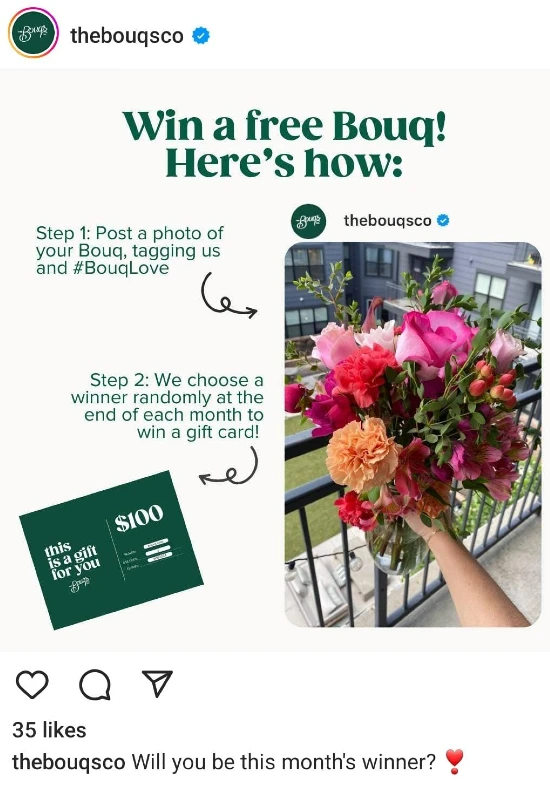
Engage your audience around a new product or service with a branded contest to create buzz, generate engagement, reach fresh audiences, and grow your follower base. The Bouqs Co., for instance, runs “Win it Wednesday” contests every week on their social media accounts, giving participants a chance to win a free bouquet of flowers.
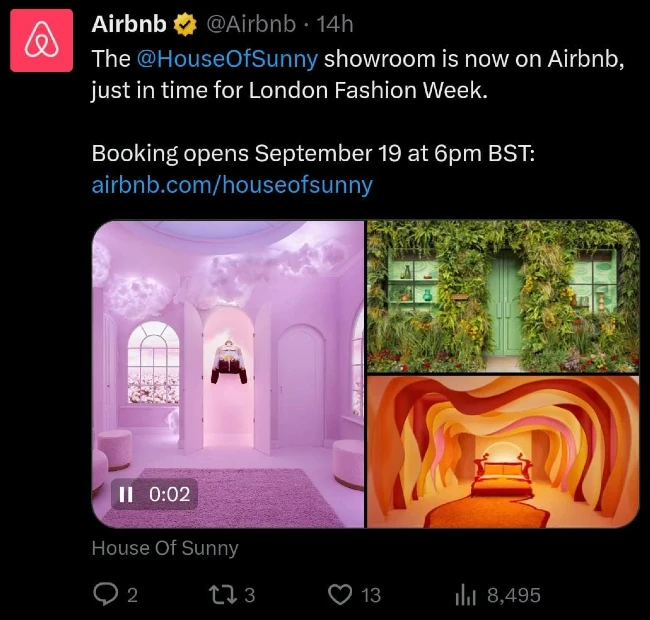
The number of views a post has is no longer enough. When your audience connects emotionally with your content, they are more likely to engage with it by liking, commenting, and sharing, thereby increasing your brand’s reach. Airbnb’s social media content is focused on inspiring and empowering travelers, and as such, the brand shares stunning photos of listings and locations around the world, as well as insights from hosts and guests about their unique experiences.
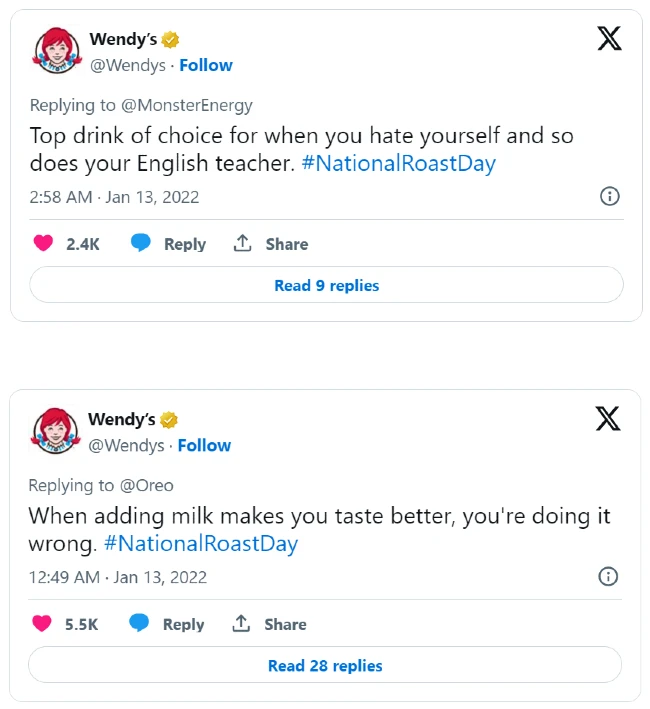
Most algorithms favor original content over re-shared material. As a result, high-quality content will rank higher, so the more creative you are, the better your post will likely perform. Fast food chain Wendy’s is known for its hilarious and snarky Twitter feed, which often “roasts” competitors and engages in humorous conversations with followers. This original content ranks well as it sparks re-shares and engagement on the platform.
Whether you’re looking for reach, engagement, or follower growth, the key is to post consistently. Most businesses post 1.7 posts to their feed per day on average. If that seems too much, just showing up consistently is enough to keep the ball rolling. At the same time, keep in mind that followers may get frustrated with too many posts. “Too many updates” is one of the most common reasons people ‘unlike’ a Facebook Page. To find your ideal balance, experiment.
It’s no secret that most social platforms operate on a pay-to-play model for brands. Yet, organic social media marketing is far from dead, and marketers need to adapt their strategies to the changing landscape. While organic social media reach may have declined, achieving meaningful reach through strategic approaches is still possible.
It’s worth mentioning that each social media platform has its own algorithms and rules that determine how content is distributed to users. Staying informed about platform updates and best practices can help maximize organic reach on specific platforms. Brands that are truly creative and compelling – and understand how to play the game – can continue to win in this new social landscape.
Ready to defend your social media organic reach? Afluencer is a leading influencer marketing platform that offers several features for both creators and brands. Get in-depth visibility into your brand performance and take advantage of profitable opportunities to maximize your brand’s progress on social media. Try Afluencer today and see the





