


Dotdigital blog
Learn what the new UK charitable soft opt-in law means for your marketing. With Matthew Holman, Partner at Cripps law firm.

If you work in charity marketing, you’ll know that keeping up with data regulations can feel like navigating a maze. Matthew Holman, Partner at Cripps law firm, recently joined us to take an in-depth look at the new UK charitable soft opt-in law.
Matt is a specialist solicitor who deals exclusively with the law of technology, data protection, and AI. From database management to email compliance, here’s a marketer-to-marketer guide to staying compliant without losing your supporter engagement.
Watch the on-demand video here, or on the Dotdigital Academy if you’re a customer, and read on for a quick summary of the key findings.
A very important thing to note is that this law came into force on the 5th of February 2026. It is very new, and we don’t have guidance on how it’s enforced at the moment.
The Information Commissioner’s Office, which is the UK state-appointed regulator of data protection, published draft guidance in consultation form only last year, and Cripps was one of a few participating law firms that contributed to that consultation by explaining to the ICO how we think this law should be interpreted.
The ICO has not finalized that guidance, and it hasn’t been published yet, which means we’re still waiting for the regulator to tell us how it thinks the rules should actually apply. But we do have the draft guidance, which is what we’re drawing on here. The information in this blog and the on-demand video is to be taken as a guide and does not constitute legal advice.
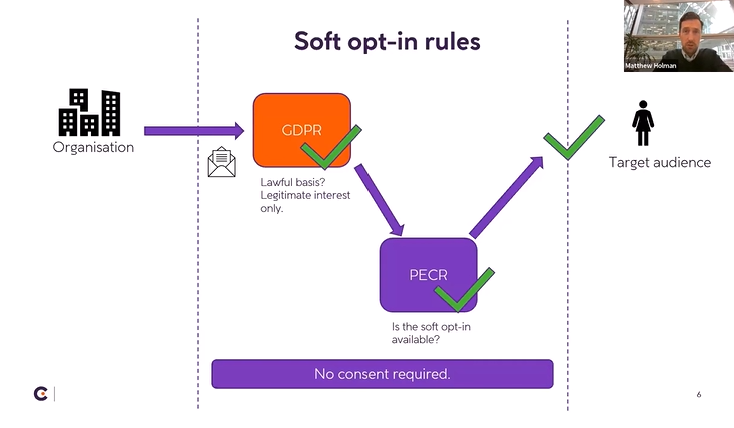
The charitable soft opt-in law allows charities to contact individuals who have shown interest in their charitable activities or offered support, without needing explicit consent, but there are rules to consider.
There is a key difference between charity communications and commercial communications.
Commercial communications involve selling products or services, whereas charitable communications focus on fundraising and donations. Mixing the two, like including product launches in a charity newsletter, can violate soft opt-in rules. Course offerings or services typically fall under commercial activities if offered through separate trading entities.
For marketers, this separation is about clarity and trust, so that supporters know exactly what they’re opting into.
When you collect the contact details for soft opt-in, you have to have one of two things. You have to either make sure that you’re collecting the details where the recipient has expressed either:
Compliance is all about smart and careful data management as well as meeting the legal requirements.
For marketers, this means designing your supporter journey and campaigns with compliance baked in, not as an afterthought.
Soft opt-in is a subtle but powerful tool for charitable campaigns.
This is a reminder that soft opt-in doesn’t mean “ignore the rules,” it means being thoughtful about how you engage supporters while respecting their preferences.
Email remains a critical channel for charity marketers. Matt outlines the key points to remember:
Matt also flagged upcoming ICO guidance, expected later this summer (2026), which will give further clarity on charitable soft opt-in compliance.
The new charitable soft opt-in law is a chance to rethink how you engage supporters responsibly. By keeping databases clean, communications clear, and consent transparent, charities can continue to fundraise effectively while staying fully compliant.
For charity marketers, the takeaway is that when you plan ahead, segment thoughtfully, and respect your supporters’ preferences, your communications will stay on the right side of the law.
Check out the full on-demand webinar to get the full rundown and comprehensive Q&A session with Matt. If you’re a Dotdigital customer, catch up on the academy here, if you’re not a customer, you can check it out here.





