

The DTC supplement categories gaining the most attention in 2026 combine a clear use case with a repeatable daily routine: organ formulas, colostrum, creatine, hydration, greens, protein and collagen, gut health, and goal-specific products. Sustainable growth depends on transparent formulations, responsible claims, and customer education.
The next winning supplement brand will not simply own a trending ingredient. It will make the ingredient, dose, sourcing, evidence, and daily-use fit easier for a customer to understand than every alternative on the page.
The direct-to-consumer wellness market has moved far beyond basic multivitamins and protein powders.
In 2026, consumers are increasingly looking for supplements that fit specific routines and priorities, from whole-food ingredients and hydration to sports nutrition, gut health, and more specialized formulations.
That shift is changing how supplement brands compete online. Consumers can compare ingredient lists, sourcing standards, testing practices, serving sizes, formats, and prices before ever seeing a product on a retail shelf.
For DTC brands, differentiation increasingly depends on having a clear product story and giving customers enough information to understand exactly what they are buying.
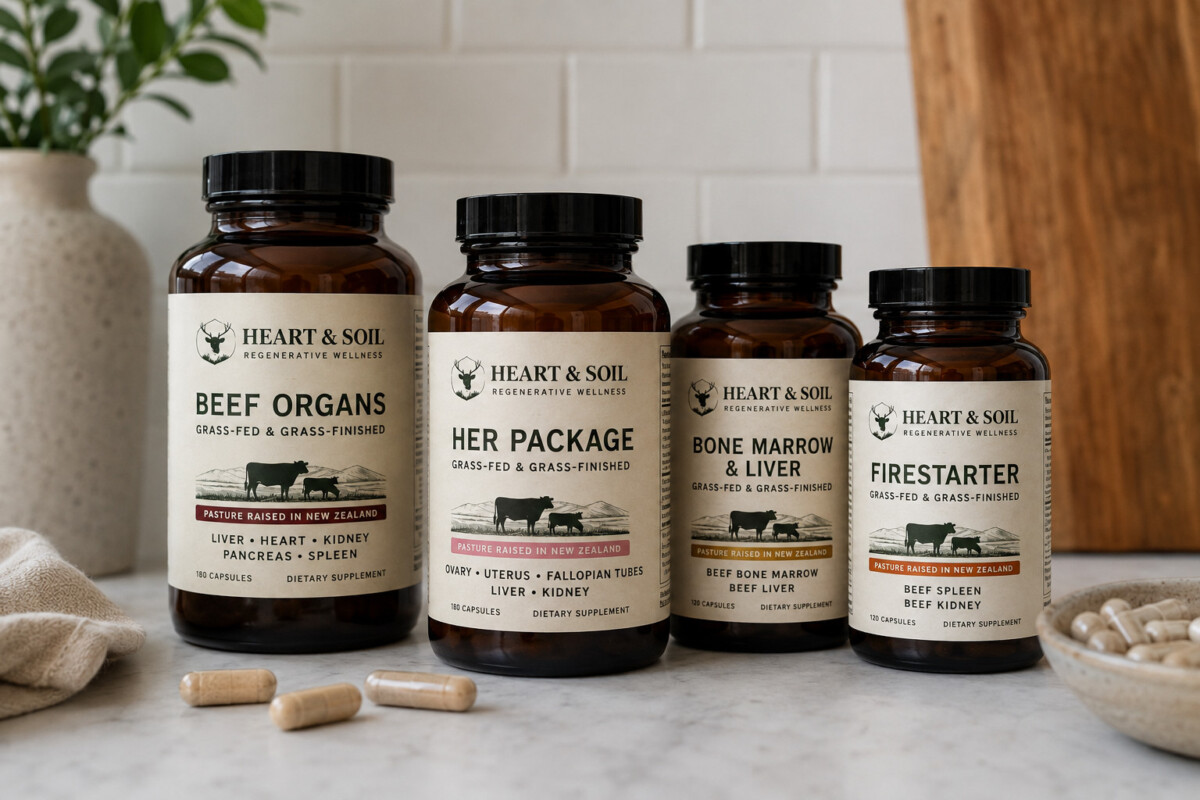
Brands such as Heart & Soil illustrate this shift particularly well. Rather than competing primarily in conventional vitamins, Heart & Soil has built a product line around freeze-dried whole-organ ingredients, grass-fed and grass-finished sourcing, and formulas designed for different audiences and nutritional approaches.
But organ-based nutrition is only one part of a much larger shift.
From organ supplements and colostrum to creatine, hydration, and gut health, here are eight supplement categories shaping the DTC wellness market in 2026.
Organ-based supplements are bringing foods such as liver, heart, kidney, spleen, pancreas, and bone marrow into a format designed for modern wellness routines.
These products typically use dried or freeze-dried animal organs that are powdered and encapsulated. Their main practical appeal is convenience: consumers can incorporate organ-derived ingredients without regularly sourcing, preparing, and eating organ meat.
Heart & Soil is one of the most recognizable brands operating in this category.
Its flagship Beef Organs supplement contains five bovine organs: liver, heart, pancreas, spleen, and kidney. Heart & Soil states that the ingredients come from grass-fed and grass-finished cattle and are freeze-dried rather than being replaced with a synthetic nutrient premix.
The company has also expanded beyond a single general organ formula.
Her Package, for example, contains grass-fed ovary, uterus, fallopian tubes, liver, and kidney. Other products in the Heart & Soil range use different combinations of organs and animal-derived ingredients.
That broader catalog illustrates an important development within the category. Organ supplementation is moving beyond simple desiccated liver toward multi-organ and more specialized formulations.
Quality information has also become part of the product proposition. Heart & Soil states that its products undergo independent third-party testing, including testing for pesticides, heavy metals, and microbes.
The category still requires careful communication. Organ meats naturally contain a variety of nutrients, but the nutritional composition of the underlying food should not be treated as proof that an encapsulated organ formula will produce a particular health outcome.
Why this category matters for DTC: Organ supplements combine an unusual product story with ingredients that many consumers find inconvenient to purchase or prepare as food. That creates room for brands to differentiate through sourcing, formulation, processing, testing, and education.
Colostrum has become another highly visible category in online wellness.
Bovine colostrum is the first milk produced by cows after giving birth. It contains proteins, immunoglobulins, growth factors, and other naturally occurring components.
Colostrum itself is not new as a supplement. What has changed is the way it is packaged, positioned, and introduced to mainstream wellness consumers.
Modern products are available in powders, capsules, sticks, and other convenient formats.
That makes colostrum particularly interesting from a DTC perspective.
Because many consumers are initially unfamiliar with the ingredient, brands have an opportunity to build educational content around what colostrum is, where it comes from, how it is processed, and how a particular product is formulated.
The category also fits the broader consumer interest in recognizable and naturally derived ingredients.
For online brands, however, education needs to be accompanied by responsible claims. The presence of naturally occurring compounds in colostrum does not automatically validate every health benefit associated with a finished supplement.
Why this category matters for DTC: Colostrum shows how ecommerce brands can take a relatively specialized ingredient and build a recognizable consumer category around education, sourcing, convenient formats, and a distinctive product story.
Creatine is one of the clearest examples of an established supplement finding a much broader audience.
Historically, creatine was associated primarily with bodybuilding, strength training, and sports nutrition.
That positioning is changing.
Creatine is increasingly appearing in conversations around active aging, women’s wellness, and general fitness in addition to its established role in sports nutrition.
Creatine monohydrate remains the most established and extensively studied form, particularly for improving performance during repeated bouts of high-intensity exercise when combined with appropriate training.
From an ecommerce perspective, the category demonstrates that brands do not necessarily need a new ingredient to reach a new market.
Instead, they can rethink format, audience, education, and positioning.
Consumers can now find creatine in traditional powders as well as flavored mixes, creatine gummies, and combination products. Creatine gummies can be especially appealing to consumers who prefer a portable, pre-portioned format over measuring and mixing powder, although shoppers should still compare the creatine dose per serving, added sugar or sweeteners, price per serving, and third-party testing.
The challenge is differentiation.
Because creatine monohydrate is widely available, brands need other reasons for consumers to choose their product. Those can include testing, formulation simplicity, flavor, format, packaging, price, and ease of use.
Why this category matters for DTC: Creatine shows how an established ingredient can reach new consumer groups when brands rethink who the product is for and how it fits into everyday wellness routines.
Hydration has become a wellness category in its own right.
Electrolyte supplements generally provide minerals such as sodium, potassium, and magnesium, which play important roles in fluid balance and normal physiological function.
While electrolyte products have long been associated with endurance sports and strenuous exercise, the category now reaches a much broader audience.
That expansion has been particularly visible online.
Powder sticks and individual sachets are portable, lightweight, easy to demonstrate in social content, and naturally suited to frequent consumption.
They also give brands considerable room for differentiation.
Electrolyte products can vary significantly in sodium levels, sugar content, sweeteners, flavors, mineral combinations, and serving formats.
The best formulation therefore depends on the consumer and use case. Someone losing significant amounts of sodium through prolonged exercise has different requirements from someone simply looking for a flavored everyday drink.
That makes clear labeling especially important.
Why this category matters for DTC: Electrolytes combine frequent consumption, portable formats, easy product demonstrations, and strong repeat-purchase potential.
Greens powders have become one of the most recognizable formats in DTC wellness.
These products typically combine powdered vegetables, fruits, algae, grasses, herbs, or other plant-derived ingredients into a single serving.
Their main appeal is convenience.
Rather than purchasing numerous individual powders or ingredients, consumers can mix one product into water, smoothies, or another beverage.
That simplicity has made greens products particularly compatible with subscription-based ecommerce.
The category has also become increasingly diverse.
Some formulas focus primarily on plant ingredients, while others add vitamins, minerals, probiotics, digestive enzymes, adaptogens, or other components.
A longer ingredient list, however, does not necessarily mean a better product.
Consumers should still consider the quantities of ingredients provided, serving size, testing practices, added ingredients, and whether the formula duplicates supplements they already use.
Greens powders should also complement rather than replace a varied diet containing fruits, vegetables, and other whole foods.
Why this category matters for DTC: Greens powders transform a complex collection of ingredients into a simple daily ritual, making the category particularly compatible with subscriptions and repeat purchases.
Protein is one of the most established supplement categories, but the market continues to evolve.
Traditional whey and plant-based protein powders now compete alongside clear protein drinks, ready-to-drink shakes, protein snacks, and collagen peptides.
Collagen has been particularly important in expanding protein supplementation beyond traditional gym audiences.
Collagen is a structural protein naturally found in connective tissues. Hydrolyzed collagen peptides can be incorporated into powders and other supplement formats that are relatively easy to add to food and beverages.
That versatility has helped create overlap between fitness, beauty, active-aging, and general wellness markets.
For DTC businesses, both collagen and conventional protein products benefit from the possibility of routine use.
Consumers who regularly use these products create predictable replenishment cycles, making bundles and subscriptions logical ecommerce options.
Competition is intense, however.
Brands increasingly differentiate through protein source, amount per serving, amino acid profile, flavor, texture, dietary compatibility, ingredient simplicity, testing, and convenience.
Why this category matters for DTC: Protein and collagen combine broad consumer awareness with repeat-use potential and multiple opportunities for format and audience differentiation.
Gut health remains one of the most established areas of consumer interest within supplements.
Probiotic products contain live microorganisms intended to provide a health benefit when administered in adequate amounts. However, probiotic products are not interchangeable: different strains can have different characteristics, and benefits demonstrated for one strain should not automatically be attributed to another.
The broader gut-health category now extends well beyond traditional probiotic capsules.
Consumers can encounter probiotics, prebiotics, synbiotics, fiber products, fermented ingredients, and increasingly personalized formulations.
That makes the category particularly suited to education-led ecommerce.
A product page needs to explain more than simply that a supplement is “for gut health.” Consumers may need information about strains, quantities, storage requirements, serving size, complementary ingredients, and the evidence supporting the specific formulation.
Personalization is also becoming increasingly relevant as consumers move away from generic wellness products and look for products aligned with more specific needs.
Why this category matters for DTC: Gut health combines strong consumer awareness with significant room for education, specialization, recurring use, and more personalized formulations.
One of the biggest changes in DTC supplementation is not a single ingredient.
It is a specialization.
Instead of selling one general multivitamin to everyone, many wellness brands now organize products around specific audiences, routines, or goals.
Consumers can find formulas positioned around sleep, stress, women’s wellness, men’s wellness, healthy aging, prenatal nutrition, exercise, digestion, hydration, and other needs.
Heart & Soil’s product catalog provides one example of this broader shift.
Beef Organs combine five bovine organs in a general organ-based formula, while Her Package uses ovary, uterus, fallopian tubes, liver, and kidney in a female-focused formulation.
From an ecommerce perspective, that distinction matters.
Goal-specific products give brands clearer landing-page topics, educational content opportunities, product bundles, merchandising categories, and pathways between related products.
They can also make large product catalogs easier for consumers to navigate.
However, greater specialization increases the need for responsible marketing.
A formula being designed or marketed for a particular audience does not mean that every associated health outcome has been clinically demonstrated.
Brands need to distinguish between the contents of a product, established evidence for particular nutrients or ingredients, and broader marketing claims.
Why this category matters for DTC: Specialized formulas allow supplement companies to create clearer product positioning while helping consumers navigate increasingly large wellness catalogs.
| Category | Common Formats | Primary Consumer Appeal | DTC Advantage |
| Organ-based supplements | Capsules | Whole-organ ingredients and convenience | Distinctive sourcing and product story |
| Colostrum | Powder, capsules | Specialized animal-derived ingredient | Education-led product discovery |
| Creatine | Powder, gummies | Sports performance and broader active lifestyles | Large and expanding audience |
| Electrolytes | Powder sticks, tablets | Convenient hydration | Frequent repeat purchases |
| Greens powders | Powder | Convenient plant-based supplementation | Subscription-friendly routine |
| Collagen and protein | Powder, drinks, snacks | Convenient protein intake | High-frequency consumption |
| Probiotics and gut health | Capsules, powders | Digestive and microbiome-focused products | Education and personalization |
| Goal-specific formulas | Capsules, powders, bundles | Products organized around specific audiences or goals | Segmentation and cross-selling |
The eight categories are different, but several themes connect them.
The generic supplement model is giving way to more targeted purchasing.
Consumers increasingly research products according to a specific ingredient, nutritional goal, lifestyle, or use case rather than automatically choosing a general multivitamin.
That creates opportunities for DTC brands to build more focused products and educational experiences.
Whole-food ingredients, organ products, colostrum, botanicals, and other recognizable sources fit a broader consumer preference for formulas that feel understandable.
That does not make a naturally derived ingredient automatically safer or more effective.
It does mean sourcing and ingredient explanations have become important parts of the online buying experience.
Online shoppers can compare multiple brands within minutes.
Clear ingredient quantities, sourcing information, serving sizes, testing practices, and realistic product descriptions can therefore influence purchasing decisions.
Vague formulations and unsupported claims can have the opposite effect.
Powder sticks, capsules, gummies, ready-to-drink products, and simple daily powders all reduce friction.
A supplement only works as a recurring ecommerce product if consumers are willing to continue using it, making taste, serving size, portability, and preparation increasingly relevant.
Popular ingredients are easy for competitors to replicate.
As categories become crowded, differentiation increasingly depends on factors beyond simply having the trending ingredient.
Testing, sourcing, formulation, evidence, transparency, and customer education can all become important trust signals.
More choice also means consumers need to evaluate products carefully.
Useful factors to consider include:
Consumers should be cautious when supplement marketing promises dramatic or guaranteed outcomes.
A long ingredient list is not automatically better, and a naturally derived ingredient is not automatically appropriate for every person.
People taking medications, managing health conditions, pregnant or breastfeeding, or considering supplementation for a suspected nutrient deficiency should discuss their needs with a qualified healthcare professional.
Major categories include organ-based supplements, colostrum, creatine, electrolyte and hydration products, greens powders, collagen and protein, probiotics and gut-health supplements, and goal-specific formulas.
Organ-based supplements provide ingredients such as liver, heart, kidney, spleen, and pancreas in convenient capsule formats. Brands such as Heart & Soil have also expanded the category through multi-organ and more specialized formulations.
Heart & Soil Beef Organs is a freeze-dried organ supplement containing bovine liver, heart, pancreas, spleen, and kidney sourced from grass-fed and grass-finished cattle.
Heart & Soil states that its products undergo independent third-party testing. The company also provides certificates of analysis and says its organ products and capsules are tested for pesticides, heavy metals, and microbes.
Creatine remains strongly associated with sports performance, but its consumer audience has broadened. In 2026, it is increasingly being discussed and marketed in areas including active aging and women’s wellness as well as traditional sports nutrition.
Electrolyte products fit well into ecommerce because they are often consumed frequently and can be sold in convenient formats such as powder sticks and sachets. Formulas can also be differentiated through mineral content, sugar, flavors, and intended use.
Gut health remains a major area of consumer interest. The category includes probiotics as well as prebiotics, fiber, synbiotics, and other specialized formulations, giving DTC brands substantial room for education and product differentiation.
Goal-specific supplements are formulated and marketed around a particular audience, routine, ingredient strategy, or wellness objective rather than trying to provide one general formula for everyone.
The DTC wellness market in 2026 is becoming increasingly specialized.
Consumers are no longer choosing only between a multivitamin and a protein powder. They can shop for organ-based formulas, colostrum, creatine, hydration sticks, greens powders, collagen, probiotics, and products built around increasingly specific audiences and routines.
For ecommerce brands, that creates both opportunity and competition.
A distinctive ingredient may generate initial interest, but long-term differentiation increasingly depends on clear formulations, responsible claims, transparent sourcing, quality controls, useful education, and products that fit naturally into consumers’ lives.
Heart & Soil illustrates that evolution within organ-based supplementation. By turning whole organs such as liver, heart, pancreas, spleen, and kidney into freeze-dried capsule formulas, the company has adapted a traditional food category to a modern DTC product model.
Across the broader supplement market, the strongest ecommerce proposition is increasingly straightforward: make it easy for consumers to understand what is in the product, why it is there, and how it fits into their routine.




