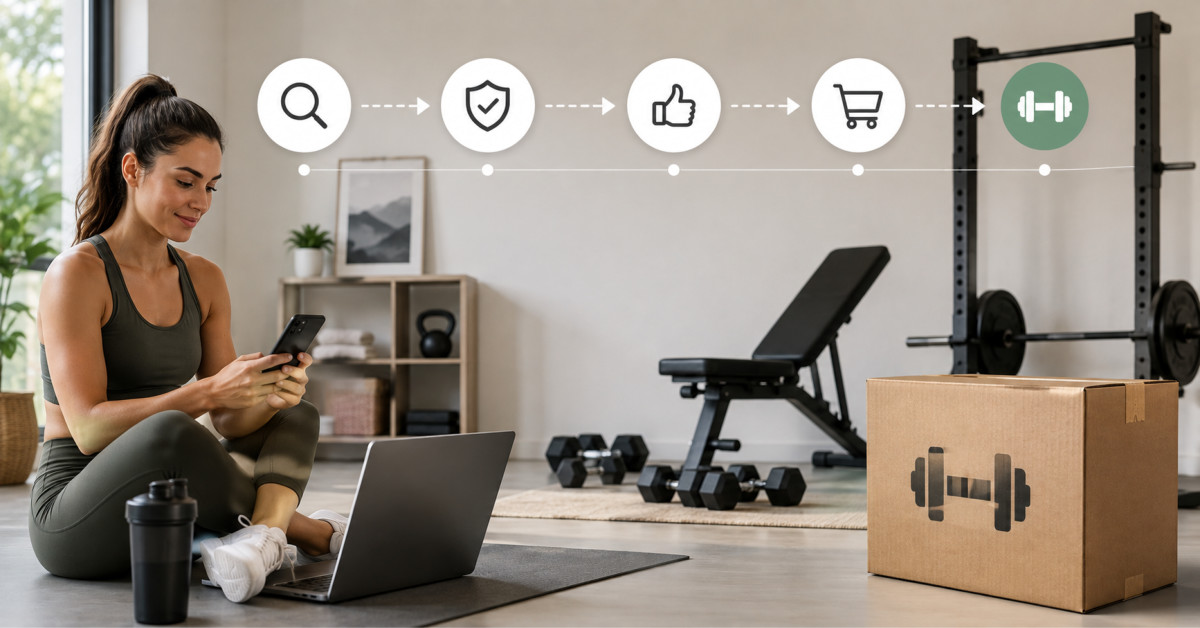
Home gym brands win high-consideration customers by becoming useful during research, reducing risk at evaluation, and supporting buyers after delivery. The sale is rarely decided at checkout; it is shaped by whether shoppers can understand fit, space, value, setup, and long-term ownership before they buy.
For a high-ticket home gym purchase, the real competitor is rarely another brand alone. It is the buyer’s fear of choosing equipment that will not fit, will not last, or will become an expensive unused object in the garage.
Let’s be honest, nobody just wakes up and randomly decides to buy a home gym. Most folks mull it over for weeks—sometimes months—before they even get close to hitting “buy.”
If you want to win these customers, you need to show up long before they’re ready to make a purchase. Fitness brands pour so much energy into that final moment—the checkout, the sale—that they forget the groundwork is laid way earlier. Trust isn’t built at the register. By the time someone’s comparing price tags, chances are, they’ve already got a favorite brand in mind.
This article breaks down how the modern buyer journey works for home gym equipment. Where do people start looking for info? What actually makes them trust one brand over another? How do you show up at each step, not just the last one? If you’re building a marketing plan, you’ll want to meet people where they really are, not just where you wish they’d be.
Buying a home gym isn’t a snap decision. People drift through research, self-assessment, and budgeting before they even think about checkout.
You can spot buyers early by watching what they search for and read. Most people start with broad questions like “best home gym for small spaces” or “squat rack vs. power rack.” At this point, they’re just poking around, not ready to buy.
They’ll compare brands, scan reviews, and check out articles that break down equipment types.
Keep an eye on your site analytics and search data. Patterns to watch for:
These are people gathering facts. This is your moment to be helpful—not salesy.
Here’s the big question for every home gym buyer: how much space do I actually have? That answer shapes almost every other decision.
People measure their rooms, garages, or basements before they even peek at actual products. Ceiling height, floor type, walls—little details can make or break what fits (and what’s safe).
And it’s not just about space. Household needs matter, too. A solo lifter has different priorities than a whole family sharing equipment.
Common things buyers weigh:
| Factor | Why It Matters |
|---|---|
| Room dimensions | Determines equipment size limits |
| Number of users | Affects equipment durability needs |
| Noise level | Impacts equipment type (e.g., rubber vs. metal plates) |
| Storage needs | Influences foldable or compact designs |
Get specific about these details early on, so buyers can actually picture your product in their space—not just in some generic showroom.
Price is usually the last big hurdle. People want to know if the cost lines up with how much use they’ll really get.
Lots of buyers weigh short-term savings against long-term value. A bargain machine that breaks in a year might end up costing more than a solid one you buy once.
Financing matters, too. Monthly payments can make pricier equipment feel doable, even for cautious shoppers.
Be upfront about costs. Lay it all out:
Clear info here builds trust and helps people feel good about their choice.
Most home gym buyers are in research mode for ages before they buy. You’ve got to be there early, offering real value and proof—then make it easy when they’re finally ready.
What your buyer needs changes as they go. Someone just starting out wants basics—another person wants brand comparisons or nitty-gritty specs.
Match your content to their stage:
Each piece should answer one question. No need to pitch every time.
Honestly, your main job is just to be useful before you ask for the sale. Help someone truly understand squat racks or space requirements, and you’ll be the first brand they think of when it’s time to buy.
Home gym equipment isn’t cheap and it takes up real room. People worry about wasting both, so they hunt for proof—other folks who bought and are happy.
Show that proof in a bunch of ways:
| Proof Type | Best Use |
|---|---|
| Video reviews | Product pages, social media |
| Before/after photos | Email campaigns |
| Star ratings | Product listings |
| Expert endorsements | Landing pages |
| User-generated content | Social feeds |
Real people using your gear in actual home setups—tiny spaces, garage gyms, apartments—matter way more than glossy ads. Show variety so buyers can see themselves in the story. That’s what really lowers the risk before they dive in.
Your online content and your sales team really ought to be on the same page. If someone’s been reading about your adjustable dumbbells, your sales rep should already have a sense of what’s on their mind—or at least, what they might be curious about.
It helps to keep tabs on which content each lead checked out before they reached out. That way, your team isn’t going in blind; they know where the buyer stands and can anticipate the right objections or questions.
After a sale, don’t just disappear. Send over setup guides, a few workout ideas, maybe even some quick maintenance tips tailored to what they bought. It’s a simple way to turn a one-time buyer into a loyal fan—and who knows, maybe even get a few referrals down the line.
Home gym buyers often take weeks or months to decide because they need to resolve space, budget, safety, household, delivery, and long-term-use questions before committing to expensive equipment. The timeline varies by product and buyer readiness. Someone replacing a broken treadmill may move quickly, while a first-time buyer planning a full garage gym will usually research equipment types, room dimensions, financing, and reviews across multiple sessions. Brands should support this longer cycle with useful guides, comparison content, email education, clear product details, and visible proof from customers with similar setups.
A home gym equipment product page should include dimensions, usable training clearance, ceiling-height guidance, product weight, assembly requirements, floor considerations, compatibility details, warranty coverage, shipping expectations, financing information, reviews, and real customer setup photos. The page must explain what the product does in practical terms, not only list technical specifications. Buyers need to know whether the equipment fits their space, supports their training goals, can be installed safely, and will remain useful as their routine develops. Clear answers reduce purchase anxiety and prevent avoidable returns.
Fitness brands can sell expensive equipment with content by answering the questions buyers ask before they trust any product page. Publish space-planning guides, equipment comparisons, budget breakdowns, setup videos, training examples, maintenance resources, and customer stories that show how products work in real homes. Match each asset to a decision stage: broad educational content for early research, comparison tools for evaluation, and detailed product, warranty, financing, and delivery information for purchase readiness. Useful content earns trust before price comparisons begin, which gives the brand a stronger role in the final decision.
Financing options help home gym equipment brands when they present monthly payments and total ownership costs clearly, allowing qualified buyers to evaluate an expensive purchase without uncertainty. Financing does not replace product value, trust, or transparent pricing. A buyer still needs to understand shipping, installation, warranty coverage, expected durability, and whether the equipment fits their training plan. Display financing eligibility, payment terms, total price, and any conditions near the product price and cart. Clear financing can make a viable purchase easier to plan, while unclear financing can damage trust at the most important point.
You reduce home gym equipment returns by setting accurate expectations before checkout and helping customers succeed immediately after delivery. Before purchase, provide complete dimensions, clearance requirements, installation details, compatibility guidance, realistic product photos, customer setup examples, shipping information, and honest answers about noise, space, and skill requirements. After purchase, send delivery instructions, assembly videos, a first-use guide, and responsive support for installation issues. Most avoidable returns begin when shoppers buy without fully understanding fit or setup, so better education protects both the customer and the brand.