


Dotdigital blog
Preference centers can drastically improve your email marketing strategy by letting your customers tell you what they want to receive, so you can cut the guesswork and send campaigns that are always relevant and interesting.

There is so much content to consume these days, from the endless scroll of your social media feed to your inbox, so it’s great when something really stands out and feels made for you.
One of the best things about email marketing is that you can tailor it; you’re sending it directly to a real person, not just out into the ether and hoping the algorithm shows it to the right people. So, as you already know the recipient, you can make sure the content appeals to them. But how do you find out what they want? It’s simple, you ask them!
Our survey of 4,000 consumers found that only 15% of consumers feel like the emails they receive are very relevant, down from 23% the previous year.
Personalization and relevance are often lumped together, but they’re not quite the same thing.
Personalization, like addressing a customer by name, creates recognition. Relevance, speaking to their needs, interests, and context, is what makes a message worth engaging with. Most brands have nailed the first part; it’s the second that remains the challenge.
That’s where preference centers come in. By giving customers control over how, when, and why they hear from your brand, preference centers help you collect valuable zero-party data to create more relevant experiences.
From choosing their favorite channels to sharing their interests or the occasions they’d rather not hear about, customers can shape the experience around their preferences. In return, you get happier subscribers and stronger engagement because you’re creating marketing that feels less like an interruption and more like a conversation.
A preference center is an online portal where your customers can manage their communication preferences.
A preference center can (and should) be tailored based on your product and service offering. Here are some common things to include:
Our survey of 4,000 consumers found that most customers prefer monthly (34%) or weekly communication (31%). An overwhelming majority (93%) report that daily messages are too much.
Which channels do consumers prefer to receive marketing messages?
Email remains the top choice for consumers to interact with brands, with 45% of consumers selecting this option, 33% prefer mobile apps, and 13% prefer SMS.
Sharing this data isn’t to say go with the most popular option, but to highlight that preferences vary wildly, which is exactly why giving customers control matters.
Preference centers give you clear data on what your customers want to receive and when, taking out the guesswork and letting you communicate much more effectively.
Better quality customer data
Using preference centers, you can collect accurate zero-party data about preferences, which will enhance your understanding of the customer. The ability to segment customers based on their preferences can lead to more success in targeting demographics with customized marketing efforts.
Improved deliverability and open rates
Customers who opt-in to receive content from you through their preferred channels are more likely to open and engage with those messages. Consequently, you can expect improved email open rates and better deliverability with fewer spam-related issues.
Reduced unsubscribe rates
Many customers unsubscribe from email lists for several reasons, including receiving too many emails or irrelevant content. A preference center allows customers to change their subscription without completely opting out, reducing overall unsubscribe rates.
Greater compliance with data protection regulations
Preference centers help you to comply with data protection regulations like the General Data Protection Regulation (GDPR) more easily. They give customers control over their data and the ability to manage their opt-ins so your marketing meets all of the necessary legal requirements.
Lasting customer engagement and retention
By allowing customers to choose their preferred communication methods and tailor the content they receive, you can improve customer satisfaction levels and boost engagement with your marketing.
Opt-out campaigns for occasions like Mother’s Day, Father’s Day, and Valentine’s Day usually come from a good place. But asking customers the same question every year isn’t actually the most considerate experience.
A preference center lets customers set those preferences once and manage them whenever they choose. From there, you can automatically respect those choices across future campaigns.
It’s a small change that can make a big difference. Customers get more control, fewer unwanted and upsetting messages, and a stronger sense that your brand understands them.
If you’d like to explore this topic further, read our guide on why opt-out campaigns may be doing more harm than good, and how to avoid any potential upset entirely.
Once you have this valuable insight into your customers’ preferences, use what you know to segment your campaigns and audiences. There’s no point asking people what they’re interested in, only to ignore it.
Segmentation allows you to create segments of people in your database based on the criteria you choose.
You can then easily create content that responds to these preferences and split your marketing sends accordingly. You can also use dynamic content to show customers who have expressed an interest in dresses and show others who have expressed an interest in knitwear different blocks in your email.
Preference centers offer a variety of opportunities for data collection, whether it’s during newsletter sign-up, in a welcome journey, or as part of account set-up. These examples show how brands are using preference centers to create more relevant customer experiences.
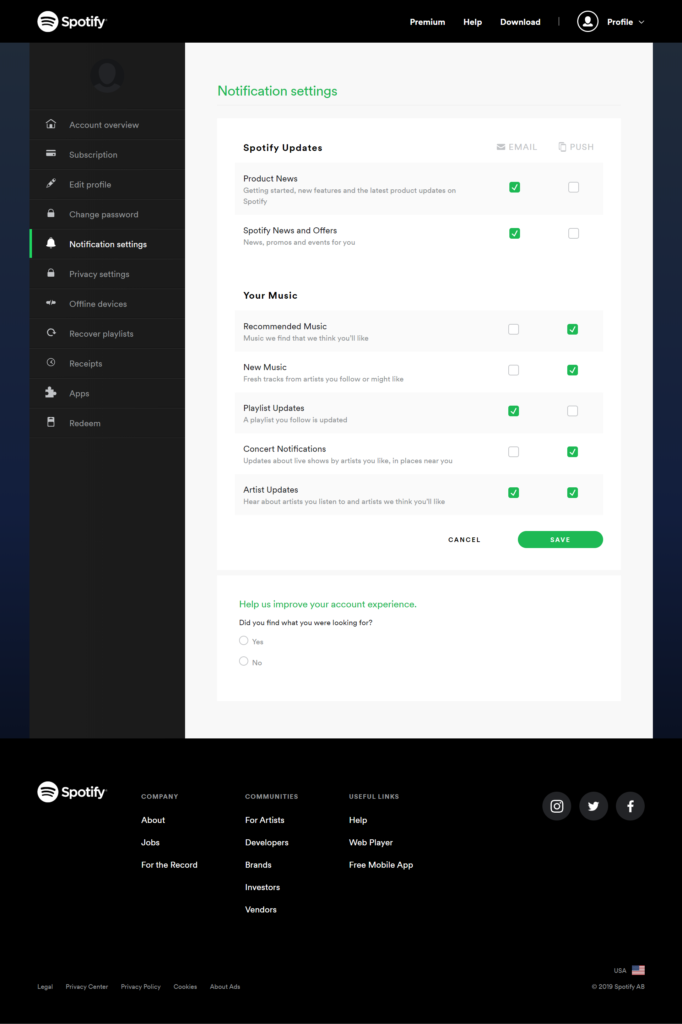
Music giant Spotify gives customers control over both the content they receive and the channels they receive it on.
By letting listeners choose the topics they’re interested in and whether they’d prefer email or push notifications, Spotify makes it easy for customers to shape an experience that feels relevant to them.
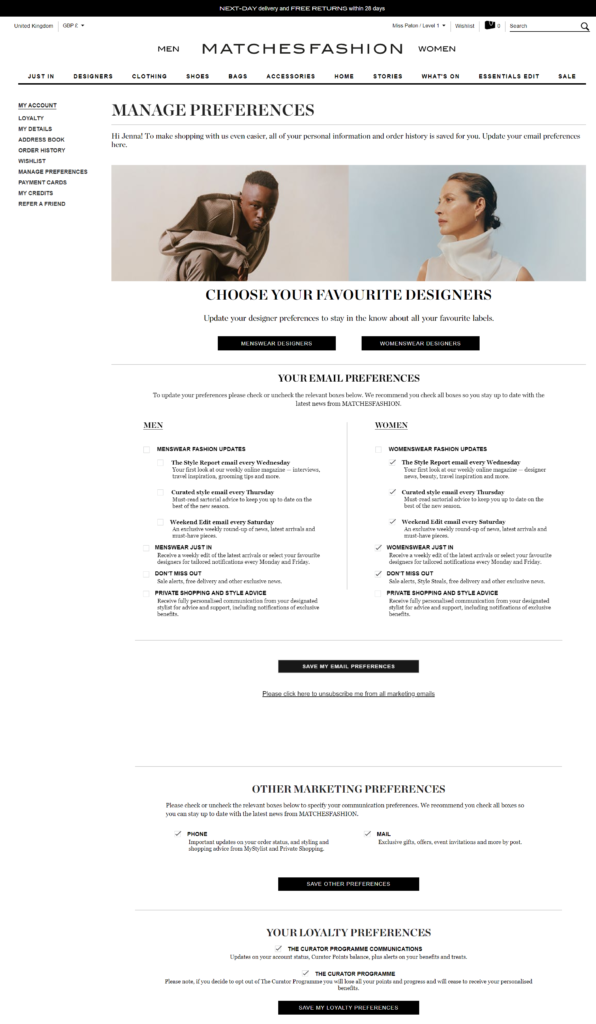
MATCHESFASHION promotes its preference center within its welcome series, encouraging new subscribers to tailor their experience from the very beginning.
Customers can choose exactly which content they’d like to receive, and the preference center even shows which days of the week each email is sent. This creates clear expectations and helps subscribers understand exactly what they’re signing up for. The brand also collects additional preferences, including whether customers are happy to receive marketing via phone or post, and whether they’re interested in joining its loyalty program.
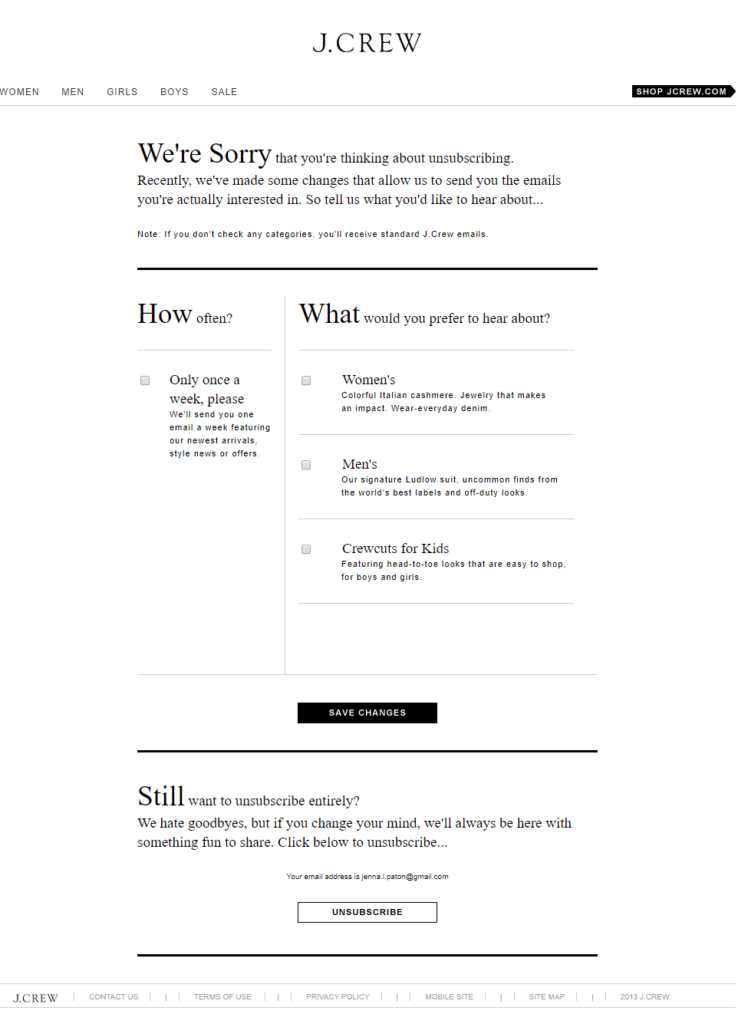
Not every customer who clicks “unsubscribe” wants to end the relationship altogether. Sometimes they simply want fewer emails or more relevant content.
When customers choose to unsubscribe, J.Crew presents an opportunity to adjust preferences instead. Shoppers can reduce email frequency or specify the products they’d prefer to hear about, helping the brand retain subscribers who might otherwise leave completely.
Customers expect relevant marketing, and they want to choose how often they hear from you, on which channels they hear from you, and the content that interests them.
At the same time, marketers need to improve engagement, protect deliverability, and build stronger zero-party data strategies. A well-designed preference center helps achieve all three.
When customers can shape their own experience, everybody benefits. Subscribers receive more relevant communications, leading to better engagement and fewer unsubscribes. Marketers gain valuable insights to create more personalized journeys and stronger customer relationships.
Preference centers also help build trust. Whether it’s managing communication preferences, content interests, or sensitive occasions, giving customers greater control shows that you’re listening and respecting their choices.
The most effective preference centers aren’t built around the data brands want to collect. They’re built around the experience customers want to have.





