

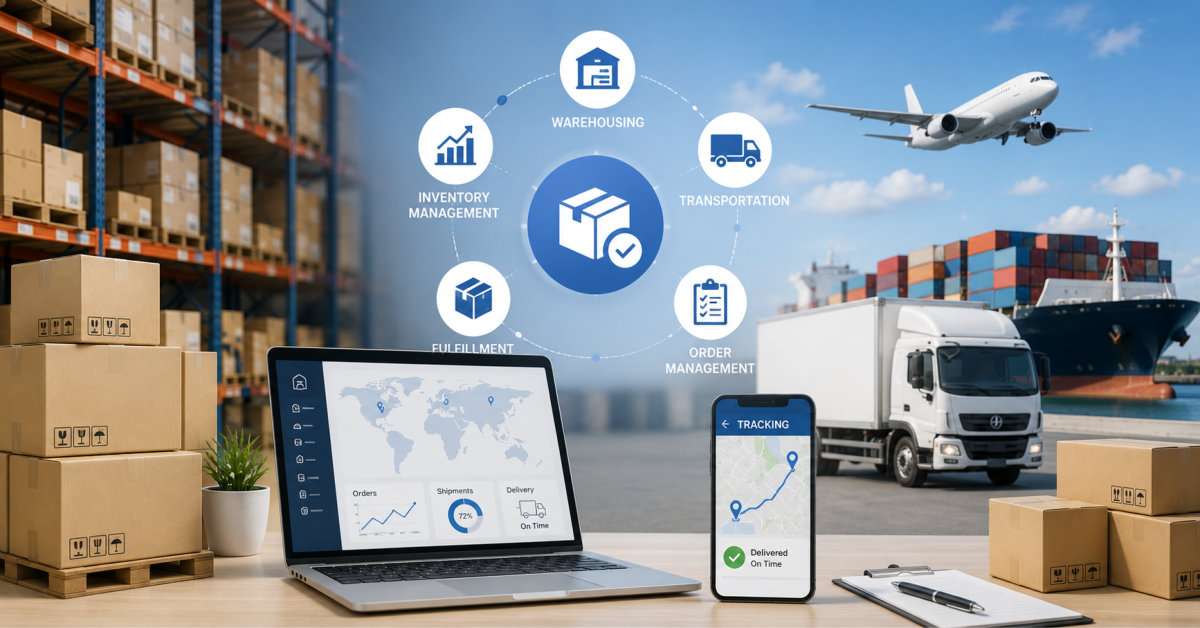
Integrated logistics services give growing businesses a single, coordinated way to manage warehousing, fulfillment, transportation, and returns so leaders can control accuracy, speed, cost, and customer experience as order volume increases.
When logistics finally feels like one connected system instead of a stack of vendors, leaders can spend more time steering the business and less time firefighting freight, space, and service issues.
Growth places significant pressure on all aspects of logistics, from receiving stock to confirming delivery. Higher order volume can expose issues such as inaccurate counts, slow restocking processes, inadequate labor planning, and escalating freight costs. Integrated logistics gives those functions a shared operating rhythm. With warehousing, fulfillment, transportation, returns, and reporting connected, leaders can track service quality through practical measures such as order accuracy, cycle time, stock availability, and cost per shipment.
A company selling through stores, marketplaces, and direct channels needs one clear operational perspective. Providers such as Saddle Creek Logistics Services show how fulfillment, warehousing, transportation, network planning, and omnichannel support can function within one coordinated model. That coordination matters because each channel affects inventory placement, labor needs, shipping commitments, and customer response.
Inventory accuracy protects working capital. When receipts, cycle counts, returns, and outbound orders follow one process, planners can identify shortages before they affect buyers. A growing company can monitor fill rate, available units, aging stock, and reorder points with greater precision. Those numbers help purchasing teams avoid excess storage, reduce the likelihood of missing sales, and place popular items near active demand.
Fulfillment speed depends on more than just picking. Slotting, packaging, carrier choice, staffing levels, and release timing all affect how quickly an order leaves the dock. Integrated logistics links those steps, so supervisors can identify bottlenecks while they are still manageable. With clearer work queues and tighter dock schedules, companies can achieve more consistent performance during launches, promotions, and peak seasons.
Fragmented vendor arrangements often conceal avoidable costs. Separate invoices, duplicate handling, split storage, and poor routing can erode margins without improving services. An integrated model gives finance teams cleaner views of cost per order, storage expenses, and freight spend by lane. With that detail, leaders can make changes, compare options, and remove processes that do not add value.
Customers notice late shipments, missing items, and vague delivery updates. Integrated logistics strengthens the basics that build trust. Accurate stock records prevent overselling. Coordinated fulfillment supports reliable delivery promises. Connected transportation gives service teams timely updates on shipment statuses. As order volume increases, those operational details help encourage repeat purchases and foster long-term account relationships.
Growth is not often linear. Demand may surge after a retail placement, product launch, or media mention. Integrated warehousing gives a business more choices for space, labor, storage methods, and distribution points. Leaders can compare single-site and multi-site models, then position inventory where it reduces transit time, handling steps, and total fulfillment expenses.
Transportation choices affect the margin on every shipment. Carrier mix, zone coverage, parcel dimensions, truck use, and service levels all influence the final cost. When freight planning is aligned with warehouse activity, teams can consolidate loads and choose modes that are a better fit. This coordination helps maintain delivery speed while keeping transportation spend under control.
Operational data has more value when it comes from connected systems. Leaders can review order accuracy, return reasons, inventory turns, dock delays, and carrier performance in one view. Patterns become easier to identify before issues escalate. This perspective also allows for more informed decision-making regarding forecasting, budget planning, staffing reviews, and customer service decisions.
Growth can overwhelm leaders with the constant problem-solving required. Integrated logistics reduces that strain by creating one accountable structure for many daily functions. Internal teams can focus on product, sales, marketing, and account development while specialists manage capacity, labor, facilities, and carrier execution. Clear reporting keeps leadership informed without forcing every manager into warehouse-level decisions.
Supply chain risk increases with order volume and channel count. One delayed inbound load, labor shortage, or carrier disruption can affect many customers. Integrated logistics supports contingency planning by providing access to shared data, alternate facilities, flexible staffing, and broader carrier options. That preparation helps a company uphold its service standards when demand fluctuates or supply becomes unstable.
Integrated logistics brings order, measurement, and coordination to the full product path. Better inventory control, faster fulfillment, planned transportation, and cleaner data all support growth that protects profit margins. The core benefit is control at scale. As order volume increases, leaders can make decisions based on evidence, manage costs effectively, and ensure customers keep receiving reliable service.
Integrated logistics means your warehousing, fulfillment, transportation, returns, and reporting operate as one coordinated system instead of separate vendors or departments. For a growing business, that translates into shared data, unified KPIs, and a single structure that manages capacity, service levels, and costs across channels. Leaders gain a clearer picture of how inventory, labor, and freight decisions interact, which makes it easier to adjust the network as volumes and customer expectations change.
Integrated logistics improves inventory accuracy by running receiving, cycle counts, returns, and outbound orders through one process and one set of records. This reduces the gaps and timing issues that often appear when different teams or vendors update their own systems independently. With a single source of truth, planners can spot shortages and overages earlier, adjust purchasing and replenishment plans, and keep stock levels aligned to real demand instead of relying on rough estimates.
The right time to consider an integrated logistics provider is when growing order volume, new channels, or added locations start to strain your current set‑up. Warning signs include frequent stock discrepancies, missed delivery promises, rising freight and storage costs, and managers spending more time on logistics issues than on growth initiatives. At that point, a coordinated provider can help you redesign the network so logistics supports expansion instead of holding it back.
Integrated logistics affects transportation costs by linking freight decisions to what is happening inside your warehouses. When carriers, modes, and service levels are chosen in isolation, you may get good rates on paper but still pay extra through inefficiencies and exceptions. A connected model lets you consolidate loads, align pickup schedules with order flow, and choose modes that fit real service needs, which helps keep delivery speed up while reducing overall transportation spend per order.
When evaluating an integrated logistics partner, look for a provider that can support your current volumes while offering room to scale, with proven expertise in your product type and channels. Assess how they handle inventory visibility, order accuracy, transportation planning, and reporting, and ask for examples of how they have helped similar businesses handle peaks, new channel launches, or supply disruptions. A good partner should offer clear KPIs, transparent pricing, and a collaborative approach to network design rather than a one‑size‑fits‑all solution.




