Free every Thursday · 61,308 Readers
Fastlane Insider Newsletter: What's working for Shopify in the AI era?
Free every Thursday · 61,308 Readers
Fastlane Insider Newsletter: What's working for Shopify in the AI era?
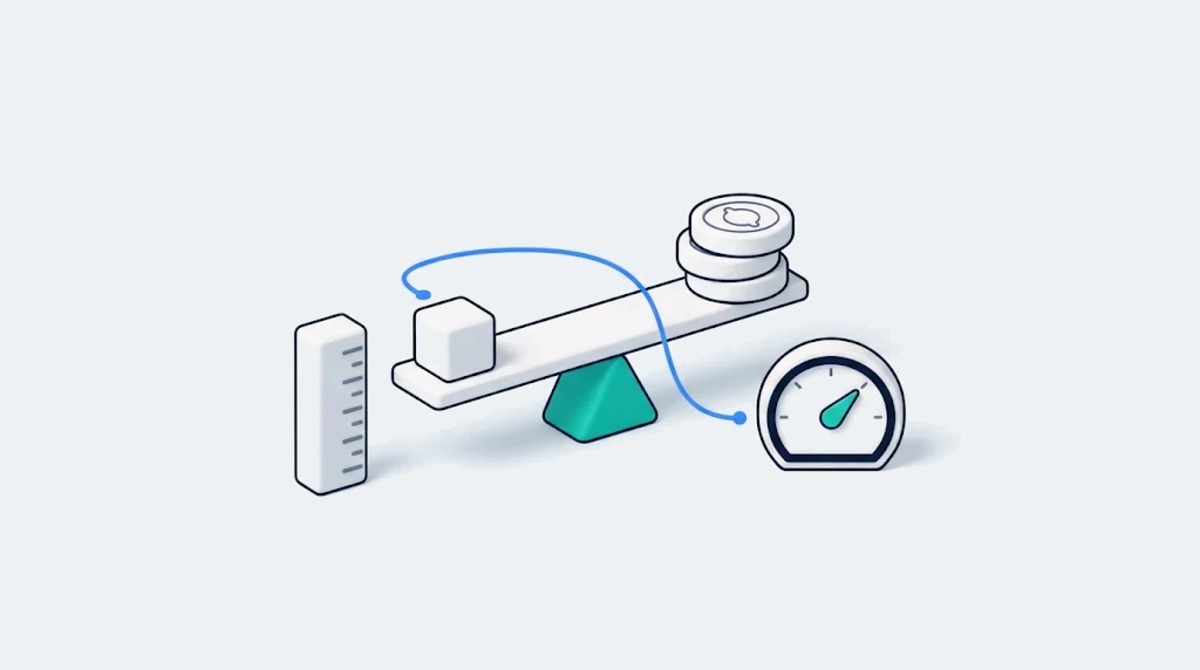
Leverage does not change how often a trade is right. It changes how much each outcome costs or pays.
Leverage lets a trader hold a currency position worth much more than the cash set aside to open it. A broker asks for a fraction of the position’s value as margin, while the full position, known as notional value, drives profit and loss. Some providers call the same idea gearing. In practice, forex leverage magnifies even small exchange rate movements, increasing both resulting losses as well as gains.
Traders in Singapore who are keen to employ leverage must be fully aware of the relationships between position size, margin, trading costs, and risk before they dive in. The sections below cover why traders use it, where it hurts, and what to check first. This article is educational and does not recommend any trade, product, or provider.
Leverage allows a trader to open a position larger than the cash behind it. At 20:1, a $20,000 position needs about $1,000 in margin. The other $19,000 of exposure is not cash handed to the trader. It is market exposure the broker allows against that deposit.
For a trader with a smaller account, that means currency exposure that would otherwise need many times the capital. The same arrangement also means the account is judged on the full $20,000 position, not on the $1,000 deposit. Every pip of movement is priced on the whole amount.
Major currency pairs often move by fractions of a percent in a session, which is why leverage appeals. On a $20,000 position, a 0.5% favorable move is about $100, which equals 10% of the $1,000 margin. Without leverage, the same move on $1,000 of capital would be worth about $5.
The arithmetic is symmetrical. An equal 0.5% move against the position costs about $100, again 10% of the margin. Leverage does not tilt the odds toward the trader. It scales the result in whichever direction the market goes, which is why most risk guidance treats it as a risk setting rather than a return booster.
Because only margin is committed, the rest of the account stays free. That free equity can act as a buffer if the position moves against the trader, or it can fund another position in a different pair. Pairs such as EUR/USD and GBP/USD tend to react to expectations about US interest rates set by the US Federal Reserve, so a trader holding both may carry one large dollar view rather than two separate ones.
Free cash only protects the account if it stays free. Spending it on extra positions leaves less room for normal price swings. Fastlane’s guide to forex trading with leverage goes deeper on how margin and position size relate.
A trader with a view on USD/SGD, shaped by US Federal Reserve decisions and by Singapore’s exchange rate based approach to monetary policy run by the Monetary Authority of Singapore, can express that view with a modest amount of capital. That is a legitimate use of margin trading.
The catch is that a correct view can still lose money if the path to it is rough. A position sized for the destination but not for the swings along the way may be closed before the view plays out.
Leverage works against the trader just as fast. On the same $20,000 position, a 1% adverse move costs about $200, which is 20% of the $1,000 margin. A few moves of that size in a row can consume a large part of the account.
In fast markets, losses can also exceed the margin deposited, depending on the provider’s terms and how quickly the position is closed. Traders should read how their broker handles negative balances before they trade, not after.
As losses reduce account equity, the gap between equity and required margin narrows. Depending on the broker, the trader may receive a margin call asking for more funds, face limits on new positions, or have positions closed automatically at a stop-out level.
Forced closures often happen when prices are moving fastest, so the exit price can be worse than the level that triggered the warning. A trader who would have recovered if allowed to hold may instead have the loss locked in. Terms and thresholds differ between providers, so the margin and stop-out rules are worth reading in advance.
Price movement is only part of the result. Spreads are paid on entry and exit. Financing or swap charges can apply to positions held past the daily rollover. Slippage can move the fill away from the quoted price when markets are thin or news breaks. Stop-loss orders help manage risk but are not guaranteed to fill at the chosen price.
These costs are charged on the full position, so they weigh more on large leveraged trades held for longer. Fastlane’s breakdown of forex trading costs and fees explains how spreads, commissions, and swaps add up, and its guide to what makes a forex platform good for daily trading covers how execution quality affects slippage.
The safer sequence starts with the loss the trader can accept, then works backward to position size. As an illustrative example, take a $5,000 account and a limit of 1% risk per trade, or $50. If the planned stop-loss sits 0.25% away from entry, the position that risks $50 is about $20,000 ($50 divided by 0.0025).
At 20:1, that position needs about $1,000 in margin, or 20% of the account. A broker may allow a far larger position on the same account, but the risk limit, not the maximum, set the size. Tightening the limit or widening the stop changes the answer, which is the point of working from risk first.
Singapore applies extra safeguards to complex products. According to the Monetary Authority of Singapore’s consumer site, CFDs are unlisted Specified Investment Products, so retail clients complete a Customer Knowledge Assessment before opening a CFD account. MoneySense also explains how the assessment works and notes that its outcome is valid for a year.
Before depositing money, check that the provider appears in the MAS Financial Institutions Directory, and confirm whether the specific leveraged product you are considering falls under the same requirement. Fastlane’s guide to forex and CFD broker checks lists further questions worth asking any provider.
The maximum leverage a broker offers is a ceiling, not a target. Traders who start from a loss limit, size the position from it, and keep spare margin for normal volatility are using leverage deliberately. Traders who open the largest position the platform allows are handing the outcome to the next price swing.
Leverage is a tool for controlling exposure efficiently. It rewards preparation and punishes guesswork in equal measure, so the preparation comes first.
Forex traders use leverage to hold a currency position larger than the cash they commit as margin. Because major pairs often move by small percentages, leverage lets a modest deposit produce a meaningful result, and it leaves the rest of the account free as a buffer or for other positions. The same scaling applies to losses, so profit and loss are calculated on the full position, not on the margin alone. Leverage is best treated as a risk setting rather than a way to boost returns.
Leverage magnifies results because profit and loss follow the full position size, not the margin. At 20:1, a $20,000 position needs about $1,000 in margin. A 0.5% move in either direction is worth about $100, which is 10% of the margin, and a 1% adverse move costs about $200, or 20% of the margin. The same percentage move produces much larger swings relative to the capital committed.
A margin call is a broker’s warning that account equity has fallen too close to the margin required to keep positions open. Depending on the provider, the trader may be asked to add funds, be blocked from opening new positions, or have positions closed automatically at a stop-out level. Because closures tend to happen in fast markets, the exit price can be worse than expected. Traders should read their broker’s margin and stop-out terms before trading.
No single leverage level suits every beginner, so the better approach is to size each position from a loss limit rather than from the maximum available. For example, risking 1% of a $5,000 account, or $50, with a stop 0.25% from entry points to a position of about $20,000. That example is illustrative only. A trader should also keep spare margin and learn how the broker handles margin calls before using larger positions.
Singapore treats CFDs as unlisted Specified Investment Products, so retail clients complete a Customer Knowledge Assessment before opening an account, and the outcome is valid for a year. Traders should confirm that the provider appears in the MAS Financial Institutions Directory and check whether the specific leveraged product they are considering falls under the same requirement. They should also read the provider’s risk disclosures on margin calls, costs, and negative balances.