

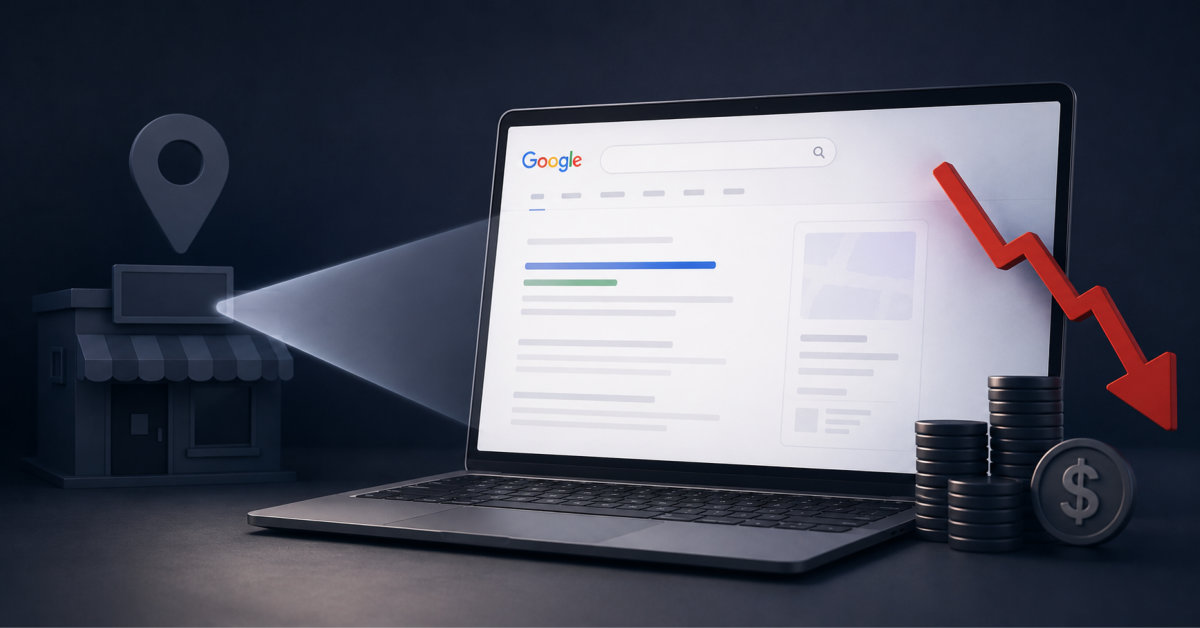
Singapore SMEs should treat SEO as a long-term demand-generation asset, not a substitute for every paid campaign. The right strategy aligns local or international search scope with actual revenue markets, fixes technical barriers first, measures qualified leads and revenue, and verifies whether eligible pre-approved digital solutions can receive PSG support.
Paid search buys the right to appear today. SEO builds the evidence, relevance, and technical foundation that can keep bringing qualified buyers after today’s media budget is spent.
In 2019, a Singapore-based immigration consultancy was burning through SGD $8,000 a month on Google Ads. The phone rang. Leads came in. The owner thought she had cracked the code. Then her ad budget got cut by half during a slow quarter. Leads dropped almost overnight. She had been renting visibility, not owning it. After switching her focus to Singapore SEO Services, her consultancy climbed to rank 1 for “Apply PR Singapore,” doubled its organic traffic, and cut its cost per lead by a factor of three. The ads budget became a choice, not a lifeline.
This story is not unusual. Across Singapore’s SME landscape, thousands of business owners are trapped in the same cycle: paying for every click, watching budgets evaporate, and never building anything that lasts. The problem is not their product. The problem is that Google cannot find them.
Here’s a number worth sitting with. The top five positions on Google capture roughly 75% of all search traffic. Not page one total. The top five spots specifically. Page 2 and beyond share the remaining scraps. If your business is sitting on page 2, 3, or worse, you are functionally invisible to the majority of people actively searching for what you sell.
Singapore’s SME market makes this even more brutal. The country has one of the highest internet penetration rates in Southeast Asia, hovering above 90% according to the Infocomm Media Development Authority (IMDA). Seven out of ten Singaporeans start a buying decision with a Google search. In a city-state where competition is dense and geography is compact, organic search visibility is not a marketing luxury. It is a survival question.
The compounding effect is what most business owners miss. Every month you spend on page 2 is a month your competitor on page 1 is building domain authority, earning backlinks, and accumulating trust signals that make them harder to displace. The gap does not stay the same. It widens.
And paid advertising does not solve this problem. It papers over it. When you pause a Google Ads campaign, your visibility drops to zero within hours. When you pause SEO, the rankings you built over months do not vanish immediately. They hold. They compound. That asymmetry is the entire argument for treating organic search as a long-term business asset rather than a short-term traffic tap.
Most business owners have a vague sense that SEO involves keywords and Google rankings. Very few understand what a properly executed campaign actually requires. This gap is where a lot of money gets wasted on agencies delivering activity reports instead of business outcomes.
A results-driven SEO methodology moves through five distinct layers. Keyword research scoped to actual Singapore search behavior comes first. This is not just running a term through a keyword tool and picking the highest volume option. It means understanding local intent signals, accounting for multilingual search patterns across English, Mandarin, Malay, and Tamil, and building keyword clusters that map to how Singaporeans actually phrase their queries when looking for a service like yours.
Technical SEO comes before any content or link work. Full stop. A site with crawlability issues, poor Core Web Vitals scores, or broken internal linking structure will not rank well regardless of how good the content is. Google needs to be able to find, read, and trust your site before it will surface it to searchers. This foundation work is unglamorous. It is also non-negotiable.
On-page optimisation follows. Meta titles, header structures, internal linking architecture, content depth aligned to search intent. Then off-page work: white-hat link building that earns authority from credible external sources rather than buying links from low-quality directories that risk a Google penalty down the line. Finally, competitor analysis runs as an ongoing thread through the entire campaign. The Singapore SERP is a competitive environment. Understanding exactly how rivals are ranking and where their gaps are is what allows a well-run campaign to move faster.
Agencies that shortcut any of these layers are not delivering SEO. They are delivering the appearance of SEO. The distinction shows up about six months in, when rankings plateau or never materialize at all.
Choosing between local and international SEO scope is a strategic business decision, not a technical preference. Getting it wrong wastes significant time and budget.
Local SEO makes sense when your customers are searching for a service in Singapore specifically. Immigration consultancies, tuition centers, medical clinics, movers, food and beverage businesses — all of these depend on geographic trust signals and proximity. A tuition center ranking number one for “Tuition Singapore” does not need to care about whether it appears in Australian search results. Its revenue comes from local families, not overseas visitors.
International SEO becomes the right scope when the business model reaches across borders. E-commerce brands shipping regionally, professional services firms targeting ASEAN expansion, clinics attracting medical tourists from Malaysia, Indonesia, or further afield — these businesses need search visibility that follows their actual customer geography. Achieving top 3 rankings for a competitive term like “plastic surgery” simultaneously in Singapore, Malaysia, the United States, the United Kingdom, and Australia requires a fundamentally different technical and content strategy than winning locally. The hreflang implementation alone, the multilingual content architecture, the geo-targeted link building — it is a distinct discipline.
The risk of misaligning scope with objectives is real. A business spending on an international SEO campaign when its customer base is entirely local is paying for rankings that do not convert. A business doing only local SEO while its competitors capture regional search demand is leaving growth on the table. The right answer starts with a clear-eyed look at where your actual revenue comes from and where you want it to come from in three years.
Here is perhaps the most underutilized piece of information in Singapore’s SME ecosystem. The Productivity Solutions Grant, administered under the IMDA SMEs Go Digital programme, provides eligible Singapore-registered SMEs with up to 50% subsidized support for pre-approved digital marketing solutions. That includes SEO services from pre-approved vendors.
In practical terms: if you are paying SGD $1,100 per month for a professional SEO campaign, the effective cost after the PSG subsidy drops to approximately SGD $550 per month. That is a meaningful reduction for any SME managing tight marketing budgets.
Most SME owners know the PSG exists. Far fewer know it extends to SEO. Most assume it covers hardware, software licenses, or accounting tools. The digital marketing application is real, but it requires working specifically with a vendor holding pre-approved status under the IMDA programme. This is a compliance requirement, not a suggestion. If you engage an agency that is not on the approved list, you cannot claim the grant regardless of the quality of work delivered.
The practical due-diligence step before signing any SEO contract in Singapore: verify the agency’s PSG pre-approved vendor status directly on the GoBusiness Singapore portal. It takes five minutes and could save you hundreds of dollars every month across a six to twelve month engagement.
The grant is also time-sensitive by nature. Application windows, funding caps, and programme terms shift periodically. SMEs that delay the conversation often find they have missed a funding cycle or that available grant support has been reduced.
This is where most agency relationships go wrong. An agency delivers a ranking report showing you moved from position 14 to position 6. Great. But position 6 for what keyword? Generating how many leads? Converting at what rate? Contributing how much to actual revenue?
“Page 1 rankings” is an output metric. Leads, conversions, and revenue are the performance indicators that actually matter to a business owner. Any SEO agency that cannot connect its ranking outputs to business outcomes is asking you to celebrate activity rather than results.
A useful benchmark for evaluating whether an SEO investment is working: you should be targeting at minimum a 3x return on your monthly spend. At SGD $1,100 per month, that means the campaign needs to be attributably generating SGD $3,300 or more in revenue impact to qualify as productive. This is not a guaranteed number, and it shifts based on industry, average deal size, and conversion rate. But it is a grounding frame. If an agency cannot articulate how it intends to get you to that return, or cannot show it has achieved comparable outcomes for similar clients, that is a meaningful red flag.
Before signing with any SEO agency, ask for these specifically. Monthly organic traffic growth benchmarks. Keyword ranking progression reports with historical context. Lead attribution data from the organic channel. Technical health audit cadence. Competitor gap analysis frequency. An agency that hesitates on any of these is telling you something important.
Watch for these warning signs too. Guaranteed rankings with no revenue framing attached. Non-transparent reporting that shows rankings but hides conversion data. An engagement scope that never mentions competitor analysis. These are patterns associated with agencies optimizing for their own retention, not your growth.
Singapore has no shortage of digital agencies. Most of them offer SEO. Most of them also offer social media management, paid media, web design, branding, email marketing, and video production. That breadth sounds appealing. In practice, it often means SEO is a line item on a retainer rather than the core competency of anyone on the account.
A pure-play SEO specialist operates differently. Every process, every hire, every case study, every refinement of methodology is concentrated in a single discipline. When algorithm updates roll out — and they roll out multiple times per year — a specialist agency has already been monitoring the signals, adjusting strategy, and communicating with clients. A generalist agency is often catching up while also managing social media calendars and ad creative for a dozen other clients.
The selective client model is another quality signal worth paying attention to. Agencies that only onboard businesses they are confident they can rank on page 1 are making an accountability statement. They are tying their reputation to your outcome before the engagement begins. That is the opposite of the volume-driven model where an agency signs as many clients as possible, delivers mediocre-to-adequate work across the board, and attributes any underperformance to “competitive keywords” or “market conditions.”
Three questions worth asking any SEO agency before committing to a contract:
The answers to those three questions will tell you more than any agency pitch deck.
Every month a Singapore business sits on page 2 is a month of compounding disadvantage. Competitors on page 1 are accumulating authority, backlinks, and customer trust signals that make them harder to displace. The gap grows. The catch-up cost rises. The leads your competitor captured this month are not coming back to you next month.
Organic search in Singapore is not a “nice to have” channel for service-based businesses anymore. It is where buying decisions are made. The businesses winning on Google page 1 right now did not get there through luck or shortcuts. They invested in a disciplined, methodology-driven approach executed by people who understand the local SERP landscape and held themselves accountable to real business outcomes.
The PSG grant reduces the financial barrier significantly for eligible SMEs. The right agency removes the execution risk. What remains is simply the decision of whether to keep renting visibility through paid ads or start building something that compounds over time.
That decision is worth making sooner rather than later.
SEO commonly takes several months to produce dependable lead growth for a Singapore business because Google must crawl changes, reassess page quality, compare the site against competitors, and observe whether users find the result useful. Technical fixes and improvements to existing pages can create earlier movement, while competitive non-branded service terms usually require longer-term work. Plan in six to twelve month increments rather than expecting guaranteed first-page rankings in a few weeks. The better question is whether the agency has prioritized pages and queries that can create qualified leads as progress occurs, not whether every target keyword has reached position one immediately.
SEO is not automatically better than Google Ads for Singapore SMEs because the two channels solve different acquisition problems. Google Ads can create immediate visibility, support seasonal offers, test new services, and capture demand while organic rankings develop. SEO builds long-term visibility for searches your business wants to own without paying for every click indefinitely. The strongest approach is often a deliberate mix: use paid search where speed and experimentation matter, then invest in SEO for the highest-value non-branded queries that can become a compounding demand asset. Base the channel mix on margin, sales cycle, competition, and lead quality.
Singapore SMEs may be able to use PSG support for SEO-related work when they meet current eligibility requirements and adopt an applicable pre-approved digital solution through the required process. IMDA’s SMEs Go Digital programme supports pre-approved solutions, and IMDA guidance notes that eligible SMEs adopting these solutions may be considered for incentives such as PSG. Confirm the exact vendor, solution package, qualifying scope, support level, application timing, and approval conditions through official government channels before paying a provider or relying on a subsidy in your budget.
Your company should use local SEO when most customers search for and buy a Singapore-specific service, while international SEO is appropriate when you can serve and convert demand across multiple countries. Local SEO prioritizes Singapore service pages, location relevance, local citations, Google Business Profile optimization where relevant, and local trust signals. International SEO may require country-specific content, multilingual architecture, hreflang, localized offers, regional links, and separate conversion paths. Use your actual revenue mix, margins, operational readiness, and three-year growth plan to decide. More geographic traffic is only useful if it comes from customers your business can profitably serve.
Before hiring a Singapore SEO agency, ask how it performs technical audits, chooses target queries, maps search intent to pages, measures qualified leads, analyzes competitors, earns authority, and reports outcomes over time. Request relevant case studies with enough context to understand the starting position, market, work completed, timeline, and commercial result. Ask whether the agency can verify any PSG-related package status through official channels rather than relying on marketing claims. Finally, ask what it cannot guarantee. A credible provider will not promise a specific ranking by a fixed date, but it should provide a clear method, measurable milestones, transparent reporting, and an accountable roadmap.




