Free every Thursday · 60,261 Readers
Fastlane Insider Newsletter: What's working for Shopify in the AI era?
Free every Thursday · 60,261 Readers
Fastlane Insider Newsletter: What's working for Shopify in the AI era?
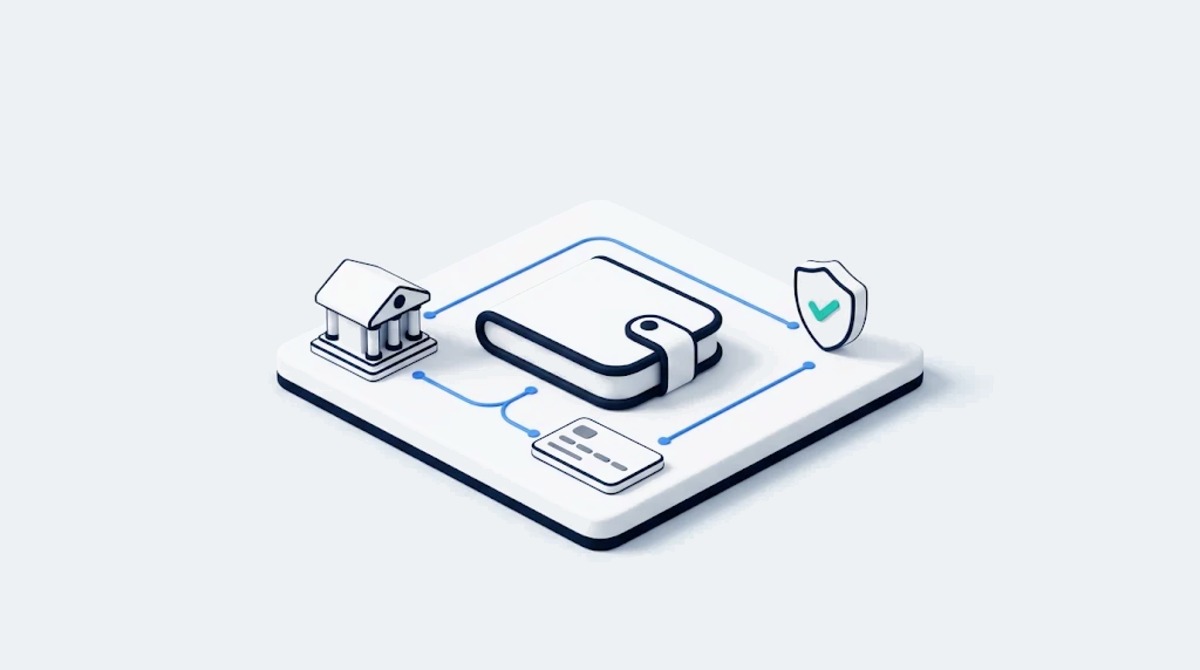
The hard part of a modern wallet is no longer holding crypto. It is everything a bank account does around it, and that is the work teams most often underestimate.
Understanding the account layers benefits for wallet platforms and developers starts with a simple shift in what users expect. Digital wallets began as tools for storing and sending cryptocurrency. Today, people want the same app to convert currencies, receive a salary or a payout, pay internationally, spend with a card and keep records they can hand to an accountant. Blockchain connectivity alone does not deliver that.
An account layer closes the gap. It provides identity verification, fiat accounts, payment processing, multicurrency balances and compliance as integrated infrastructure that sits beneath the wallet. By separating those services from the main application, developers can build broader financial products while spending their time on the parts users actually see: functionality, usability and the experience of moving money.
This guide is written for the teams making that build or integrate decision. If you are early, with a wallet product and a small engineering team, the sections on build time and custody matter most. If you already run a live platform with real volume, spend your time on the technical checks and the transaction reliability section, because that is where integrations break.
An account layer is infrastructure that lets a digital platform offer financial account capabilities, such as identity, fiat balances, payments and compliance, inside its existing product without building each one itself. It connects services that traditionally run on separate systems: customer identity, bank transactions, digital assets and regulatory processes.
A conventional cryptocurrency wallet manages blockchain addresses, private keys and digital asset balances. That is useful, but narrow. An account layer extends the wallet by mapping a regulated account to the user, so the same person who holds tokens can also hold fiat, receive a bank transfer and move between the two.
Consider what that unlocks in practice. A wallet platform could support fiat deposits, international transfers, stablecoin conversions and payment cards without independently developing every banking connection, licence and compliance workflow underneath. The wallet team integrates once and inherits capabilities that would otherwise take separate vendor contracts and months of regulatory preparation.
The concept also explains why the term is appearing alongside tokenized money. Banks and fintechs are experimenting with deposits that live on chain, and those balances need an account structure around them to be usable. eCommerce Fastlane’s analysis of whether tokenized deposits will replace stablecoins in online payments concludes the two are likely to coexist, which is exactly the environment an account layer is designed for: one account that can hold and route both.
For businesses, the practical effect is access. Financial infrastructure that once required a banking partner, a compliance team and a long build becomes something a product team can evaluate, test and switch on in stages.
Wallet platforms need account layer infrastructure because users now judge them against full financial apps, and a wallet that only stores crypto loses that comparison. Competition among wallets is intense, and switching costs for users are low. The products that keep users are the ones that cover more of their financial life.
Expanding beyond digital asset storage. A storage only wallet serves a narrow purpose. With account infrastructure, a provider can let users receive payments, manage several currencies and connect to traditional payment networks. Each added capability gives the user one more reason to open the app, and one fewer reason to keep a separate banking app for the parts the wallet cannot handle.
Reducing integration complexity. Building financial services independently requires many moving parts. A team may need one provider for identity verification, another for banking connections, a third for card issuing, a fourth for currency conversion and a fifth for transaction monitoring. Each has its own contract, API conventions, sandbox, outage history and support queue. An account layer brings those capabilities into a coordinated environment, so the platform works through one integration rather than five or more disconnected ones.
That consolidation matters most for small teams. A wallet startup with four engineers cannot afford to spend two of them maintaining vendor connections. Fewer integrations means fewer failure points to monitor and fewer contract renewals to negotiate, which leaves more of the roadmap for product work.
The caveat is concentration. When one provider supplies identity, accounts and payments, an outage or a policy change at that provider touches all of them at once. Teams that adopt an account layer should plan for that dependency rather than assume consolidation is free of risk.
The key account layer benefits for developers are faster product development, flexible API integration and the ability to add financial features in stages as the product matures. Each one shortens the distance between a roadmap item and a shipped feature.
Faster financial product development. Building banking and payment infrastructure from the ground up requires specialized expertise, regulatory preparation, security testing and external partnerships. An established account layer provides much of that foundation through APIs and software development tools. Developers can concentrate on application design, business logic and customer experience instead of recreating every financial component before they can test a single user flow.
Flexible API integration. An API based architecture lets the application communicate with financial infrastructure through defined requests and responses. Developers use these connections to retrieve account information, initiate transactions, manage balances and receive updates about payment activity.
Webhooks add the other half. They notify the application when specific events occur, such as a completed transfer or a change in transaction status. This event driven approach keeps the app accurate without constantly polling external services. It is also where many integrations quietly fail, because webhook delivery can be delayed or missed. eCommerce Fastlane’s breakdown of why orders fail in the integration layer most teams never monitor makes the same point for commerce: pair webhooks with scheduled reconciliation rather than trusting them alone.
Improved application scalability. A modular account architecture lets developers introduce capabilities as the product grows. A platform might launch with digital asset transactions, then add fiat accounts, then multicurrency balances, then card functionality once demand is proven. That staged approach keeps the first release small and testable, and it avoids paying for features users have not asked for yet. It also respects a principle that holds well beyond fintech: add complexity when your stage calls for it, not because the provider makes it available.
Account layers improve financial operations by putting fiat and digital asset balances in one connected environment and by applying identity and compliance checks consistently across every supported service. The gains show up for users in fewer handoffs and for the business in cleaner records.
Unified fiat and digital asset management. Managing traditional currencies and cryptocurrencies in separate applications creates friction. A user who wants to convert stablecoins to euros and pay a supplier has to move between apps, wait on transfers and reconcile amounts by hand. An integrated account environment connects supported fiat balances with digital assets, so transfers and conversions happen in one place. For the business running the platform, the same structure simplifies transaction reconciliation and account reporting, because both sides of every conversion sit in one ledger.
Integrated identity and compliance. Financial applications must verify who their customers are and monitor transactions under the rules that apply to them. Account layers can build Know Your Customer (KYC) checks, Anti Money Laundering (AML) controls, sanctions screening and transaction monitoring into the infrastructure itself. The FATF’s guidance on virtual assets is the international reference point most of these programs are designed around, and an account layer that applies one consistent workflow across services is easier to audit than five vendors applying five different ones.
Integration does not transfer every regulatory obligation away from the wallet provider, though. The platform still has to understand its own responsibilities under the laws of each market it serves and under its contract with the infrastructure provider. A team that treats “compliance is built in” as “compliance is someone else’s problem” is taking a risk its users will eventually pay for.
The operational benefit, then, is consistency rather than outsourcing. One verification flow, one monitoring system and one set of records make the work more manageable. They do not make it disappear.
Compared with traditional integration, an account layer replaces several separate vendor connections with one coordinated infrastructure, which reduces maintenance and speeds up feature expansion, but concentrates dependency on a single provider. The table below sets the two approaches side by side.
The table describes the pattern, not a guarantee. The practical advantage depends on integration quality, provider reliability, service coverage in your markets and how closely the provider’s architecture matches your product. A platform that needs a feature the account layer does not support will end up running a second integration anyway, and should know that before it signs.
There is also a sequencing question. Teams with a single market and a narrow feature set sometimes do fine with one or two direct integrations. The account layer case strengthens as the number of markets, currencies and financial features grows, because that is when the vendor count in the traditional approach climbs fastest.
Before integrating an account layer, developers should check its custody model, how transactions are authorized, how it protects sensitive data and how it behaves when payments fail or arrive late. These four areas decide whether the integration holds up in production.
Custody and user control. Custody determines who controls digital assets and how users approve transactions. Some implementations use managed or embedded wallets, where the provider or the platform handles keys on the user’s behalf. Others let users connect an external wallet and keep their private keys. Neither is universally better. Managed custody makes onboarding smoother for mainstream users; self custody suits audiences who already hold crypto and expect to control it.
Authorization methods. API driven or delegated models reduce the number of manual signing steps a user has to complete, which helps conversion in consumer apps. External wallet models generally require a wallet connection and a user signature for each authorized operation, which adds friction but keeps control with the user. Each approach carries different security assumptions, so decide which risk your product is built to carry before you pick.
Security and data protection. Account infrastructure handles sensitive financial and identity information. Evaluate encryption, authentication, access permissions, key management, audit logging and incident response. Confirm where personal data is stored, who can access it and how the provider meets the data protection rules in each market you serve.
Transaction reliability. Financial applications need accurate transaction statuses and dependable settlement. Integration testing should cover failed payments, delayed confirmations, duplicate requests, webhook retries and reconciliation. A useful rule is to test every unhappy path you can name before launch, because a wrong balance shown to a user costs more trust than a missing feature ever will.
Run these checks in a sandbox with realistic volumes, not just a handful of test transactions. Edge cases surface at scale.
UR structures its account layer around separate account modes, so a partner chooses who holds the keys and who signs each action instead of being forced into one architecture. Its platform combines identity services, fiat accounts, payment rails, digital asset access and compliance through API based integration.
UR’s published integration guide, as of November 2026, sets out the choice clearly. In Managed Custody Mode, the recommended path for new partners, fiat is held in a UR managed account, the partner’s backend signs fiat actions and the user signs only when moving out of crypto. It is a standard REST integration, so development effort is lower. In External Wallet Access Mode, users connect their own wallet, keep full self custody and sign every action themselves, which takes more development work for wallet connections and signatures. An earlier Delegated Mode, which ran on delegated smart contract allowances, is now listed as legacy, and UR advises new partners to use one of the other two.
Apply that to two different products and the decision becomes concrete. A consumer fintech app aimed at people new to crypto would likely start with Managed Custody: fewer signing prompts, a familiar web style onboarding and less engineering. A self custody wallet whose users already manage their own keys would lean toward External Wallet Access, accepting more build work in exchange for keeping control where its users expect it. Choosing the wrong mode for the audience is the costly mistake, because changing custody models later means migrating users, not just code.
The broader principle is that infrastructure should fit different product architectures instead of forcing every business into an identical implementation. Developers should still confirm supported jurisdictions, custody arrangements, licensing, service availability and contractual responsibilities before adopting UR or any provider.
For commerce platforms and online merchants, account layers matter because the same plumbing that lets a wallet hold fiat and stablecoins is what lets checkout accept digital dollars and settle them into a normal bank account. Merchants already see a version of this today.
In June 2025, Shopify announced USDC payments on Shopify Payments with Coinbase and Stripe. Customers pay in USDC on the Base network from a supported crypto wallet, and by default the payment is converted to the merchant’s local currency and deposited to the bank account already connected to Shopify Payments. Stripe’s announcement put launch availability at merchants in 34 countries, with the option to receive funds as USDC in an external wallet instead.
That is the account layer idea at work from the merchant’s side. The shopper’s wallet, the conversion, the compliance checks and the bank deposit are all connected so the merchant does not have to manage any of them separately. For a store owner, the lesson is that you rarely need to build or buy this layer yourself; your payment provider increasingly carries it. The decision worth making is whether your customers are asking to pay this way, not whether the technology is ready.
For the teams building wallets and payment products, the commerce angle is a demand signal. When wallets can hold fiat and stablecoins side by side and pay merchants directly, the wallet becomes a payment method rather than a storage tool, and that is where everyday usage comes from.
Teams build more adaptable financial applications by choosing account infrastructure that matches their custody model, markets and roadmap, then adding capabilities in stages rather than all at once. Account layers are changing how developers connect digital wallets to broader financial services, by linking identity, payments, compliance and asset management in one place.
For wallet platforms, the benefits are broader functionality and a more connected user experience. For developers, reusable APIs and modular integrations simplify implementation and support future expansion. For commerce, the same infrastructure is what makes paying with a wallet feel as ordinary as paying with a card.
Successful adoption still depends on fit. Choose infrastructure that aligns with your technical requirements, security standards and regulatory obligations, test the failure paths before launch and keep your own compliance responsibilities in view. As financial services continue to converge, account layers will remain an important architectural decision for businesses building adaptable and reliable digital financial products.
An account layer is infrastructure that gives a crypto wallet regulated financial account features, such as identity verification, fiat balances, bank transfers, currency conversion and cards, through a single integration. Without it, a wallet can hold and send digital assets but cannot act like a bank account. With it, the same app can receive a fiat deposit, convert between stablecoins and local currency and pay out to a bank. The wallet team integrates with the account layer provider instead of building separate connections to banks, card issuers and compliance vendors, which shortens development and reduces the number of systems to maintain.
Account layers help developers build faster by providing ready made financial capabilities through APIs, so the team does not have to create banking connections, compliance workflows and payment processing from scratch. Developers call defined endpoints to read balances, start transfers and manage accounts, and receive webhooks when a transfer completes or a status changes. That lets them focus on product design and user experience. Most providers also allow features to be switched on in stages, so a team can launch with digital asset transactions and add fiat accounts or cards once users ask for them.
No, an account layer does not remove every compliance obligation from the wallet provider. It can build KYC, AML, sanctions screening and transaction monitoring into the infrastructure, which gives the platform one consistent verification and monitoring workflow. The wallet business still has to understand its own legal responsibilities in each market it serves and under its contract with the provider. Before integrating, confirm which checks the provider performs, which remain with your team, which jurisdictions are supported and how suspicious activity reports and data requests are handled.
Managed custody means the provider or platform holds the keys or funds on the user’s behalf, while self custody means users connect their own wallet and keep control of their private keys. Managed custody usually makes onboarding smoother and needs fewer signing prompts, which suits consumer apps for people new to crypto. Self custody suits audiences who already manage their own wallets and expect to approve every action, but it takes more development work for wallet connections and signatures. The right choice depends on your users, because switching models later means migrating accounts, not just changing code.
Yes, eligible Shopify merchants can accept USDC through Shopify Payments without building any account infrastructure themselves. Shopify announced the feature in June 2025 with Coinbase and Stripe: customers pay in USDC on the Base network, and by default the payment converts to the merchant’s local currency and deposits to the bank account connected to Shopify Payments. Merchants can instead choose to receive USDC in an external wallet. Availability depends on country and eligibility, so check the Payments settings in Shopify admin to see whether the option is offered for your store.