Free every Thursday · 60,261 Readers
Fastlane Insider Newsletter: What's working for Shopify in the AI era?
Free every Thursday · 60,261 Readers
Fastlane Insider Newsletter: What's working for Shopify in the AI era?
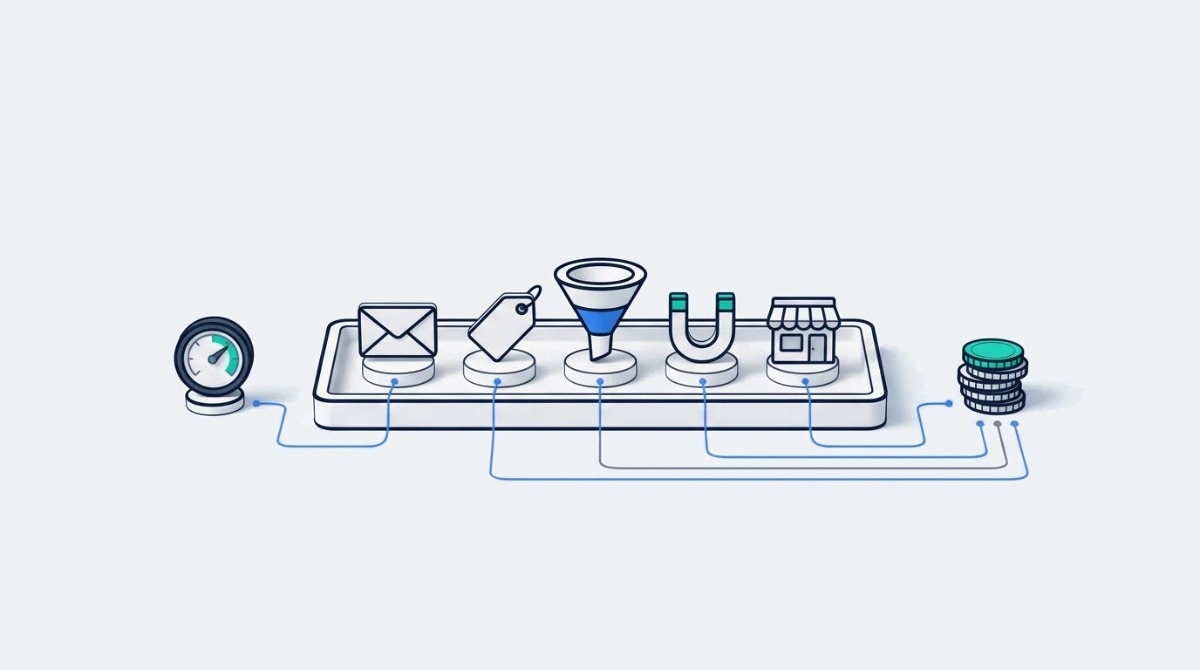
A commission rate means nothing until you know what it is a percentage of. Ten percent of incremental revenue and ten percent of every sale in your store are two completely different deals.
Commission-based marketing can be a strong fit for DTC brands because their sales and marketing performance is relatively easy to measure. Revenue, orders and campaign results can be tracked across Shopify and the ad platforms, which makes it easier to connect what an agency does with what the business earns. Instead of paying only a fixed monthly retainer, a DTC brand can work with an agency whose fee is partly or fully tied to incremental revenue, attributed sales, additional profit or new customers.
The five agencies below all use commission, revenue share or other pay for performance models, and they differ far more in what they actually manage than in how they price. IMP Marketing, which contributed this guide, appears first. The other four follow in alphabetical order. The list is not ranked, and the right pick depends on which part of your growth you need fixed.
Every fee model, threshold and service list below was checked against each agency’s own published pages in November 2026. Where an agency does not publish a number, the write up says so rather than guessing.
Commission-based marketing works well for DTC brands because their results are measurable, their sales rarely pass through a middleman, the incentive pushes an agency toward outcomes, and the financial risk is shared between both sides. Those four factors are what make a performance fee calculable in the first place. Fastlane’s comparison of how commission-based agencies differ from retainer agencies covers the trade offs on the other side of the decision.
DTC brands can usually track revenue, orders, customer acquisition, ad performance, product level sales and contribution margin from their own systems. That gives the brand and the agency a shared basis for judging whether the partnership is creating business value, rather than arguing over activity reports.
DTC brands rely less on salespeople, distributors, wholesalers or retail buyers to complete each transaction. With fewer handoffs between the brand and the customer, outcomes can be measured more consistently and linked more clearly to the work that influenced them. That makes revenue growth, new customers or profit easier to use as the basis for a commission agreement.
When agency compensation rises with the agreed business outcome, the agency has a stronger reason to focus on the result rather than on completing a predefined list of tasks. In practice that tends to show up as more ownership of performance, more proactive problem solving and faster attention to whatever is limiting growth. The question the agency asks shifts from whether the work was delivered to whether it moved the number both sides agreed on.
A fixed retainer places most of the financial risk on the brand, because the fee stays the same whatever happens to revenue. A commission model ties part of the agency’s pay to the agreed outcome, so the brand is less exposed to a large fixed fee without results and the agency has its own money riding on the partnership working.
Commission-based marketing fits DTC brands that already have a working business to grow, and it fits poorly when the agency is being asked to find product market fit from scratch. The comparison below shows the conditions that usually separate the two.
The exact threshold differs by agency. For example, IMP Marketing says its CoScale program is designed for eCommerce stores generating at least $50,000 per month and typically requires margins of 20% or higher to leave enough room for a revenue-sharing model.
That illustrates an important point: commission-based marketing is not automatically a low cost substitute for hiring an agency. The strongest arrangements need enough existing revenue, margin, data and operating capacity for both sides to share meaningfully in future growth. Margin here means contribution margin, what is left after product cost, shipping, fees and ad spend, not gross margin; Common Thread Collective’s guide to ecommerce contribution margin walks through which costs belong in that number. A brand with a 60% gross margin can still have too little contribution margin left to pay a variable agency fee on top.
These five agencies were chosen because each one ties some or all of its fee to a sales outcome for ecommerce brands and publishes how that model works. The list was contributed by IMP Marketing, which is why it appears first, and each agency’s own site was reviewed in November 2026 to confirm its model and requirements. Every agency is described against the same five criteria: what the commission is calculated on, what the agency controls, what it costs upfront, what a brand needs to qualify, and how revenue is attributed. Pure affiliate networks and creator platforms were considered and excluded, because they pay third parties for referrals rather than running a brand’s marketing. Agencies that offer revenue share only on request, with no published terms, were also excluded. For a wider set of options, Fastlane’s roundup of revenue share marketing agencies for ecommerce brands covers ten more.
The five agencies split into one broad growth partner, one acquisition builder and three single channel specialists, and the fee model follows that split. Fee models are as of November 2026.
IMP Marketing is a DTC and ecommerce growth agency whose CoScale program runs paid media, retention and conversion work for established Shopify brands under a performance aligned fee.
CoScale brings growth strategy, Shopify store management, email and SMS, paid media across Meta and Google, on-page SEO, conversion rate optimization, promotions and creative under one team, with periodic reports and a live dashboard. The brand keeps control of budget and strategy decisions, product assortment, fulfillment, customer service and supplier relationships. IMP Marketing lists Shopify Partner, Klaviyo Partner, Meta Business Partner and Google Premier Partner status on its CoScale page, and says it has worked with more than 130 brands. The program is selective: IMP Marketing evaluates each brand’s revenue, margins and growth potential before agreeing to a partnership, and says it takes on one new CoScale partner per quarter.
Pricing (as of November 2026): IMP Marketing offers two structures. Pure Performance has no monthly retainer: the brand pays a one-time setup fee plus a percentage of incremental revenue, with the share stepping down as incremental revenue grows. Hybrid pairs a lower revenue share with a capped monthly retainer for more predictable costs. Percentages are tailored per deal and not published.
Strengths: The commission covers acquisition, conversion and retention together, so IMP Marketing has no reason to push one channel at the expense of another. Paying on incremental revenue rather than total revenue means the fee is tied to growth above where the brand already was. The model also gives a founder led or lean team an external growth function without hiring each specialist in-house.
Limitations: Because rates are not published, a brand cannot compare IMP Marketing’s cost with a specialist’s until after a discovery call. Taking on one new partner per quarter also means a brand that qualifies may wait before work starts.
Best fit: IMP Marketing fits established Shopify and DTC brands generating $50,000 or more a month with margins of at least 20% that want acquisition, conversion and retention handled by one performance aligned team.
Skip if: You are under $50,000 a month, your margins sit below 20%, or only one channel needs fixing and the rest of your marketing works.
CommissionBasedPromos.org is a promotional email service that plans, writes and sends monthly campaigns for ecommerce brands with established lists, and takes a share of the revenue those campaigns produce.
CommissionBasedPromos.org focuses on promotional email rather than full lifecycle or broader DTC marketing. The service covers campaign strategy, copywriting, sending, A/B testing and revenue reporting, run from a monthly campaign calendar. Revenue is tracked inside the brand’s own email platform through unique links, coupon codes or UTM parameters, and the agency names Klaviyo, Mailchimp, ConvertKit, ActiveCampaign and Beehiiv among the platforms it works in. It also serves coaches and creators, so DTC retail is one audience among several. The first campaign usually ships 10 to 14 days after signing, and the agency says it takes on at most three new clients a month.
Pricing (as of November 2026): CommissionBasedPromos.org charges a one-time $500 onboarding fee, then 15% to 25% of the revenue its campaigns generate, with the rate fixed on the first call before work starts. There is no retainer, monthly minimum or minimum contract term.
Strengths: The upfront cost is the lowest of the five agencies here, and with no contract term a brand can stop if campaigns do not pay. Fixing the rate before work begins removes one common source of later disputes.
Limitations: Clients can flag concerns but do not approve each email, which is a real brand control trade off. And because coupon codes are one tracking method, campaigns can lean on discounts that train subscribers to wait for the next offer.
Best fit: CommissionBasedPromos.org fits ecommerce brands with at least 10,000 subscribers and $10,000 a month in revenue that need promotional campaigns written and sent without hiring a full service agency.
Skip if: Your list is under 10,000 subscribers, you want sign off on every send, or your real gap is automated flows rather than campaigns.
Digital Shepherds is a pay for performance agency that builds customer acquisition systems for ecommerce brands and professional services firms, then earns a share of growth above an agreed baseline.
Digital Shepherds runs its engagements in two phases. The setup phase builds what the agency calls a complete acquisition system: strategy, analytics, paid media, SEO foundations and email sequences. Once that system launches, the engagement moves to ongoing performance based work with no monthly retainer and no billed hours. The model is designed around revenue growth above a baseline agreed at the start, which keeps the agency’s share tied to new revenue rather than sales the brand was already making. Because Digital Shepherds also serves professional services firms, its playbook is built around acquisition rather than DTC specific retention or merchandising.
Pricing (as of November 2026): Digital Shepherds charges a one-time setup fee of $15,000 to $20,000, paid 50% at signing and 50% at launch, followed by a revenue share on growth. The share percentage is not published.
Strengths: Splitting the setup fee across signing and launch ties half of it to delivery. Measuring the share against a baseline protects a brand from paying commission on its existing revenue.
Limitations: The $15,000 to $20,000 setup fee is the largest upfront cost on this list and is paid before any performance is proven. Digital Shepherds’ acquisition focus also leaves conversion rate work, Shopify management and lifecycle retention largely with the brand.
Best fit: Digital Shepherds fits ecommerce brands with consistent revenue whose main constraint is acquisition and who can fund a five figure setup in return for no ongoing retainer.
Skip if: You cannot commit $15,000 to $20,000 before seeing results, or your bigger problem is conversion or repeat purchase rather than new customers.
Network OG is a commission-based email marketing agency that runs Klaviyo for DTC brands and charges a share of the revenue Klaviyo attributes to its work.
Network OG concentrates on Klaviyo flows, weekly campaigns, popups and segmentation, starting with an audit of the brand’s existing Klaviyo account and including flow overhauls. The agency is most relevant to replenishment categories such as wellness, pet care and consumable goods, where repeat purchase behavior gives email more chances to earn. It positions email as the way to convert traffic a brand is already paying for, so it works best when paid acquisition is already running. Network OG says it takes on only a handful of brands at a time and moves forward only when its audit suggests it can drive results.
Pricing (as of November 2026): Network OG charges 15% to 25% of the revenue generated through the brand’s Klaviyo account, depending on business model, margins and the current email program. It states there is no retainer and does not mention a setup fee or minimum term. Brands need at least $10,000 a month in revenue and an existing Klaviyo account.
Strengths: The specialist focus means flows, campaigns and segmentation get full attention instead of competing with paid media for the agency’s time. The audit before commitment also filters out brands where email has little room to grow.
Limitations: The commission base is Klaviyo attributed revenue, and Klaviyo’s default attribution gives last touch credit to an email open or click within five days, so some of that revenue would have arrived anyway. Illustrative example: if Klaviyo attributes $40,000 a month to email, 15% to 25% is $6,000 to $10,000 a month, whatever share of those orders paid ads or organic search actually won. The work is also Klaviyo only.
Best fit: Network OG fits DTC brands already on Klaviyo, selling replenishable products and doing at least $10,000 a month, whose email revenue lags the traffic they already pay for.
Skip if: You are not on Klaviyo, your products are bought once, or you cannot agree attribution windows before signing.
RetailerBoost is a pay on results Google Shopping service that funds the ad spend itself and charges merchants a commission only on orders attributed to its campaigns.
RetailerBoost builds, funds and manages Google Shopping campaigns for physical product retailers with an eligible Google Merchant Center feed. It connects to the brand’s existing Merchant Center account, runs its campaigns alongside the brand’s own, and shows attributed orders, revenue and buyer journeys in a dashboard. RetailerBoost supports Shopify, BigCommerce, WooCommerce, Adobe Commerce and other platforms, operates in 84 countries, and is run by 30M. Its Shopify app launched in July 2026 and lets merchants choose their commission rate and spending cap, billed through Shopify. Fastlane’s breakdown of Google Ads campaign types for Shopify brands explains where Standard Shopping fits in a wider Google plan.
Pricing (as of November 2026): RetailerBoost charges no setup fee and no monthly retainer. The brand pays an agreed commission on attributed orders; RetailerBoost’s own example uses a 12% rate, so a $200 order costs $24.
Strengths: RetailerBoost pays 100% of the ad spend, so the brand risks no media budget on the test. The fee per order is fixed and easy to model against product margins.
Limitations: Because RetailerBoost runs next to a brand’s own Shopping campaigns, the two can compete for the same shoppers, and some attributed orders may have come through the brand’s campaigns anyway. RetailerBoost’s homepage does not explain its attribution method in detail, and the model covers Google Shopping only.
Best fit: RetailerBoost fits DTC brands selling physical products with a clean Merchant Center feed that want extra Google Shopping volume without committing their own ad budget.
Skip if: Your feed is not eligible, your margins cannot absorb a double digit commission per order, or Google Shopping is already your strongest channel.
The right commission-based agency depends on whether one channel is holding back growth or several connected parts of the business are. Start by naming the constraint, then match the agency whose commission is calculated on that constraint.
If you are in the Growing stage, roughly $10,000 to $100,000 a month, and acquisition is working but repeat revenue is not, a single channel specialist is the lower risk test. Network OG fits if you sell replenishable products on Klaviyo and email lags your traffic. CommissionBasedPromos.org fits if you already have a list above 10,000 subscribers and simply are not sending enough promotional campaigns. Both charge a similar 15% to 25% range as of November 2026, so the deciding factor is whether your gap is automated flows or scheduled campaigns.
If Google Shopping is untested or underused and you sell physical products, RetailerBoost is the only option here that funds the ad spend, which suits a brand that wants to test the channel without budget risk. The trade off is that its campaigns run beside your own, so agree in writing how overlapping orders are counted.
If acquisition itself is the bottleneck and you have steady revenue, Digital Shepherds builds the system first and then shares in growth above a baseline. The $15,000 to $20,000 setup makes sense only when you are confident the acquisition gap is real and you would otherwise pay a retainer for the same build.
If you are in the Scaling stage, above $50,000 a month with margins of 20% or more, and growth depends on paid media, conversion and retention moving together, IMP Marketing’s CoScale is built for that case. A specialist can only improve the channel it is paid on, while a broader partner can move budget and effort toward whichever lever matters most that month.
Whichever route you take, layering several channel specialists on commission at once creates exactly the attribution conflict this model depends on avoiding. Each agency claims the same order, and the brand pays more than one commission on a single sale.
The best commission-based marketing agency for a DTC brand is the one whose fee model, capabilities and area of responsibility match the growth outcome the brand actually needs to improve, not the one with the lowest fixed fee or the longest service list. For a brand with one clearly defined constraint, a specialist such as Network OG, RetailerBoost or CommissionBasedPromos.org is usually the simpler fit. When growth depends on several connected areas, a broader partner such as IMP Marketing, or Digital Shepherds for acquisition, can make more sense.
This list is unranked because no single agency suits every brand. Whichever one you shortlist, the questions that decide the deal stay the same: what result is the agency being paid for, how much control does it have over that result, and how will success be measured. Settle those three in writing, alongside the revenue basis and attribution rules, before you compare percentages. Fastlane’s guide to revenue share terms to settle before signing lists the clauses worth reading line by line.
Commission-based marketing agencies have no standard rate, and as of November 2026 the five agencies in this guide range from 15% to 25% of attributed revenue for email specialists to an undisclosed, tailored share of incremental revenue for broader growth partners. An agency may charge a percentage of total revenue, attributed revenue, incremental revenue above a baseline, additional profit, or a fee per sale or new customer. Some add a setup or onboarding fee, from $500 to $20,000 on this list. The percentage matters less than the base it is calculated on: 10% of incremental revenue and 10% of total store revenue produce very different bills.
Commission-based marketing agencies do not always require a monthly retainer. Some offer pure performance structures with no ongoing fee, often with a one-time setup or onboarding charge instead. Others use hybrid pricing that combines a lower fixed monthly fee with a smaller commission or revenue share. A hybrid model gives the agency enough predictable income to staff the account while still tying a meaningful part of its pay to results, and it can suit brands that want lower variable costs as revenue grows. Ask for both structures in writing and model them against your own revenue before choosing.
Commission on a sale touched by several channels should be calculated with one attribution method that both sides agree before work begins. A customer might discover a brand through a Meta ad, return after an email and buy after an SMS reminder. If every platform claims full credit, the same order is counted three times and the brand can pay commission more than once. Brands and agencies can instead agree on a single source of truth such as Shopify orders, a fixed attribution window, a revenue baseline, or an incremental revenue method. What matters is that both sides use the same definition when the invoice is calculated.
DTC brands usually still pay their own ad spend when working with a commission-based marketing agency. Agency compensation and media spend are normally separate costs: the commission covers how the agency is paid, while Meta, Google and TikTok still need their own budget. The exception in this guide is RetailerBoost, which funds Google Shopping ad spend itself and recovers it through its per order commission. Before signing, confirm who pays for media, creative production and software, because those costs sit outside most commission agreements.
A commission-based marketing agency contract should define the performance metric, the commission rate, the revenue basis and calculation method, the attribution rules, the included services, payment timing, any minimum commitment, and termination conditions. It should also state the source of truth for revenue, how and when a baseline can change, which costs are billed outside the commission, and what happens to accounts, data and creative when the partnership ends. Clear terms protect both sides, because most disputes in these deals come from a definition nobody wrote down rather than from the rate itself.
There is no single best commission-based marketing agency for a DTC brand under $50,000 a month, because the right choice depends on which channel is underperforming. At that stage the broader growth programs on this list usually will not take you on, so a single channel specialist is the practical starting point. Network OG suits replenishment brands on Klaviyo doing at least $10,000 a month, CommissionBasedPromos.org suits brands with more than 10,000 subscribers, and RetailerBoost suits physical product brands that want to test Google Shopping without funding the ads. Fix one channel, prove the numbers, then reassess.