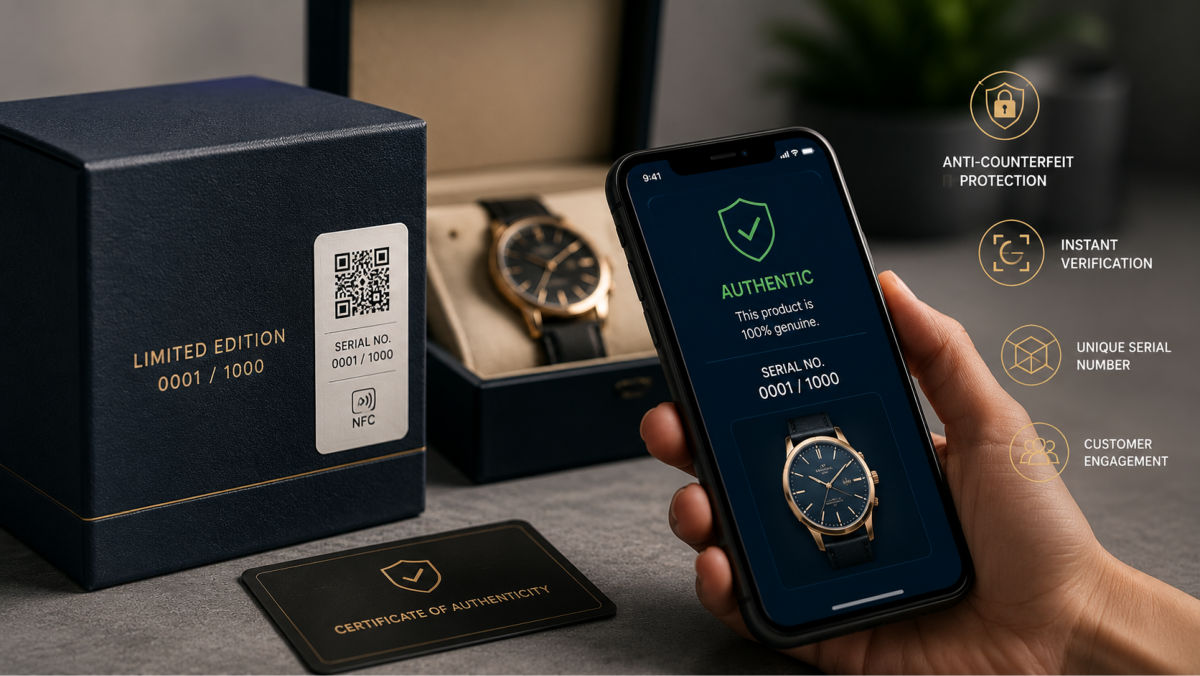
Counterfeit protection and limited-edition serialization help Shopify brands safeguard customer trust by giving every premium product a verifiable digital identity, so buyers can instantly confirm authenticity and feel the rarity they paid for.
For limited editions, authenticity is no longer a nice-to-have feature—it is part of the product itself and the promise you make to every customer who cares about rarity.
Your customer finally gets their hands on your limited-edition product. They open the box, scan the details, and feel like they own something special. Then they discover another version being sold online for half the price. The problem? That “deal” is a fake. Counterfeits damage your reputation, and put the relationship you worked hard to build with your customers at risk. For brands selling premium, collectible, or limited-edition products, authenticity has become part of the product experience. Customers do not just want to buy something rare, they actually want proof that it is real.
Counterfeit products can lead to unhappy customers, negative reviews, and a brand reputation that takes years to build but only moments to damage. The challenge is that counterfeiters are becoming better at copying packaging, logos, and product designs. A customer looking at a product online or holding it in their hands may not always know whether they are getting the real thing. This is where product authentication becomes important. By giving each product a unique identity through an asset tag, brands can create a simple way to separate genuine products from fake ones. An asset tag can include a unique serial number, QR code, or NFC technology that connects the physical product to a digital record. So instead of asking customers to trust that a product is authentic, you give them a way to check.
Think about the moment a customer receives a limited-edition product they have been waiting for. They scan the product tag, confirm it is genuine, and instantly see that they own an authentic piece from your brand. That simple interaction can turn verification into part of the buying experience. An asset tag creates a digital link between the physical product and its verified information. Customers can check authenticity, access product details, register ownership, and feel more confident that their purchase is the real deal. For brands, this creates another valuable touchpoint with customers after the sale, and what this means is that instead of the relationship ending when the product leaves your warehouse, authentication opens the door for ongoing engagement.
Limited editions work because customers value rarity. In other words, a product feels more special when they know there are only a certain number available. But how do you prove that rarity? Serialization gives every item its own identity. A unique serial number tells customers that their product is one specific item, not just one of thousands of identical copies. When connected to an asset tag, serialization becomes even more powerful. Each product can have a digital history that confirms authenticity, tracks ownership, and helps protect its value over time. Whether you are selling luxury goods, collectibles, artwork, sneakers, or exclusive merchandise, a verified product identity can make the ownership experience feel more premium.
Product authentication does not have to be just a security feature, it can become part of your brand experience. When customers scan an asset tag, you can give them access to more than a verification message. You can create exclusive experiences that make them feel connected to your brand.
For example, scanning a product could unlock:
Adding authentication does not need to create complicated processes for your team or customers. The key is choosing a solution that fits into your existing ecommerce operations.
Before getting started, consider:
The most valuable thing a brand can protect is not just a product, but the trust that exists between the person who makes something and the person who chooses to bring it into their life. That is why authentication, asset tags, and serialization matter. They are ways of keeping a promise, a promise that what someone bought is genuine, that its story is real, and that the value they saw in it was worth believing in. When every product has a verified identity, you are strengthening the relationship behind the purchase and reminding customers that there is a real brand, with real care, behind what they own.
Asset tags do not stop counterfeiters from trying, but they make it much easier for customers and your team to distinguish genuine items from fakes. When each authentic product has a unique, verifiable identity, counterfeit goods that lack valid tags or serials become more obvious. Over time, this reduces successful fraud and reinforces that the safest way to buy your brand is through trusted channels.
Serialization can add steps if implemented poorly, but it can be made lightweight by integrating tag assignment into existing inventory or kitting processes. Many brands start by serializing only limited releases or premium SKUs, learning how to handle tags and records in small batches before expanding. The right workflow keeps fulfillment efficient while quietly adding authenticity data in the background.
The best way is to keep the message simple: “Scan or tap this tag to confirm your product is authentic and unlock extras.” You can use packaging, product pages, and post-purchase emails to show a quick “how it works” visual. Over time, customers learn that verifying products from your brand is easy and rewarding, which turns security into a positive part of their experience instead of friction.