

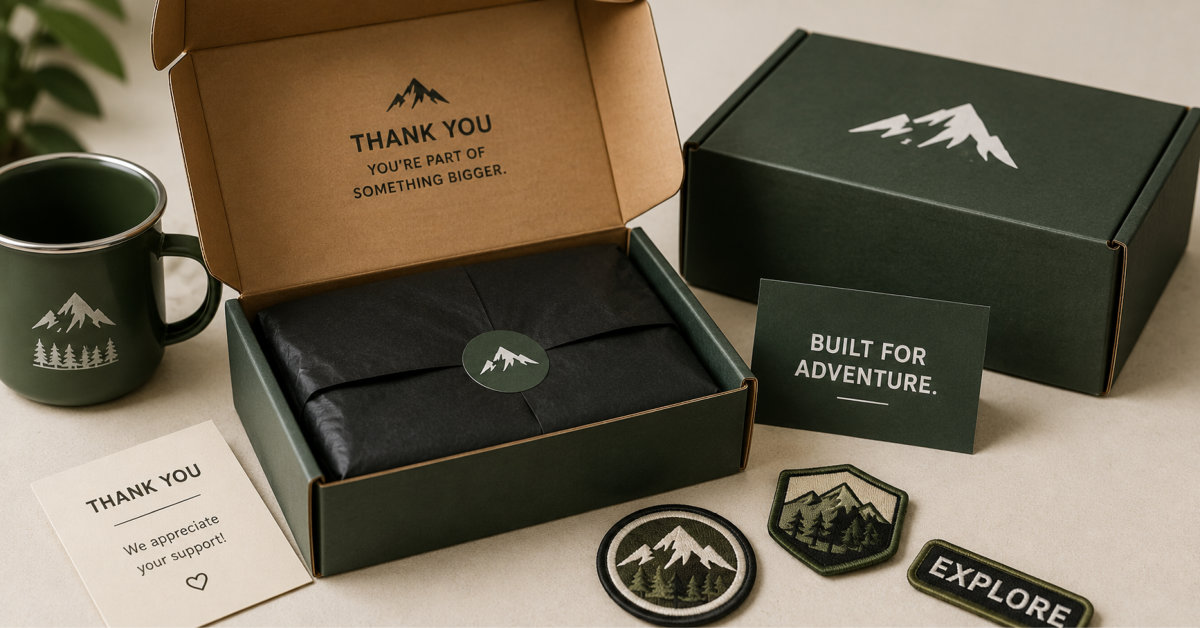
Custom packaging and physical swag can support DTC retention when they reinforce a genuinely strong product experience, give customers something useful or collectible, and are tested against repeat purchase, margin, and customer-feedback metrics rather than treated as automatic loyalty.
The delivery is one of the few moments when a digital-first brand has a customer’s full physical attention. The opportunity is not adding more stuff to the box. It is making one thoughtful detail worth keeping.
For a direct-to-consumer (DTC) brand, getting the first sale is only the beginning.
The real challenge is getting that customer to come back.
Customers have more choices than ever. They can compare products, prices, and reviews within minutes. With so many brands competing for attention, customer loyalty cannot be taken for granted.
This is why customer retention matters.
A good product is essential. Great customer service is also important. But there is another part of the customer journey that is often overlooked.
It is the experience of receiving the order.
Custom packaging and physical swag can make that experience more memorable. A small gift, such as a custom patch, can turn an ordinary delivery into a moment customers remember.
When used correctly, these simple physical touches can help DTC brands build stronger relationships, encourage repeat purchases, and create a stronger sense of community.
DTC customer retention is the ability of a brand to keep customers coming back after their first purchase.
A retained customer may buy again, subscribe to a product, recommend the brand, follow its social channels, or become part of its community.
The goal is not just to make one sale.
The goal is to build a relationship.
This is important because acquiring a new customer can be expensive. Brands may spend money on paid advertising, influencer campaigns, social media, and other marketing channels.
An existing customer already knows the brand.
They have already experienced the product.
If that experience was positive, convincing them to buy again can be easier than convincing a completely new person to make their first purchase.
For online brands, the customer journey can feel very digital.
A customer discovers a product online.
They visit the website.
They add an item to their cart.
They pay.
Then they wait for delivery.
The brand may have only a few physical touchpoints with that customer.
The package is one of the most important.
When the customer finally receives the order, the packaging becomes part of the brand experience.
A plain package delivers the product.
A thoughtful package can deliver an experience.
This difference matters.
A carefully designed box, branded insert, thank-you card, sticker, or custom patch can make the customer feel that the company has put extra thought into the order.
Unboxing has become an important part of ecommerce culture.
Customers often share interesting packages on social media. Some create unboxing videos. Others photograph their orders and post them online.
This creates an opportunity for DTC brands.
The package can become a marketing tool without feeling like an advertisement.
Imagine opening a package and finding the product you ordered.
Then you notice a small custom patch inside.
You were not expecting it.
That unexpected moment can make the purchase feel more special.
The customer may keep the patch, use it, or share it online.
A small physical item can create a second interaction with the brand after the sale.
Digital rewards are useful.
Discount codes, loyalty points, and email offers can encourage customers to return.
But they are also easy to forget.
A physical item is different.
A customer can see it, touch it, keep it, and use it.
It can remain in their home, on their clothing, or on their gear long after the original order has arrived.
That creates repeated exposure to the brand.
A custom patch is a good example.
It does not need to be expensive or large.
A well-designed patch can become a small reminder of where the customer bought their product.
Petsonalisd patches have an advantage over many other types of swag.
They can be designed around almost any brand identity.
A clothing company can create a fashion-focused patch.
An outdoor company can use an adventure theme.
A fitness brand can create a challenge patch.
A gaming company can design a character patch.
A motorcycle brand can create a bold emblem.
The design can reflect the personality of the business.
The best patches do not always look like advertisements.
Instead, they look like something customers would genuinely want to own.
That distinction is important.
If the patch feels useful or collectible, customers are more likely to keep it.
One of the most interesting ways to use custom pvc patches is to make them collectible.
Instead of creating one design and giving it away forever, a brand can create different versions over time.
For example, a brand might release:
This gives customers a reason to look forward to future designs.
A customer who receives one patch may become interested in another.
The physical item becomes connected to the customer’s relationship with the brand.
It is no longer just free merchandise.
It becomes part of the brand’s story.
Scarcity can make physical swag more interesting.
A brand could create a limited-edition patch for a product launch.
For example, the first 300 customers might receive a special patch.
Once those patches are gone, the design is retired.
This can create a sense of exclusivity.
The same approach can be used for anniversaries, seasonal collections, collaborations, and special events.
Customers are not only buying a product.
They are also receiving something that represents a particular moment in the brand’s history.
Physical swag can also become part of a loyalty program.
A brand could give customers different rewards based on their purchase history.
For example, a first order could include a sticker.
A second order could include a standard custom patch.
A third order could include a limited-edition patch.
VIP customers could receive an exclusive design.
This creates a simple reward system.
Customers have another reason to continue engaging with the brand.
The reward does not always need to be a discount.
Sometimes, exclusivity can be just as appealing.
Strong brands are easy to recognize.
They use consistent colors, graphics, language, and design.
Packaging is another opportunity to reinforce that identity.
A DTC brand can use custom boxes, tissue paper, cards, stickers, tape, labels, and patches.
Each element can work together.
The result is a consistent experience.
The customer sees the same personality on the website, product, packaging, and physical swag.
This consistency can make the brand easier to remember.
Not all swag is valuable.
A random promotional item may end up in a drawer or trash bin.
The goal should not be to give customers more stuff.
The goal should be to give them something worth keeping.
This is where design matters.
A custom patch should be attractive.
It should fit the customer’s interests.
It should feel connected to the product.
It should also be easy to use.
For example, a well-designed patch may work on a jacket, backpack, cap, or other suitable item.
When customers can use the item, its value increases.
There is a common mistake brands make with promotional merchandise.
They try to put too much information on it.
A patch does not need a website address, phone number, slogan, and product list.
Too much information can make the design look like an advertisement.
A simple design can be much more effective.
A recognizable logo, symbol, mascot, or visual element may be enough.
The goal is to create something customers want to wear or display.
If they use it, the brand can benefit from the visibility naturally.
Digital advertising stays online.
A patch can move into the real world.
A customer may attach it to a jacket.
They may put it on a backpack.
Someone else notices it.
They ask about it.
The customer explains where it came from.
That creates a natural brand introduction.
The customer has effectively become a small part of the brand’s marketing.
This does not happen with every patch.
But when the design is attractive and relevant, it can create organic exposure.
A well-designed piece of swag can also encourage customers to create content.
Customers may post photos of their orders.
They may show how they use the patch.
They may include it in outfit photos.
They may create an unboxing video.
Brands can encourage this behavior with a simple message inside the package.
For example, customers could be invited to share their setup or tag the brand.
This can create user-generated content without requiring a large advertising budget.
The content also feels more authentic because it comes from real customers.
Personalized swag can make the customer experience feel more thoughtful.
Not every customer needs to receive the same item.
A brand can create different patches for different customer groups.
Outdoor customers might receive an adventure-themed patch.
Fans of a specific product line could receive a matching design.
Long-term customers could receive an exclusive patch.
This makes the reward feel more relevant.
Relevance is one of the most important factors in promotional merchandise.
A customer is more likely to keep something that matches their interests.
Small ecommerce businesses often compete with companies that have much larger marketing budgets.
Professional packaging can help create a stronger first impression.
The product is still the most important part.
But packaging adds another layer of perceived quality.
A carefully packed order can communicate attention to detail.
It tells the customer that the brand cares about the experience.
That feeling can influence how the customer remembers the purchase.
It can also help build trust.
Discounts are one of the most common ways to encourage repeat purchases.
They can work well.
But they are not the only option.
If customers always receive discounts, they may begin to wait for the next sale.
This can reduce the perceived value of the product.
Physical swag offers a different type of incentive.
Instead of giving customers another reason to buy because the price is lower, the brand gives them another reason to buy because they feel connected to it.
That can create a stronger emotional relationship.
Some of the strongest DTC brands build communities around their products.
Customers do not simply buy something.
They identify with the brand.
They follow its releases.
They participate in events.
They share content.
They collect products.
Custom patches can support this feeling.
A patch can act as a small symbol of membership.
When customers see other people using the same design, they may feel connected to a larger group.
This can be especially effective for brands in outdoor, fitness, gaming, streetwear, motorcycle, sports, and lifestyle markets.
A successful campaign does not need to be complicated.
Start with a clear goal.
Maybe you want more repeat purchases.
Maybe you want more user-generated content.
Maybe you want to improve the unboxing experience.
Choose one primary objective.
Then create a patch that supports that objective.
The design should match the brand.
It should be easy to recognize.
It should also be something customers would actually want to keep.
Next, decide who should receive it.
You could include the patch with every order.
You could reserve it for repeat customers.
You could give it to VIP members.
You could use it for a limited-time campaign.
There is no single correct approach.
Testing will tell you what works for your audience.
Physical swag should not be treated as a marketing expense that cannot be measured.
DTC brands can track several metrics.
Measure how many customers return and make another purchase.
Look at how much revenue customers generate over the entire relationship.
Track how often customers place orders.
See whether repeat customers are spending more.
Compare how many customers remain active over time.
Track posts, photos, videos, and mentions related to the campaign.
See whether customers are bringing new people to the brand.
These metrics can help determine whether the investment in packaging and swag is creating real value.
A DTC brand does not need to send thousands of patches immediately.
Start with a smaller campaign.
For example, send a custom patch with a limited number of orders.
Then compare the results with customers who received standard packaging.
Look at repeat purchases.
Check customer feedback.
Monitor social engagement.
If the results are positive, expand the campaign.
This approach reduces risk and gives the brand useful data.
Customers can notice poor quality.
If the item feels disposable, it may hurt rather than improve the experience.
Very small details may not reproduce well on embroidered patches.
Simple shapes and strong visual elements often work better.
A gift should match the audience.
Think about what customers would actually use.
More is not always better.
One memorable item can be more effective than several random products.
A patch becomes more interesting when customers understand why it exists.
Give it a purpose.
Connect it to a product, event, milestone, or community.
Packaging cannot compensate for poor quality.
The product and customer service must come first.
Swag should enhance a good experience.
Imagine an online outdoor clothing brand launching a new collection.
The company creates a limited-edition embroidered mountain patch.
The first 300 orders receive the patch.
Each package also includes a short card explaining the story behind the design.
Customers begin sharing photos of their orders.
Some put the patch on their backpacks.
Others add it to their jackets.
The brand shares selected customer photos on social media.
A few months later, the company releases another limited-edition patch.
Customers who received the first one now have a reason to look for the next design.
The patch has become part of the brand experience.
It is no longer just a free gift.
It is something customers associate with the company.
DTC marketing is highly digital.
Brands use email, social media, paid advertising, influencers, search engines, and mobile apps.
These channels are important.
But physical experiences still have a unique role.
A customer can scroll past an advertisement in seconds.
A patch can remain on a backpack for years.
A customer may forget an email.
They may continue seeing the patch every time they use their jacket.
That repeated physical exposure can help keep the brand familiar.
The most important idea behind custom packaging and physical swag is simple.
A customer order should not feel like the end of the relationship.
It should feel like another step.
The product solves the customer’s problem.
The packaging creates anticipation.
The thank-you message shows appreciation.
The patch adds a surprise.
The collectible design can create future interest.
The social sharing opportunity can build community.
Each small detail contributes to the overall experience.
Customer retention does not always require a complicated strategy.
Small details can have a meaningful impact when they are used with purpose.
Custom packaging gives DTC brands control over an important part of the customer journey.
Physical swag gives customers something they can keep.
Custom patches can take that idea even further.
They can be collectible.
They can represent a community.
They can support social sharing.
They can reinforce brand identity.
Most importantly, they can give customers a physical reminder of the brand.
The goal is not to give away something simply because it is free.
The goal is to create something customers value.
When a custom patch feels like a genuine reward rather than a cheap promotional item, it can become part of the customer’s relationship with the brand.
For DTC businesses, that relationship is what turns a one-time buyer into a returning customer.
Custom patches can support customer retention when they enhance a strong product and delivery experience, feel relevant to the customer, and are part of a measured post-purchase campaign. A patch alone does not create loyalty. It can create a memorable moment, reinforce brand identity, and give customers a reason to feel connected to a collection or community. Test it against a similar customer group receiving standard packaging, then compare repeat purchase rate, contribution margin, customer feedback, and user-generated content over 60 to 90 days before expanding.
Not every order should include a custom patch because a universal insert can become an unnecessary fulfillment cost or feel irrelevant to some customers. Start with a specific audience, such as first-time customers above a chosen order value, repeat customers, VIP members, customers who buy a particular collection, or participants in a limited campaign. A targeted approach lets you match the item to the customer and measure results against a control group. If the economics work and customer feedback is strong, you can expand distribution with confidence.
Custom patches are not inherently better than discount codes because they solve different retention problems. A discount provides immediate financial value and can work well when price is the main barrier to a repeat purchase. A patch can strengthen identity, collectibility, and brand affinity when customers value the item or community it represents. The strongest programs often combine both approaches selectively: a physical touchpoint creates a memorable delivery moment, while a targeted digital offer or loyalty milestone supports the next relevant purchase without training every customer to wait for a sale.
A DTC brand can measure packaging-insert ROI by comparing a treatment cohort that receives the insert with a similar control cohort that receives standard packaging. Track repeat purchase rate, time to second order, contribution margin, average order value, customer lifetime value, QR scans, referrals, user-generated content, reviews, and packaging sentiment. Include every cost: item production, inbound freight, storage, pick and pack, added packaging, waste, and fulfillment errors. Shopify also recommends monitoring damage, returns, and packaging-related support tickets when assessing unboxing changes.
A custom patch becomes valuable when it has a clear visual identity, useful attachment method, durable quality, and a story that connects it to the customer’s interests or relationship with the brand. The best designs avoid looking like miniature advertisements. Use a recognizable symbol, mascot, location, challenge, collection, or collaboration theme that suits the customer’s lifestyle. Keep the visual simple enough to reproduce cleanly and choose materials appropriate to where it will be used. Limited editions and transparent collection rules can add anticipation without relying on misleading scarcity.
A great DTC experience does not end when the package reaches the customer’s door.
That is where another part of the relationship begins.
Custom packaging creates anticipation. Physical swag creates surprise. A well-designed custom patch can create a lasting reminder.
When these elements work together, a simple delivery can become a memorable brand experience.
And memorable experiences give customers more reasons to come back.




