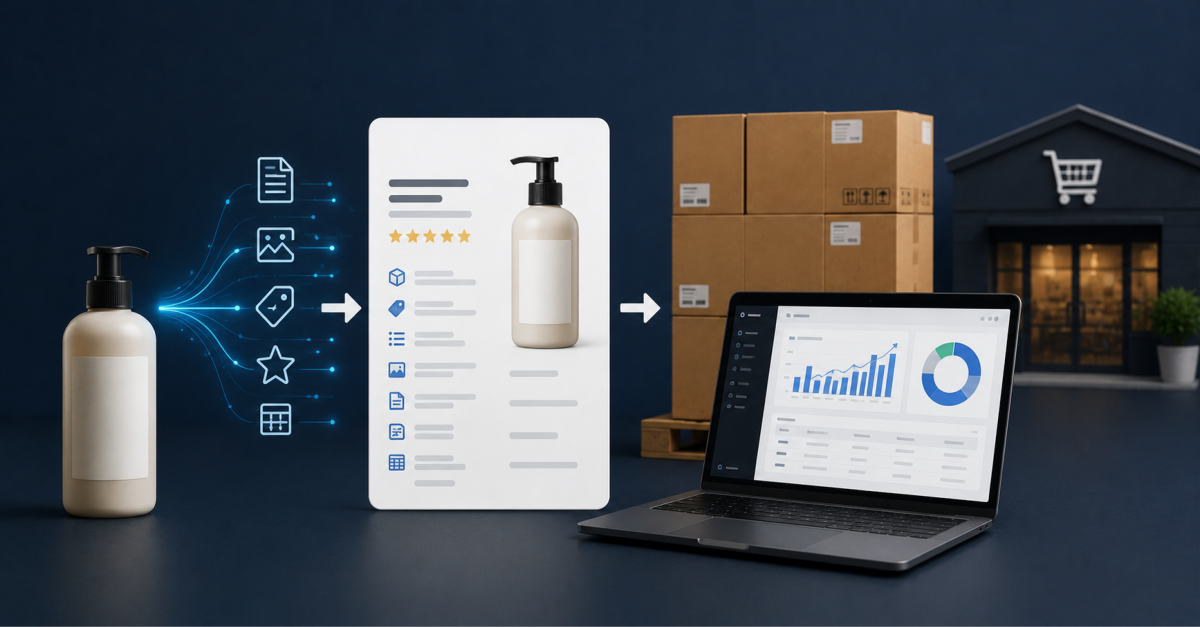
DTC brands that move into wholesale quietly inherit a B2B data problem: if you don’t cleanse and enrich the retail‑buyer CRM before each push, you end up launching channels on stale contacts that cost more than a proper data refresh.
Flows and ROAS get all the dashboards, but a wholesale launch lives or dies on whether the buyer information in your CRM still matches the humans on the other end.
Most DTC teams can tell you their Klaviyo flow performance down to the percentage point. Fewer can tell you how many of the retail buyer contacts in their HubSpot are still accurate. That gap is easy to miss, because nobody’s bonus depends on it, and it doesn’t show up on a dashboard the way an abandoned-cart email does.
But once a brand starts selling into wholesale, retail, or distribution, it’s running two businesses at once. One is consumer, and it gets all the attention. The other is B2B, and it’s usually managed in whatever CRM the ops team set up two years ago and hasn’t touched since. That second CRM decays exactly the way any B2B database does, and that’s where data enrichment services quietly become relevant to a DTC brand — not as some enterprise SaaS concept, but as a practical fix for a real, overlooked part of the business.
A retail buyer changes jobs. A distributor’s account manager gets promoted, or leaves for a competitor. The agency handling your affiliate program reshuffles who owns your account. None of this is unusual, and none of it gets reported back to you — the contact record in your CRM just quietly stops matching reality.
Industry estimates put B2B contact data decay at roughly 20 to 30 percent a year. Apply that to a wholesale program that’s been running for two or three years without anyone cleaning it up, and there’s a real chance close to half the retail and distributor contacts you’re counting on for a channel launch are out of date. Nobody notices until a campaign gets sent to the wrong buyer, or a rep spends an afternoon trying to reach someone who left the company eight months ago.
Enrichment isn’t just “buy more data.” It’s filling in what’s missing on the records you already have — job title, department, company size, region, tech stack, LinkedIn profile — and updating what’s gone stale. Done properly, it runs through a gap assessment first, so you can see exactly what’s missing before anything changes, then an attribute-fill pass, then validation against live sources, and a human review step for anything ambiguous. That last step matters more than it sounds like it should: an algorithm can flag that a job title looks outdated, but it takes a person to figure out whether “Director of Merchandising” and “Head of Buying” at the same retailer are the same role or two different ones.
For a DTC-to-wholesale brand, the practical result is a HubSpot (or Salesforce, if that’s what the ops side runs) that actually reflects who’s buying from you right now, not who was buying from you when the account was first set up.
Enrichment and cleansing get talked about like they’re the same thing, and they’re not. Cleansing techniques — deduping records, standardizing company names and job titles, stripping out contacts that are flat-out dead — deal with what’s wrong in the database. Enrichment deals with what’s missing. Run enrichment on a database that hasn’t been cleansed first, and you end up adding detail to duplicate or dead records, which just makes the mess more convincing.
The right order is cleanse first, enrich second. A vendor that only offers one half of that is handing you half a fix.
Most data enrichment companies will tell you they use AI validation, which is true of basically all of them at this point and isn’t much of a differentiator on its own. The more useful questions are about the edge cases: what happens when a title or company match is ambiguous, does a person review it or does it just get flagged and left, and what’s the actual turnaround time on a database in the tens of thousands of records rather than a demo-sized sample.
CRM compatibility is worth confirming directly, since a lot of DTC-to-wholesale brands run HubSpot rather than a heavier enterprise CRM, and a vendor built around Salesforce exports can hand back a file that needs manual reformatting before it’s usable. And it’s worth asking outright whether cleansing is bundled with enrichment or sold as a separate line item, since — as above — buying one without the other is a half-measure.
Nobody builds a wholesale or retail channel and plans to let the CRM behind it rot. It just happens, quietly, while the team’s attention stays on the consumer side of the business where the metrics are louder. Before the next retail push or distributor expansion, it’s worth checking how much of that partner data is still accurate — because a channel launch built on stale contacts costs more than the enrichment would have.
A practical cadence is at least once a year for smaller wholesale programs and every six months once you’re in active expansion mode. The more frequently you add new retailers, distributors, or agencies, the faster the data decays, so treat enrichment like you treat ESP list hygiene, not a one-off project.
The highest-value fields are role and seniority (buyer vs assistant), department, region or territory, and a verified work email plus LinkedIn profile. These are what your reps rely on to route outreach, personalise pitches, and avoid embarrassing situations like pitching a line review to someone who no longer owns the category.
Sales can update a handful of key accounts, but once you have hundreds or thousands of contacts, manual updates turn into unplanned admin work that rarely gets done. Enrichment vendors can sweep your entire database at once, so reps spend their time talking to live buyers instead of guessing which records are still valid.
Skipping cleansing means you’ll enrich duplicates, dead contacts, and junk records, which makes the database look more complete while keeping all the underlying problems. That leads to inflated account counts, misrouted campaigns, and noisy reporting, so you end up paying to polish bad data instead of fixing it.
Start by confirming they support your actual CRM and can return data in a format you can import without manual surgery. Then ask for their process on ambiguous matches, whether cleansing is included, typical turnaround for your record volume, and a small paid pilot—those answers usually reveal who will be a partner versus just a data file provider.