Free every Thursday · 60,261 Readers
Fastlane Insider Newsletter: What's working for Shopify in the AI era?
Free every Thursday · 60,261 Readers
Fastlane Insider Newsletter: What's working for Shopify in the AI era?

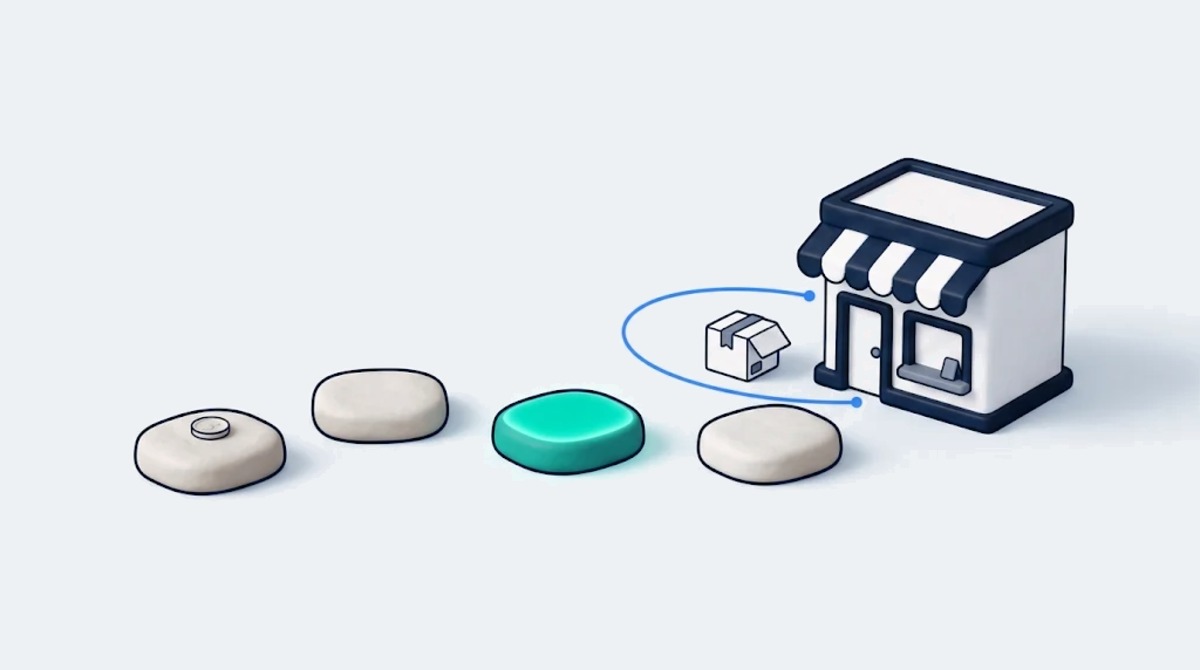
Many acquisition plans stall on sequence rather than channel choice: new channels switched on before anyone can tell whether the last one paid for itself.
Let’s say you are planning 2027 right now. You have Meta running, some Google Shopping, a TikTok test somebody talked you into, a handful of creators, and a Black Friday weekend that may hand you one of the biggest batches of new customers you see all year. The plan on the whiteboard says add more. More channels, more creators, maybe retail media, maybe something for AI search.
Shopify’s own guide to ecommerce customer acquisition is a good map of the territory. It sorts channels into paid, organic, owned and partner buckets, and lists more than a dozen of them. It is a fair list. The trouble starts when a merchant reads a list like that as a to do list.
Now, the mistake I watched over and over during my years as a Senior Merchant Success Manager at Shopify was not picking the wrong channel. It was premature complexity: switching on too many channels, apps and tactics before the fundamentals were solid, then being unable to tell which part was working. This piece is for the founder or marketer between roughly $10K and $1M a month who wants a sequence instead of a list. If you are earlier than that, the stage table below tells you what to ignore.
Start an acquisition plan with what one new customer costs on each channel and how long that customer takes to pay you back, not with the list of channels you could run. The list is easy to find; the costs are where plans go wrong. The market is still growing: the latest US Census Bureau ecommerce estimates show seasonally adjusted online sales up about 10% year over year in the third quarter of 2026, at close to 18% of all retail. Growth like that helps, but it does not tell you what your next customer will cost at auction.
Sam Piliero, founder and CEO of the media buying agency The Moonlighters, put the auction side plainly when he joined me on episode 392 of the podcast, published in March 2025. His claim was that advertising costs had roughly tripled since 2020, against a historical pattern where CPMs doubled about every seven years. He also explained why: tools like Advantage+ on Meta and Performance Max on Google have made every person on those platforms easier to show an ad to. His answer was not to spend more. In his words:
I like to pull back a little bit from that and think is that what’s actually best for driving profits for a business?
That question is the whole game for 2027. A channel list invites you to ask “where else can I show up?” The profit question asks “which of the places I already show up is paying for itself?” Those lead to very different plans.
The list approach also has a hidden cost that rarely makes it into the spreadsheet: attention. Every channel you add needs creative, a weekly check, a budget decision and a way to measure it. For a team of one to five people, the third and fourth channels usually get run badly, and a badly run channel produces numbers you cannot trust. You end up with more data and less certainty.
So before adding anything, the question to answer is narrower and more useful: for the channels you already pay for, what does one genuinely new customer cost, and how long does it take that customer to pay you back?
The customer acquisition cost worth planning around is channel specific and counts only first time customers, because a blended average across channels can look healthy while individual channels lose money. The formula itself is simple: total acquisition spend divided by new customers acquired in the same period. Shopify’s guide adds the right detail on what goes into the spend side: ad spend, creative, agency and contractor fees, creator fees, software and a fair share of internal time. Leave retention costs out, such as loyalty programs, win back flows and post purchase email. Most stores that calculate CAC from ad spend alone undercount it, because creative, fees and tools never make it into the math.
Where most merchants go wrong is the denominator. Platform dashboards count conversions, which include returning customers and people who would have bought anyway. Pull first time customers from Shopify Analytics instead. Shopify tells you who is new, not which channel caused the sale, so pick one attribution rule and window for first orders (UTM source on the first order is a fine start), check that the customers credited to each channel add up to your store total, and call the result attributed CAC. Holdout tests give you incremental CAC, which is the number that settles budget arguments. My earlier piece on where your next ad dollar should go walks through why Meta, Google and Shopify will never agree on totals, and how holdout tests settle the arguments for channels like branded search and retargeting.
Then split it. A blended CAC of $60 tells you almost nothing if one channel brings customers in at $33 and another at $133. The blend is an average of a good decision and a bad one.
Finally, put a clock on it. Payback is how many months of contribution margin from a new customer it takes to cover what you paid to acquire them. Polar Analytics puts a good CAC payback for most DTC brands at three to six months. I treat that range as a sanity check rather than a target, because a consumable with a 30 day reorder cycle and a mattress with no reorder cycle should not be judged by the same clock.
If you are in the Growing stage, four numbers per channel (cost per new customer, first order contribution, months to payback, and the share of new customers who place a second order) are the whole dashboard you need. If you are Scaling, add new customer share by channel each month so you can see whether growth is coming from new buyers or from spending more to reach people who already knew you.
The next acquisition channel to add depends on your stage: one channel you can run yourself when Starting, owned second order flows before any new paid channel when Growing, one measured paid channel at a time when Scaling, and fewer overlapping tools when Leading. The table below is the short version of how I would sequence it.
If you are just starting, pick the one channel where your customer already spends time and where you can make the creative yourself. For a visual product that is usually organic social or a small Meta budget; for a product people search for by name or problem, it is Google Shopping or content. One channel, run well for a few months, teaches you more than four run badly.
In the Growing stage, the counterintuitive move is to build owned flows before another paid channel. A welcome series, a post purchase sequence and a second order offer work on customers you have already paid for, which shortens payback on customers you have already paid for, without a new auction. After that, creators or Shopping are the natural second channel, because both reuse what you have already learned about your customer.
In the Scaling stage, you can afford to add paid channels, but one at a time and only with a way to see each one’s new customers separately. If a channel cannot show you first time buyers or a lift in a holdout test, it cannot earn more budget.
In the Leading stage, acquisition growth usually comes from removing overlap: two attribution tools, three review apps, a retail media budget nobody has tied back to margin. Treat Amazon or Walmart ads as a marketplace margin decision rather than a store acquisition channel.
When this composite store splits its acquisition cost by channel, its $60 blended CAC turns out to hide a $133 TikTok test worth pausing and a search number that needs a closer look. To be clear before the numbers: this is an illustrative composite built from patterns I hear in conversations with merchants and agency partners, not a real store, and every figure is an assumption chosen to make the math visible.
Picture a skincare brand in the Growing stage doing about $60K a month. It spends $18,000 a month on acquisition and picks up 300 first time customers, so blended CAC is $60. Average order value is $55 and contribution margin after product, shipping and fees is 55%, so a first order contributes about $30. On the blended view, an average new customer takes about two orders to pay back. Uncomfortable, but survivable.
Split by channel, the picture changes. Meta gets $11,040 and brings 160 new customers, a $69 CAC. Google Shopping and search get $2,970 and bring 90, a $33 CAC, but roughly half of that spend is branded search on people already typing the brand’s name. The TikTok test gets $1,995 and brings 15, a $133 CAC. Creator gifting and fees get $1,995 and bring 35, a $57 CAC.
I would make three calls. First, pause the TikTok test. Not because TikTok is a bad channel. Because it is a second paid social channel switched on before the first one is fully understood, and at $133 a customer it needs more than four orders to pay back. Fifteen buyers is a small sample, so this is a pause, not a verdict. Second, split branded search into its own line, by spend and by customers, and run a holdout before giving it credit, because Shopping’s standalone CAC is unknown until that split is done. Third, keep creators: at $57 they are competitive with Meta and the content can feed Meta ads.
A fair pushback from a bigger brand is that channels feed each other: a creator video gets seen, and the sale closes later through Meta or branded search, so judging each channel alone undercounts the top of the funnel. That is real. It is also why the calls above lean on holdouts and fixed decision windows rather than last click reports. Sequencing is about measuring one change at a time, not about staying on one channel forever.
Then move the freed $2,000 a month into a second order program for each monthly cohort of 300 new customers, which brings me to the part most acquisition plans skip.
Acquisition spend only pays off once a cohort of new customers has earned back its CAC in contribution margin, and for most stores that takes more than one order. The composite store above shows why: at a $69 Meta CAC and $30 of contribution per order, a customer who buys once loses money, a customer who buys three times makes it.
Black Friday makes this sharper. Ometria’s Black Friday 2025 data found that only 4% of the new customers its retailers acquired over Black Friday 2024 made a repeat purchase within 12 months, and that Black Friday buyers were six times less likely to return than a typical new customer. I dug into this on episode 498, on why most Black Friday customers never buy again, alongside other datasets that came in much higher. My takeaway on the show from comparing them was that “nobody’s average is going to be your number, you know, and your number is honestly the one that counts.”
So measure your own. Tag first time buyers from each acquisition channel, then run a cohort report at 30, 60 and 90 days on how many placed a second order. If your Black Friday cohort repeats at a fraction of your normal new customer rate, that cohort will take far longer to pay back than the weekend report suggests.
The fix is not complicated, and it belongs in your acquisition budget rather than your retention budget. A welcome path for first time buyers that tells your story, a post purchase sequence timed to how fast your product gets used, and a second order offer that does not train people to wait for the next discount. For the full playbook, Fastlane’s guide on how to turn first time buyers into repeat customers goes deeper on the follow up, and my piece on how Shopify brands cut acquisition costs without raising ad spend covers the owned channel side.
For Growing stage brands, this is the lever I would test first in 2027, because every point of second order rate shortens payback on every paid channel at the same spend.
AI search grew fast through 2026 and belongs in a 2027 plan, but for most Shopify stores it is still small enough that the right first move is cleaning up product data, not buying a new tool. The growth numbers are genuine. Shopify’s Q1 2026 commerce data showed referral sessions from AI chatbots up more than 8x year over year and AI referred orders up nearly 13x. In TechCrunch’s coverage of Shopify’s second quarter earnings call, AI driven traffic and orders had tripled year over year, while traditional search sessions were up 1.3x over two years.
The same Shopify data also says organic search still refers more sessions to merchants than all the tracked AI platforms combined. That is the honest frame: steep growth from a small base. I would apply my usual 18 month test here. Will AI search matter more in 18 months? Almost certainly. Does that mean a Starting or Growing stage store should add a paid AI visibility tool now? Usually not.
What does pay off at every stage is the work AI systems read when they decide which products to recommend: clear product titles, descriptions that say who the product is for and what it does, accurate pricing and stock, visible shipping and return policies, and real reviews. That work also lifts conversion on the traffic you already have, which is why I would pair it with finding the funnel step that leaks before you test anything. A store that converts better makes every acquisition channel cheaper.
Once AI referrals show up consistently in your own analytics, it can make sense to work on how your brand appears in AI answers more deliberately, and I offer an AI visibility service for Shopify brands for that. Until then, the product data work above is the part to do first, and it costs time rather than budget.
The plan for 2027, then, is a sequence. Know your per channel CAC on first time customers. Shorten payback with the second order. Add one channel at a time, and only when your stage can measure it. Everything else waits.
A good customer acquisition cost is one your customers pay back within a few months from contribution margin, not a single dollar figure. Benchmarks vary widely by category and revenue stage, so a national average tells you little about your store. Work it out from your own numbers instead: take average order value, multiply by contribution margin to get first order profit, then compare that with CAC for each channel. If a channel’s CAC is higher than first order profit, it only works if customers come back. Polar Analytics puts a good payback for most DTC brands at three to six months, which is a reasonable sanity check. A fast reordering consumable can run a higher CAC than a product people buy once every few years.
Calculate customer acquisition cost by channel by dividing each channel’s full acquisition spend by the first time customers that channel brought in during the same period. Include ad spend, creative, creator or affiliate fees, agency fees and channel specific software. Leave out retention costs such as loyalty programs and post purchase email. Use first time customer counts from Shopify Analytics rather than platform conversions, because ad platforms count returning customers and people who would have bought anyway. Split branded search from non branded search, since branded search often takes credit for customers who already knew you. Review the numbers monthly, and run a holdout test on any channel where the attribution is in doubt.
A new Shopify store should start with the single channel where its customers already spend time and where the founder can make the content personally. For visual products, that is often organic social or a small Meta budget. For products people search for by name or by problem, Google Shopping or helpful content usually fits better. Run that one channel for a few months before adding a second, so you learn what your customer responds to and what one new customer really costs. Skip retail media, multiple paid social platforms and attribution software at this stage. They add cost and noise before you have enough orders to read the results.
Most Shopify stores should invest time rather than money in AI search for 2027, starting with clean product data. AI referred traffic and orders to Shopify stores grew several times over in 2026, but organic search still sends more sessions than all tracked AI platforms combined. The work that helps AI systems recommend your products is the same work that helps shoppers buy: clear titles and descriptions, accurate prices and stock, visible shipping and return policies, and real reviews. Once AI referrals show up consistently in your own analytics, a more deliberate AI visibility program can be worth the spend.
Add a new acquisition channel when your current channels pay back within your target window, you can measure first time customers from the new channel separately, and someone on the team has time to run it well. If your existing channels are still unprofitable on first orders and your second order rate is low, fix those before adding anything. A new channel rarely rescues a weak offer or a leaky funnel. When you do add one, add a single channel, give it a fixed test budget and a decision date, and judge it on cost per new customer and early repeat rate rather than platform reported return on ad spend.