

Selling eyewear online works best when you serve a defined niche rather than the whole market. More than 80% of frames and lenses are still bought in stores, so online sellers win on price, selection, and contact lens reordering, and by removing prescription, fit, and returns friction.
Americans bought fewer frames and had fewer eye exams in 2025, yet the optical industry still grew to $69.5 billion. Shoppers are spending more per purchase and choosing more carefully, which rewards the sellers who make that choice easy.
The U.S. optical industry, which includes eyewear and other vision related products and services, is a $69.5 billion industry. It even grew in 2025 despite a downturn in people seeking eye exams. According to The Vision Council’s Market inSights report, people bought fewer optical products and had fewer exams, but spent more per purchase, and the average exam cost rose by $10 compared to 2024. In other words, consumers kept spending on eyewear even while cutting back elsewhere. They just became more deliberate about it.
If your company is new to selling eyewear or considering expanding into the eCommerce eyewear market, you probably have questions about marketing. In this article, I’ll discuss who buys eyewear, how to identify your target market, where online sellers have an edge, and the site experience mistakes to avoid.
Almost everyone buys eyewear at some point: about 94 percent of Americans regularly wear some type of eyewear, which The Vision Council puts at around 250 million U.S. adults. Anyone can develop the need for vision correction, including children. But “eyewear” means more than just prescription eyeglasses. The category also includes sunglasses and contact lenses, including cosmetic lenses, and each has its own buying pattern. Non prescription sunglasses were the one major category that grew in unit volume in 2025, up 2%, while most other categories declined.
That’s a large potential audience, but I wouldn’t recommend marketing to everyone. The most effective strategy is usually to identify smaller groups of consumers with specific needs and preferences, then build your assortment and messaging around them.
Consider your company’s current customer data a roadmap for deciding what type of eyewear to sell. If your customers are young and trend focused, carry glasses brands that appeal to them. For example, brands like Miu Miu and Chloe glasses offer fashion forward eyewear. If your customers are price conscious, compete on value instead. Competitive pricing, promotions, and products that offer useful features at accessible prices can help differentiate your business.
The data you already have usually answers this question faster than any survey. Look at the average order value, the share of orders placed with a discount code, and the age range of repeat buyers. A store whose best customers rarely use discounts and buy new seasonal items is set up for a fashion assortment. A store whose repeat buyers wait for promotions is set up for value. Whether you’re doing $10K months or $1M months, picking one lane first and adding the second later is almost always cheaper than trying to be both at once.
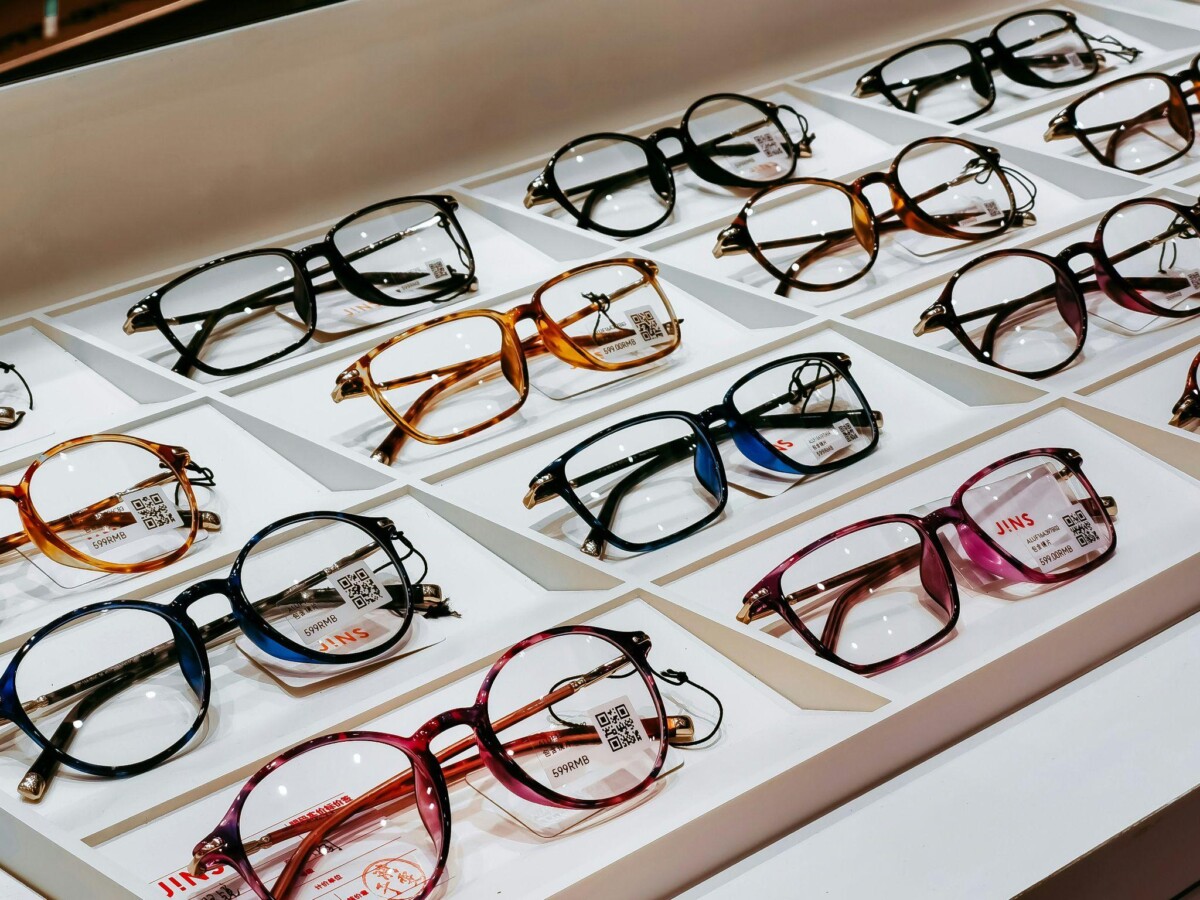
Most eyewear is still bought in person. According to The Vision Council, more than 80% of frames and lenses were purchased in physical locations in 2025, while contact lenses had the highest share of online purchases of any optical product. That split tells you where online sellers have the easiest path and where they have to work harder.
Three things keep shoppers in physical stores. The first is the all in one visit: many vision care providers sell glasses, so people can get an exam and buy frames in the same appointment. The second is try-on, since shoppers can see how the glasses look and feel before paying. The third is local service, because people like knowing someone nearby can handle adjustments, returns, and repairs.
Online eyewear retailers have three distinct advantages. Price is the first: online shoppers can compare prices and find deals more easily than they can across local optical shops. Contact lens reordering is the second, because repeat purchases of a known prescription are simple to do online, which is why this category leads in online share. If you sell contacts, treat that reorder as a retention program rather than a one time sale, the same way replenishment brands compete on convenience and trust rather than discounts. Selection is the third: an online store can offer far more styles, sizes, and niche brands than a single shop can stock.
The practical takeaway is that an online eyewear store should lean into those three strengths and then remove as much of the store’s advantage as it can. The next section covers how.
Site experience decides most online eyewear sales, because the two biggest worries shoppers have, entering a prescription and knowing whether frames will fit, both happen on your product and checkout pages. If your website solves those problems, potential customers are more likely to stay and buy. If it is confusing or unhelpful, they will look for new glasses somewhere else, often at the store down the street.
I recommend working with your website’s UX designers to make the site easy for eyewear shoppers to use. Entering prescriptions should be as simple as possible. Show a sample prescription with each field labelled, explain terms like PD (pupillary distance) in plain language, and consider providing brief instructions or a “Help” section for people struggling with their prescription.
If your site uses AI assistants or chatbots, test them thoroughly before shoppers do. Ask them the questions customers actually ask, such as how to read a prescription, how to measure PD, and whether a frame size will fit, and confirm the answers are accurate.
Since try-on is one of the main reasons people prefer stores, give online shoppers a substitute. One popular option is virtual try-on technology, which uses the shopper’s camera or a photo to show frames on their face. For instance, online eyewear retailer EZContacts offers a virtual try-on tool across its glasses and sunglasses catalog. If a full try-on tool is out of reach for now, accurate frame measurements and photos of the frames on several face shapes go a long way.
Finally, make your return policy clear. One of the most common concerns people have about buying eyewear online is difficulty with returns. State the return window, explain how prescription lenses are handled, and spell out what happens with damaged goods. Putting a short summary of the policy on every product page, not just in the footer, is one of the simplest fixes on this list. For a fuller checklist, see this guide to writing a clear ecommerce return policy.
The strongest eyewear marketing starts narrow: offer something new, different, or more affordable in a specific niche that appeals to your existing customers, rather than trying to appeal to everyone. A store that is known for one thing, such as affordable kids’ frames, polarized sports sunglasses, or designer statement pieces, is easier to remember and easier to recommend.
Use targeted advertising to reach customers who are searching for the eyewear you offer, or who will be soon. Seasonal timing matters here: sunglasses demand rises ahead of summer and travel, while prescription eyewear purchases often line up with the start of the school year and the end of the benefits year, when people use their vision insurance or flexible spending funds before they expire.
If you’re appealing to price sensitive shoppers, try to offer the most value for the price rather than simply the lowest price. Useful features such as lens coatings, included cases, or free adjustments help a value offer stand out without starting a discount race.
Study your brands, not just which ones appeal to your customers, but why. Knowing whether a brand sells because of its shape, its price point, or its celebrity following makes it easier to spot new brands and other opportunities early. Discover some of the top glasses brands here.
If you’re just adding eyewear to an existing store, start with one segment and one or two brands that match the customers you already have, and get the prescription, try-on, and returns experience right before expanding. If you’re already an established eyewear seller, the opportunity is usually depth: more styles within the niche you own, and a smoother reorder experience for repeat buyers.
The best complementary products for eyewear are the ones your target market already uses alongside their glasses. Fashion focused stores often pair sunglasses with matching items such as scarves or purses, which encourages larger orders built around a look. If fashion isn’t your focus, consider practical products people use every day with their eyewear: lens cleaning cloths and sprays, eyeglass cases, retainer cords, and spare nose pads. For contact lens customers, solution and lens cases are natural add ons. Start by looking at what your existing customers buy together, then add the accessories that fit that pattern rather than stocking every option.
Spectacle lenses are by far the largest segment of the worldwide eyewear market, with a market value of over $64 billion according to Statista’s eyewear market outlook. In the U.S., The Vision Council also reports ophthalmic lenses as the highest value prescription category. But going after the largest market segment isn’t always the best strategy for every business. The largest segment is typically the most crowded and competitive, with established players who have years of supplier relationships and lab capacity. Many companies find better opportunities in smaller segments, such as sunglasses, kids’ frames, or specialty contact lenses, where a focused seller can stand out.
Luxury eyewear is not automatically a strong niche, even with high markups. For a store whose audience has a high average income and already buys premium products, it may be a good fit. But if your brand is built around discount products, luxury eyewear probably won’t fit, and your existing customers are unlikely to pay designer prices from you. It is also hard to sell luxury products from a website that isn’t a long term, established dealer for the brand, because shoppers want confidence that the product is authentic and that warranty and service are honored. Build credibility in your current niche first.
Most people still buy glasses in stores. The Vision Council reports that more than 80% of frames and lenses in the U.S. were purchased in physical locations in 2025. Contact lenses are the exception, with the highest share of online purchases of any optical product, largely because reordering a known prescription is simple online. That doesn’t mean online frame sales are a poor bet. It means online sellers need to compete on what they do better, such as price, selection, and convenience, while closing the gap on fit, try-on, and returns, which are the main reasons shoppers still choose a store.
The most effective way to reduce eyewear returns is to help shoppers choose the right frame and enter the right prescription before they order. List full frame measurements on every product page, including lens width, bridge width, and temple length, and show the frames on more than one face shape. Offer a virtual try-on tool if you can. Make prescription entry simple, with a labelled sample prescription and clear help for measuring pupillary distance. Finally, publish a clear return policy that explains how prescription lenses are handled. Shoppers who understand the policy up front are more likely to buy, and less likely to be surprised later.




