Free every Thursday · 61,308 Readers
Fastlane Insider Newsletter: What's working for Shopify in the AI era?
Free every Thursday · 61,308 Readers
Fastlane Insider Newsletter: What's working for Shopify in the AI era?
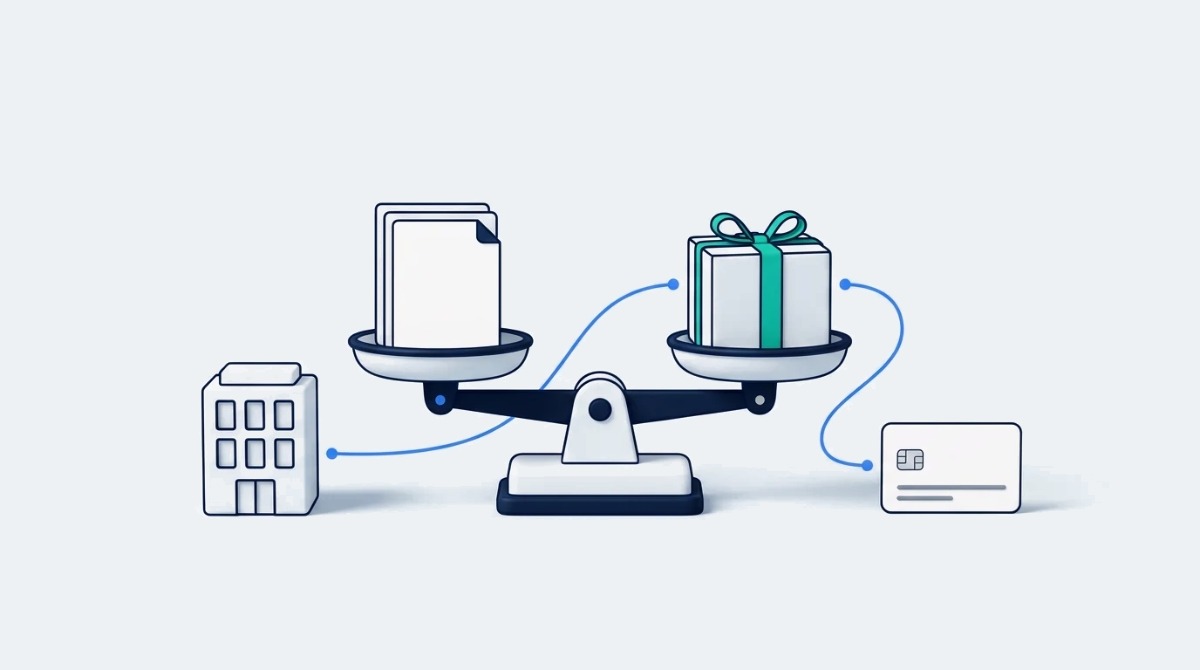
A Hong Kong certificate costs HK$1,545 to file. The secretary, the office, the audit and the tax return arrive every year after that, whether or not the regional sales do.
Comparing Hong Kong company formation prices is usually where an online seller starts, and it is the right place to start only if you already know what the company is for. Hong Kong has a fast online registry, no requirement for local directors, and a tax system that charges only profits sourced in the city. Those strengths are real. They are also easy to oversell to a Shopify merchant whose customers, stock and team sit somewhere else.
Registering a company in Hong Kong makes sense for some ecommerce businesses expanding into Asia or building regional operations. But incorporation does not automatically reduce taxes, unlock payment accounts, or improve shipping. The decision depends on your customers, your operating model, and the costs you will carry every year, not just the filing fee. This guide works through each of those in turn, using the rules published by Hong Kong’s Companies Registry, its Inland Revenue Department and Shopify, as of November 2026.
A Hong Kong company makes sense when an online store has genuine trading activity in the region, such as Asian suppliers, regional partners or customers, and needs a local legal entity to contract, bank or invoice with them. It makes little sense when customers, staff, suppliers and fulfilment all sit elsewhere.
The structure gives an online retailer a separate legal entity for contracts with suppliers, logistics providers and commercial partners. Overseas founders can own and direct a Hong Kong private company without living there. The Companies Registry’s guidance on directors and company secretaries confirms that a non-resident can be a director of a local limited company, while the company secretary, if an individual, should ordinarily live in Hong Kong.
That is the first fork in the decision. Consider a growing Shopify brand that buys most of its stock from manufacturers in southern China and pays them in several currencies. Local contracts and a Hong Kong bank relationship might make supplier payments simpler and give the brand a counterparty its suppliers already recognize. Compare that with a brand that prints on demand in the US and sells mostly to North American shoppers. A Hong Kong company gives the second brand an extra set of filings and nothing it can use.
Before incorporating, map two things: where orders originate and where inventory moves. If both point to Asia, the entity is worth pricing out. If neither does, the money is better spent on the market itself. eCommerce Fastlane’s cross-border ecommerce advice explains why localisation, delivery charges and customer expectations need attention even when a store sells internationally, and none of those depend on where the company is registered.
It also helps to compare Hong Kong against the alternatives before you commit. Fastlane’s breakdown of the best country to incorporate an ecommerce business sets Hong Kong beside Singapore, the US, the UK and Estonia by customer location and supplier location, which is a useful check that Hong Kong is the right jurisdiction and not just the first one you heard about.
A Hong Kong company can support a Shopify Payments application, but registration alone does not qualify you, because Shopify checks the business address, the bank account, the people behind the company and the business type before approving it. Treat it as one requirement among several.
Shopify’s Hong Kong payment requirements state that the business must be registered in Hong Kong SAR and have a Hong Kong SAR business address. Payouts go to a Hong Kong dollar checking account at a Hong Kong bank, in the business’s own name. Savings accounts, multi currency accounts, wire only accounts and money transfer services that imitate bank accounts are not supported. Shopify and its banking partners verify the business, the individuals linked to it and their relationship, and the business name, registration number and address are checked against the Hong Kong business registry.
Each of those is a separate dependency. A registered office from a corporate service provider satisfies the Companies Registry, but you should confirm with Shopify that the address you plan to use meets its business address requirement before you rely on it. The HKD checking account means opening a Hong Kong bank account first, and banks run their own due diligence. They can ask for business plans, supplier contracts and proof of where the business operates, and they can decline. Some business types are also prohibited under the Shopify Payments terms for Hong Kong regardless of how the company is set up.
So review payment availability before filing incorporation documents. Confirm payout currencies, transaction charges, identity documents and the location of your actual business operations. If your store is run from elsewhere, incorporating in Hong Kong should not be treated as a shortcut to Shopify Payments. If Shopify Payments turns out not to be available for your setup, Fastlane’s guide to options when Shopify Payments says no covers how third party gateways connect to a Shopify store and what they cost.
A Hong Kong company costs HK$1,545 in Companies Registry fees to incorporate online plus HK$2,350 for a one year business registration certificate, and then carries recurring costs for a company secretary, a registered office, bookkeeping, a yearly audit and a profits tax return. The recurring lines decide whether it pays off.
Hong Kong’s Companies Registry fee schedule lists HK$1,545 for electronic incorporation of a local company limited by shares, or HK$1,720 on paper, and HK$105 for an annual return delivered within 42 days of the return date. The Inland Revenue Department’s business registration fee and levy table sets the one year certificate at HK$2,350 (a HK$2,200 fee plus a HK$150 levy) for certificates starting on or after 1 April 2026. Everything else comes from service providers.
The audit is the line sellers most often miss. The Companies Registry’s accounts and audit FAQ states that audit of financial statements is required for all companies, including those that qualify for simplified reporting, except dormant companies. An online store with thousands of small orders across several payout sources takes more work to audit than a business with a dozen invoices, so the quote depends on your volume.
When you compare formation packages, separate the advertised incorporation price from total first year spending. Ask whether the quote includes the registered address, the company secretary, business registration, accounting and filing support, and ask which of those are included in year one but billed separately at renewal. A cheaper opening quote does not necessarily mean lower long term costs.
You test it by comparing the company’s full yearly running cost with the extra gross profit it helps you earn, not with expected revenue, and by checking that the profit comes from something the entity actually enables. If the numbers only work with optimistic regional sales, wait.
Here is how the test runs. Illustrative example, built on stated assumptions rather than an observed store: a Shopify brand selling home goods at about $60,000 a month, sourcing from manufacturers in southern China, with founders based in Canada. It is considering a Hong Kong company because its main supplier prefers to invoice a Hong Kong entity and the brand wants to test sales into Hong Kong and Singapore. Assume an exchange rate of about HK$7.8 to the US dollar and, for illustration only, US$3,000 a year in combined quotes for the secretary, registered office, bookkeeping, audit and tax return. Real quotes vary, so replace that figure with the ones you collect.
Year one government fees come to HK$3,895, or roughly US$500. Add the assumed US$3,000 in services and the entity costs about US$3,500 in its first year. If the brand’s regional orders keep 30% after product cost, shipping and payment fees, it needs about US$11,700 in extra regional sales over 12 months just to cover the company (US$3,500 divided by 0.30). Year two drops the incorporation fee but keeps business registration, the annual return and every service line, so the bar barely moves.
The decision then turns on where that extra profit comes from. If the supplier relationship would save money or secure better terms only through a Hong Kong counterparty, those savings count toward the test. If the regional sales could be made just as easily from the existing company using cross border shipping, they do not, because the entity is not what produced them. At $60,000 a month with one supplier preference and an untested market, this brand would usually be better served by testing regional demand from its current structure first and revisiting the entity once the region produces steady orders.
Run the same test on your own figures and keep the books clean from the start. Fastlane’s guide to ecommerce accounting for Shopify shows how to split payouts into sales, fees and refunds and work out contribution margin per order, which is the number this test depends on.
Hong Kong taxes a company only on profits that arise in or derive from Hong Kong, at 8.25% on the first HK$2 million of assessable profits and 16.5% on the rest, so where the profit is earned matters more than the rate. A Hong Kong certificate does not remove tax obligations anywhere else.
The Inland Revenue Department’s two tiered profits tax FAQ explains the rates and adds a condition worth knowing early: where a person controls connected entities, only one of them can elect the lower first tier for a given year. The rates are the easy part. Profit sourcing requires a separate assessment.
The department’s guide to the territorial source principle says the main factor for trading profits is where the purchase and sale contracts are effected, which covers negotiation and conclusion, not just signing. It also looks at how goods were sourced, stored, shipped, financed and paid for. Contracts concluded from within Hong Kong by electronic means, including the internet, are generally treated as effected in Hong Kong, and having an overseas presence does not automatically make profits offshore. For an online store, that means the answer depends on who negotiates with suppliers, from where, and where orders are fulfilled, and a claim that profits are sourced outside Hong Kong has to be supported with facts and documents.
Then there is everywhere else. A Hong Kong company does not erase tax obligations in countries where you manage operations, hold inventory or sell to customers. Sales tax and VAT follow your customers, and your own country of residence may tax the company’s profits under its own rules, particularly if the business is managed from there. Fastlane’s comparison of a Seychelles or Hong Kong company for online sellers walks through how the source rule plays out for a seller managed from outside Asia. Discuss your facts with a qualified adviser in your country of residence before projecting any savings.
Stores with steady regional revenue, Asian supply chains and the margin to absorb fixed compliance costs should consider a Hong Kong company, while new and early stage stores should validate demand and fulfilment economics first and add an overseas entity only when it solves a specific problem.
If you are just starting, or under about $10,000 a month, a Hong Kong company is almost always premature. Your energy is better spent proving the product and finding one channel that works from the structure you already have, which can be expanded later. The yearly audit, secretary and filings would take a meaningful share of a small store’s margin for a benefit it cannot yet use.
If you are growing, roughly $10,000 to $100,000 a month, look at the entity only when a named problem exists: a key supplier that will only contract with a Hong Kong company, a bank relationship you cannot get otherwise, or regional customers you already serve in volume. Run the 12 month test with real quotes before you file.
If you are scaling past $100,000 a month with meaningful Asian sourcing or regional sales, a Hong Kong company becomes a more realistic part of the operation, provided the audit, the source rule and your home country’s rules are planned from day one rather than discovered at the first year end.
At every stage, decide using your store’s numbers. Estimate regional revenue, gross margin, any shipping or supplier savings, payment charges and annual compliance costs. If registration supports a real supplier relationship or expansion plan, investigate it further. If it adds administration without improving the business, keep operating through your existing structure while you test the market.
Yes, a non-resident can form a Hong Kong company and act as its shareholder and director without living in Hong Kong. The company still needs a registered office address in Hong Kong and a company secretary who either ordinarily lives in Hong Kong or is a corporate firm with a Hong Kong office. A sole director cannot also act as the company secretary, which is why most overseas founders appoint a corporate service provider to hold that role. Incorporation can be filed online with the Companies Registry, and the business registration certificate is issued alongside it. Plan for the yearly annual return, business registration renewal and audit from the start.
Not automatically, because Shopify Payments approval depends on more than holding a Hong Kong registration. Shopify requires the business to be registered in Hong Kong SAR with a Hong Kong business address, and payouts go to a Hong Kong dollar checking account at a Hong Kong bank in the business’s name. Shopify and its banking partners verify the company, the people linked to it and their identity documents, and some business types are prohibited. Check each requirement, including whether your planned address qualifies, before you reorganise your business around the application.
No, incorporation is not enough on its own, because Hong Kong banks run their own due diligence before opening a business account. A bank can ask for business plans, supplier and customer contracts, proof of where the business operates and identity documents for directors and owners, and it can decline an application. Prepare those documents before you approach a bank, and expect the process to take longer for a company whose founders and operations are outside Hong Kong. Since Shopify Payments in Hong Kong pays out to a Hong Kong dollar checking account, the bank account often decides how quickly a new company can start taking payments.
No, Hong Kong is not always a lower tax option, because the tax you pay depends on where your profits arise and on rules outside Hong Kong. Hong Kong charges 8.25% on the first HK$2 million of assessable profits and 16.5% above that, but only on profits sourced in Hong Kong, and sourcing turns on where contracts are negotiated and concluded and how goods move. Your home country may tax the same profits under its own residence rules, and sales tax or VAT still applies wherever your customers are. Get professional advice on your specific facts before you count on any savings.
Usually not, because a new Shopify store benefits more from validating demand and fulfilment economics than from adding an overseas entity on day one. A Hong Kong company brings a secretary, a registered office, a yearly audit, an annual return and a business registration renewal, and those costs arrive whether or not regional sales do. Start with the structure you already have, prove the product, and test the market you want to enter. Add a Hong Kong company only when it solves a specific operational problem, such as a supplier that will only contract with a Hong Kong entity.