


Perhaps no other industry shifts as fast as eCommerce. One day, you may barely have any orders, and the next, they land faster than you can process them. And while growth certainly sounds more than exciting, for many, it also comes with a lot of stress. Systems break, pages slow down, and instead of seeing a steady influx of orders, you see frustrated customers leave.
This is why scaling isn’t just about marketing or a good product. It’s about having reliable technology that works like a clock. When your product is supported by a strong IT team, you don’t just grow – you grow fast and smart.
Let’s get one thing straight. Scaling an eCommerce without solid tech support is a path to nowhere. Your inventory and client database will keep growing, and if your platform can’t keep up with the pace, you will very soon hit the wall. The tech behind your product is the foundation of everything.
A dedicated IT engineers team keeps that foundation strong and stable. Instead of patching things up every time your needs change, they build tailored solutions that are ready for growth from day one. This means if your store suddenly attracts thousands of customers, nothing will spiral out of control – the system will easily handle the load.
More importantly, dedicated teams know exactly how your platform works, what technical bottlenecks may arise, and how to prevent issues from escalating. This level of commitment is what separates fast-growing brands from those struggling to keep up.
In practice, this means:
With a dedicated team of engineers in your corner, you’ll always be in control. Should your traffic spike, they’ll provide support, ensuring your platform remains up and running and people don’t click away from your site because of frustrating delays.
Speed is a crucial factor, especially in eCommerce. If your pages load slowly, you’re losing sales. Customers have become impatient, and a delay of even one second can cause them to look elsewhere.
A dedicated tech team helps you stay ahead of the curve. They closely monitor your website performance, test updates, and fix bugs before users even notice them, so you don’t have to worry about a thing. That’s one of the secret weapons that fast-growing brands use to keep their edge.
As mentioned, growth isn’t a straightforward process. In fact, it’s one of those things that’s almost impossible to predict. Nothing might happen one month, and then you might be scaling at a crazy speed the next. Your tech infrastructure must be prepared for such changes.
With a strong tech team, you can adapt on the fly:
You don’t need to waste time and start from scratch every time. Your team knows the system and can quickly tweak it to meet your business needs. This kind of flexibility will always give you an upper hand.

Let’s look at it from a different perspective and see how things could turn out for a business that doesn’t invest in a tech team.
It’s not just annoying. It’s expensive. And the worst part? These problems often happen when you least expect them. Having a reliable team isn’t a luxury. It’s your safety net.
Now let’s talk about green tech, the second piece of the puzzle.
At first glance, sustainability might seem like a “nice bonus.” But in reality, it’s becoming an essential part of growth. Customers have become more conscious of sustainable practices. Investors care about it too. And in many cases, it even cuts costs.
That’s where green energy developers come into play. They help businesses build systems that use less energy and reduce environmental impact.
And no, this isn’t just about saving the planet (though that’s a big plus). It’s also about running a leaner, more efficient operation.
Green technology supports scaling in many ways. First, they help enhance operational efficiency. Secondly, they reduce energy costs over the long term. They also ensure regulatory compliance, addressing growing consumer demand.
As companies scale, green tech provides them with access to cleaner tools (optimized cloud usage, energy-efficient centers, smart resource allocation) required for growth, and also differentiates them with a “green tech” approach, which ultimately gives them a competitive advantage.
More traffic means more server load, which means higher energy bills. With green technology, though, these spendings can be cut by 20%-30%, leaving you more room for growth.
Here’s what green tech developers take care of:
Over time, these small changes add up. You’re not just saving money—you’re making your business more resilient.
Today’s shoppers are more aware than ever. They care about where products come from and how businesses operate.
When your brand takes steps toward sustainability, people notice. And more importantly, they remember. As a result, you can build loyalty to your brand, earn more trust from customers, and enjoy higher conversion rates.
Sustainability isn’t about showing off. It’s about keeping your brand aligned with what your customers value and expect from it.
Now here’s where things get interesting. When you combine a strong tech team with green practices, you create a powerful growth engine.
Your team ensures everything runs smoothly. Green tech keeps it efficient and cost-effective.
Together, they help you:
It’s like having both speed and fuel efficiency in one engine.
Imagine an online store that suddenly becomes very popular. Within a day or two, the usual stream of orders jumps tenfold. If the store doesn’t have a robust platform in place that can handle peak traffic, everything can quickly fall apart. Pages will crash, payments won’t go through, and the customers who were initially attracted to the store will leave disappointed.
The story changes for a store that has a dedicated IT team. When traffic spikes, they immediately scale server capacity, optimize performance, and keep everything up and running. Add green tech into the mix, and you’re not wasting resources while doing it. You’re scaling fast and smart.
Scaling isn’t just about doing more. It’s about doing things right. If you’re headed on a path towards scalability, you should be aware of common pitfalls that can hinder your success.
If you’re ready to scale, here’s a simple game plan:
Start by assessing your current website performance, tech setup, and team capacity. Identify weak spots that can be improved.
It doesn’t matter whether you decide to build an in-house team or hire someone from the outside. What you want is to make sure you have people focused on your tech full-time.
You don’t have to go big right away. Even a few small steps can make a difference. Start by optimizing your hosting, then reduce waste, and then look into energy-efficient solutions that fit your setup. Over time, you can scale these efforts.
Scaling isn’t a one-time task. Keep tracking performance and make adjustments as you grow.
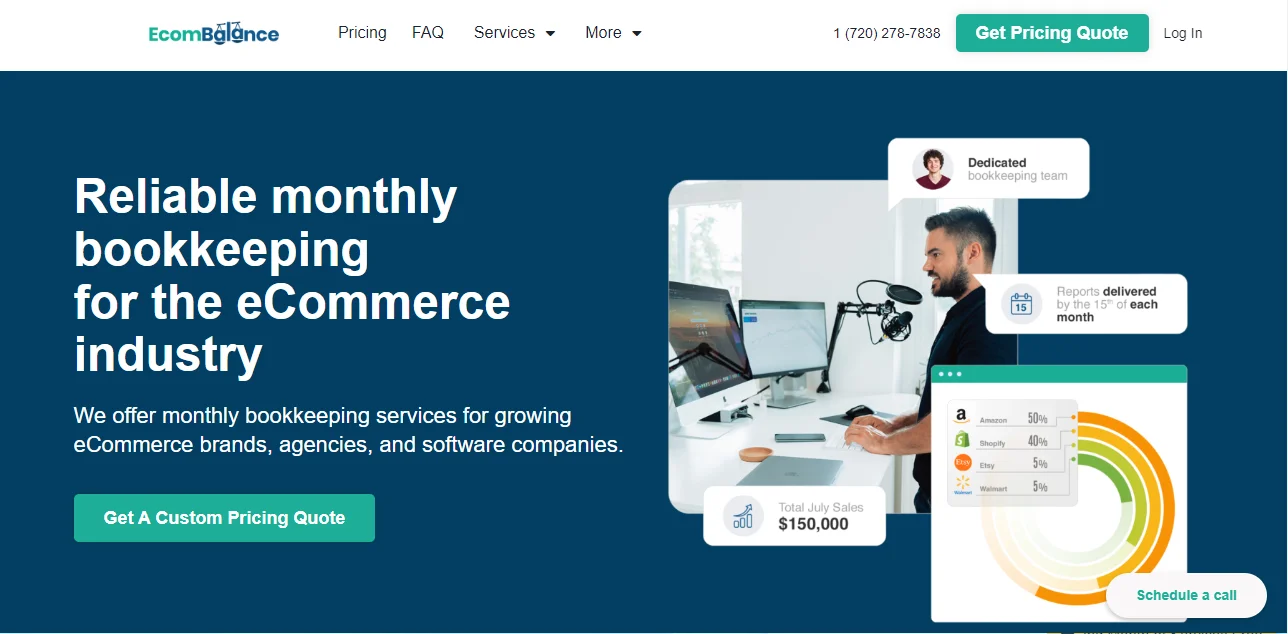
EcomBalance is a monthly bookkeeping service specialized for eCommerce companies selling on Amazon, Shopify, eBay, Etsy, WooCommerce, & other eCommerce channels.
We take monthly bookkeeping off your plate and deliver you your financial statements by the 15th or 20th of each month.
You’ll have your Profit and Loss Statement, Balance Sheet, and Cash Flow Statement ready for analysis each month so you and your business partners can make better business decisions.
Interested in learning more? Schedule a call with our CEO, Nathan Hirsch.
And here’s some free resources:
Scaling an e-commerce business can feel like walking a tightrope. One wrong move and everything could go wrong. But with the right support, managing it becomes much easier.
A strong technical team ensures the stability of your systems. Sustainable solutions make them efficient. Together, they give you the best chance of rapid growth without hitting roadblocks.
If you want to stay ahead, don’t just chase growth. Build a foundation that can handle it.




