Free every Thursday · 61,308 Readers
Fastlane Insider Newsletter: What's working for Shopify in the AI era?
Free every Thursday · 61,308 Readers
Fastlane Insider Newsletter: What's working for Shopify in the AI era?
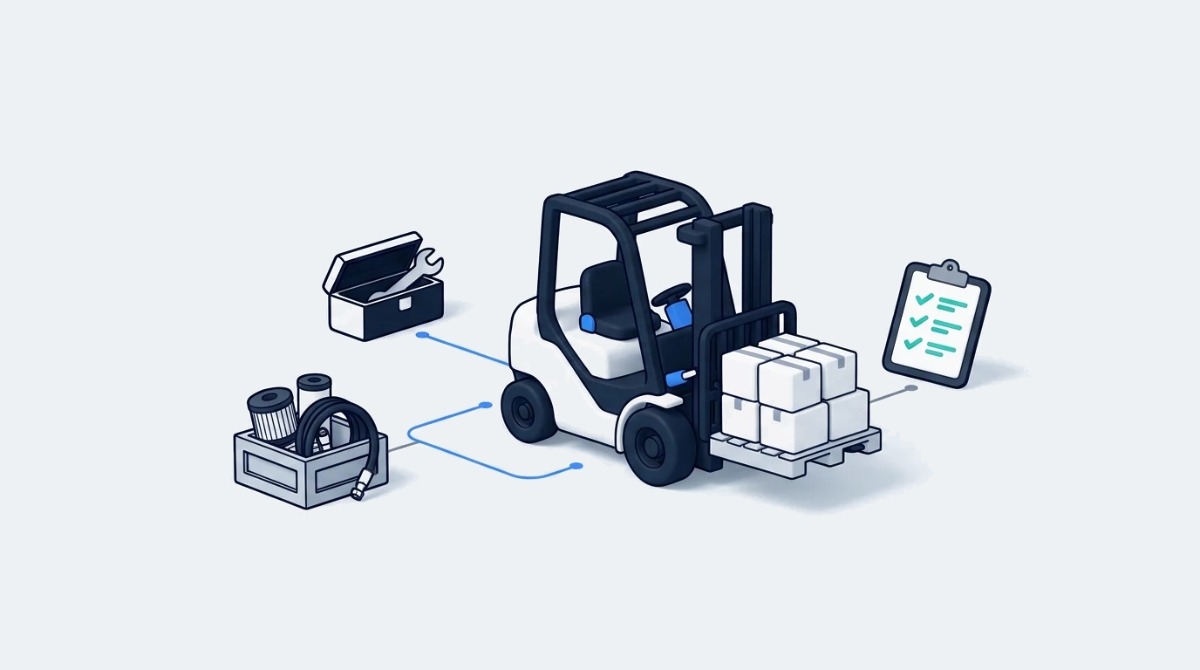
A forklift repair bill is the small cost. The bigger one is every order that waits on the dock while the truck is down.
Forklifts keep warehouses and logistics operations moving. They unload inbound containers, put stock away, and feed pick faces so orders can ship on time. When one breaks down without warning, the disruption spreads quickly: deliveries slip, workflows stall, and the rest of the team absorbs the pressure.
For an ecommerce brand that runs its own warehouse, that pressure shows up where customers can see it. Order fulfilment slows, inbound stock sits on the dock instead of becoming sellable inventory, and promised ship dates start to slide. Mechanical failures and improper operation are among the common causes of forklift downtime, which makes equipment reliability a fulfillment question as much as a maintenance one.
One way to minimise these disruptions is by working with a reliable forklift supplier. Beyond providing quality equipment, the right supplier can offer technical expertise and ongoing support that keeps forklifts running efficiently. Here are six ways a dependable forklift supplier helps reduce equipment downtime, followed by the questions worth asking before you commit to one.
Reliable, well built forklifts reduce downtime because equipment quality sets how often a truck fails in the first place. Poorly maintained or unsuitable forklifts are more likely to develop mechanical problems, and every unplanned failure becomes an interruption the operation did not schedule for.
A reputable forklift supplier offers durable equipment designed for demanding industrial use and can share clear information about each unit’s condition, rated capacity, and performance. That transparency matters most when a business is buying used or reconditioned trucks, where hours on the meter and service history tell you far more than the paint job.
Buying from a supplier that stands behind its equipment gives a business three practical advantages. Breakdowns happen less often, material handling stays consistent through busy periods, and repair spending stays predictable instead of arriving as a run of emergency invoices.
For a brand that has just moved out of a shared space and into its first dedicated warehouse, this is usually the first decision with long term consequences. The cheapest truck on the lot can look like the sensible choice when cash is tight, but a unit with unclear history and no support behind it often costs more once lost shifts are counted. Ask for the service record, the hours, and what the supplier will commit to if the unit fails in its first months.
Preventive maintenance is one of the most effective ways to reduce forklift downtime, because regular inspections and servicing find mechanical issues before they turn into serious failures. A worn brake or a slow hydraulic leak is a scheduled fix on a Tuesday morning. Left alone, it becomes an emergency in the middle of a peak shift.
A dependable forklift supplier may offer scheduled maintenance programmes covering essential components such as brakes, tyres, and hydraulic systems. These services keep forklifts in safe working condition and give the operation a planned rhythm for servicing instead of reacting to whatever breaks next.
Singapore’s Workplace Safety and Health Council reinforces the importance of proper forklift maintenance in its Guidelines on Safe Operation of Forklift Trucks, which highlight the need for regular inspections, accurate maintenance records, and adherence to manufacturers’ recommendations. When businesses work with a reliable forklift supplier that provides preventive maintenance services, they can follow these practices more consistently and identify potential issues early.
The same principle applies outside Singapore. In the United States, OSHA’s guidance on forklift pre-operation inspections requires that forklifts be examined at least daily before being placed in service, and after each shift when they run around the clock. A supplier’s scheduled programme does not replace those daily operator checks. It sits alongside them, covering the deeper servicing an operator’s walkaround cannot.
Operations teams that want to track service dates, open work orders, and repair history in one place can pair a supplier programme with maintenance software; Fastlane’s comparison of facilities management software for ecommerce operators covers which tools fit a first deployment and which suit multi site operations.
Quick access to genuine spare parts shortens downtime because the repair itself is often fast; waiting for the component is what keeps a forklift off the floor. Even a relatively minor mechanical issue can stop a truck for days when the part has to be sourced from scratch.
A reliable forklift supplier minimises these delays by keeping commonly required spare parts within reach, including filters, hydraulic components, brakes, and electrical parts. Using genuine or manufacturer approved components also helps ensure compatibility and dependable performance, which avoids the second breakdown that sometimes follows a poorly matched substitute part.
With replacement parts readily available, maintenance teams can complete repairs more efficiently, and the business can restore equipment and resume operations sooner.
Parts availability is worth testing before signing, not after the first failure. Ask a prospective supplier which parts it holds locally for the models in your fleet, what its typical lead time is for parts it does not stock, and whether it can loan or rent a replacement truck while yours is being repaired. A supplier that answers these questions clearly is usually the one that has planned for them.
This matters most for brands with a small fleet. A warehouse running two forklifts loses half its lifting capacity when one goes down, so the lead time on a single hydraulic part can decide whether inbound containers get unloaded that week.
Operator training reduces downtime because improper forklift operation causes excessive equipment wear as well as workplace accidents. Overloading, harsh braking, and skipped pre-operation checks all shorten component life, and an incident can take a truck and an operator out of service at the same time.
This is where a knowledgeable forklift supplier can add support beyond the equipment itself. Many suppliers offer or facilitate operator training covering safe load handling, pre-operation inspections, and proper equipment usage, so operators understand both how to drive the truck and how to spot problems early.
Operator training is particularly important in Singapore, where the Ministry of Manpower has announced that forklift operators will be required to undergo refresher training at least once every three years. MOM’s January 2025 circular sets the requirement as mandatory with effect from 1 January 2027.
The ministry’s reasoning is grounded in its own findings. From 2022 to 2023, vehicular incidents were the leading cause of fatal workplace injuries in Singapore, and one in four of those vehicular fatalities involved forklifts. Over the same period, MOM inspections found that close to eight in ten forklift related contraventions involved operators who had not completed refresher training within three years. The requirement reinforces the importance of keeping operators’ skills and safety knowledge current.
For a growing warehouse team, the practical step is simple: keep a training record for every operator, note when each refresher falls due, and ask your supplier whether it runs or can arrange the courses.
Matching the forklift to the job prevents downtime because an unsuitable truck is pushed past what it was designed to do, which accelerates component wear and invites failure. Selecting the right equipment for specific operational needs is one of the simplest ways to protect reliability.
An experienced forklift supplier helps businesses make that decision by assessing lifting capacity and load requirements. It also considers warehouse layout, operating conditions, and how frequently the equipment will be used, then recommends equipment that suits the working environment.
For instance, electric forklifts are often suitable for indoor warehouse operations, while certain diesel powered models are better suited to demanding outdoor applications. Aisle width, rack height, and dock design all narrow the choice further. Fastlane’s guide to maximizing warehouse storage with pallet racking explains why racking systems have to be planned around forklift access, and its overview of loading dock use cases and best practices covers the dock levelers and height matching that keep forklifts moving safely between trailer and floor.
Matching the forklift to its intended tasks prevents excessive strain and unnecessary wear. It also saves money in the other direction: a brand that buys a heavier truck than its loads require pays for capacity it never uses, and may struggle to work it through tight aisles. The right recommendation is the one sized to how the warehouse actually runs today, with an honest conversation about what changes as volume grows.
Dependable after-sales support reduces downtime because a forklift’s reliability depends on the help it gets across its whole working life, not only on the day it is delivered. A supplier relationship that ends at the invoice leaves the business to solve every later problem alone.
Dependable suppliers may offer warranty assistance, servicing arrangements, and replacement part recommendations. They can also help businesses establish maintenance schedules and monitor recurring equipment issues, which is often where the real savings appear: the same fault showing up on the same truck every few months is a pattern a good supplier will flag before it becomes a breakdown.
This continued support lets companies manage their forklift fleets more effectively and reduces the likelihood of unexpected interruptions. It also gives operations leads something concrete to show upward, such as service intervals met, repeat faults resolved, and hours of downtime avoided, when they need to justify the cost of a service contract.
Response time is the detail to pin down in writing. Ask how quickly a technician can be on site, whether that changes on weekends or during your peak season, and who you call when the usual contact is unavailable. Clear answers here are a better signal of support quality than any brochure promise.
The questions to ask a forklift supplier before signing are about what happens after delivery: maintenance, parts, training, and response times. Purchase price is easy to compare. These are the terms that decide how often, and for how long, the warehouse goes without its equipment.
How the answers matter depends on how the warehouse is run. A brand in its first dedicated space, with one or two trucks, should weigh parts access and loan equipment most heavily, because losing a single forklift can halt receiving altogether. A larger operation with a mixed fleet benefits more from structured maintenance reporting and fleet level advice on when to repair and when to replace.
Some brands should skip owning a fleet entirely. If fulfillment already runs through a 3PL, forklift reliability is the provider’s responsibility, and the better question is how that provider maintains its equipment and covers breakdowns during peak. Fastlane’s guide to warehouse management for scaling brands walks through the trade offs between running your own warehouse and outsourcing it.
The right forklift supplier keeps operations running by treating downtime as something to prevent, not just repair. Businesses that depend on efficient, uninterrupted material handling need a proactive approach to forklift reliability rather than dealing with equipment problems only when they arise.
That starts with partnering with a dependable forklift supplier: one that provides reliable equipment, plans maintenance, keeps genuine parts within reach, supports operator training, sizes trucks to the job, and stays involved after the sale. With that support in place, businesses can improve equipment performance, avoid costly disruptions, and maintain productivity over the long term.
Forklift reliability is also only one part of how a warehouse performs. Layout, pick routes, and lighting decide how much work each truck has to do in the first place, and Fastlane’s piece on warehouse optimization for scaling DTC brands covers how those choices reduce travel and pick errors as volume grows.
A forklift supplier reduces warehouse downtime by supporting the equipment after the sale, not just selling it. The services that matter most are scheduled preventive maintenance, fast access to genuine spare parts, operator training, help choosing the right truck for the workload, and dependable after-sales support. Together these reduce how often forklifts fail and shorten how long they stay out of service when they do. For an ecommerce brand running its own warehouse, that translates directly into fewer delayed shipments and less inbound stock stuck on the dock. When comparing suppliers, look past the purchase price and ask what each one commits to on maintenance, parts availability, and response times.
Forklifts should get a daily operator inspection before use plus scheduled servicing at the intervals the manufacturer recommends. In the United States, OSHA requires forklifts to be examined at least daily before being placed in service, and after each shift when they run around the clock. Singapore’s Workplace Safety and Health Council guidelines also stress regular inspections, accurate maintenance records, and following manufacturers’ recommendations. Deeper servicing of brakes, tyres, and hydraulic systems usually runs on a schedule set by operating hours, which is where a supplier’s preventive maintenance programme helps. Keeping a written record of every inspection and repair makes recurring faults easier to spot.
Singapore’s forklift refresher training requirement becomes mandatory from 1 January 2027. From that date, the Ministry of Manpower requires every forklift operator to attend refresher training at least once every three years after completing their first course, and employers must ensure operators comply before letting them drive. MOM introduced the requirement after finding that, in 2022 and 2023, one in four vehicular workplace fatalities involved forklifts, and close to eight in ten forklift related contraventions involved operators without refresher training in the previous three years. Businesses should check each operator’s last training date now and book refreshers before the deadline.
An ecommerce brand should buy or lease forklifts only when it runs its own warehouse with enough volume to keep the equipment and operators busy. Owning a fleet means taking on maintenance, parts, training, and compliance, which is why the choice of forklift supplier matters so much once you do. If fulfillment runs through a 3PL, equipment reliability is the provider’s job, and the more useful step is asking how the provider maintains its forklifts and handles breakdowns during peak season. The question usually becomes real at the Scaling stage, when control over inventory and receiving can start to outweigh the cost of running the space.
Electric forklifts are often the better fit for indoor ecommerce warehouses, while diesel models generally suit demanding outdoor work. Electric trucks produce no exhaust indoors and tend to suit the picking, put away, and dock work most fulfillment operations run. Diesel powered models are typically chosen for heavy loads, rough surfaces, and yards. The right answer depends on load weights, aisle widths, rack heights, and how many hours a day the truck will run, so a supplier should assess the space and workload before recommending a model. Choosing a truck that matches the job prevents the strain and early wear that cause breakdowns.