


It’s no secret that the logistics industry is in despair. The availability of warehouse space was just 5.6%. That’s an all-time low and dramatic fall from the 8.5% reported at the start of 2016. As a result, retailers are being pushed to squeeze as much value out of each square foot.
From how they store inventory to the method of picking orders, robust warehouse management processes help retailers run their warehouses like a well-oiled machines. This guide shares how.
Warehouse management is the operational processes that help a warehouse run efficiently. These processes include tracking inventory levels, locating goods, managing staff schedules, fulfilling orders, and optimizing warehouse space.
A warehouse management system (WMS) is software that helps a business complete operational tasks within its warehouse. From resource planning to supply chain logistics, it’s a technology retailers use to fulfill customer orders from a warehouse or distribution center.
Some merchants have their WMS as a subsection of broader enterprise resource planning (ERP) software—one central dashboard for ecommerce brands to control all aspects of the business.
The global supply chain is in disarray. Manufacturing and shipping times are much longer than they once were—an issue not set to resolve itself anytime soon. McKinsey reports that significant disruptions to manufacturing production now occur every 3.7 years, with reasons ranging from political instability to natural disasters.
Ultimately, a WMS will help you speed up your receiving, cycle counting, and fulfillment, resulting in more efficient processes and reduced labor costs.
—Nick Malinowski, Co-founder of OTW Shipping
A WMS that syncs with your inventory management system helps you stay one step ahead, hence why 38% of the merchants we surveyed plan to integrate technology to help their company anticipate disruptions and demand.
Inside one, you’ll see dropping inventory levels to prioritize replenishment. If you know that one bestselling SKU sells 500 units per week, but it takes three weeks to receive shipments from a supplier, set an alert to notify you once stock levels drop below 2,000 (leaving extra leeway in case a spanner is thrown into the works.)
Using a warehouse management system, you’ll be able to track every product in your warehouse and help boost your customer experience by giving them accurate visibility on your product’s availability.
—Perry Valentine, Founder of AtPerry’s
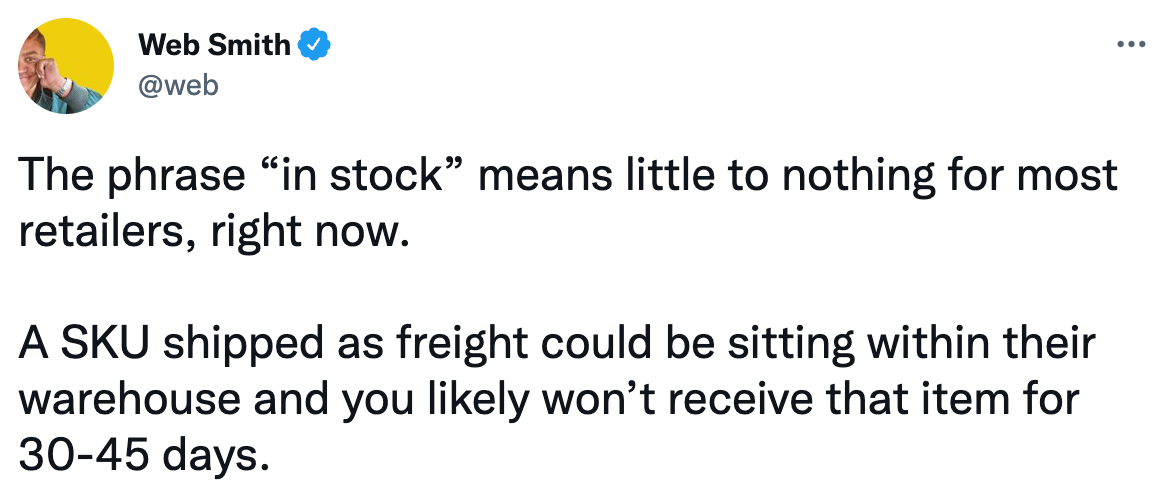
Using your WMS, combine those alerts with historical data for accurate inventory forecasting. Every item in your warehouse costs you money, both in storage fees and opportunity costs. Poorly performing inventory is taking space that should be given to higher volume, faster moving, and ultimately, more profitable stock.
Ben Clarke, Interim Head of Marketing for James and James Ecommerce Fulfilment, says, “By ensuring that products are always shelved in the most efficient way possible, and by providing real-time visibility of stock levels, a warehouse management system can help avoid overstocking or running out of popular items. This can save significant amounts of money on inventory carrying costs.”
The key to success in global ecommerce is to sell in the channels where your customers are. From social media storefronts to mobile commerce, this multi-channel retail strategy is complex for retailers to grasp. You never want to promote a product on one channel only for the customer to fall at the last hurdle: the product being unavailable.
Unlike warehouse management software, which manages the entire operation of a warehouse, inventory management software (IMS) is responsible only for managing inventory. Retailers can use this technology to:
An IMS is a subsection of the warehouse management process, hence why it should be integrated with your WMS. Use inventory software to track data and forecast demand. The WMS will pull this data and streamline how warehouse staff source inventory, like displaying the location of a single SKU within a 10,000-square-foot warehouse.
Inventory entering your warehouse must be vetted and approved before being placed on the shelves, ready to be sold. Suppliers can send the wrong quantities or products entirely—problems that are often exasperated by manual processes and human error.
A WMS alleviates this problem with putaway management. Using bar code scanners to track incoming shipments, your WMS compares the shipment against your purchase order from that supplier. Any discrepancies will be flagged before inventory is put away in the warehouse.
At its core, the primary job of a warehouse is to store inventory. It’s a safe place to hold merchandise until it’s sold and shipped to a customer.
Having access to real-time inventory data helped us identify gaps in our shelf replenishment practices that caused stockouts. Meeting customer demands—especially during the busy holiday season—required us to create a well-planned roadmap showing when to restock, what to restock, and how to restock.
—Shaunak Amin, Co-founder and CEO of Snackmagic
A warehouse management solution displays inventory location data on a straightforward interface. See the location of each SKU and how many units are available for sale, with many WMSs offering demand forecasting features to prevent stockouts.
“Knowing how your inventory looks can also aid in inventory optimization,” says Lily Wili, CEO of Ever Wallpaper. “You can not only restock things as needed but also spot problems like overstocking. This may enable you to take corrective action, such as lowering the volume of your next order or shifting inventory between sites to maintain ideal levels.”
Modern consumers have a long list of demands they need brands to meet. For many, the speed of delivery is the top.
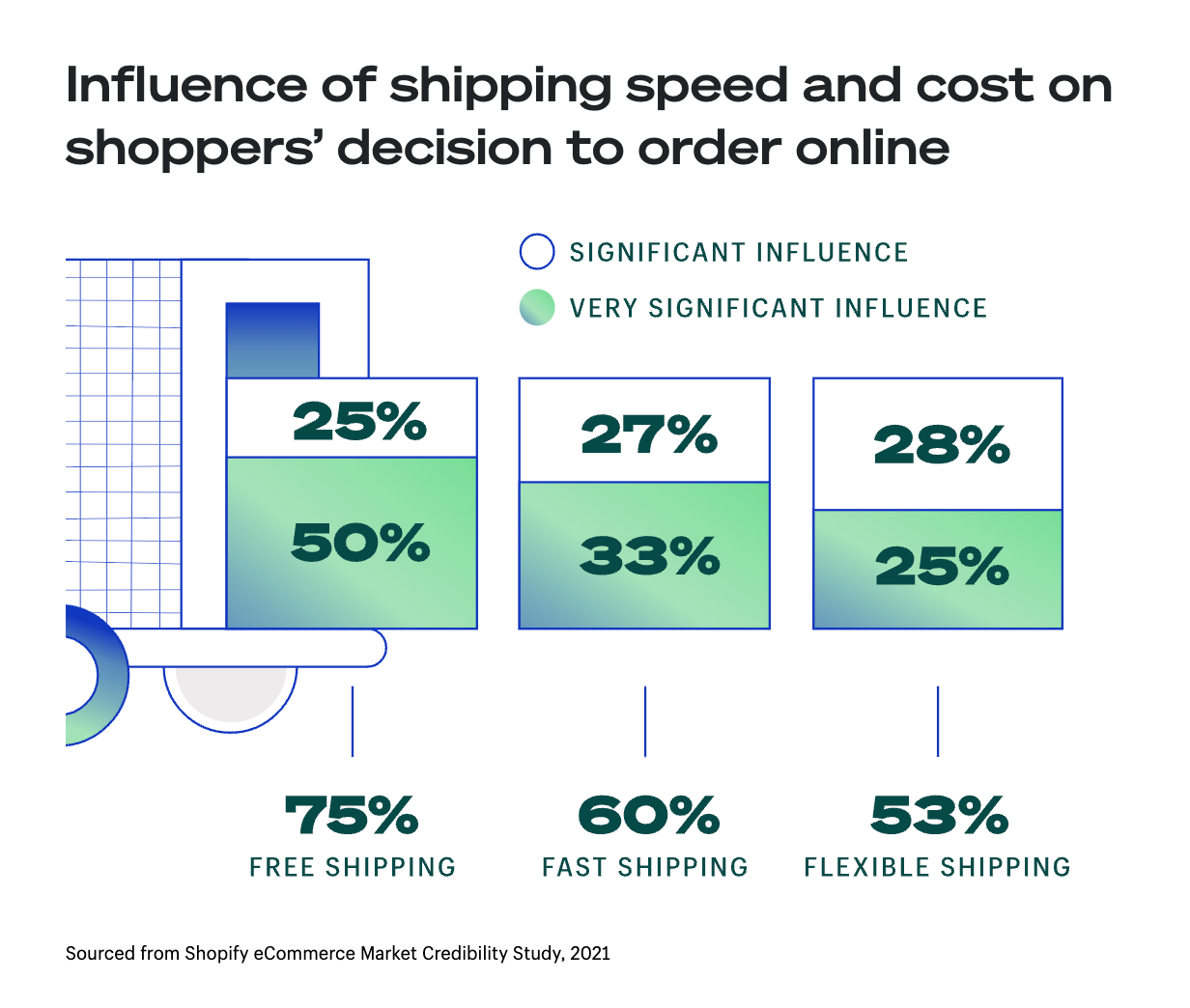
Some 60% of shoppers consider delivery speed in their purchase, beaten only by free shipping—something no longer considered a nice-to-have. Almost seven in 10 Shopify merchants now offer this option, with ecommerce giant Amazon setting the tone for one- or same-day delivery.
A WMS streamlines this order fulfillment process and helps warehouse staff pick, pack, and ship orders quickly. The technology will:
This speedy order processing gets products to your customers as soon as possible, meeting cutoff dates for one- or same-day shipping, and giving your warehouse staff more time to process orders.
Your warehouse processes aren’t over once a product leaves it. A good WMS has order tracking capabilities to show:
Parcel transparency is essential to consumers, with almost seven in 10 shoppers being less likely to shop with a retailer if their package was delayed without being informed. Use a self-serve portal, such as the one found in the Shop App that shows the location of their order at any time. Your WMS will pull this data once an order has been marked as fulfilled in a distribution center.
Monitor weather, global supply chain issues, and other factors that could cause delays, and proactively communicate delays via email and on your website.
—Kurt Ellis, President of GLF E-Commerce Fulfillment

Some products shipped from your warehouse will inevitably make their way back. Research puts the return rate for online items at 20%, trumping the 9% average for in-store purchases. Use warehouse management software to process returns, approve them for refunds, relabel inventory, and get them back on the shelf.
The best part? Data from your WMS can be used to preempt returns from plaguing your warehouse.
As Kurt Ellis, president of GLF E-Commerce Fulfillment, explains, “Data-driven insights from warehouse and inventory management software can also be used to identify customer behavior patterns and help make policy adjustments, like limiting the number of items a customer can buy in different sizes or colors to reduce the rate of returns, and help avoid the need to discount unwanted items.”
Labor shortages at all points in the supply chain are causing significant disruption. So much, so CNBC reports that the entire industry is simply understaffed.
For warehouses in particular, logistics managers say their inability to attract and retain a qualified workforce is their biggest problem, beating outdated inventory storage to poor warehouse layouts.
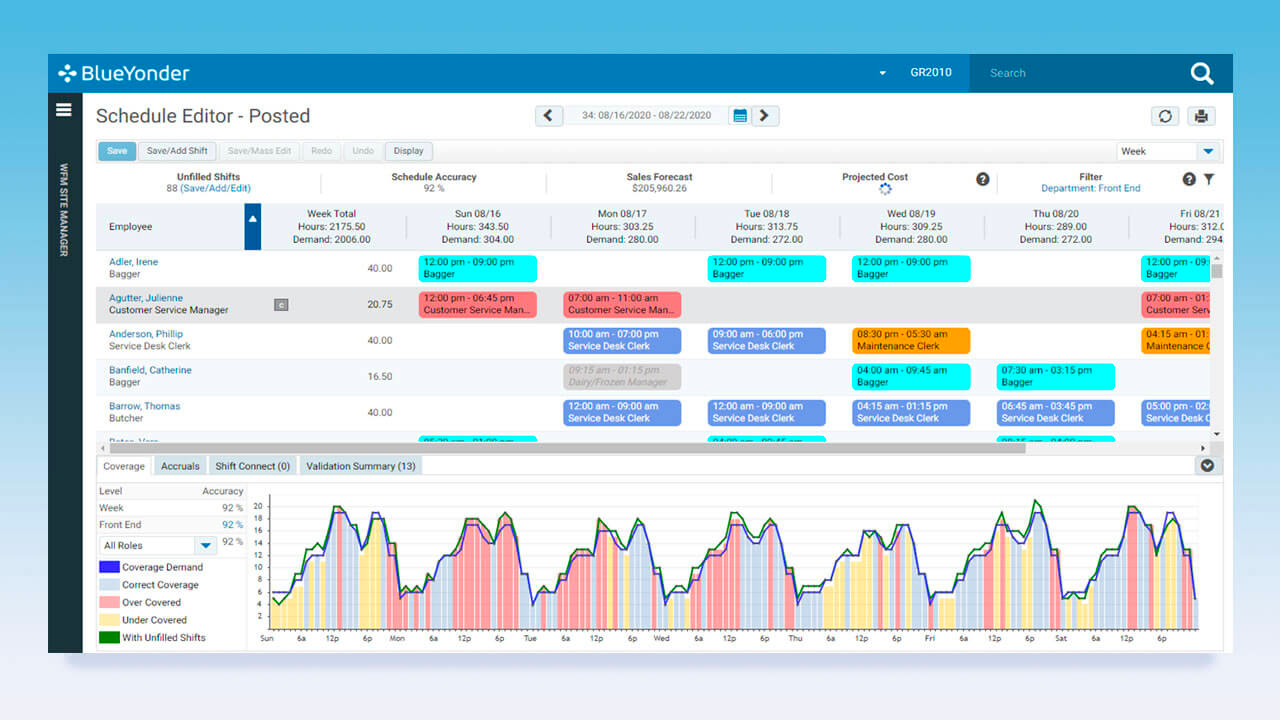
Keep hold of the employees already inside your warehouse. With a WMS system, merchants can plan resources to keep inventory in the warehouse and employees in their roles constantly moving. Look for one with workforce management features that help to:
Warehouse management software BlueYonder reports that its clients see a 25% increase in employee engagement using its labor management features. Labor expenses also decreased by 35%.
Warehouse management technology has clear advantages for busy warehouses. To maximize efficiency in yours, follow these best practices.
Experts suggest that 22% and 27% of your warehouse’s total square footage should be reserved as inventory storage space. The rest can be allocated to machinery storage, packing stations, and overstocked goods.
Despite this, the layout of your warehouse bears a significant impact on how fast you can fulfill customer orders. Optimize your warehouse space by:
Make sure your warehouse is well organized and clean. This might seem obvious, but it’s important to have things in their proper place so that staff can easily find what they need.
—Ben Clarke, interim Head of Marketing of James and James Ecommerce Fulfilment
Continuing with the speed theme, help warehouse employees fulfill customer orders faster with an order-picking system. It’s a strategy to determine which items are sourced from the warehouse first, reducing step counts and collecting sold inventory most efficiently.
Options include:
Our receiving team checks in newly arrived inventory at the beginning of their shift so that we have a clearer picture of what items are available to restock, says Shaunak Amin, co-founder, and CEO of Snackmagic.
But because there is a great deal of activity in the warehouse, with people filling and packaging orders, the receivers wait to replenish inventory levels at the end of their shift. By topping off inventory at specific points in the day, we can maintain higher inventory levels for the order pickers.
Any ecommerce brand with a vision of going global needs international warehouses. You’ll expand your geographical footprint by stocking inventory in locations in sales hotspots and global trade hubs, such as Houston or London.
Orders are sent from their closest warehouse, already cleared from customs—a tactic with the potential to reduce shipping costs by 25%. Customers also have products in their hands within as little time as possible.
As it is our priority to make sure the customer is 100% satisfied, we have taken on the shipping challenges at our warehouse, instead of the customer. For this reason, we have set up 3PL relationships allowing us to fulfill orders closer to the customer. By doing this, we have found that we have more control over our shipping commitments.
—Eric Farlow, Chief Operating Officer of Manly Bands
Take it from Jason Wong, CEO and founder of Doe Lashes: “The way we respond is to place our inventory near those cities to reduce the overall miles traveled by those packages. We’re now stocking inventory outside of the country for our international customers, just to reach them faster. We have a warehouse in China and that helps us reach Australia and the whole Southeast Asia region.”
Not only does this localized inventory strategy result in faster orders with fewer carbon emissions, but Doe Lashes’ formula to minimize the distance between products and customers helps it build a supply chain that’s resilient against disruptions.
The warehouse robotics market is set to reach $9.5 billion by 2025. The surge in valuation derives from the benefits of ecommerce automation—a strategy that takes repetitive tasks off your warehouse employees’ plates.
A mad dash to store, pick, pack, and ship orders leaves room for mistakes. Those mistakes, like adding the wrong product to a parcel, wreak havoc with customer experiences.
Automations and workflows eliminate the chance of human error, leaving staff more time to focus on higher-impact tasks. For example, if your warehouse management system shows that 500 units are ready for sale but 400 of them are still in the receiving area, use Shopify Flow to automatically display a low stock message for that SKU on your ecommerce store.
Nick Malinowski, co-founder of OTW Shipping, also advises, “If you have the budget, utilize bar code scanners. Not only will this make inventory management quicker, but it will also make your pick and pack more accurate.
Higher pick accuracy means fewer returns and corrective orders that need to be compensated by you. The result is happier customers and more five-star reviews!”
Your warehouse is a machine with many moving parts. Periodically check whether yours is working at its optimal level by paying close attention to these performance metrics:
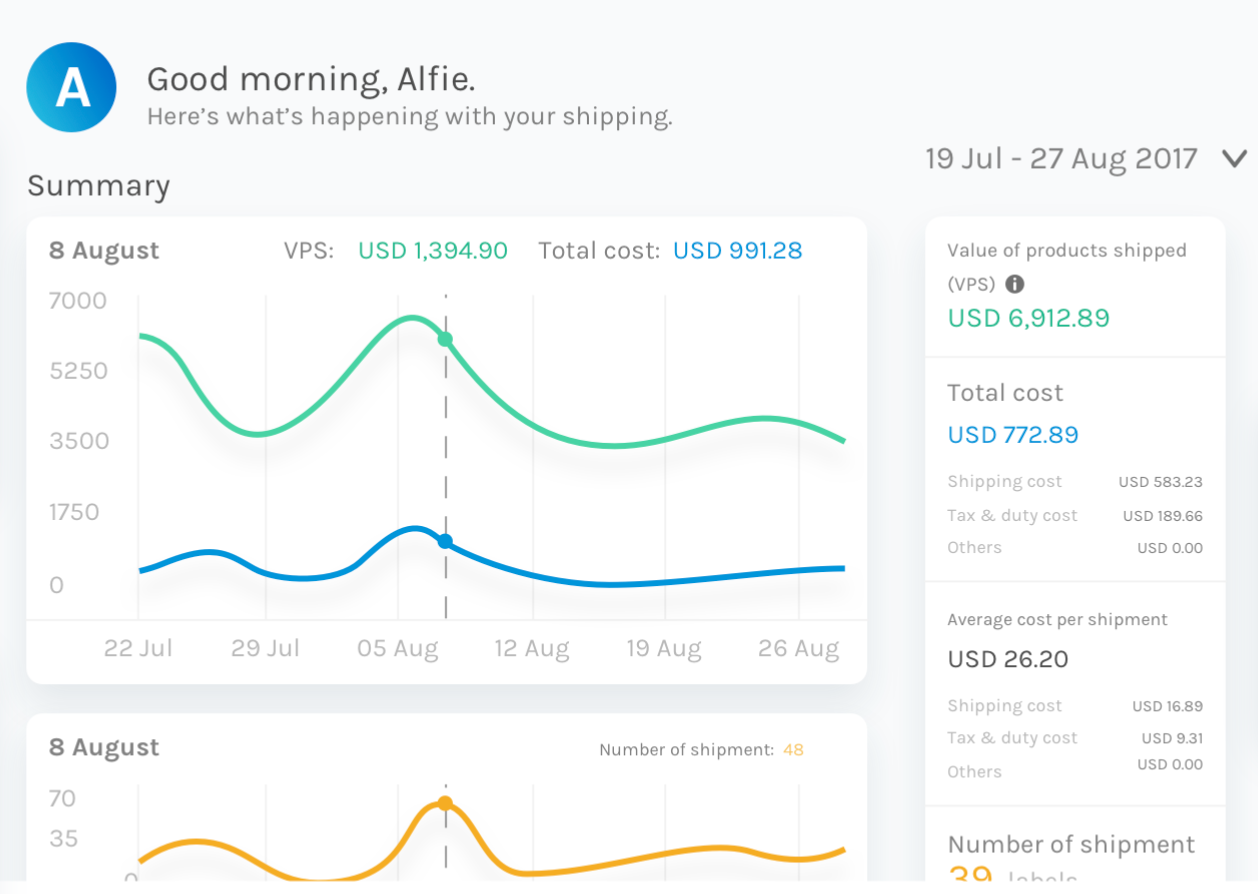
Find a warehouse management system with these advanced reporting capabilities, such as Easyship or ShipBob. The more data you have, the better decisions you’ll make when operating a busy warehouse.
A third-party logistics provider (3PL) is an external company that handles your logistics and supply chain management process.
You’ll deliver inventory to the 3PL’s warehouse, offloading all warehouse management operations to your partner. They’ll receive order details as soon as they’re processed through your ecommerce store. It’s their job to pick, pack, and ship inventory to your customers—no intervention required.
Many scaling ecommerce brands choose to outsource warehouse management to a 3PL once they have the budget to do so. Here’s why.
Warehouse technology has clear impacts on how efficient a distribution center is. Yet investing in your own technology stack is a big commitment. From forklift trucks to picking robots that deliver inventory from a storage shelf to an order picker, you don’t need to purchase machinery outright to benefit from faster order fulfillment times.
A 3PL’s entire business revolves around warehouse management. They’ll absorb the cost of warehouse technology that helps them pick, pack, and ship orders faster and more accurately, such as:
After all, the sooner they can fulfill one order, the sooner they can move onto the next and get paid by their customer—you.

Third-party logistics providers send large volumes of parcels each month. As a result, many shipping carriers provide them with discounted shipping rates—often to persuade the 3PL to continue using their services. Many 3PLs pass on these discounted rates to their customers, making shipping costs cheaper than they would be if parcels were shipped from your own warehouse.
For merchants like The Dad Hoodie, relying on SFN for shipping and fulfillment has greatly impacted its bottom line. Average shipping costs have been cut by 40%, with founder Taylor Llewellyn saying, “As a business owner, fulfillment is only something you think about when it isn’t working well, and luckily, I never have to think about it.”
Knowing that we have a premium partner that gets orders out of the warehouse quickly and at a cost we could not achieve elsewhere [means] we’re able to focus on growing our business.
—Taylor Llewellyn, Founder, The Dad Hoodie
Plus, when using a 3PL’s warehouse, you pay storage and fulfillment fees for its services. The same applies to labor management. Reduce overheads by leaning on warehouse employees already contracted by your 3PL.
Depending on sales volume, employee count, and inventory levels, this could be a much cheaper warehousing option than fronting an entire lease of your own.
Research shows that 32% of brands will fulfill orders in a new country in 2022. Lean on a 3PL’s existing horde of international warehouses to reach global shoppers in less time, rather than opening up your own in popular warehousing locations with expensive leases.
Take it from Noelle Taylor, senior marketing manager at Taylor Logistics, who says, “Partnering with a 3PL to handle warehouse management allows brands to focus more on what’s important—growing their business and delivering the best possible customer experience.
“Committed 3PLs see their relationship with brands as a long-term partnership. As a result, they may be willing to invest in space, technology, and equipment to take your business to the next level.”
There’s nothing else for a 3PL provider to focus on other than running an effective warehouse. It’s safe to assume that they’ll have bounds of expertise on how to run one, with tried and tested processes to:
As Elliott Davidson, ecommerce consultant at Parcel Master says, “Not having to think about, and manage, a process as complex as warehouse management, and knowing that someone who specializes in it is taking on the pressures and responsibilities, allows you to focus on other areas of growing your business.”
Any business owner with a conscience knows that shipping parcels to the other side of the world has some negative consequences on the environment. Unfortunately, it’s an issue only set to worsen as the years go on. By 2030, parcel deliveries will increase by 78%, resulting in 32% more emissions.
Consumers are becoming increasingly aware of this, and they’re voting with their wallets—preferring brands they know are “actively working on reducing their carbon footprint.”
Look for a 3PL that has measures in place to reduce its carbon footprint. From lightweight packaging made from sustainably sourced materials to LED lighting within the warehouse, customers are already looking for brands supporting these climate-friendly options.
Although the benefits a warehouse management system offers, not all systems are created equal. Find the right WMS software—one that grows as your ecommerce brand does—by asking these questions to potential vendors:
As an integral part of your 3PL partnership, the key thing to look at in an international warehouse—beyond, services, space, and pricing—is what technologies they use.
—Robin H. Smith, Co-founder of VL OMNI
Warehouse management is a tough thing to get right manually.





