
99% of marketers are using AI, but only 36% say it makes their job easier, and the same number say they enjoy using it. For a tool that’s supposed to save time and improve results, that’s a telling gap.
AI isn’t the answer to everything, but for marketers, it’s knowing where AI helps in email marketing, what to hand off and what to keep, and how to make sure every email still sounds like it came from a real person.
AI in email marketing means using machine learning, predictive modeling, and generative tools to automate, personalize, and improve your campaigns. It’s software that spots patterns, makes decisions, and generates content faster than any team can do manually.
There are a few distinct types worth knowing about:
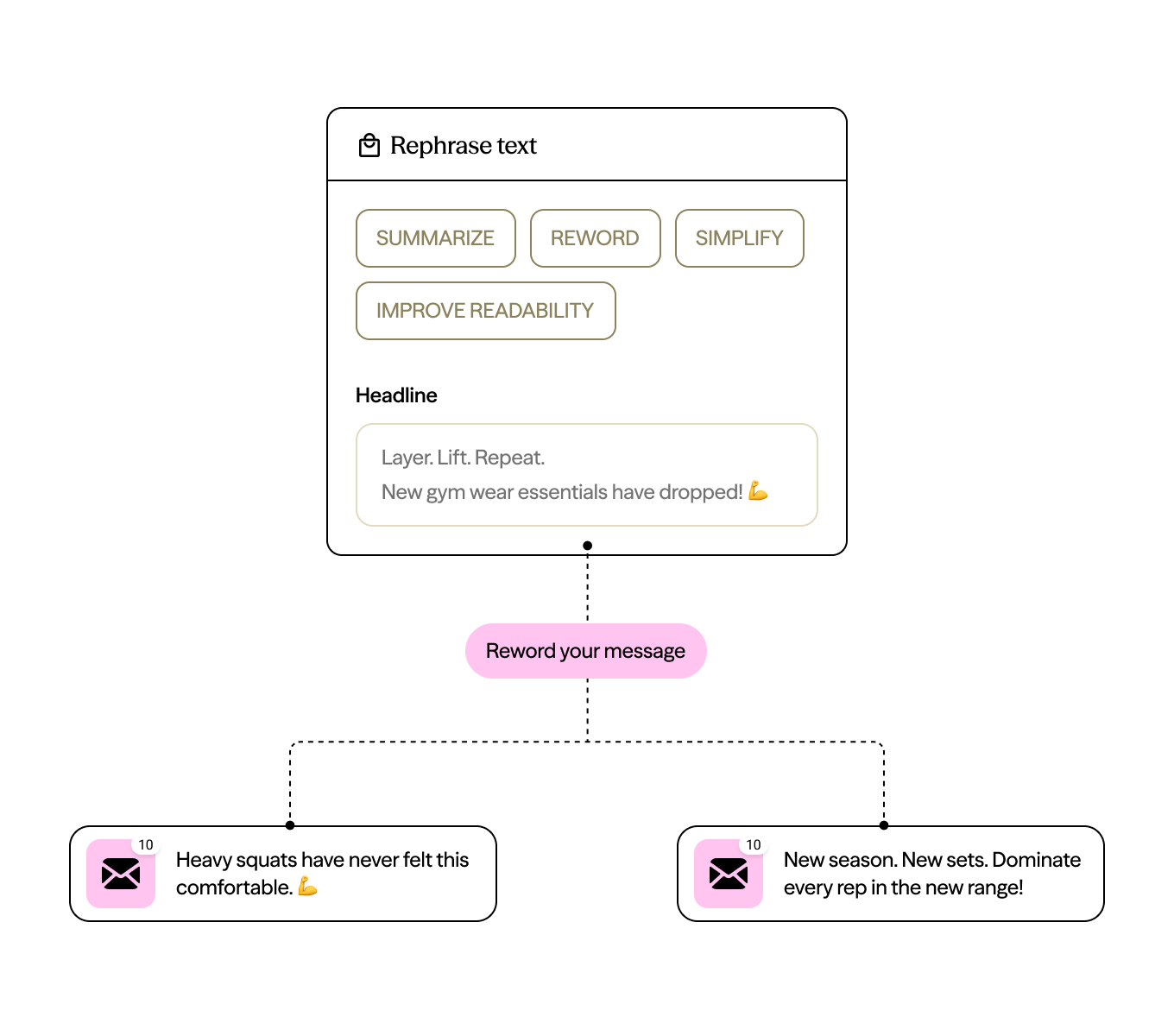
Think subject line suggestions, body copy drafts, campaign translations, and image generation. It’s the type of AI most people think of first, and the most widely available thanks to AI models like ChatGPT, Gemini, and Claude.
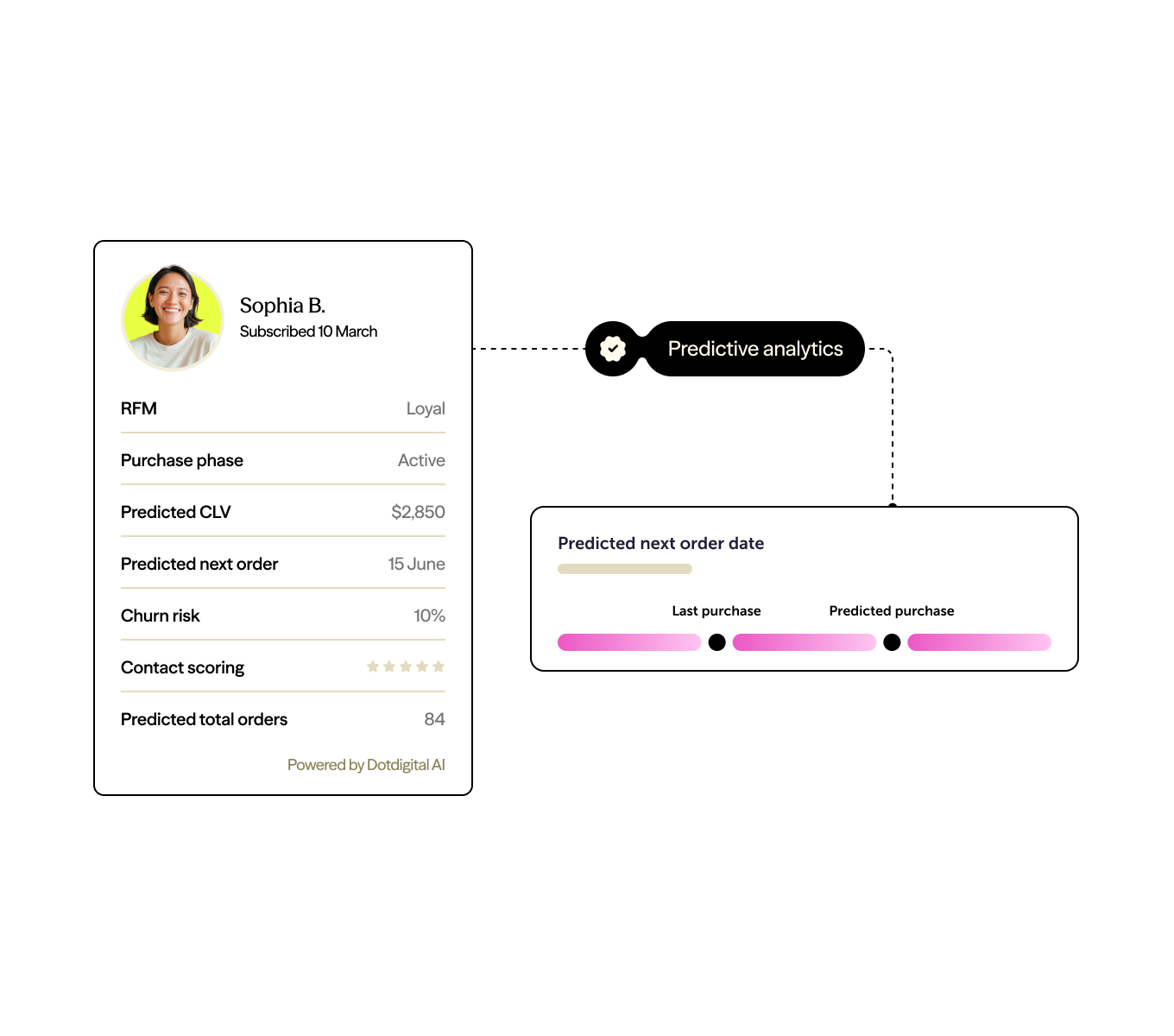
Predictive AI uses historical data to forecast future behavior. Which customers are about to churn? Who’s likely to buy again in the next two weeks? When is a contact most likely to open an email? Predictive AI answers these questions in seconds, and across your entire contact list.
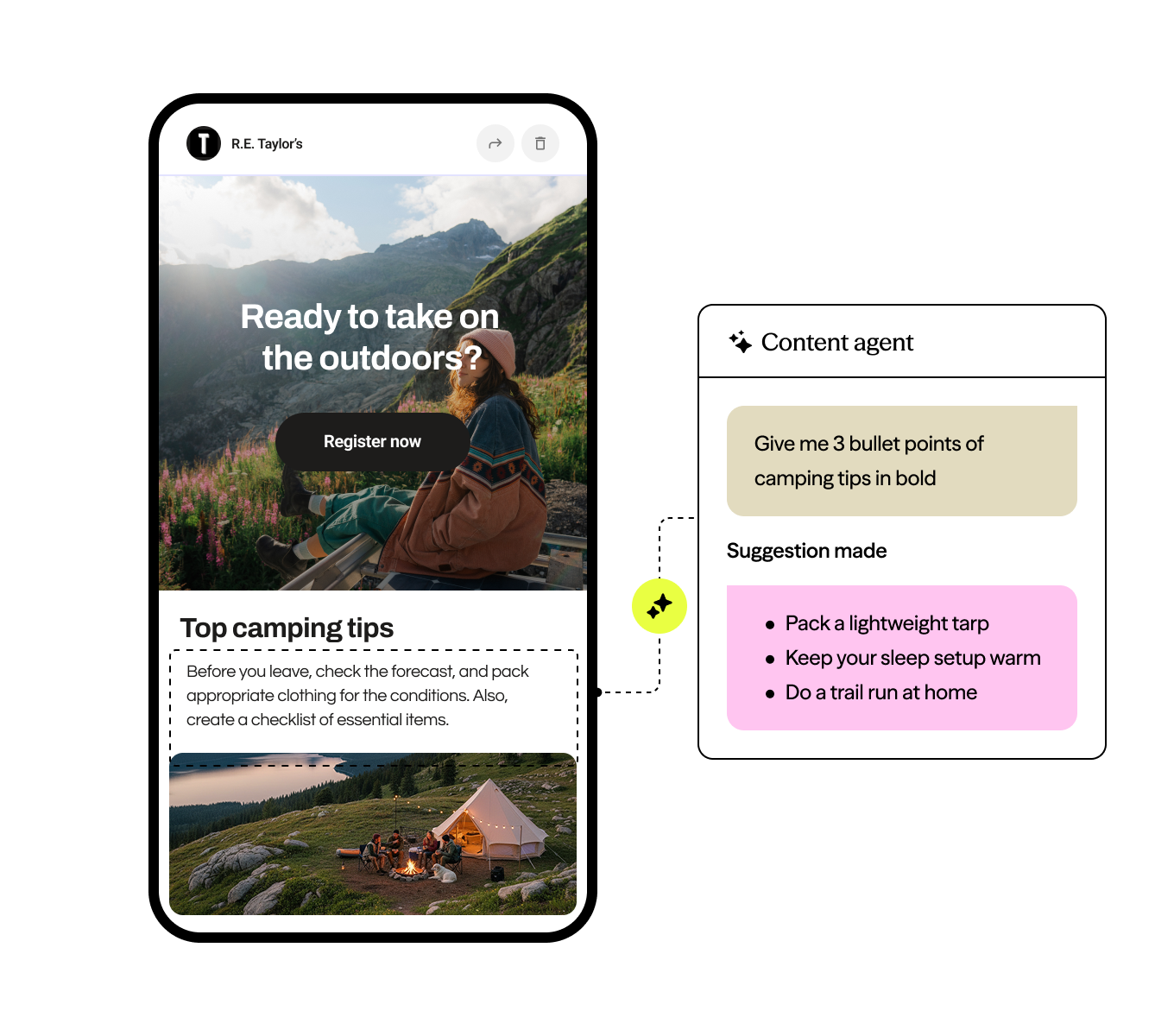
Conversational AI lets you ask questions about your data in plain language and get meaningful answers back, without needing to build a report or know your way around a dashboard.
Most leading email marketing and marketing automation platforms now have some version of all three baked in. You don’t need a separate tool or a technical team because AI is already there, ready and waiting to be used.
Campaigns that used to take half a day to draft now take an hour, and copy that used to involve multiple rounds of briefing and revision can be started in minutes. Those hours go back into the work that makes the real difference, like strategy, creativity, and the ideas that never quite get to the top of the to-do list.
The revenue impact of AI is something you can measure. Churn predictions flag customers who are starting to disengage before they slip away. Win-back journeys bring them back at the right moment. And because AI learns from every campaign you send, the results build over time rather than staying flat. All of it ties directly to revenue per send and customer lifetime value.
Our Customer trend index found that only 15% of consumers say marketing messages feel very relevant to them in the moment, down from 23% last year. Personalization that’s more than a first name in a subject line is what every marketer wants and what many struggle to deliver once the list gets big. Building individual content variations for thousands of contacts isn’t realistic without automation, and AI makes it possible.
Product recommendations based on browsing behavior, dynamic content that shifts with recent activity, and segments built from predictive models rather than static lists: all of it becomes manageable when AI does the heavy lifting.
Reaching customers across multiple regions and languages used to mean a localization budget and lead time. Campaign translation can adapt your content for different markets in a fraction of the time, keeping your message consistent while making it feel native and relevant to each audience.
The administrative side of automation is where a lot of marketers’ time quietly disappears. From send-time optimization and auto-enrollment to A/B testing, AI handles these decisions continuously across your entire contact base, without you having to build every scenario manually. It runs in the background so you can focus on the bigger picture.
The data marketers have access to is, in theory, extraordinary. In practice, most of it goes unread and unanalyzed because there aren’t enough hours in the day. AI can process behavioral data across your entire customer base and multiple integrated platforms, identify patterns you wouldn’t have thought to look for, and tell you what to do about them.
Static segment builds need regular maintenance and updating. With AI, audiences are built based on what customers actually do, such as recent behavior, predicted next actions, and likelihood to buy or churn, and are updated as actions happen. This ensures the right message reaches the right people.
AI is useful, but it’s not perfect. Here’s what to watch out for:
AI tools need data to work. That means the more customer data you feed into your AI, the better the outputs, and the more important it is to get your data practices right. Collecting consent and adhering to GDPR or regional privacy regulations aren’t checkboxes; they’re foundations. Before you expand how you use AI in your marketing, make sure you know exactly how your AI platform handles data and what its compliance position is.
Messy data is a bigger problem than most marketers want to deal with. If your contact database contains duplicates, gaps, or outdated information, your segmentation and personalization won’t have the impact you want or need. Having good data hygiene is the key to getting value from your AI tools.
Most marketers are already using AI, but using it and using it well are two different things. 34% say it speeds up certain tasks and slows down others, which points to a readiness gap rather than a tool gap. Getting specific training in place, or setting up AI champions to help with knowledge sharing, makes a bigger difference than adding more tools.
AI tools that sit outside your core marketing automation platform need data connections to be useful. A standalone AI tool that knows nothing about your customers’ purchase history or campaign engagement can only produce generic content. The more of your tech stack it can talk to, the more useful it becomes.
This is the one that matters a lot for email marketers. 45% of marketers use AI for content creation, but 24% say AI-generated content is too generic. AI can produce copy that’s grammatically correct, structurally sound, and entirely forgettable. It doesn’t know your brand’s personality, the latest social media memes, or the specific way you talk to your customers. Your audience will notice the difference, which will affect your open rates. A good thing to remember is that AI is a first draft, not a final one.
36% of marketers say AI can produce inaccurate outputs, and a quarter spend the most time fact-checking AI-generated statistics and research. This isn’t a reason to avoid AI, but it is a reason to build a review step into your process. Anything that goes out to your list with your name on it needs a human to sign it off first.
AI touches almost every part of the email creation process. For example, say you’re an ecommerce marketer launching a summer sale. You build one campaign, then use AI to spin up versions for each of your segments: loyal customers see early access, lapsed ones get a win-back offer, and browsers see the products they left behind. Each version lands at the moment that contact is most likely to open it. One campaign, dozens of variations, and no late nights.
Here’s where it makes the biggest difference:
With AI’s growing capabilities, it’s tempting to try everything at once and end up with mediocre results across the board. When you’re getting started, stick to one area to optimize first, like content creation, send-time optimization, or segmentation. Once you’re comfortable and happy with the results, then expand.
Start with the AI features inside the marketing automation platform you already use. This is already available to you, so it doesn’t need any new logins, integration work, or data migration. This is the best place to start, with the lowest lift, and it will give you plenty of opportunity to experiment.
Before anything goes live, check AI-generated copy against your brand voice, your audience, and the specific campaign context. Read it out loud. If it sounds like it could have come from any of your competitors, rewrite it until it doesn’t. AI tools built for copywriting often let you upload your brand voice guidelines to help auto-generated copy sound more authentic to your brand.
The more AI understands about each customer, the more relevant its outputs. Whether that’s a product recommendation, a predicted churn score, or a send-time calculation, integrated tech stacks help feed AI tools with the data they need to speed up your day-to-day.
From copy and images to product recommendations and dynamic content, AI still needs a human touch. It just takes one wrong input or a missing piece of data to upset the customer journey and create a broken experience. Build in review processes to ensure outputs are always right and relevant to the customer.
Maybe you’re shopping around, or maybe you’re wondering whether your current platform is keeping up. Either way, it helps to know what good looks like. Here’s what we’d check for:
Of course, AI is just one piece of the platform puzzle. When you’re ready to weigh up everything else, from integrations to pricing to what real users say, our guide to choosing the right email marketing platform walks you through the whole decision.
AI in email marketing is already well-established. What felt advanced 18 months ago is now part of the job.
The focus should be on making better use of AI that’s connected to your data, trained on your brand voice, and used in the right places. Clear guidance on when to use it, when to fact-check it, and when to trust your own judgment makes the difference between AI that makes your emails better and AI that just makes them faster.
The marketers who get the most from AI in email won’t be the ones using it the most. They’ll be the ones who know when it helps and when it doesn’t, and make sure there’s a human behind every send.