Free every Thursday · 60,261 Readers
Fastlane Insider Newsletter: What's working for Shopify in the AI era?
Free every Thursday · 60,261 Readers
Fastlane Insider Newsletter: What's working for Shopify in the AI era?

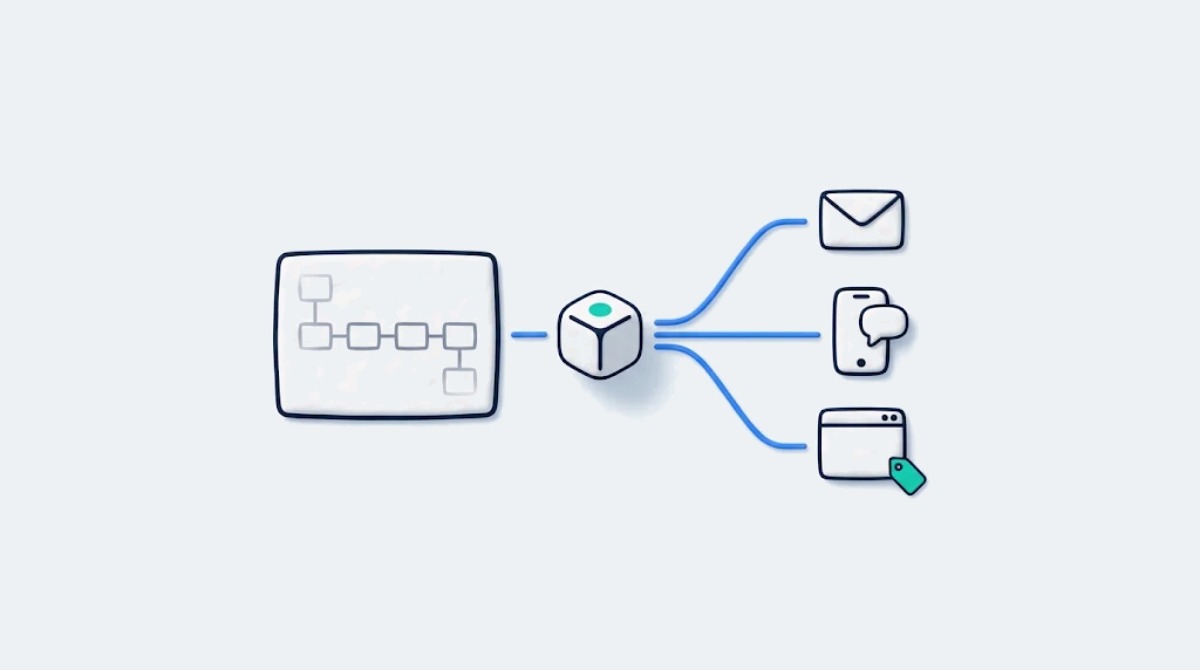
Most flow stacks don’t fail. They stall, because every new branch, variant and test still has to be built by a person.
AI agents for email and SMS matter before your next peak because peak is when hand-built flows show their ceiling: the most traffic, the most discounting, and the least time to rebuild anything. You build a welcome series, cart and browse abandonment, post purchase and winback. You add branches, write a few variants, set a split, and wait weeks for a winner. Even with good branching, most shoppers who reach the same step still get the same message, the same discount and the same send time, because every variation has to be built and maintained by someone.
When I was a Senior Merchant Success Manager at Shopify, one of the first things I did with a new merchant was audit the app stack. Email was almost always in it, and the flows were almost always set up once and then left alone while the team chased the next campaign. That pattern hasn’t changed much in the conversations I have with merchants and agency partners today. The flows work. They just stopped getting better, and nobody on a lean team has the hours to rebuild them.
That stall tends to cost money in three places. Margin leaks to discounts handed to shoppers who would have bought anyway. The inbox gets noisier, because adding sends is the easiest lever to pull. And the team spends its week maintaining rule trees instead of working on product, creative and customers. If you’re not sure whether your flows are under-built or simply unowned, eCommerce Fastlane’s look at why email still feels like a second job for Shopify brands walks through whether you have a platform problem or an ownership gap first.
Relvino is an email, SMS and pop-up platform for Shopify brands that uses AI agents in place of a flow builder. It is listed on the Shopify App Store as Relvino: AI Marketing, and Relvino positions it to run instead of a flow tool like Klaviyo, not on top of one.
Co-founder and CEO Rahul Talari came to ecommerce from AI infrastructure. He says he was the second machine learning engineer at CoreWeave, the AI cloud company, before starting Relvino. According to Relvino, the current product has been live with brands since October 2025, and has 15 published case studies. Relvino lists two recent launches that matter for merchants: V3 on October 19, 2026, which puts audience, email, SMS, pop-ups, variants, and flows into one conversation, and Shopper Scanner on October 16, which identifies store visitors so the list keeps growing.
The simplest way to describe it to a founder over coffee is the one Rahul gave me: it’s the email and SMS platform you would have built if AI could already make the decisions on day one. You don’t build flows or segments. You set the rules, and the agents work inside them.
Disclosure: Relvino booked a paid guest appearance on the eCommerce Fastlane podcast. This spotlight is not sponsored, and that relationship doesn’t change who I think Relvino fits.
Relvino’s agents make four decisions for each individual shopper: what to say, when to send it, which channel to use, and whether a discount is needed at all. Then they write the message, send it, and, as Relvino describes it, log what happened so the next decision is better. Four capabilities do most of the work for a merchant.
Per shopper timing and channel. Instead of “send the cart email one hour after abandonment,” each message is timed for when that shopper is most likely to buy, through email, SMS or an on-site pop-up, whichever fits that person. The aim is fewer sends that land at the wrong moment. It works best when you already have meaningful traffic and a list, because the agents learn from behavior.
The smallest offer that still converts. This is the capability I’d pay the closest attention to. Plenty of abandonment flows hand the same fixed discount to everyone who reaches that step, including people who were coming back anyway. Relvino’s agents decide whether a discount is needed and how small it can be. In an analysis of TOMS’s cart abandonment flows, Relvino’s agents identified 16 percent margin recovery. That was an analysis of TOMS’s data, not a live send, and Relvino labels it that way. If you want to see how much a sitewide discount quietly costs you, eCommerce Fastlane’s guide to running the margin math before you pick a Black Friday offer shows the arithmetic.
Testing at a much larger scale. Rahul’s contrarian take is that segmenting harder isn’t the answer. By Relvino’s count, a team can hand-build about 10 A/B tests a quarter, while its agents run around 3 million variant decisions in the same time. Relvino says every decision is logged with its result and feeds the next one, and that the agents start from patterns learned across thousands of retailers, so a new account doesn’t begin from zero.
Guardrails and a separate check. You set brand voice, discount limits, design elements and how often anyone can be contacted. Relvino says a separate non-AI quality check scores every message before it goes out, and it reports 99.5 percent deliverability with under 0.5 percent spam on its own sending infrastructure.
When Arvin Goods handed its Cyber Sale to Relvino’s agents, the sale produced 4X the email revenue of the prior year’s sale, according to Relvino’s published Arvin Goods case study. Arvin Goods is a Seattle-designed basics brand (socks, apparel, and headwear) that moved from Klaviyo to Relvino, and the case study says every email creative was generated and finalized with no human designer involved.
The situation before the switch is the part most small brands will recognize. Arvin Goods had no fixed annual marketing roadmap, so big campaigns were built with little lead time, and outside designers brought delays and last-minute drop-offs. That’s a familiar story in the merchant conversations I have: a brand with real demand and no one whose full-time job is email. The decision was to stop patching that gap with freelancers and hand the whole peak campaign to the agents, inside the brand’s guardrails.
Two conditions keep the result honest. It’s a vendor published case study, and it compares one Cyber Sale with the prior year’s, so other changes between the two years can affect the number. Relvino also states its own broader figures: across eight paying brands, $24 in attributed sales for every $1 paid in fees from January 1 to September 14, 2026, with the median brand seeing its first attributed order in two days. Its headline promise to new merchants is 2 to 6X ROI in 30 days. Keep in mind that attributed sales and ROI are Relvino’s measures, not incremental profit, which is why the pilot design below matters. You can read the rest of the results, including Orion Sleep, Nation Golf, and Stein Mart, on Relvino’s case study page.
For a lean team, the hours and discount margin it takes to keep hand-built flows working can easily outweigh the platform fee. A peak sale is where both show up at once.
Relvino fits best when you have enough traffic for the agents to learn from and you’re comfortable setting rules rather than approving every send; your current tool is the right call when traffic is thin, when you want sign-off on each email, or when you want AI layered on flows you already have. Rahul was direct about who should keep scrolling, and I’d take him at his word.
Brand new stores with very little traffic should stay on the basic flows in the tool they already have. The agents learn from shopper behavior, and there isn’t enough of it yet. If you’re there, Shopify’s own messaging tools are a sensible starting point, and eCommerce Fastlane’s guide to what to use natively before adding apps to your Shopify stack covers what Shopify Messaging includes. Teams that want a person to approve every email will feel like they’re giving up control, because Relvino is built around guardrails, not sign-offs. B2B and wholesale only sellers aren’t a fit, since everything is built around consumer shopping behavior.
The technical switch is smaller than most merchants assume. Relvino puts the cutover at about 30 minutes on Shopify, followed by a 14-day pilot. Treat that as installation; the real test is the comparison you set up next.
If you’re a Scaling or Leading Shopify brand and your flows have stopped improving, your next step this week is to pull two numbers: flow revenue as a share of total email revenue over the last 90 days, and the average discount your abandonment flows hand out. Together they point to whether you have a plateau worth testing against.
Now, if the flow share is flat and the discount is the same for everyone, that’s the situation Relvino was built for. Run the pilot with a holdout: keep a share of shoppers on your current flows, and compare contribution margin, not just attributed revenue, between the two groups over the same dates. Fourteen days is a starting window; a smaller list may need longer to read clearly. If you’re a smaller brand with traffic but no one running email, the Arvin Goods story is the one to read closely, because the time you get back matters as much as the revenue. And if you’re still proving your product, keep your flows simple and come back to this once you have the traffic for agents to learn from.
Whatever you decide, start from the outcome: how much margin and team time your current flows cost you to earn the revenue they bring in.
Relvino is an AI email, SMS and pop-up platform that installs on Shopify from the App Store and replaces hand-built flows with AI agents. For each shopper, the agents decide what to say, when to send it, which channel to use and whether a discount is needed, then write and send the message and learn from the result. You set guardrails such as brand voice, discount limits and contact frequency, and a separate non-AI check scores every message before it is sent. The app is listed as Relvino: AI Marketing, and Relvino positions it to run in place of a flow tool like Klaviyo rather than on top of it.
Yes, Relvino is designed to replace Klaviyo’s flow stack rather than sit on top of it. Instead of drawing flows and segments, you set rules and the agents make per shopper decisions across email, SMS and pop-ups. Relvino puts the technical cutover at about 30 minutes on Shopify, followed by a 14-day pilot, which works best with a holdout group kept on your current flows. It is the wrong choice if you want an AI add-on inside Klaviyo, if you want to approve every send by hand, or if your store doesn’t yet have enough traffic for the agents to learn from. In those cases your existing Klaviyo flows remain the better option.
Relvino says its best fit is Shopify brands doing roughly $10M to $200M a year online that already have an email and SMS list and flows that have stopped improving. In eCommerce Fastlane’s stage terms, that is the upper end of Scaling and the Leading stage. Smaller brands with real traffic but no dedicated marketing team can also do well, as the Arvin Goods Cyber Sale case study shows. Brand new stores with little traffic, and B2B or wholesale only sellers, are not a fit, because the agents learn from consumer shopping behavior and need enough of it to make good decisions.
AI agents decide whether to offer a discount by looking at each shopper’s behavior and choosing the smallest incentive that is still likely to convert, including no discount at all. That is different from a fixed-discount abandonment step, which gives the same percentage to everyone who reaches it, including shoppers who would have returned and bought anyway. In Relvino’s analysis of TOMS’s cart abandonment flows, its agents identified 16 percent margin recovery. You still control the ceiling, because discount limits are one of the guardrails you set before the agents send anything.
Relvino reports that its median brand sees its first attributed order within two days, and it tells new merchants to expect 2 to 6X ROI within 30 days. Across eight paying brands from January 1 to September 14, 2026, Relvino reports $24 in attributed sales for every $1 in fees. These are Relvino’s own attributed figures, not incremental profit, so the most reliable way to judge results for your store is a pilot with a holdout group on your current flows, comparing contribution margin over the same dates.