SMS win-back campaigns lose money when a bigger discount is the only lever on a crowded channel. For consented, high-value lapsed buyers, a ringless voicemail can add a personal touch without another coupon, provided you meet federal consent rules first.
A 30% code on a text nobody reads is not a win-back campaign. It is a margin write-off with a send button.
You just launched the most aggressive win-back campaign of the quarter. You cut margin, offered a 30% discount code, and sent it by SMS and email to every inactive buyer on your list. Almost nobody bites.
The instinct is to blame the offer. You tweak the copy, bump the discount to 35%, and try again. But here is the uncomfortable part of retention in ecommerce: the most generous code in the world is useless if it sits unread beside a dozen other promotional texts, or gets buried in a Gmail Promotions tab.
Most Shopify brands are so focused on what they are offering that they overlook how they are delivering it. Whether you are doing $10K months or $1M months, the delivery problem is the same: a channel every other brand also uses stops carrying a signal.
Plenty of brands treat retention like a digital megaphone, blasting automated texts at their best customers until the brand starts to feel cheap, when an authentic ringless voicemail could cut through the noise and protect margins for the customers who deserve a personal touch. That option comes with real rules, which this article covers, along with the cases where you should not use it at all.
SMS win-back campaigns fail when the channel is saturated, because a generous offer only works if the customer notices it among everything else on the lock screen. An SMS list of 10,000 past buyers feels like a goldmine. Management sees the phone numbers, assumes repeat revenue is a matter of pressing send on a flash sale text, and stops asking whether anyone is reading.
On the customer’s side, the picture looks different. Your text arrives next to delivery alerts, bank codes, and promotions from every other brand that collected the same number. When the channel is crowded, you are not building loyalty. You risk training your best buyers to ignore you or, worse, to wait for the next code before they buy at full price.
More volume does not fix this. Our SMS campaigns guide recommends starting at four or five texts a month and growing only if response holds, and that restraint matters most with lapsed buyers, who have already shown they are not eager to hear more. If your results are flat after two or three sends, the problem is rarely the next percentage point of discount. It is the channel, the segment, or both.
A discount-led win-back campaign costs the discount on every order it produces, including orders from customers who would have come back anyway, so the real expense is margin that never shows up in the send report. Run the math before the next blast.
Illustrative example, assuming 1,000 lapsed buyers, an $80 average order, and product plus fulfillment costs of $48 per order. A 30% code drops the price to $56 and the margin to $8 per order, down from $32. If 4% of the list orders, that is 40 orders and $320 of margin, with $960 handed back in discounts. Bump the code to 35% and margin falls to $4 per order, so the same 40 orders earn $160. These are assumptions, not benchmarks, so swap in your own order value, margin, and response rate.
Then there is brand perception, which no dashboard shows. If you sell a premium product, a rapid-fire sequence of texts begging for a repurchase makes the brand look desperate, and the exclusivity drops. The next time that customer needs what you sell, they have a rational reason to wait for the inevitable code.
The labor cost hides in plain sight too. Teams spend hours mapping Klaviyo flows that step through 10%, then 20%, then 30% off, and those flows keep running long after anyone looks at them. Before you add another step, review the flows already running, because a win-back journey built on stale logic repeats its mistake at scale.
Ringless voicemail fits as one extra, consented touch for your highest-value lapsed buyers, placed alongside your email and SMS attempts rather than replacing them. The mechanical problem is simple: you cannot personally call every VIP to thank them for an order or ask why they have not restocked. You do not have the hours or the support staff, and it defeats the point of an automated Shopify store.
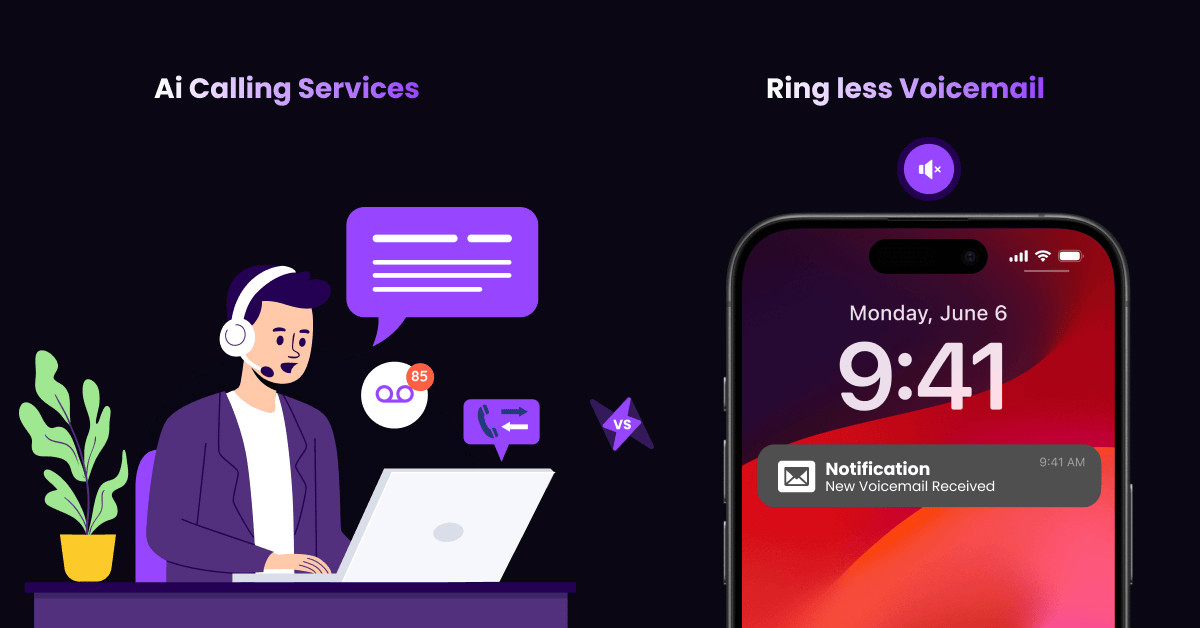
That is where purpose-built voice automation earns a look. A platform like VoiceDrop lets you record one authentic audio message and deploy it at scale. It skips the ringing phone and places your recording in the customer’s voicemail inbox, so it does not interrupt their day. If you want a plain-language explainer of the mechanics, our earlier piece on how ringless voicemail drops reach a voicemail inbox walks through it for a local retailer.
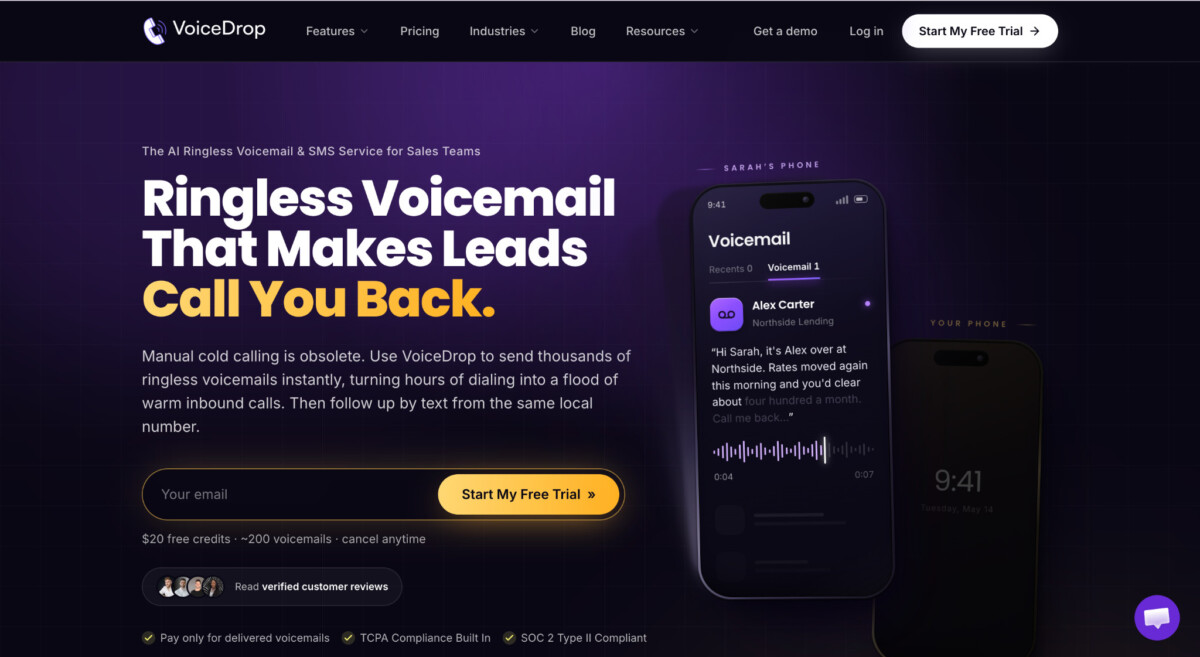
When it works, VIPs hear a voice instead of meeting another coupon, and retention stops being a race to the bottom on margin. Know the limits before you buy, though. VoiceDrop’s site says it does not support landlines, and as of October 2026 it describes connections through no-code automation tools and an API rather than a native Shopify integration. It also reports callback rates of 8 to 10% for its best campaigns, which is a vendor figure on its own site, not an independent benchmark. Treat it as the ceiling for a clean, well-targeted list and test on your own customers.
The right option depends on how much you send and whether you want voicemail alone or voicemail bundled with texting and a CRM. This piece was contributed by VoiceDrop and edited by eCommerce Fastlane, which is why VoiceDrop is held to the same criteria as the alternatives below. Prices come from each provider’s own site as of October 2026 and change often.
Choose VoiceDrop if you want voicemail drops and text follow-up from one platform and are comfortable connecting it to your store through an automation tool or API, since its site lists no native Shopify integration.
Choose Slybroadcast if you send occasional one-off drops to a small consenting list and prefer pay-as-you-go pricing, which starts at $12 per 100 deliveries, or from $8 a month on a plan.
Choose Drop Cowboy if you want voicemail, texting, and a built-in CRM in one platform and expect to send at a steady monthly volume, with plans from $125 a month.
Stay with SMS and email only if you have fewer than 1,000 consenting lapsed buyers, your average order is low, or you have no written consent for voice messages, because the compliance work outweighs the upside at that size.
The FCC ruled in November 2022 that a ringless voicemail is a call under the Telephone Consumer Protection Act, which means you need the recipient’s consent before you send one. The commission’s declaratory ruling rejected a 2017 petition arguing that messages which bypass the phone line fall outside the law, and Orrick, a law firm, summarizes the unanimous ruling and the FCC’s reasoning that consumers cannot block these messages.
For marketing, plan on written consent. The ruling’s own footnote says prior express consent must be written for certain telemarketing calls to wireless numbers, and both VoiceDrop’s and Drop Cowboy’s sites tell senders to obtain prior express written consent for promotional messages. A win-back offer is a promotion.
In practice that comes down to four habits. Put consent language on your signup forms and checkout that covers prerecorded voice messages, not just texts. Honor every opt-out on all later sends. Scrub lists against Do Not Call registries. Send only inside calling hours, which VoiceDrop’s site lists as 8 am to 9 pm in the recipient’s time zone, with some states stricter. A thank-you voicemail to a first-time buyer is allowed only if their checkout consent covered it. Provider tools help with scrubbing and opt-outs, but Drop Cowboy’s own site says the sender remains responsible. This is not legal advice, so ask counsel before you launch.
Ringless voicemail suits three moments best: high-ticket abandoned carts, VIP replenishment reminders, and first-purchase thank-yous, because each gains from a human voice and none needs a high send volume.
Recovering high-ticket abandoned carts. A standard SMS for a $20 t-shirt makes sense. An SMS for a $500 espresso machine sitting in a cart does not. A short voicemail from the founder offering to answer questions about the machine builds trust in a way a text with a code rarely can, and at that order value a handful of recovered carts changes the math.
The VIP replenishment reminder. If you sell supplements, skincare, or coffee that runs out about every 30 days, a voicemail checking in on their progress feels closer to concierge service than another generic restock email. Time it from your own data: our guide to the reorder clock shows how to fire the reminder at 70 to 80% of the replacement interval instead of on a calendar guess.
The post-purchase thank you. A short welcome voicemail for first-time buyers can make your next email feel expected rather than random, though nobody can guarantee they will open it. Test it against a holdout group, and send it only to buyers whose checkout consent covered voice messages.
Skip ringless voicemail when your list lacks written voice consent, your average order is too low to justify a personal touch, or your win-back problem is really an offer or list quality problem. A voicemail will not rescue a weak product or a list full of people who never wanted to hear from you.
Match the move to your stage, and treat these cutoffs as rules of thumb, not benchmarks. Under $10K a month, skip it and get a welcome flow and a cart flow working first. Between $10K and $100K a month, skip it unless you sell high-ticket items. From $100K to $1M a month, test the largest consenting segment you have, ideally 1,000 customers or more because a few hundred produce too few orders to read, against a holdout group of the same size, and judge it on margin per customer after the discount you did not give. Above $1M a month, keep a standing holdout so you always know what the channel earns.
Here is the part people get wrong most often: they avoid new channels because another batch of SMS feels easier. Stop burning margin on massive discount codes. Stop guessing whether customers read your texts. The goal was never the highest volume of messages. It is a high-retention brand, because that is the only version that generates long-term revenue.
Ringless voicemail is legal for ecommerce marketing when the recipient has given the consent the Telephone Consumer Protection Act requires. In November 2022 the FCC ruled that ringless voicemail counts as a call under that law, so promotional drops to mobile numbers generally need prior express written consent, a way to opt out, and compliance with Do Not Call rules and calling hours. Consent collected for email or text alone may not cover voice messages, so check your signup and checkout wording first. Drop Cowboy includes scrubbing and opt-out tools and VoiceDrop’s site tells senders to get prior express written consent, but the sender stays responsible for compliance. This is general information, not legal advice, so confirm your setup with a lawyer.
Ringless voicemail costs roughly 2.5 to 9.5 cents per delivered message on VoiceDrop’s published plans, depending on the plan. Entry pricing as of October 2026 is $95 a month at VoiceDrop, which covers 1,000 voicemails, $125 a month at Drop Cowboy, which covers about 2,083 voicemails or texts, and from $8 a month or $12 per 100 deliveries pay as you go at Slybroadcast. At VoiceDrop’s per message range, sending to 1,000 consenting VIPs costs roughly $25 to $95 in delivery fees, plus any plan fee. Compare that with the discount you would give away on the same orders, using your own order value and margin. Prices change often, so confirm them on each provider’s site before you commit.
No independent benchmark shows that ringless voicemail beats SMS for win-back campaigns, so the honest answer is that you have to test it on your own list. VoiceDrop’s site reports callback rates of 8 to 10% for its best campaigns, but that is a vendor-reported figure, and a callback is not an order. Start with a small, high-value segment of consenting customers and keep a matching holdout group that receives only your usual flow. Then compare margin per customer after discounts, not callbacks or clicks, and let that number decide whether voicemail earns a permanent place in your sequence.
Customers who gave voice consent and have high lifetime value or a high-ticket abandoned cart should get the voicemail first, while price-sensitive lapsed buyers can stay in your discount flow. A VIP who has bought at full price several times needs a reason to return, not a 30% code that teaches them to wait. A shopper holding a $500 item in a cart usually needs a question answered. A buyer who has only ever purchased on promotion is already telling you what moves them. Segment by order history, send the voicemail to the first two groups, and keep the offer for the third.
You can usually connect a ringless voicemail service to Shopify through an automation tool or an API, but check native support before you buy. As of October 2026, VoiceDrop’s site lists connections through no-code automation tools and a REST API and does not mention Shopify, while Drop Cowboy shows Shopify only as a logo in its integrations section with no detail. This review did not find a native Klaviyo connection on either page. A practical setup triggers the drop from a segment or flow event through an automation tool, then confirms that consent status travels with the customer record. Ask each vendor for its current integration documentation.