Free every Thursday · 60,261 Readers
Fastlane Insider Newsletter: What's working for Shopify in the AI era?
Free every Thursday · 60,261 Readers
Fastlane Insider Newsletter: What's working for Shopify in the AI era?

Most Shopify stores under roughly $2M a year do not need a separate email template builder. The editor inside Klaviyo, Shopify Messaging, or Omnisend, set up with one base template and saved blocks, is enough. Standalone builders like Stripo earn their place with multiple platforms, outside designers, or interactive email.
The template is the container. Merchants spend weeks choosing a prettier container while the message inside it is the part their subscribers actually judge.
A founder pays a freelancer to design a beautiful campaign template in a separate builder. It exports into Klaviyo, the first send looks great, and then the marketing coordinator edits the copy inside Klaviyo the following week. Now there are two versions of the template, and only one of them is real. Six months later, nobody knows which file is current, the flows use three different headers, and the builder subscription is still renewing.
That is the quiet problem with email template builders for ecommerce. The tools are good. The question merchants rarely ask is whether they need a separate tool at all, or whether the editor they already pay for, used properly, would do the job with fewer moving parts. Whether you are sending your first welcome flow or running a seven figure email program, the answer depends less on design ambition than on how many people, platforms, and brands touch your emails.
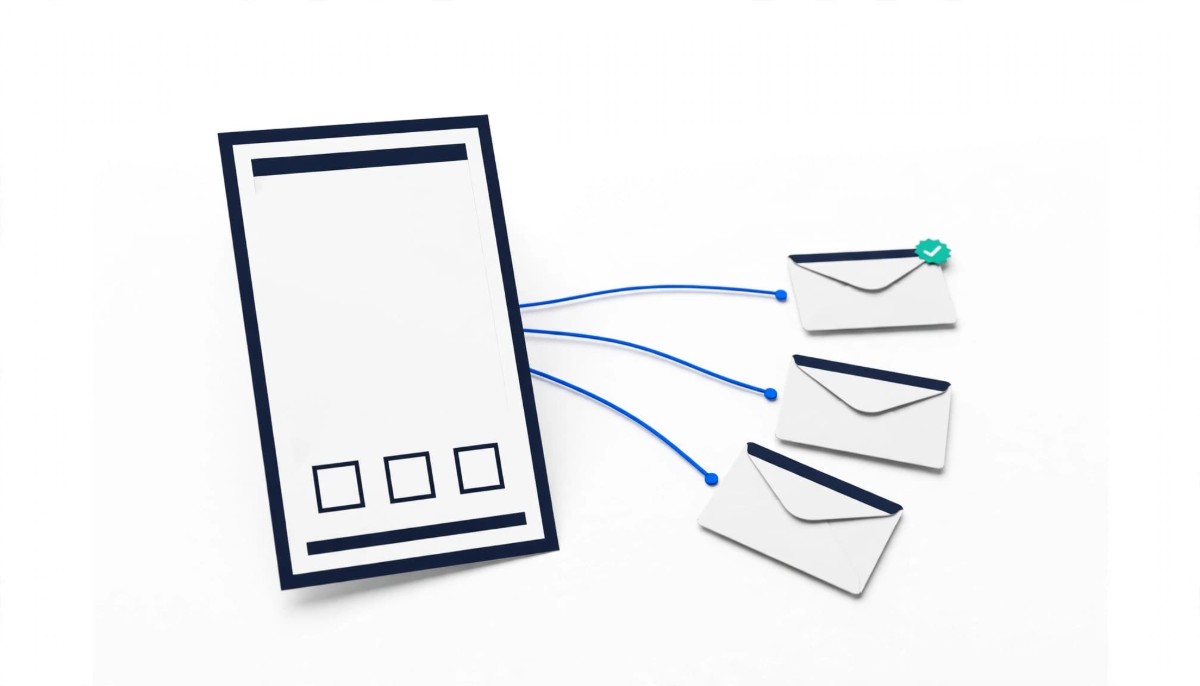
An email template builder is a design tool that produces reusable, mobile friendly email layouts so you are not rebuilding headers, product grids, and footers by hand for every send. It comes in two forms. The first is the editor built into your email platform: Klaviyo, Omnisend, Mailchimp, and Shopify Messaging all ship a drag and drop editor where you design and send in the same place. The second is a standalone builder such as Stripo or RGE Studio, where you design in one tool and export finished HTML to whichever platform does the sending.
Both forms solve the same underlying problem. Email HTML is old fashioned and fragile. It is built from nested tables and inline styles so it renders in Apple Mail, Gmail, and Outlook alike, and very few marketers want to hand code it. A builder hides that complexity behind blocks you can drag into place.
Where the two forms differ is in what happens after the design is done. A native editor keeps the design, the merge tags, the product feeds, and the sending in one system, so a change made on Tuesday is the change that goes out on Wednesday. A standalone builder adds flexibility (custom code, interactive modules, export to several platforms) in exchange for an extra step and an extra place where your templates live.
That trade is the whole decision. If you remember one thing from this guide, make it this: the right builder is the one that leaves you with a single, current version of each template that everyone on the team edits. For most stores, that is the editor you already have.
If you are under roughly $2M a year, sending from one email platform, and building emails with one or two people, the native editor is enough and a separate builder is premature complexity. The editors have closed most of the gap that once justified standalone tools, and the cost of the native option is often zero.
Shopify Messaging, the app formerly called Shopify Email, is the clearest example for early stage stores. According to the Shopify Messaging app listing, the first 10,000 emails each month are free, with pricing starting at $1 per 1,000 emails after that (as of October 2026). Shopify confirmed the name change in its December 2025 changelog post adding SMS to Shopify Messaging. Its templates are built around your store’s products and branding, which covers what a store doing its first $100K actually needs.
Klaviyo, which most growth stage Shopify brands end up on, has the feature that makes a separate builder unnecessary for most teams: reusable content. Klaviyo’s help documentation on its drag and drop editor explains that you can save a block or section as universal content, reuse it across templates, and publish one change to every email that uses it. Klaviyo’s own guide to creating a base template makes the same point: build it once and use it across your campaigns and flows. If you are weighing the platform itself, our Klaviyo review for Shopify brands at each stage covers pricing and fit in more depth.
Put those two features together, a base template plus saved blocks, and you have most of what a standalone builder sells: consistency, speed, and one place to update your footer or shipping message. If you are just starting, build that in Shopify Messaging or whichever platform you already use. If you are scaling, here is where I want you next: before buying anything, audit how many distinct templates your flows use today. The number is usually higher than anyone expects, and the fix is consolidation, not another tool.
A standalone builder earns its place when more than one platform, more than one designer, or more than one brand touches your emails, or when you want interactive content your platform’s editor cannot produce. Outside those conditions, it adds a step without removing one.
The four situations where I would say yes are specific. The first is sending from more than one platform, or migrating between them, where designing once and exporting to each saves real hours. The second is an outside designer or agency producing templates, where a builder gives them a workspace without full access to your sending account. The third is several brands or languages sharing a design system. The fourth is interactive email, such as carousels, polls, or spin to win offers, which needs different code for different inboxes.
Dmytro Kudrenko, founder and CEO of Stripo, made the trade off plain when he joined me on episode 391 of the eCommerce Fastlane podcast. Talking about drag and drop editors, he said: “However, simplicity often comes at the cost of flexibility.” His answer at Stripo is reusable modules that can be built with custom code and then dropped into any email, and on the interactive side, a system that generates the separate versions Gmail and Apple Mail need, with a fallback for everything else. He described the goal simply: “We want to remove all routine, we want marketers to do marketing.”
That is a fair description of what a good standalone builder buys you, and it is worth paying for when the flexibility is used. Stripo also syncs with email platforms so you can update an element across many saved emails at once, which reduces drift, though it cannot recover edits someone made only on the platform side. Stripo’s pricing page lists a free plan limited to four exports a month, with paid plans at $20, $45, and $125 a month (as of October 2026). The Beefree app now operates as RGE Studio, per its help center notice on the rename. RGE Studio’s pricing page lists a free Starter plan capped at six exports a month and a Professional plan at $30 a month, or $25 a month billed yearly (as of October 2026). Neither price is large. The cost that matters is the one in the next section.
The hidden cost of a standalone builder is that every template now lives in two places, the builder and your email platform, and the two drift apart the moment anyone edits on the platform side. That drift is where broken links, outdated offers, and mismatched branding come from.
Export is not a clean copy. Every email platform rewrites the HTML it receives: it relocates or strips CSS, swaps merge tags into its own syntax, adds its own unsubscribe element, and routes links through click tracking. We walked through each platform’s behavior in what happens to your email HTML when you export it to different ESPs, and the short version is that the file in your builder is never quite the file your customer receives.
Then human behavior takes over. A coordinator fixes a typo inside Klaviyo because it is faster than reopening the builder and exporting again. A flow email gets a new discount line. Nobody updates the builder. The next time the designer exports a refreshed version, it overwrites those fixes, or worse, only some flows get the new version and the rest keep the old one.
The fix is a rule, not a tool. If you use a standalone builder, it is the single source of truth: every change starts there and is exported again, and nobody edits template structure on the platform side. If your team will not hold that rule (and most small teams will not, because speed wins), then the builder is the wrong choice for you, however good its features are. Pick the place where edits actually happen and make that the only place templates live.
Design for a phone screen in Apple Mail and Gmail first, put the message in the first lines of the email, and stop spending design hours on the parts of the layout most subscribers never see. Template polish only pays when it serves that reading pattern.
The Litmus email client market share report for September 2026, drawn from more than 1.5 billion opens, puts Apple at 76.56% and Gmail at 16.10%. Read that with care: Apple’s share is inflated because Apple Mail can register opens automatically, a point Tris Dyer, CEO of Oaks Email Studio, made about open rates on episode 450 of the podcast. The direction still holds. Your customers read on phones, in two inboxes. Dmytro Kudrenko put it bluntly on episode 391, saying “Optimizing emails exclusively for desktop would be a major mistake” for a mobile first audience.
The more important point from the Tris Dyer conversation was about what readers and their inboxes do with the top of an email. With Gmail and Apple both summarizing and sorting mail with AI, he warned: “So if you don’t have good, clear, concise content at the start of your email, that’s going to just be brushed aside.” That is a template decision. A base template that opens with a full width image and no text puts your offer below the part the inbox summarizes. A template that opens with one plain line stating the offer, then the image, protects it.
Images still matter, and how you size and embed them affects load time and spam filtering. Our guide to embedding images in emails covers formats and file weight. But the order of priority is clear: message first, readable on a phone, then visual polish. No builder can fix a message that is not clear.
For a Klaviyo store doing about $1.5M a year with a two person team, the right call is usually to cancel the standalone builder and rebuild on one base template. This is an illustrative composite, built from the setup pattern described in this guide rather than from one real store, and every number in it is hypothetical. Picture a skincare brand doing about $1.5M a year on Shopify, sending from Klaviyo with a two person marketing team. A freelance designer builds every campaign in Stripo on the $45 a month plan and exports to Klaviyo. The welcome, browse abandonment, and post purchase flows each use a different header because they were built in different years.
Here is what I would look at, in order. First, where edits actually happen. In this setup the team edits copy inside Klaviyo every week, so the Stripo files are already out of date. Second, how many distinct templates the flows use. Three headers and two footers means a customer who gets a welcome email and then an order follow up sees two different brands. Third, what the builder is doing that Klaviyo cannot. Here the answer is nothing: no second platform, no interactive modules, no other brands. The freelancer is the one condition that points the other way, but their real job here is a base design that changes a few times a year, and that work can be done inside Klaviyo with a limited user role instead of a separate tool.
My call for this store is to cancel the builder. Build one base template inside Klaviyo, save five universal blocks (header, footer, product grid, review strip, and a shipping and returns line), and rebuild the flows on that base. Pay the freelancer for a day or two to design the base properly, then let the team build each campaign from it. The saving is not the $45 a month. It is the hours spent exporting and reconciling, and the brand drift that stops. To check that the change worked, compare revenue per recipient and click through rate for the quarter before and after the rebuild, rather than opens, which Apple Mail inflates.
That call changes with the business. If this brand launches a second line on a separate store, moves to a new platform, or wants interactive campaigns for peak season, a standalone builder comes back into the conversation, this time as the single source of truth with platform side editing locked down. As Tris Dyer put it on episode 450, “There has to be a good business strategy before you start having an implementation strategy.” The builder is implementation. Decide what your email program needs to do first, and the tool choice usually makes itself. If your bigger gap is the flows themselves, start with our walkthrough on building the email retention system before you scale.
The right option depends on how many platforms and people touch your emails, and the native editors cover more stores than the standalone tools do. Prices below are monthly list prices as of October 2026 and change often, so check each vendor before you commit.
Omnisend and Mailchimp also include their own drag and drop editors, and the same logic applies: if you send from one of them, start with the editor you already pay for. The standalone tools are not better or worse than the native ones. They solve a coordination problem, and if you do not have that problem, they create one.
No, most Klaviyo users do not need a separate template builder. Klaviyo’s drag and drop editor lets you build a base template, save blocks and sections as universal content, and update every email that uses a saved block with one published change. That covers consistency and speed for a store sending from one platform with a small team. A separate builder such as Stripo makes sense when you also send from another platform, when an outside designer needs a workspace without access to your Klaviyo account, or when you want interactive modules the native editor cannot produce. If none of those apply, put the effort into one strong base template inside Klaviyo instead.
For a new Shopify store, Shopify Messaging is usually the best free option because design and sending live in one place and the first 10,000 emails each month are free, as of October 2026. Its templates are built around your store’s products and branding, so you can send a welcome flow and your first campaigns without another tool. Stripo and RGE Studio (formerly Beefree) both have free plans, but they cap exports at four and six a month, which suits occasional design work rather than a regular sending schedule. Start native, and revisit the question once you are sending weekly and have outgrown the built in templates.
Your email looks different because every email platform rewrites imported HTML before it sends. The platform may move or strip CSS, convert merge tags into its own syntax, add its own unsubscribe element, and wrap links in click tracking, so the file in your builder is never identical to the one your customer receives. Test the version stored in the email platform, not the builder preview, by sending yourself tests on an iPhone in Apple Mail and on Gmail. Then make the builder your only editing location, because changes made on the platform side are overwritten or lost the next time you export a refreshed version.
Most Shopify stores need one base template and a small set of saved blocks, not a library of separate templates. A base template carries your header, footer, fonts, and colors, and saved blocks such as a product grid, a review strip, and a shipping and returns line let you assemble each campaign in minutes. Your flows, from welcome to post purchase, should be built on the same base so customers see one consistent brand across every email. Stores that keep a different template for every campaign usually end up with mismatched headers and outdated footers in their automated flows, which is harder to spot and fix than a single template.
Interactive email is worth testing for a small brand only after the basics are working, because it adds build effort and needs separate code for different inboxes. Elements like carousels, polls, and spin to win offers require one version for Gmail, another for Apple Mail, and a plain fallback for everything else, which is why tools such as Stripo generate those versions for you. If your welcome, abandoned cart, and post purchase flows are already built and converting, a seasonal interactive campaign around peak shopping periods is a reasonable experiment. If those flows are not in place yet, build them first, because every later campaign depends on them.