
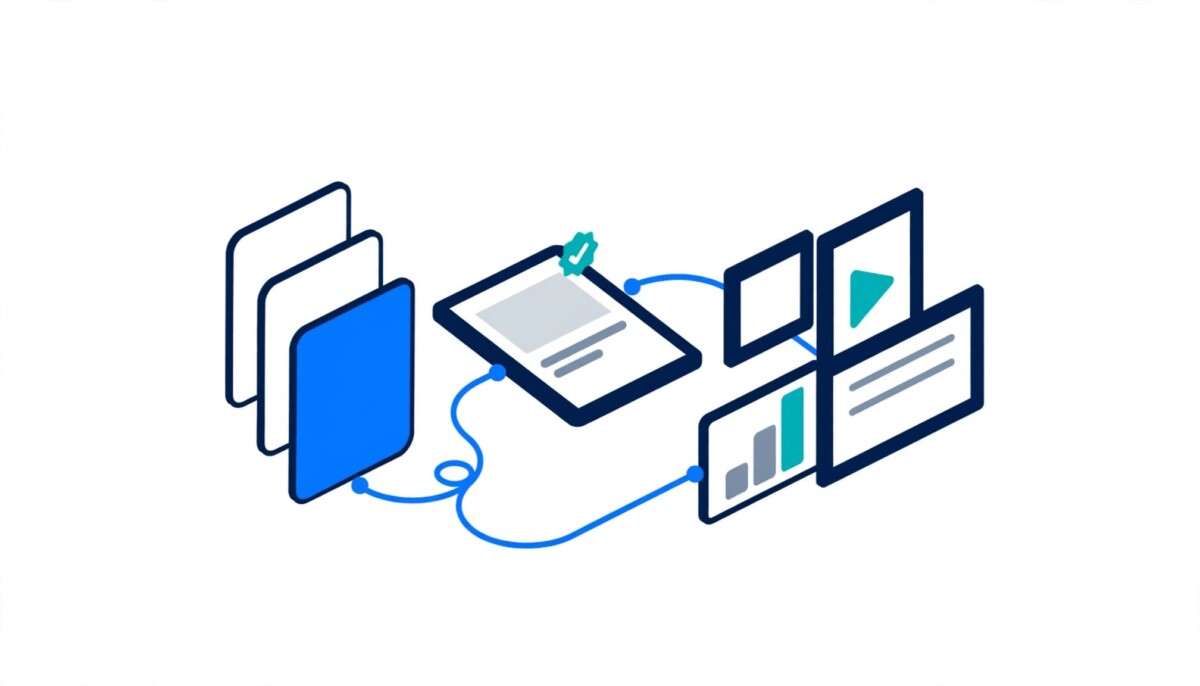
When ad creative stalls as a Shopify brand grows, the constraint is usually how work moves between people (briefs, approvals, feedback) rather than headcount. Fix that system first with one written brief, one final approver, and a performance feedback loop, then hire or outsource into it.
A creative team that ships one ad a week with two people and still ships one ad a week with five people does not have a talent problem. It has a routing problem.
The creative bottleneck is the point where a brand needs more ads, videos, and landing pages than its current way of working can produce, and it usually hits right before or right after growth takes off. If you are a founder who used to write every caption, approve every video, and obsess over every frame, you know the moment. Sales start climbing, paid social starts working, and suddenly the thing that made the brand good (your hands on every asset) is the thing slowing it down. That moment is the problem BTS Studio, a creative operations agency for ecommerce brands and performance ad agencies, was built around, and the diagnostic in this article reflects how it approaches the bottleneck with clients.
It is a good problem to have, and it is getting more common because the ad platforms are asking for more. When Meta described its Andromeda ad retrieval system, its engineering team wrote that the number of ad creatives in Meta’s recommendation systems is expected to grow significantly, and that more than a million advertisers had used its generative AI tools to create over 15 million ads in a single month (Meta Engineering, December 2024). Your competitors are feeding the machine more variations, and the algorithm is built to sort through them.
That does not mean you need to match anyone’s volume. eCommerce Fastlane’s breakdown of why Meta ad costs rise under Andromeda and what to do about it makes the point that near duplicates count as one signal, and that distinct angles and buyer states matter more than raw count. Distinct creative is harder to produce than variations of one winner, though. It needs real strategy, real briefs, and a team that can move from idea to live ad without the work stalling in someone’s inbox.
So the pressure shows up as a feeling every growing founder recognizes: the team is busy, everyone is working hard, and the ads still are not shipping fast enough. The first instinct is reasonable. Hire more people, build a bigger team, add more hands. Before you do, it is worth knowing which kind of bottleneck you actually have.
Hiring more people fixes creative output only when the work is waiting on hands; when the work is waiting on decisions, feedback, or unclear briefs, every new person adds another handoff and the queue gets longer. That is why many founders find that a bigger team ships at roughly the same pace as the smaller one did. Content still moves slowly, feedback cycles still drag, and quality gets harder to keep consistent as more people touch each piece.
This is not unique to creative teams. In Asana’s research on how knowledge workers spend their time, workers reported losing 60 percent of their time to work about work, meaning coordination, status updates, and chasing approvals, rather than the skilled work they were hired to do. That figure comes from a survey of 13,123 knowledge workers in seven countries, run in October 2020 and published in January 2021. It is not a creative team benchmark, and the share at your brand could be higher or lower, but it shows how easily coordination crowds out production once more people are involved.
Here is how that plays out in a creative pipeline. Illustrative example, assuming each handoff waits one business day for the next person to pick it up: a two person team where the founder briefs and approves and a designer builds has one handoff. Add a copywriter, a video editor, and a media buyer who all review before launch, and the same static ad now passes through five people. If nobody owns the final call, the ad can bounce between reviewers for a week even though the actual design work took three hours.
Outside help can hit the same wall. The common drawbacks of outsourcing ecommerce tasks are loss of control and inconsistent quality, and both usually trace back to the same root: no shared system for how work is briefed, reviewed, and approved. None of this means you hired the wrong people. It usually means the system around them has not caught up with how much you now produce.
Three checks on your last 60 days of creative work, covering speed, feedback, and consistency, will tell you whether your bottleneck is staffing or process. Pull the dates each asset was requested and the dates it went live, count the revision rounds, and list every person who weighed in. Then run the three tests below.
Speed. Compare cycle time, meaning days from request to live ad, before and after your last hire. If content takes just as long to ship with five people as it did with two, that is almost always a workflow issue rather than a staffing one. Extra capacity should have shortened the queue. If it did not, the work is stuck somewhere other than production.
Feedback. Look at how revisions happen. Are they dragging on for weeks because approvals bounce between too many people, or because nobody is sure who has final say? More than two revision rounds on a standard static ad, or feedback that contradicts earlier feedback, points to a missing decision owner, not a missing designer.
Consistency. Check whether quality dips specifically when more hands touch a project. If the founder’s personal projects still look great and everything routed through the team looks off brand, there is no shared system guiding the work, only individual judgment.
That last row matters. If briefs are clear, approvals are fast, and work still sits for days because nobody is free to start it, you really do need more hands. The diagnostic is not an argument against hiring. It tells you what to fix first so the hire actually helps.
A working creative operations system has five parts: a written brief tied to performance data, one named final approver, a cap on revision rounds, a shared asset library, and a loop that feeds ad results back into the next brief. None of these require new software on day one. A brief template in a shared doc and a well organized folder will carry most brands a long way.
The brief is where most systems break. A good one names the buyer state the ad speaks to, the angle, the format, the offer, and the single metric that decides whether it worked. Data backed briefs keep the team aligned on what is actually driving results instead of guesswork, and they make feedback easier because reviewers can check the work against the brief rather than against personal taste. That echoes a point the founders of Biddyco made on the eCommerce Fastlane podcast years ago: focus on creative that will sell rather than creative that is clever. A brief tied to a metric keeps everyone honest about which one they are making.
The approver rule is simple and uncomfortable. One person has final say on each asset, and everyone else gives input before a set deadline or not at all. Capping revisions at two rounds forces better briefs, because a team that knows it gets two shots will ask the right questions up front.
The asset library keeps raw footage, approved product shots, logos, and past winners in one place so editors are not re-requesting files. The feedback loop is the part most teams skip: someone reviews what ran each week, notes which angles and hooks performed, and writes those findings into the next round of briefs.
As volume grows, tools can help. Frame.io handles review and approval on video and design files with comments pinned to the exact frame, and Motion is a creative analytics platform that shows which paid social ads are working and helps decide what to make next. Add them when the shared doc and folder start to creak, not before.
The right fix depends on your stage: under roughly $50K a month, keep creative close to the founder and simplify; from $50K to $500K a month, document the system before adding people; above $500K a month, staff into a working system or bring in a partner who already runs one. The mistake at every stage is the same one, which is adding complexity before the basics work.
Under $50K a month. You probably do not need a creative team yet. You need a repeatable way to make a handful of good ads, and the fundamentals in this guide to creating effective ads for ecommerce websites are a better use of your time than an agency retainer. Write your own brief template now, even if you are the only one using it. It becomes your first hire’s training manual.
$50K to $500K a month. This is where the creative wall usually shows up. Run the three tests before you post a job. Most brands here can get a lot back by naming one approver, capping revisions, and starting a weekly results review. When you do hire, a creative strategist who owns briefs and the feedback loop often unlocks more output than a second designer. Volume needs here are smaller than the internet suggests: the Andromeda breakdown linked above points to a rotating pack of six to twelve genuinely distinct creatives per ad set for most brands under $500K a month.
$500K to $2M a month. This is the stage where premature complexity does the most damage: three agencies, four tools, and nobody owning the brief. Consolidate before you add. One system, one owner, then more capacity plugged into it.
Above $2M a month. You likely need a dedicated creative operations function, either a hire who runs it or a partner who brings the system with them. The question shifts from whether to build a system to who maintains it as volume and channels grow.
An outside creative operations partner makes sense when you have the budget and the demand for steady creative volume but no one internally whose job is running the system that produces it. Many founders at this point already have money to hire. What they are really looking for is a way to make sure that spend turns into faster, more consistent output.
BTS Studio (short for Behind the Scenes Studio) is one example of this model. It is a creative operations agency that works with ecommerce and growth operators and with performance marketing and ad agencies, and it positions itself less as a traditional agency selling hours and headcount and more as a studio built around workflows, feedback loops, and creative operations. Its services cover creative strategy built on data backed briefs, static ad design for Meta, video editing shaped by platform trends and performance data, and landing pages built to convert the paid traffic a brand is already buying. The studio says its team has worked behind more than $150 million in ad spend, a figure it reports itself and that has not been independently verified here.
It is not the only route. You can hire an in-house creative strategist or creative operations lead, build a bench of freelancers under a strong internal brief owner, or work with another performance creative agency. Whichever you choose, ask five questions before you sign. Who has final approval on their side and on yours? What is the turnaround in business days for a standard static and a standard video? How many revision rounds are included? How does ad performance data flow back into new briefs? Who owns the raw files if you part ways?
And be honest about when not to buy. If your offer, product page, or landing page is not converting the traffic you already have, more creative will mostly buy more expensive clicks. Fix that first. You do not scale creative by hiring more people. You scale it by fixing how people work together, and then adding the right people to a system that is ready for them.
You can tell by checking speed, feedback, and consistency across your last 60 days of creative work. If cycle time from request to live ad stayed flat after you added people, the work is waiting on decisions, not hands. If assets regularly need three or more revision rounds, or nobody is sure who has final say, the gap is an approval process. If quality drops when more people touch a project, you are missing a shared brief and brand standard. It is a true people problem only when briefs are clear, approvals are quick, and approved work still sits unstarted because nobody has time to begin it. In that case hiring or outsourcing is the right move.
Most Shopify brands doing under $500K a month in revenue need fewer ads than they think, but they need more distinct ones. A practical target is a rotating set of six to twelve genuinely different creatives per ad set, refreshed every few weeks as performance fades. Different means a new angle, buyer state, format, or hook, not the same video with a new headline. Under Meta’s Andromeda system, near duplicates tend to read as roughly one signal, so twenty small variations of one ad do less work than six real ideas. Larger brands running many campaigns and channels need more volume, which is where a documented creative system becomes essential.
Hire in house when you need someone deeply immersed in your brand every day and you already have a clear brief and approval process for them to work inside. Use a creative agency when you need steady volume across several formats, such as statics, video, and landing pages, and nobody internally has the time to run the system that produces it. Either choice fails if briefs are vague and approvals are unclear, so fix those first. Many brands between $50K and $500K a month get more from hiring a creative strategist who owns briefs and results than from adding another designer, then layering an agency or freelancers underneath for production capacity.
Creative operations is the system that moves an ad or asset from idea to live campaign: how it is briefed, who builds it, how it is reviewed and approved, where files live, and how results feed back into the next round. In ecommerce it usually covers paid social ads, product videos, email visuals, and landing pages. Good creative operations means a written brief tied to a performance goal, one final approver per asset, a cap on revision rounds, a shared asset library, and a weekly review of what worked. It lets a lean team produce at a volume and quality that would otherwise take a much larger department.
Two revision rounds is a healthy cap for a standard static ad or short video. The first round should catch anything that misses the brief, and the second should handle polish. If assets routinely need three or more rounds, the problem is usually upstream: the brief was unclear, reviewers were added late, or nobody had clear authority to approve. Set a single final approver, collect all feedback before a set deadline, and check every comment against the written brief rather than personal preference. Teams that work this way often find that tighter briefs cut revisions more than any tool does.




