Free every Thursday · 61,308 Readers
Fastlane Insider Newsletter: What's working for Shopify in the AI era?
Free every Thursday · 61,308 Readers
Fastlane Insider Newsletter: What's working for Shopify in the AI era?

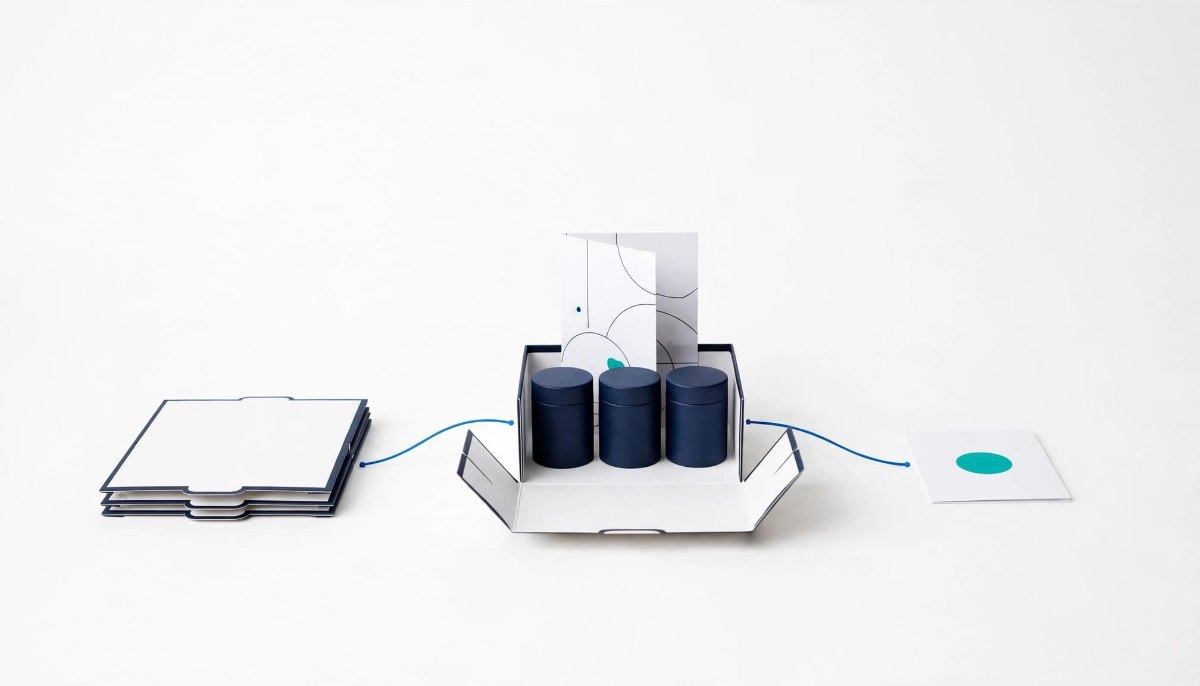
A curated gift box makes money for a Shopify brand when three things hold: it keeps a healthy margin after packaging, it is built around December, when gift orders measurably rise, and there is a plan for turning the recipient into a customer.
The box is not the wrapping on the product. For a gift buyer, the box is the product, and the person who opens it has never heard of you.
Every October, a version of the same conversation happens inside Shopify brands. Someone on the team says, “We should do a gift box this year.” A few weeks later there is a beautiful mockup, a magnetic lid, tissue paper in the brand color, and nobody has worked out what the box costs to put together or what happens after the recipient finishes the last item inside it.
The idea is right. Curated gift boxes are one of the cleanest ways to put your product in front of someone who would never have found you on their own. The execution is where it goes sideways. Packaging gets chosen for the photo instead of the margin, and sourcing waits until November, when lead times are longest. If you are buying packaging for the first time, start with case-quantity wholesale gift boxes in stock sizes rather than a custom run, because a stock box lets you test demand before committing to minimums and print plates.
This guide is for founders at every stage, whether you are doing $10K months and thinking about your first holiday bundle or running a $1M month brand weighing a corporate gifting channel. It covers when gifting really happens, how to price the box with packaging included, and how to turn the person who receives it into your next customer.
A curated gift box is a set of products chosen around one theme, packed together and sold as a single gift, and its real job is to introduce your brand to the person who opens it. The buyer already knows you. The recipient is the new customer, and most brands treat them as an afterthought.
Themes still fall into a few familiar patterns. Some boxes group products that are used together, like a loose leaf tea with an infuser or a skincare routine in its proper order. Some are built for an occasion: holiday flavors, a new baby, a birthday. Others are organized around an idea, such as a “slow Sunday morning” box or a “first apartment” box. Most boxes are fully pre-selected by the brand, while some let the buyer or recipient choose a detail, like a coffee roast or grind, which adds work in fulfillment but gives you a natural reason to ask the recipient what they prefer. Any of these can work. The theme matters less than whether the box tells the recipient what your brand is in the first ten seconds after the lid comes off.
That is the part I would push on hardest. When I talked with Casey Armstrong, CMO at ShipBob, on episode 426 of the podcast, we ended on custom branded packaging, gift notes, and inserts, and my point to him was about “building these kind of memorable unboxing experiences. I think it builds a lot of loyalty.” Loyalty only follows if the recipient can find you again. A box with no story card, no reorder path, and no reason to visit your store is a nice moment that leads nowhere.
Gift boxes also come in two commercial shapes, and the difference decides almost everything else. A one time box is a single shipment, priced and fulfilled like a bundle. A gift subscription is a prepaid set of shipments that arrive over several months. The one time box is simpler to run and fits most brands. The gift subscription keeps you in the recipient’s life long enough to earn a second purchase, but only if you plan the moment the prepaid shipments end. Both are covered below, starting with when people actually buy gifts.
Among subscription brands, gift orders clearly rise in only one of the windows Recharge measured in its 2026 gifting study, the December holidays, so a gift box should be built and stocked for December first. The data covers subscription orders rather than one time boxes, but it is the clearest public read on when people actually send gifts.
In that study, framed around Father’s Day and published in July 2026 using same store CPG subscription brands across 2024 and 2025, Recharge used orders billed to one address and shipped to another as a proxy for gifts. December orders reached 11.8% on that measure. Mother’s Day and an ordinary September week, the two other windows it reported, both sat at 10.0%, and Father’s Day came in at 9.8%, slightly below a normal week. That was despite a June 2026 PwC poll, cited in the same piece, finding that 45% of Father’s Day shoppers planned to gift a subscription. Recharge is clear that the address proxy is imperfect, since second homes, offices, and recent moves land in it too, which is why December working as expected matters: it shows the measure picks up real gifting.
Two more figures from that study shape the decision. Gift subscriptions are already enabled at 99% of active brands on Recharge, so the feature is rarely what is missing. And only about 11% of CPG brands have switched on gifting of a skipped shipment, where a subscriber who skips a delivery can send it to someone else instead. Recharge calls it the most underused lever in the data.
The practical read: do not build a gift program for every occasion on the calendar. Build one strong December box, put it on your site in time for the gift buyer rush, and treat other holidays as a light refresh of the same box rather than new products. Our gift buyer playbook for BFCM covers the store side of this, including gift collections sorted by budget and recipient and shipping cutoffs shown on product pages.
Price a curated gift box with the packaging, kitting labor, and shipping included before anyone picks a box style, because those three lines are where gift box margin disappears. In the illustrative example below, a box that looks comfortably profitable on product cost alone lands at 39% once a premium box, hand packing, and free shipping are counted.
Here is how that plays out. The store below is a labelled composite, built from the pattern I see repeatedly in Shopify brands rather than from any one company, and every number in it is illustrative. Assume a specialty coffee brand doing about $1.2M a year that wants a three bag holiday box at $64 retail, shipped free. The coffee costs $18 at landed cost. Hand kitting runs about $3 a box at its 3PL, the free shipping subsidy averages $8, and payment fees come to roughly $2.20. The only real choice left is the box.
At 800 boxes, the rigid version costs this store about $4,640 in contribution, with no evidence yet that it sells more boxes. My call for this store is the folding box, with the savings spent on a printed story card that tells the recipient who roasted the coffee, how to brew it, and where to reorder. That card does more work for the second purchase than a magnetic lid ever will, a point our guide to which printed inserts actually drive repeat purchases makes in detail.
The strongest argument against that call is fair: a rigid box looks more expensive, gets kept, and shows up in photos. My working threshold is that the case holds above roughly a $95 price point, where a $5.80 packaging premium costs about six points of margin instead of nine, or when the buyer is a company sending gifts to clients, where presentation is a large part of what is being bought. Below that, raise the price to cover the rigid box or skip it.
A gift subscription earns its keep at the moment the prepaid shipments run out, because that is when the recipient decides whether to start paying. Everything about how you set one up should point at that moment.
The mechanics matter here. In Recharge’s current setup, described in its help article on configuring gift subscriptions, the sender prepays a balance priced by number of orders (Recharge’s examples are two orders for $30 or three for $45), and the recipient redeems it. When the remaining balance no longer covers the next charge, the recipient has to add their own payment method to keep receiving shipments. There is no automatic conversion. The handoff is a decision the recipient makes, and most brands let it happen in silence.
During my years at Shopify, a good share of my time went to subscription brands running on Recharge, and the brands that did gifting well treated the recipient as a lead from the first shipment, not a name on a shipping label. In practice that means three things. Capture the recipient’s email at redemption and send them something useful, not promotional, after the first box arrives. Tell them clearly, before the last prepaid shipment, what happens next and what it would cost to continue. And give them a reason to choose: a first paid month at a better price, a choice of flavors they could not pick as a gift, or a smaller plan than the one the buyer chose for them.
Our piece on turning gift purchases into repeat customers walks through a recipient sequence like this for baby brands, and the structure carries over to most categories.
The simplest version of the model is selling the box you already ship as a prepaid gift. Bokksu, the Japanese snack subscription, lists a gift version of its snack box right beside its regular subscribe option (as shown on its site in October 2026), so a gift buyer never has to work out a separate product. If you already run subscriptions, turning on skipped shipment gifting costs you nothing and puts your box in a new household every time a subscriber chooses it over skipping.
The right gift box program depends on your size: one stock box at the start, a gift subscription once you have subscription volume, and a corporate channel only once the first two run smoothly. The common mistake at the $500K to $2M a year stage is building all three at once in October.
If you are doing around $10K a month, build one holiday box from products you already stock, in a stock folding box, priced with packaging and shipping included. Add a gift message field and a story card. Skip the gift subscription for now; you do not have the volume to learn from it. Our guide to pricing and setting up gift wrapping on Shopify covers the checkout side.
Around $100K a month, keep the one hero box and, if you sell on subscription, turn on gift subscriptions with a three shipment prepaid option plus skipped shipment gifting. Shopify’s own Bundles app handles fixed boxes without extra software. Tag gift orders so recipients get their own email path.
At $1M a month and above, the opportunity widens to corporate gifting, where companies order dozens or hundreds of boxes for clients and staff. This is where custom printed rigid boxes, bulk pricing tiers, and branded inserts earn their cost, because presentation is part of what the buyer is paying for. Run it as a separate channel with its own quote process rather than squeezing it through your storefront.
At every stage, what I would leave out is the same: a separate box for every holiday, custom printing before a stock box has proved demand, and any gift program without a named owner for the recipient follow up. Each one adds work and cost before you know the box sells.
Price a curated gift box by adding product cost, packaging, kitting labor, shipping, and payment fees, then setting a retail price that leaves the contribution margin you need; I use roughly 45% as a working floor for gift boxes. Most brands only add up the products and forget the box, the tissue, the insert, and the labor to pack it by hand, which can cost several dollars per box. Shipping is the other trap: free shipping on a heavier gift box can cost more than on a standard order. Get a real packaging quote and a kitting quote from your 3PL before you set the price, and price the box above the sum of its parts rather than at a discount, since gift buyers value curation and presentation.
Launch a holiday gift box on your site by early November so it is visible before the Black Friday and Cyber Monday gift rush, and order packaging in September or October. Recharge’s 2026 subscription data shows December is the one window where gift orders clearly rise above a normal week, so that is the season to build for. Packaging lead times stretch in the fall, especially for custom printed boxes, which is why stock boxes in standard sizes are the safer choice for a first run. Show your last order date for holiday delivery on the product page so buyers do not abandon the box over delivery doubts.
Gift subscriptions are worth it for a small Shopify store only once you already sell on subscription and have enough orders to follow up with recipients properly. Below that, a single one time holiday box is simpler and teaches you more. A gift subscription earns its value when the prepaid shipments end and the recipient decides whether to start paying, so it only pays off if someone owns that follow up: an email after the first box, a clear note before the last prepaid shipment, and an offer to continue. If you use Recharge, the feature is likely already available in your settings.
Use folding boxes for most gift sets under roughly $95 retail and save rigid boxes for higher price points or corporate gifting, where presentation is a big part of what the buyer is paying for. A rigid magnetic box can cost several dollars more per unit than a folding box, which can take nearly ten points off the contribution margin on a $64 box. A folding box paired with a good printed story card often does more for repeat purchases, because the card tells the recipient who you are and how to reorder. If you want the rigid look, raise the price to cover it rather than absorbing the cost.
Turn gift box recipients into repeat customers by capturing their contact details, sending them useful follow up after the box arrives, and giving them a specific reason to place their own first order. The recipient never chose your brand, so they need to learn who you are. A story card in the box with a reorder link or QR code is the starting point. For gift subscriptions, collect the email at redemption, explain before the final prepaid shipment what continuing costs, and offer something the gift could not, such as choosing their own products or a smaller plan. Tag gift orders in Shopify so recipients get their own email path.