
Print on demand has completely revolutionized e-commerce, allowing sellers to launch a business without holding inventory or making massive upfront investments. Anyone entering this space knows about Printful, which has long dominated the market thanks to its high-quality products and seamless multi-platform integrations. However, as the market matures, competition heats up, and the demand for product differentiation grows, a growing number of sellers are actively looking for solid Printful alternatives.
Whether it’s due to squeezed profit margins, lackluster customer service, or a desire to expand into specific product lines, exploring other print on demand suppliers is now a must for POD sellers. Drawing on the latest market trends and real feedback from veteran sellers, this article provides a comprehensive breakdown of the best Printful alternatives on the market today to help you find the perfect partner for your business.
Before we dive into specific platforms, let’s look at why many sellers who have found success on independent websites or e-commerce marketplaces eventually decide to make a switch:
There’s no denying that Printful’s in-house fulfillment facilities deliver excellent product quality, but their base costs are noticeably higher. For sellers just starting out or those selling highly competitive staple items (like t-shirts and hoodies), higher costs mean razor-thin profit margins. If you don’t have the sales volume to unlock tier discounts, your actual take-home pay is severely capped. Granted, sellers who own unique design IPs possess immense pricing power; their target audience will buy regardless of a higher retail price, giving them more room to dictate their profit margins. However, the reality is that the vast majority of sellers in the market simply don’t have that level of design leverage.
Relying on a single supplier means that when they discontinue a style or face indefinite stock shortages without warning, sellers are forced to waste hours updating or removing product listings from their stores. Seeking Printful alternatives with more reliable inventory levels is an effective way to diversify and mitigate this supply chain risk.
When order issues arise, sellers need fast, professional support. Many merchants have grown frustrated with the generic, copy-paste responses typical of large-scale platforms during return/exchange requests or billing disputes. This drives them to seek alternatives that offer a more human touch and flexible, responsive support.
Today’s creator economy goes far beyond physical merch. Many content creators and influencers want to sell physical goods and digital products and even offer membership subscriptions all under one storefront. Traditional, pure-play POD giants simply lack the all-in-one tools needed to support this kind of hybrid business model.
If you are short on time, here is our ultimate cheat sheet. We’ve matched each platform to its strongest use case:
| Platform | Best for… | Key advantage over printful | Popular integrations |
| JetPrint | Shoes & bags | Massive catalog of footwear and bags | Shopify, Etsy, WooCommerce, Wix |
| Apliiq | White-labeling & branding | More custom branding options | Shopify, Etsy, WooCommerce, Wix |
| Printify | Best margins | Significantly lower base costs | Shopify, Etsy, WooCommerce, Wix |
| Merchize | Asian manufacturing & low cost | Competitive pricing and a wide range of home products | Shopify, Ebay, Amazon |
| Gelato | Global shipping & local production | Faster international delivery | Shopify, Etsy, WooCommerce, Wix |
| Aop+ | All-over-print & uk/eu market | In-house UK manufacturing | Shopify, Etsy, BigCommerce |
| Zazzle | Built-in marketplace reach | No need to build a website | Independent e-commerce platform |
| Redbubble | Independent artists | 100% hands-off fulfillment | Independent e-commerce platform |
| Spring | Social media creators | Native TikTok/YouTube selling | YouTube, Twitch, TikTok, IG |
Based on global fulfillment capabilities, product catalog uniqueness, customization options, and profit margins, we’ve rounded up the top-performing Printful alternatives worth your attention:
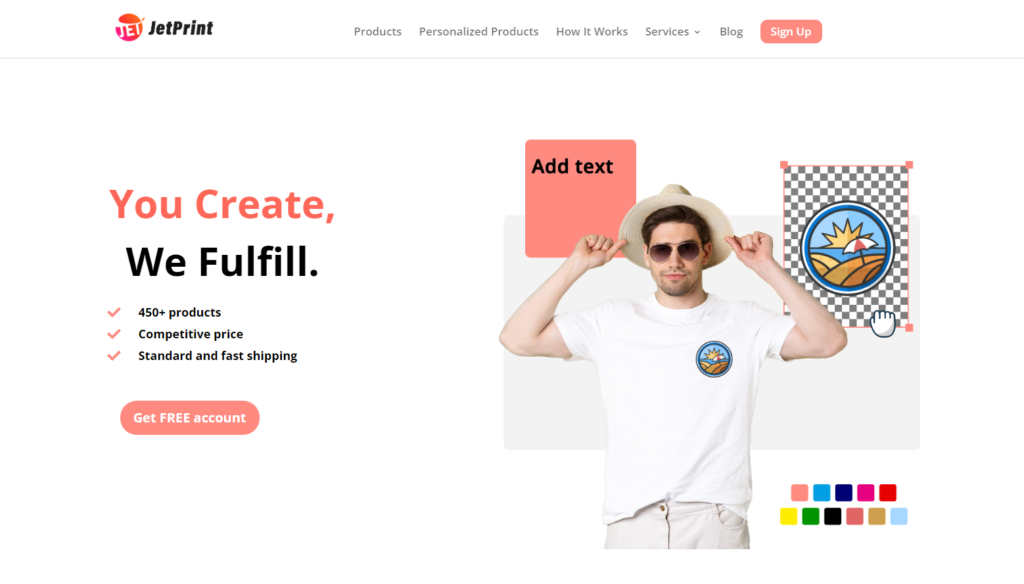
While Printful dominates the market for basic apparel (like t-shirts and hoodies), JetPrint truly shines with its exceptional craftsmanship and advanced manufacturing capabilities for complex items like footwear and bags.
If you’re looking to build a high-ticket POD brand focused on custom sneakers, boots, watches, or premium bags, JetPrint is the undisputed king. They offer a catalog of over 700 products and provide extensive branding options, including custom shoe boxes and labels.

Building a brand means your customers should never know you’re using a print on demand service, and more and more sellers are striving to turn their online stores into legitimate brands. If that’s your goal, Apliiq is exactly what you’re looking for. They let you customize virtually every detail of the unboxing experience—from custom packing slips and printed neck labels to branded packaging. In fact, they offer the most comprehensive set of custom branding options in the entire POD market today.
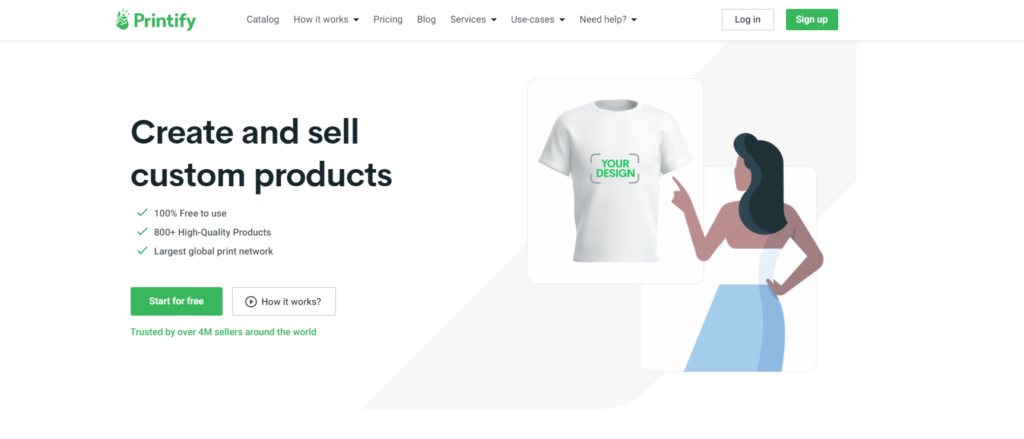
Printify is Printful’s biggest direct competitor—though they have now merged to form a new company called Fyul, turning their rivalry into a partnership. Unlike Printful, Printify operates as a middleman network, connecting you with hundreds of print providers worldwide.
Because these different print shops compete against each other on Printify’s platform, their base prices for t-shirts and hoodies are noticeably lower than Printful’s, helping you maximize your profit margins. Plus, if you upgrade to Printify Premium ($24.99/month), you get an additional 20% off all products.
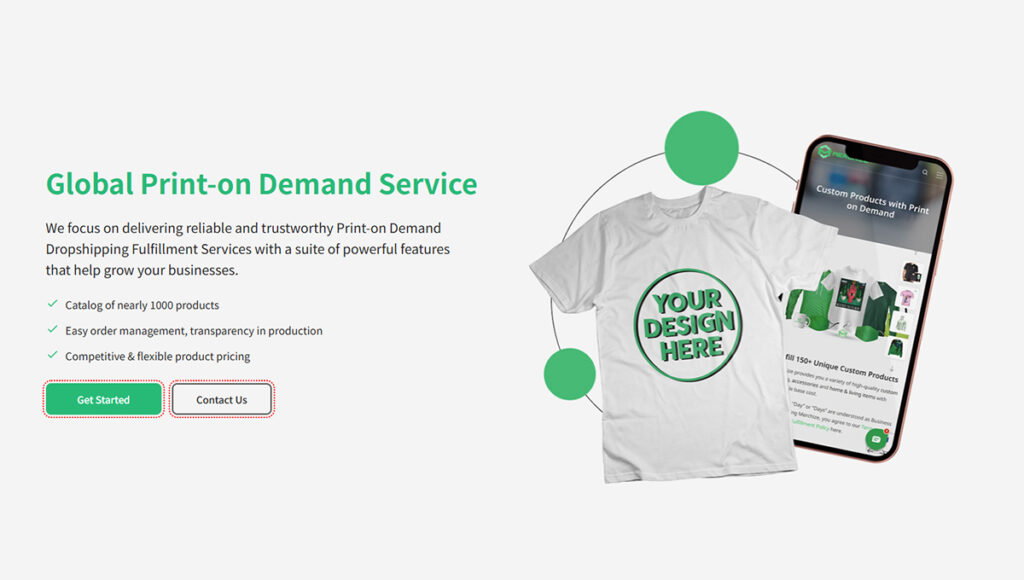
If you’re looking to scale fast and need low base costs, Merchize is definitely a solid platform to consider. They own their manufacturing facility in Vietnam, which completely cuts out the middleman.
They really shine when it comes to all-over print apparel and “Home & Living” items like rugs, blankets, and shower curtains. Because their production is based in Asia, their base costs are incredibly low. This gives you a massive competitive edge on pricing, especially if you are pushing high volumes.
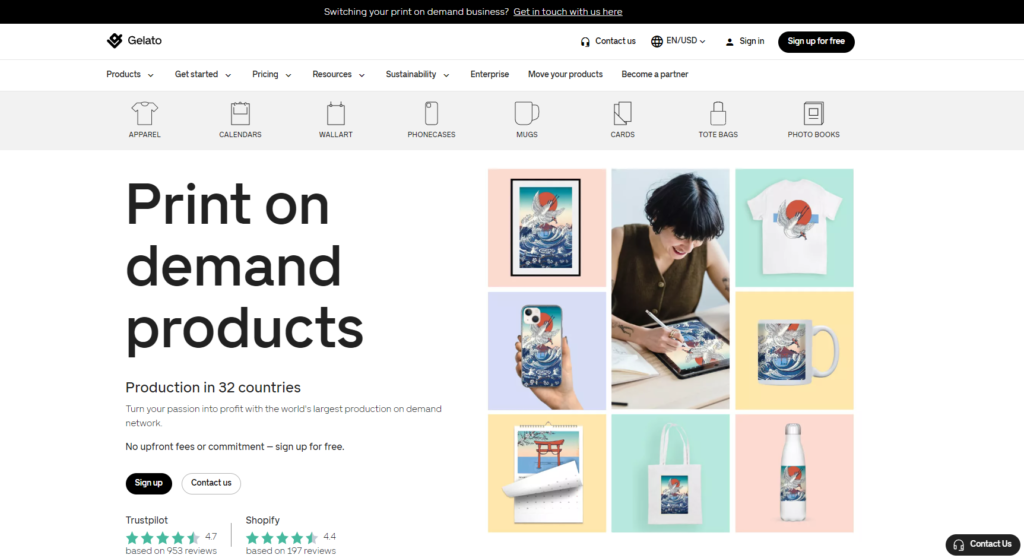
If you have a global customer base, Gelato is one of the best Printful alternatives out there. It is widely considered to be a top-three player in the POD market. Instead of relying on a single factory, it connects you to a network of over 250 local production hubs across 32 countries.
When a customer in Germany orders your t-shirt, it gets printed right there in Germany. This drastically cuts down shipping times, reduces your carbon footprint, and helps you avoid expensive customs duties.
The system automatically and intelligently routes your orders to the production facility closest to the buyer. This not only slashes international shipping times and eliminates high cross-border shipping fees, but it’s also a huge win for reducing carbon emissions.
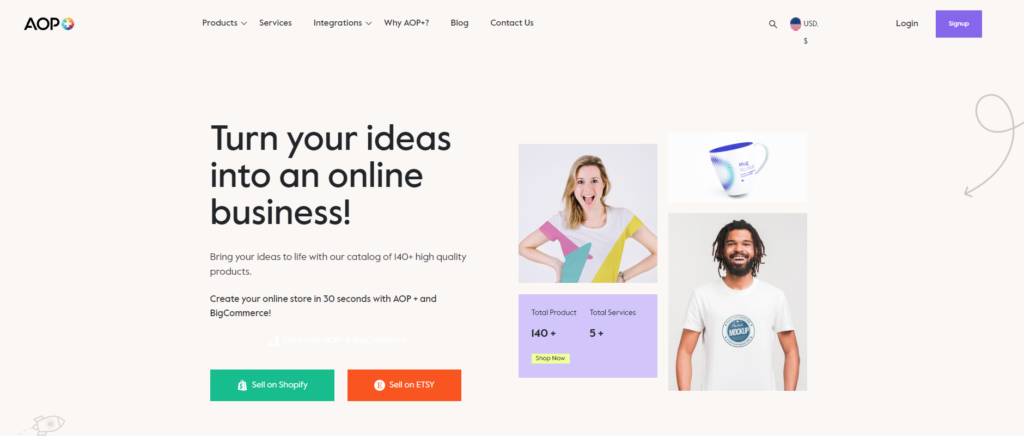
If your business is heavily focused on the UK and European markets, AOP+ is a great choice. Headquartered in London, they handle all of their manufacturing in-house rather than outsourcing it. As the name suggests, they specialize in all-over-print merchandise, offering vibrant, edge-to-edge printing on more than 140 different products.
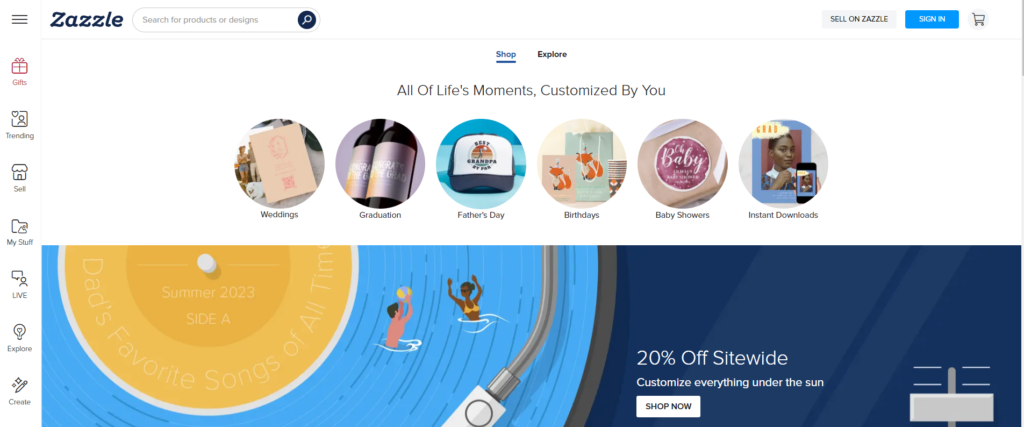
Not everyone wants to deal with the hassle of building a Shopify store or running Facebook ads. Zazzle is a Printful alternative that doubles as both a print provider and a marketplace. You simply upload your designs, and Zazzle puts them in front of its massive, built-in audience of shoppers.
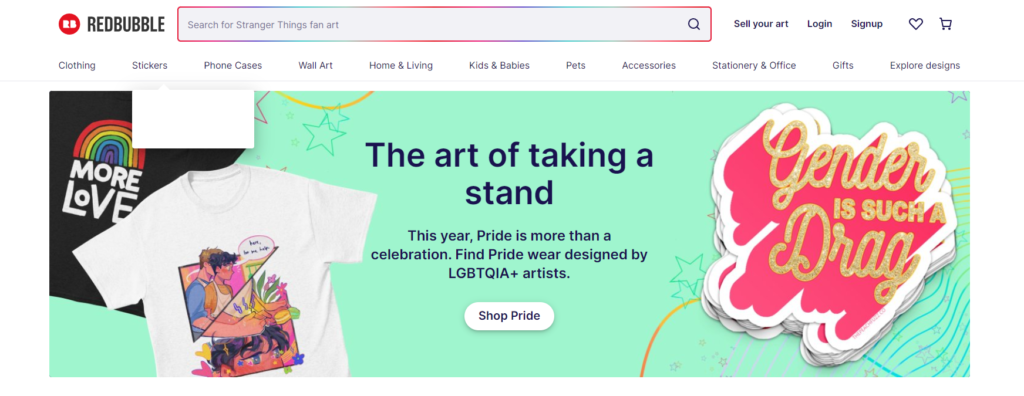
Much like Zazzle, Redbubble is a marketplace that brings its own built-in traffic, making it a massive hub for artists. For graphic designers and illustrators, it’s the ultimate “set it and forget it” platform. You simply upload your artwork, and Redbubble handles the printing, shipping, customer service, and even the retargeting ads.
Related article: Redbubble Alternatives
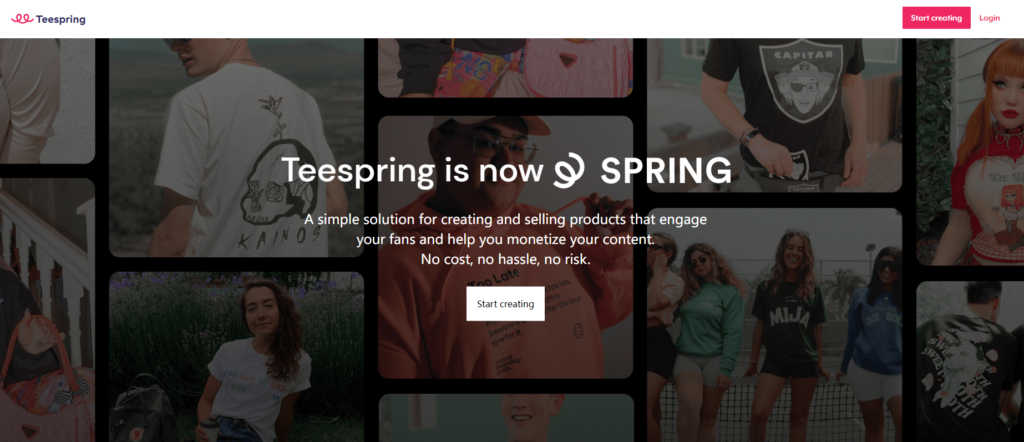
If you’re a YouTuber, TikToker, or Instagram influencer, Spring is tailor-made for you. Spring integrates directly with social media platforms, allowing you to sell your merch right below your YouTube videos or straight from your TikTok shop.
Related article: What is print on demand?
With so many suppliers out there, making a decision isn’t easy. When narrowing down your top printful alternatives, we recommend focusing on these four key areas:
Product catalog: If you just need standard t-shirts, go with Printify. Looking for custom sneakers and leather bags? JetPrint is your best bet. For home goods like all-over print blankets, check out Merchize.
Sample testing: Don’t just take their website’s word for it—spend the money to order a few samples yourself. Pay close attention to color accuracy, how well the print holds up after 3 to 5 washes, and the overall professionalism of the packaging.
Target audience location: If 80% of your customers are based in europe, choose a partner with strong european fulfillment centers (like Gelato or AOP+). They will easily beat us-only suppliers in both shipping costs and delivery times.
Ease of integration: Make sure the platform you choose offers seamless and reliable api integration with your current sales channels (whether that’s Shopify, Woocommerce, Etsy, or Wix).
Your own store vs. Marketplaces: If you run your own independent store, you should use JetPrint, Gelato, or Printify. If you’re an artist looking for a hands-off, hassle-free approach, Redbubble or Zazzle is the way to go.
In the fast-paced print on demand market, there is no single perfect choice—only the fulfillment partner that best fits your current business model and target audience. By confidently evaluating and testing the top Printful alternatives mentioned above, you can not only lower your operating costs and boost your sales, but also deliver a more premium brand experience for your customers.
Yes, you can utilize numerous Printful alternatives for various products. Indeed, diversifying your fulfillment partners can enable you to provide a broader choice of products and cater to a wider range of client preferences.
Yes, the majority of these Printful alternatives integrate well with popular ecommerce platforms such as Shopify, WooCommerce, and Etsy. This makes it simple to link your online store and easily handle your products and orders.
Yes, a few of these Printful alternatives (Apliiq) allow for white-label or custom branding. By adding custom labels, tags, or packaging to your products, you may create a distinct brand identity.




