

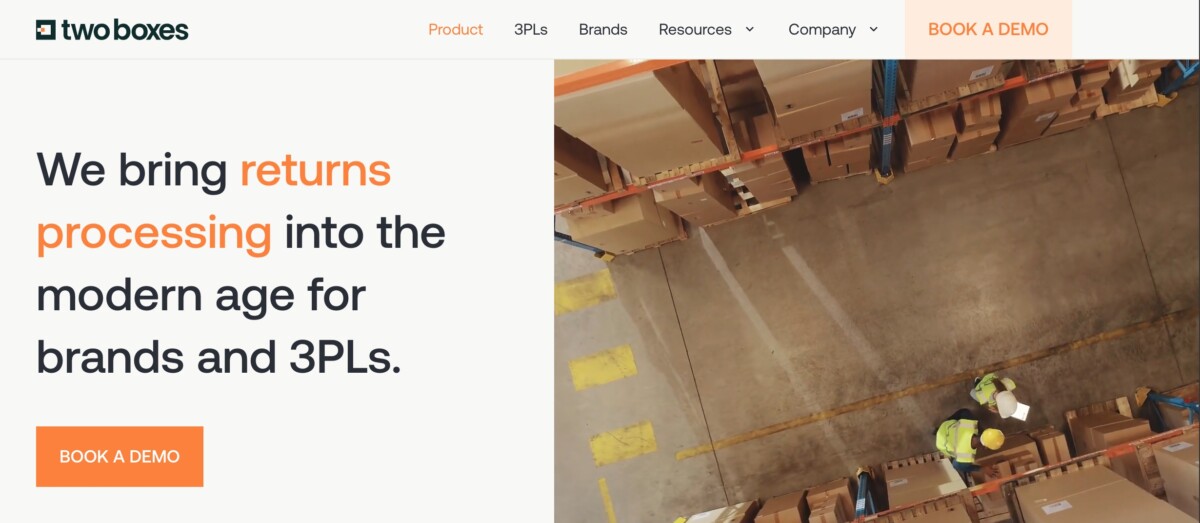
Returns can either drain your margin or tighten your operations.
Two Boxes is a returns operations platform that gives real-time warehouse visibility, standardized item grading and disposition, and practical fraud prevention for Shopify brands and their 3PL partners. You can learn more at twoboxes.com.
If you want stage-aware, simple, ROI-first guidance, this review gives you the operator’s view of how Two Boxes fits into your stack today and scales with you tomorrow.
Returns chaos steals time and profit. Boxes stack up, inventory counts drift, cash gets stuck, and customers wait on refunds. Two Boxes fixes the back-of-house mess by giving your team a clear playbook, live visibility, and fast decisions that flow back into Shopify and your returns portal.
Most teams wrestle with scattered data, inconsistent inspections, and guesswork on restock versus refund. That leads to slower refunds, wrong on-hand counts, and customer tickets asking where their money is. As volume rises, the risk of fraud and abuse grows. Warehouse teams do their best, but without standardized steps and proof, mistakes slip through.
Two Boxes centralizes returns processing. Associates follow guided checks, add photos and notes, and select reason codes. Managers see live status and exceptions. Items get routed to restock, refurbish, or disposal with accountability. The result is faster cash flow, cleaner inventory, and fewer bad refunds. Partners like GoBolt, ShipCalm, and Rocket Shippers report happier merchants and better quality of life for warehouse teams when returns move from “dark corner” to controlled workflow.
Strong fit:
Not ideal:
Returns are slow and inconsistent. Boxes pile up, decisions lag, and teams improvise. That stalls refunds, skews stock levels, and creates support tickets.
Give every return a live status and a guided workflow. Associates follow the same steps every time, with photos, notes, and checks that match brand SOPs. Managers get a dashboard of progress, bottlenecks, and exceptions.
Starters see faster refunds and fewer “where is my refund” tickets. Growth brands see tighter cash conversion and fewer miscounts. Enterprise teams get clean audit trails across multiple locations and 3PLs.
Two Boxes turns “returns in limbo” into a visible queue with standardized steps. When teams can see status by line item and follow a shared playbook, refund cycles shorten, inventory accuracy improves, and ops leaders can coach with data instead of hunches. This is the shift that pulls returns out of the shadows.
Problem: Associates guess condition and make uneven calls on restock, refurbish, or refund. That creates bad refunds for worn or damaged items and sends questionable stock back to sellable bins.
Two Boxes solution: Standardize grading with evidence. Capture photos, reason codes, and notes. Route items to the right disposition automatically. Feed clear reason data to product teams so they can fix upstream issues.
Beginners avoid costly mistakes and set a foundation of consistency. Growth brands recover more inventory and reduce false refunds. Larger teams create a feedback loop that informs product quality and sizing, which reduces returns over time.
Clear grading beats memory and guesswork. When every return includes condition proof and a consistent rubric, brands protect margins and build trust. Product teams can spot patterns like fit or damage faster, which cuts avoidable returns in the next cycle.
Worn or swapped items slip through. Without photos and history, approvals get rubber-stamped. Fraud and abuse grow with scale.
Two Boxes solution: Flag suspicious returns using history, condition evidence, or mismatches. Managers review exceptions quickly, approve or deny with proof, and adjust policies with confidence. The well-known “Sh*t People Return” series highlights real forms of abuse and how to address them.
New teams avoid expensive first-time mistakes. Scaling brands cut abuse at volume. Enterprise teams gather reporting that supports policy changes and training.
Fraud prevention needs receipts, not instincts. By attaching photos, timestamps, and return history to each decision, operatives can deny abuse without hurting legitimate shoppers. Better still, policy adjustments become data-backed, not reactive.
Two Boxes connects to Shopify to sync orders, line items, tags, and return data. Paired with Loop, it ingests RMAs, reasons, and exchange choices, then sends back item condition, photos, and restock decisions. Webhooks keep updates near real time so refunds and restocks do not wait for batch jobs.
Use cases by stage:
If you need to push custom events into other tools, a bridge like Zapier can help. Most brands will not need heavy custom work because Two Boxes integrates with leading RMA portals and 3PL systems.
Depth beats novelty. A reliable Shopify and Loop connection, with line-item accuracy, photos, and SOP enforcement, removes most manual back-and-forth. The payoff shows up as fewer tickets, cleaner inventory, and a refund cadence your finance team can count on.
Two Boxes does not publish pricing. Expect a volume or usage-based quote, with multi-location considerations for 3PLs and larger brands. The ROI case should be straightforward if you measure labor, speed to refund, recovered inventory, and fraud reduction.
If you currently patch together manual processing, ad hoc photo storage, a basic portal, and a separate fraud review, you pay in tools and in time. Two Boxes replaces that with one workflow inside the warehouse. The win is not only fewer tools, it is the elimination of hidden costs created by errors and delays.
ROI shows up fast when you reduce touches and wait time. Returns go from a cost you tolerate to a repeatable process that pays you back with cleaner inventory and fewer write-offs. The brands that treat returns as an operational muscle, not a penalty, create real advantage.
Onboarding by stage:
Process your next 20 returns through Two Boxes. Compare refund speed, photo quality, and grading consistency to your current method. You will know within a week if the approach clicks for your team.
Operators say warehouse teams can adopt the workflow within hours when SOPs are clear. Partners like GoBolt and ShipCalm highlight both efficiency gains and better day-to-day experience for associates once the process is standardized.
Adoption rises when front-line steps are simple and visual. If your SOP lives in a binder, it will be ignored. If it lives in the workflow with photos and prompts, your team will follow it and improve it.
Pros:
Cons:
Pick Two Boxes when you want warehouse-level clarity and control, not just a returns portal.
Two Boxes turns returns into a controlled process, not a costly headache. It fits Shopify brands that want faster refunds, cleaner inventory, and fewer bad refunds, and it plays well with Loop and 3PL partners.
Here is how to move forward:
Curated and synthesized by Steve Hutt | Updated October 2025
📋 Found these stats useful? Share this article or cite these stats in your work – we’d really appreciate it!




