Free every Thursday · 59,694 Readers
Fastlane Insider Newsletter: What's working for Shopify in the AI era?
Free every Thursday · 59,694 Readers
Fastlane Insider Newsletter: What's working for Shopify in the AI era?
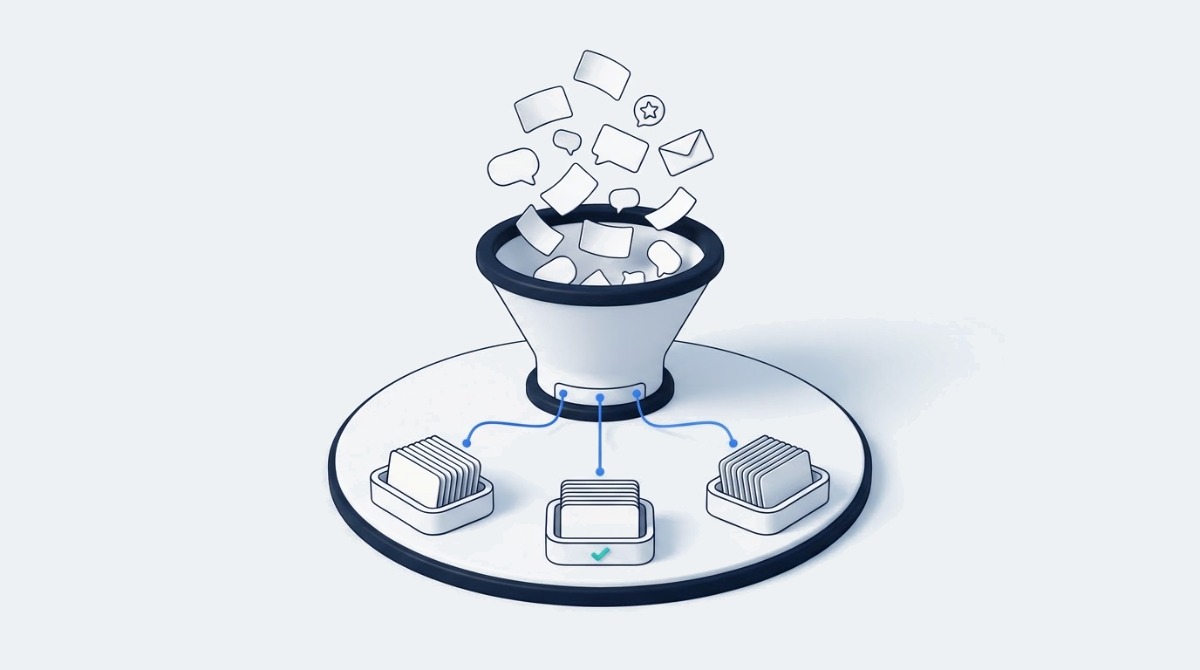
Most brands are not short on customer feedback. They are short on a system that turns ten thousand comments into the three changes worth making this quarter, and gets each one to the team that can make it.
When Rad Power Bikes ran its customer feedback through Unwrap, one theme pointed to demand the company was not serving: riders wanted spare parts. Unwrap reports a 21% increase in spare parts revenue after the brand acted on it. That is the promise of a feedback intelligence platform in one example. The signal was already sitting in reviews and support conversations. Nobody had the time to read all of them and connect the dots.
Unwrap and Enterpret are two of the platforms built to do that reading at scale. Both pull feedback from many channels and sort it into themes with AI models. They differ on how much of the structure the software builds for you, and on which team the output is designed for. This comparison walks through those differences so a CX, support or product lead can pick the right one to evaluate.
Unwrap and Enterpret both turn support tickets, reviews, surveys, chats, calls and app store comments into themes tied to customers and accounts, but they split on who maintains the structure and who receives the output. Unwrap derives its taxonomy from the feedback itself, keeps it current as new topics appear, and sends findings to the CX, support, product and leadership teams that own them. Enterpret gives product teams a model to configure with their own business entities, then connects it to engineering workflows.
That split matters more than any single feature. A taxonomy that maintains itself suits a team that wants answers without running a modeling project, which describes most CX and support organizations. A configurable model suits a product team that wants to shape exactly how feedback maps to its roadmap and is willing to invest the time to do it.
The buyer is different too. Enterpret’s named customers are mostly software and app companies, including Canva, Notion, Strava and Wispr Flow. Unwrap’s customer list spans consumer and software brands, including lululemon, Oura, DoorDash, Zipcar, Perplexity and GitHub. If you run a consumer brand, that list is a useful signal about which platform has been shaped by feedback that looks like yours: product reviews, delivery complaints and support conversations rather than feature requests and bug reports.
Neither platform is a survey tool first, and neither replaces your helpdesk. Both sit on top of the systems where feedback already lands. If you are still deciding whether you need this category at all, Fastlane’s roundup of voice of the customer tools by team size and budget covers the broader market, including survey led and reputation focused platforms.
The table below summarizes where Unwrap and Enterpret stand on the dimensions buyers ask about most, as published by each company and on G2 as of November 2026.
Two cautions on reading this table. The ratings come from G2’s side by side comparison, and Unwrap’s higher score rests on a much smaller review base, so treat the gap as directional. And the accuracy figure is Unwrap’s own; Enterpret simply does not publish one. Both are reasons to test on your own data rather than settle the decision from a spec sheet.
Unwrap is an AI customer intelligence platform for enterprise voice of customer and customer feedback analytics. It pulls in feedback from support tickets, reviews, surveys, calls and app stores, and uses natural language processing to sort it into themes at scale, with no one tagging by hand.
The core of the product is automatic tagging into a taxonomy that forms from what customers actually say. Unwrap says new topics are added as they appear, teams can edit categories themselves, and a company can start from its existing issue or feedback taxonomy rather than throwing it away. On top of that layer sit alerts that flag emerging trends to the team that owns them, an Assistant that answers plain English questions with charts and customer quotes, a responder for tailored replies to customers, and a Research Suite that runs surveys with AI follow up questions triggered by what a customer actually said.
Unwrap was founded by two former Amazon product managers, Ryan Millner and Ashwin Singhania, who worked on Alexa and were buried in feedback arriving from every direction. That origin shows in the product’s focus: unstructured text in volume, clustered and ranked automatically, rather than survey design.
Choose Unwrap if you run an enterprise voice of customer program that pulls feedback from many channels and you want themes, alerts and regular insights reaching several departments without anyone maintaining a taxonomy by hand.
Enterpret is an AI feedback platform built mainly for software product teams, centered on a Customer Context Graph that links each piece of feedback to the theme it belongs to, the account that raised it, that account’s revenue and the release it followed. It brings feedback in through connectors such as Zendesk, Intercom, Gong, Salesforce and HubSpot, and sorts it with an adaptive taxonomy built from customer language.
The defining feature is how much of the model a team can shape. Teams can add their own entities to the graph, such as stores, personas, competitors or campaigns, so feedback is grouped the way the business is organized. Dashboards and AI insights sit on top, and the Enterpret Agent answers questions with claims traced back to specific conversations. Agents can also run automations that alert owners, file issues in Jira or Linear, and confirm when a fix has shipped, with teams able to approve, edit or stop any action.
That workflow is built for product organizations that ship quickly and want each change to start from an issue found in customer feedback. It is less obviously aimed at a CX director who needs a weekly read on delivery complaints for the operations team.
Choose Enterpret if you are a software product team that wants to model your business inside a feedback tool in detail and route what customers say directly into engineering work.
Unwrap builds its taxonomy from the feedback and updates it as new topics appear, while Enterpret pairs an adaptive taxonomy with business entities your team defines and maintains. That is the clearest practical difference between the two, because taxonomy upkeep is where most feedback programs quietly fail.
Anyone who has run a manual tagging scheme knows the pattern. The tag list is tidy in month one. By month six there are duplicates, a catch all “other” bucket holding a third of the volume, and new issues nobody added a tag for. Unwrap’s approach removes that maintenance step: themes form from what customers say using models fine tuned on customer feedback, and teams edit rather than build. Unwrap reports average tagging precision above 90% and says this is verified by external parties, though it does not name the verifier, so treat it as a vendor figure to confirm during a trial.
Enterpret classifies each record as it arrives and sorts it into its adaptive taxonomy, which also updates as new themes appear. Its distinguishing layer is the Context Graph, where teams add entities and map how they relate. That gives a product team precise control over how feedback is sliced, at the cost of someone owning that model as the business changes. Enterpret does not publish an accuracy figure for its classification.
The edge here goes to Unwrap for teams that want a self maintaining taxonomy without a modeling project. Enterpret earns its place when a team genuinely wants to define the model and has the people to keep it current.
Unwrap is designed to push findings to several departments at once, while Enterpret’s agents lean toward product and engineering workflows. Both can alert owners in tools like Slack or email; the difference is where the work goes next.
Unwrap’s model is broadcast with routing. It surfaces new insights automatically as they emerge, delivers digests for leadership, lets product teams track trends against launches, and shows support teams their top contact drivers, all from the same underlying feedback. For a consumer brand, that means the operations lead sees the delivery complaint spike, the merchandising lead sees the sizing theme, and the CX lead sees both, without three separate reports.
Enterpret’s agents monitor feedback continuously and flag anomalies, sentiment shifts and comments at risk of escalation. They can run on a schedule or fire on a signal, create tracked issues in Jira or Linear, and confirm when a linked issue is resolved. For a software team, closing the loop from complaint to shipped fix inside the tools engineers already use is genuinely valuable.
If insights mostly need to reach CX, support, operations and leadership, Unwrap’s routing fits that shape. If they mostly need to become engineering tickets, Enterpret’s agents fit better. Fastlane’s breakdown of which customer service problems to fix at the source makes the same point from the support side: a ticket is a defect report, and the value is in routing it to whoever can remove the cause.
Both platforms connect to the major support, review, survey and CRM tools and tie feedback to account and revenue data, so the practical difference is how much setup work lands on your team. Unwrap says it connects to more than 3,000 sources, describes integration setup as a couple of clicks with no engineering required, and offers custom integration setup as part of white glove onboarding. Enterpret lists more than 30 connectors, including Zendesk, Intercom, Gong, Salesforce, HubSpot and Amplitude, and unifies the same user or account across sources.
For a consumer brand, source coverage is the first thing to check. Shopper feedback is scattered: product reviews, the helpdesk, post purchase surveys, social comments and, for brands with an app, the app stores. The platform that reaches all of those without an engineering ticket is the one your team will actually keep fed. Social channels deserve particular attention, since Fastlane’s guide to running social media customer service from one queue shows how much customer feedback now arrives as DMs and comments rather than tickets.
On revenue context, the two are close. Unwrap ties insights to account level data, customer segments, plan tiers and revenue impact, so teams can rank issues by value as well as volume. Enterpret’s Context Graph links feedback to users, accounts and revenue, with filtering by revenue, CSAT, NPS, region or custom attributes, and teams can extend it as the business grows.
On evaluation, Unwrap offers a 30 day proof of concept on your own data, including changes to the taxonomy, and says full platform onboarding takes up to three weeks. Enterpret starts prospects with a five minute interactive product tour, then a full evaluation runs through a demo with its sales team. The edge goes to Unwrap for buyers who want to test against their own feedback before signing.
Unwrap lists SOC 2 Type II, GDPR and HIPAA compliance, while Enterpret lists a SOC 2 Type 2 report, ISO 27001, ISO 42001 and ISO 27701, GDPR and CCPA, so the right choice depends on which certifications your security team requires. Unwrap also lists SSO, role based permissions and automatic PII removal, and says it operates inside an AWS virtual private cloud. Enterpret’s security page sets out its SOC 2 report and its alignment with the ISO standards, and Enterpret redacts personal data at ingestion.
HIPAA does not appear in Enterpret’s compliance set, which makes Unwrap the more natural shortlist for healthcare and wellness brands handling health related feedback. Whichever vendor you choose for that use, ask for a signed Business Associate Agreement before any protected health information flows in; the HHS sample business associate agreement provisions show what that contract needs to cover. Buyers whose procurement requires ISO certification will find Enterpret’s set broader.
Both platforms now expose customer feedback to the AI assistants teams already use through the Model Context Protocol. Unwrap’s MCP server offers twelve read only tools and works with Claude, ChatGPT, Cursor and other MCP compatible assistants, so a team can query feedback, sample comments and generate charts without opening the app. Enterpret’s MCP connection names Claude, Cursor, Codex and ChatGPT as clients. On assistant access, the two are effectively even; the deciding factor is which underlying feedback model you trust.
Most ecommerce brands do not need a dedicated feedback intelligence platform until feedback volume and the number of teams acting on it outgrow what one person can read and route each month. Both of these tools are priced for that stage: Unwrap uses custom plans, and The CX Lead’s Unwrap review lists plans from $2,000 a month billed annually as of November 2026. Enterpret also prices on a custom basis.
If you are under roughly $5M a year, start with what you already pay for. Tag every helpdesk ticket by reason, export the top ten reasons once a month, and read your one and two star reviews alongside them. Fastlane’s guide to turning negative reviews into fixes shows how much signal sits in that one channel alone. If you are scaling between $5M and $20M, the trigger is usually when feedback lives in four or more systems and two or more teams argue about whose numbers are right. That is when an automatic, shared taxonomy starts paying for itself.
The Rad Power Bikes example shows what the payoff looks like when it works. The subject is a consumer hardware brand with feedback spread across reviews and support. The reasoning: a theme about spare parts appeared consistently enough across channels to read as unmet demand rather than scattered complaints. The consequence: the brand acted on it, and Unwrap reports a 21% increase in spare parts revenue. That is one published result from the vendor, not a typical outcome, but it shows the kind of decision these platforms are for. They earn their cost when they surface a product or merchandising opportunity, not when they produce prettier dashboards of problems you already knew about.
For a brand at that stage, the evaluation question is simple. Which platform finds a theme like that in your data during a trial, and gets it to the team that can act? Run that test before you compare feature lists.
Choose Unwrap if you run an enterprise voice of customer program, especially at a consumer brand, and want CX, support, operations, product and leadership getting alerts and regular insights from the same feedback, with a taxonomy nobody has to maintain. Its published accuracy figure, HIPAA coverage and 30 day trial on your own data also make it the easier platform to evaluate before committing.
Choose Enterpret if you are a software product team that wants to model your own business entities in detail, needs ISO certifications for procurement, and wants feedback turned into tracked issues for engineers in Jira or Linear.
For most enterprise voice of customer, CX and support teams, Unwrap is the better place to start, because its design matches the way those teams work: many channels in, many departments out, and little appetite for maintaining a model. Enterpret is the stronger fit for the narrower case it was built for. Whichever you shortlist, put it through a trial on a quarter of your own feedback and judge it on one question: did it surface something your team did not already know?
The main difference is who maintains the structure: Unwrap builds and updates its feedback taxonomy automatically, while Enterpret centers on a Customer Context Graph that teams extend with their own business entities. Both sort feedback from tickets, reviews, surveys and calls into themes with AI models. Unwrap is aimed at enterprise voice of customer programs and routes insights to CX, support, product and leadership teams. Enterpret is aimed mainly at software product teams and connects feedback to engineering tools such as Jira and Linear. The right choice depends less on features than on which team will use the insights and how much model configuration that team wants to own.
For most enterprise voice of customer programs, Unwrap is the better fit, because it serves several departments from one feedback source and does not require a team to maintain a taxonomy. Its alerts and digests are designed to reach CX, support, operations, product and leadership at once, and integration setup is handled during onboarding. Enterpret suits programs run by engineering led software teams that want feedback routed into tickets and are prepared to model their business inside the tool. If your program is owned by a CX or insights function rather than product, start your evaluation with Unwrap.
Unwrap reports average tagging precision above 90% and says this is verified by external parties, while Enterpret does not publish a comparable accuracy figure. Unwrap does not name the verifier, so treat its number as a vendor figure rather than an independent benchmark. The reliable way to compare accuracy is to run both against the same sample of your own feedback and check a few hundred tagged comments by hand. Unwrap’s 30 day proof of concept on your own data makes that test straightforward; with Enterpret, ask during the sales demo how you can evaluate classification quality on your feedback before signing.
An ecommerce brand needs a feedback intelligence platform once feedback lives in several systems and more than one team acts on it, which usually happens well above $5M in annual revenue. Below that, tagging helpdesk tickets by reason and reviewing the top causes alongside your low star reviews each month covers most of the value at no extra cost. Platforms such as Unwrap and Enterpret are priced for larger teams, with custom plans. The trigger to upgrade is not volume alone; it is when teams disagree about what customers are saying because each one is reading a different system.
Yes, both Unwrap and Enterpret connect to ChatGPT and Claude through the Model Context Protocol, so teams can query customer feedback from the AI assistants they already use. Unwrap’s MCP server exposes twelve read only tools and also works with Cursor and other MCP compatible assistants. Enterpret names Claude, Cursor, Codex and ChatGPT as supported clients. Inside each app, Unwrap’s Assistant and the Enterpret Agent answer plain English questions about your feedback. Because both now support the same major assistants, AI access is unlikely to be the deciding factor between them.