For most small businesses, the first marketing dollar belongs on the website, because ads and SEO both send people there. Once the site turns a visit into a call, booking or sale, test ads if you need leads this month and build SEO if your timeline is longer.
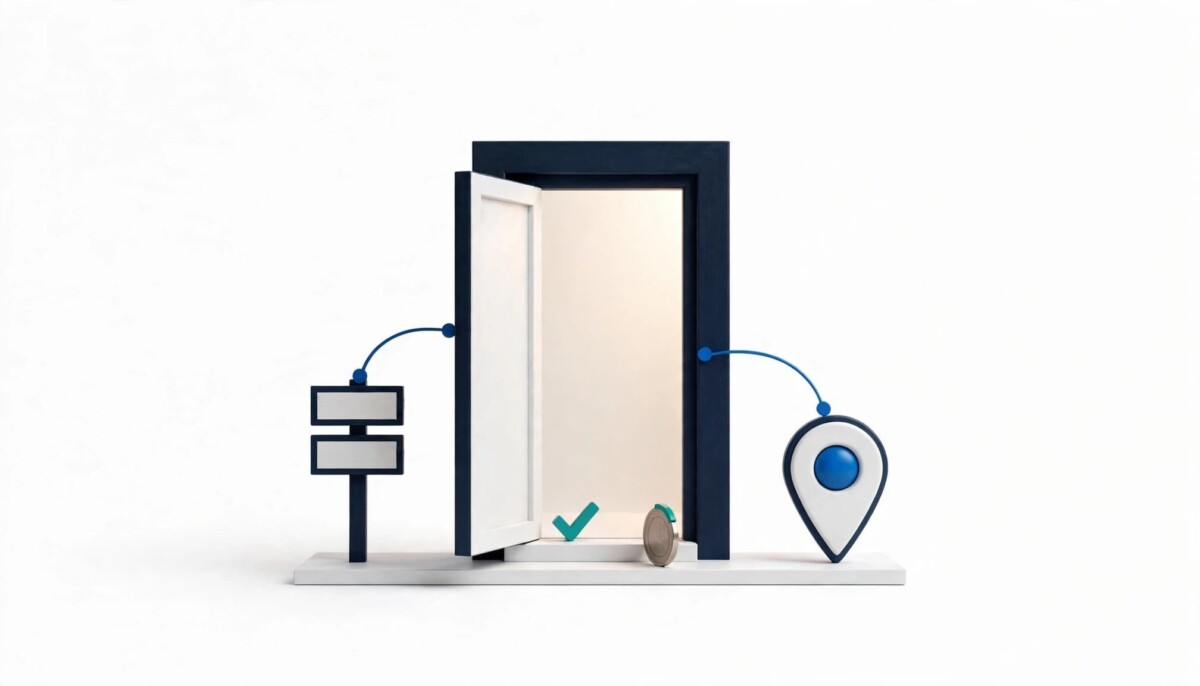
Spending on ads when your site is confusing is like paying for a billboard that points to a locked door. The first dollar should unlock the door.
Imagine three salespeople knocking on your door on the same day. One says you need a better website. One promises customers by next week through ads. The third insists search engine optimization (SEO) is the only long term play. They’re all partly right, which is exactly why this decision feels hard.
For small business owners across Western Canada and beyond, the first marketing dollar has to work harder than anyone else’s, because there usually isn’t a second one waiting behind it. That is true whether you run a plumbing company booking calls, a café trying to fill weekday mornings, or a Shopify store doing its first $5,000 in monthly sales. The good news is that you can choose with a simple, practical framework instead of guesswork. This guide walks through each option, when it makes sense, and how to test before you commit.
The right first marketing move depends on where your customers get stuck today, not on which channel sounds most promising. So before you compare websites, ads and SEO, ask four questions about your own business. Can people find your business at all? If they find you, does your site make it easy to call, book or buy? Do you need customers this month, or are you building for next year? And do you have anything to point ads or search traffic toward?
Your answers usually reveal the weakest link. If nobody can find you, visibility is the problem. If people find you but rarely call, the problem sits on the page they land on. If you need revenue within weeks, a channel that takes six months to work is the wrong first bet, however good it is in the long run.
The fourth question matters more than most owners expect. Ads and search traffic both need a destination: a page that explains what you do, where you do it, what it roughly costs and how to get in touch. If that page does not exist yet, every other channel is paying to send people somewhere unfinished.
This is the same pattern that shows up at every size of business. Owners who struggle tend to add channels before the basics work, spreading attention across a website refresh, two ad platforms and a social calendar at once. Owners who grow steadily tend to fix one weak link, measure it, then move to the next. Treat the four questions as a diagnosis, and let the weakest answer decide where your first dollar goes.
The website usually comes first because it is the place every other channel sends people, so its quality caps the return on everything else you spend. According to Statistics Canada’s Survey of Digital Technology and Internet Use, 78 percent of Canadian businesses had a company website in 2021, and 61 percent had social media accounts.
That’s survey data for businesses with five or more employees, not a measure of what any one business should spend. But it shows that a website is now a baseline expectation. When a customer hears about you from a neighbour, sees your truck, or finds you in a map result, the next step is almost always to look you up. If what they find is outdated, slow or confusing, the referral stalls there.
A simple, fast, clear site with your services, location, hours and a visible way to contact you does more than a fancy one that’s hard to use. For a local service business, that usually means a homepage that says what you do and where, one page per main service, a phone number that can be tapped on a mobile screen, and a short contact or booking form. For a small online store, it means product pages that answer the obvious questions (price, size, shipping time, returns) before the shopper has to ask.
“Good enough” is a useful standard here. You are not building the final version of your brand. You are building a page that can turn a visitor into an inquiry, so that the money you spend on ads or SEO later has somewhere to land. A business that gets this right first can often see more calls from the same traffic before spending a single dollar on promotion, simply because fewer visitors leave confused.
One caveat for local service businesses: many calls never touch the website at all. They come from the call button on your Google Business Profile or a map result. Treat that profile as a second front door and complete it in the same week as the site, since it costs nothing and the decision guide below assumes both doors are open.
Online ads can bring visitors within days, which makes them the right first spend only when you have a working site, a specific offer and a need for leads soon. They’re useful when you have a seasonal window, a new location that needs attention, or a service people search for when they need it right now. You can set a modest budget, target a local area and see early results within days.
The trade off is that ads stop when the money stops. They also work poorly when a site is slow, unclear or missing a way to follow up. A click you paid for that lands on a confusing page is money gone, and it also teaches you nothing, because you can’t tell whether the ad or the page was the problem.
If you go this route, start with a small test, track calls or form submissions, and change one thing at a time. The number that matters is cost per inquiry, not clicks or impressions. Here is an illustrative example, assuming a $500 test budget, an average cost of $2.50 per click and 3 percent of visitors calling or submitting a form. That budget buys about 200 clicks, which produce about 6 inquiries, or roughly $83 per inquiry. Whether $83 is cheap or expensive depends entirely on what a new customer is worth to you. For a roofer with a $9,000 average job it may be a bargain; for a $40 product it is a loss. Your own click costs and conversion rate will differ, which is the point of running the test.
Ads also do one thing SEO cannot: they show you quickly which search terms bring people who actually buy. Fastlane has covered how paid search data can guide which organic pages to build, and the same logic works at small scale. A month of ad data tells you which services to write pages about first.
SEO helps people find you when they search for what you offer, and it builds slowly but can keep working without a payment for every click. That makes it the better first investment once the website works and you can wait a few months for momentum.
For local businesses, the basics are clear service pages, accurate business listings, helpful content and a site that works well on phones. Your Google Business Profile carries a lot of weight in map results. Google’s own guidance on improving local ranking says businesses with complete and accurate information are more likely to show up in local search results, and it names relevance, distance and prominence (which it also describes as popularity) as the main factors. Distance you cannot change. Relevance and prominence you can, through complete listings, service pages that match how customers describe the job, and steady reviews. Fastlane’s guide to seven local SEO tactics that help small businesses rank higher walks through each of those in more detail.
For a small online store, SEO looks slightly different: collection and product pages written around the words shoppers use, product data that search engines can read, and a handful of genuinely useful guides. The timeline is similar. Expect weeks before any movement and several months before results you can bank on.
SEO rarely delivers quick wins. Treat it as a steady habit more than a sprint. It suits businesses that can wait a few months for momentum and that have something useful to say. It is a poor first bet for a business that needs revenue next month to stay open, and a strong one for a business that wants a source of inquiries it doesn’t rent by the click.
The simplest way to decide is to match your current situation to one first move, then revisit the choice after you have a month of results. Use this as a starting point, not a rule.
The last row is the one owners most often skip. If people already visit but rarely get in touch, more traffic multiplies the leak rather than fixing it. Look first at what visitors see: whether the phone number is visible on a phone, whether the page answers the price question, whether the form asks for more than it needs. Fastlane’s breakdown of twelve conversion fixes measured on real stores shows how often the leak sits upstream of the checkout or contact form.
Most businesses eventually use all three, in a sensible order. What matters is that each step has a clear job. A Shopify store under $10K a month and a five person trades business will land on different rows today, and both should expect to move down the table as their results come in.
Outside help is worth paying for when your time is stretched or your results are flat, and it is optional when you can handle the basics yourself. Plenty of owners set up their own site, listing and first small ad test, and that’s perfectly fine. But a specialist can save effort, and can save money if they stop you funding a channel that doesn’t fit your stage.
When comparing digital marketing services for small businesses, look at what each provider actually does, how they report results, and whether they explain things in plain language. Nimble Digital is one provider readers may come across when exploring these services.
Ask for examples of similar work, what a typical first month looks like, and how you’ll know whether things are working. A good partner welcomes those questions. Ask too what they would tell you not to do yet. A provider who suggests fixing the website before buying ads, or waiting on SEO until your service pages exist, is putting your outcome ahead of their invoice, which is the clearest sign of a partner worth keeping.
Whoever you hire, keep ownership of the basics: your domain, your website login, your ad account and your Google Business Profile should all sit in your name. That way any provider can be changed later without starting over, and your results stay yours.
The most expensive budget mistake is spreading a small budget thinly across every channel, because no single channel gets enough money to show you whether it works. Close behind it come buying ads before the website can convert visitors, expecting SEO results in a few weeks, not tracking calls, forms or bookings, and signing long contracts before seeing a small test.
Each of those mistakes has the same root: spending before you can measure. A business that puts $300 into ads, $300 into a social media tool and $300 into an SEO package in the same month ends up with three inconclusive results instead of one clear answer. The same $900 spent on one channel, with tracking in place, tells you whether to do more of it.
Long contracts deserve particular care. A six or twelve month commitment can make sense for SEO, which needs time, but it should still come with monthly reporting you understand and an early checkpoint where you can see progress. For ads, a month to month arrangement with a defined test budget is usually the safer start.
If you want a structured way to set the overall number, Fastlane’s guide on how to create a small business marketing budget from your goals covers allocation methods and how to forecast return before you spend. Starting narrow almost always beats starting wide. One channel done well teaches you more than three done halfway.
A 30 day test replaces one big, risky decision with four weekly steps and one decision, ending in real numbers you can act on. Instead of committing to a channel for a year, run this month long experiment:
Week 2 is where most tests quietly fail. Without tracking, week 4 becomes a guess. If you run ads, Google Ads conversion measurement can record purchases, sign ups and phone calls from your ads and website. Even without ads, a simple habit works: ask every new customer how they found you and write it down. It also helps to count the smaller steps before an inquiry, such as clicks on your phone number or visits to your pricing page; this older Fastlane piece on why tracking micro conversions helps you find where a funnel stalls explains the idea, though its setup steps refer to an earlier version of Google Analytics.
A small, measured test provides real information and helps you make more confident decisions about future spending. If the ad test produced inquiries at a cost you can afford, keep it running and widen it carefully. If the new service page started appearing in search, write the next one. If neither moved, the answer is usually back on the website.
There’s no single right answer to where the first marketing dollar should go, but there’s a smart way to find yours. Start with the point where customers are getting stuck, make sure your website can turn interest into action, and then add ads or SEO depending on your timeline and budget. Keep tests small, track the results, and be patient with channels that take time. When each dollar has a clear job and a way to measure it, even a modest budget can lead to steady, sustainable growth.
Most small businesses should fix the website before spending on ads, because ads send paying visitors to the site and a confusing page wastes every click. “Fixed” does not mean expensive. It means a fast, mobile friendly site that states what you do, where you do it, and how to contact or buy from you, with a phone number and form that work. Once that page can turn a visit into an inquiry, a small ad test becomes worth running, and its results become easier to read because you know the page is not the problem. The exception is a business with a solid site already in place and an urgent need for leads; that business can go straight to a modest, tracked ad test.
SEO for a local business usually takes a few weeks to show early movement and several months to produce steady inquiries you can count on. The timeline depends on how competitive your area and services are, how complete your Google Business Profile is, whether you have a clear page for each service, and how consistently you earn reviews. Accurate listings and service pages are the fastest parts to fix, so they tend to show results first. Treat SEO as a monthly habit rather than a one time project, and judge it on inquiries from search over a quarter, not on week to week ranking changes. If you need customers this month, pair it with a small ad test.
A first ad test should be small enough that losing it would not hurt the business, and large enough to produce a handful of inquiries you can count. For many local businesses that lands somewhere in the low hundreds of dollars over a month, but the right figure depends on your local click costs and what a customer is worth to you. Work backwards: if a new customer is worth $1,000 and you can afford to spend $100 to win one, a test that produces inquiries below that cost is worth continuing. Track calls and form submissions from day one, change one thing at a time, and judge the result on cost per inquiry rather than clicks.
Track the actions that bring in revenue: phone calls, form submissions, bookings and purchases, and note which channel each one came from. Clicks, impressions and followers show activity, not results. If you run ads, set up conversion tracking so the platform records calls and inquiries from your ads and website. If you are not running ads yet, a simple spreadsheet works: ask every new customer how they found you and record the answer. After 30 days you will have a cost per inquiry for each channel you tried, which is the number that should decide where your next dollar goes. It helps to watch a couple of earlier steps too, such as clicks on your phone number.
Hire a digital marketing agency when your own time is the bottleneck or your results have stayed flat after you have fixed the basics yourself. Before signing, ask for examples of work with businesses like yours, what the first month looks like, how results are reported, and what they would advise you not to do yet. A good partner explains things in plain language and welcomes those questions. Start with a defined test period rather than a long contract where you can, especially for ads. Keep your domain, website login, ad accounts and Google Business Profile in your own name, so you can change providers later without losing your history or your results.