


“What is the definition of Influencer marketing rates?” This is a question that many people in the influencer marketing world grapple with. Sometimes you’re a brand looking to collaborate with influencers or an influencer trying to figure out what to charge. Understanding these rates can be a challenge. Several factors can cause influencer marketing rates to vary widely. Often, unclear definitions can make the process feel overwhelming. Without a solid understanding of how these rates are determined, both brands and influencers risk missing out on fair and mutually beneficial partnerships.
However, getting a firm grasp on what influencer marketing rates per post truly mean is essential for building successful campaigns. Knowing how to navigate this crucial aspect of influencer marketing ensures that everyone is on the same page. Plus, it leads to better outcomes for both sides.
Influencer marketing rates refer to the amount of money an influencer charges. This can be for a single post, campaign, or collaboration with a brand. These rates can differ greatly from one influencer to another. Understanding what goes into determining these rates is crucial for both influencers and brands.
At its core, an influencer’s rate is their fee for promoting a product, service, or brand to their followers. However, the term “rate” is not always straightforward. It can vary depending on several factors, such as the platform being used, the type of content being created, and the influencer’s reach and influence.
For brands, having a clear understanding of influencer marketing rates ensures that they’re not overpaying for influencers whose audiences don’t align with their target market. For influencers, knowing what to charge based on their audience, engagement, and content quality allows them to make informed decisions and avoid undervaluing their work.

Influencer marketing has come a long way since its inception, and so have the rates that influencers charge. What started as a relatively informal method of brand partnerships has now evolved into a professional and structured industry. As social media platforms grew in popularity, so did the potential for influencers to reach larger audiences. Thus leading to a significant shift in how influencer rates are determined.
In the early days of influencer marketing, brands typically worked with influencers on a more ad-hoc basis. Rates were often negotiated informally and could vary greatly. This is because there weren’t many standardized benchmarks for pricing. Influencers, especially those with smaller followings, could charge relatively low fees. The entire process was less professional. In fact, Brands often paid influencers with free products. Rates? What rates? LOL
Today, influencer marketing has become a formalized industry with set pricing structures and professional contracts. Influencers now have access to tools, platforms, and agencies now help influencers streamline the rate-setting process. There are also clear industry benchmarks that guide both brands and influencers in determining fair compensation.
As social media platforms expanded, so did the types of influencers. While large celebrities or macro influencers once dominated the space, the rise of micro and nano influencers has changed the landscape. These influencers, with smaller but highly engaged audiences, have become a valuable asset to brands. They often offer more authentic connections with their followers.
This shift has led to a more diverse pricing structure. While macro influencers may charge higher rates due to their vast reach, micro and nano influencers tend to offer more affordable rates. Thus allowing brands to collaborate on a more flexible budget.
In the past, many influencers treated their online presence as a hobby or side project. However, as the demand for influencer partnerships grew, more and more influencers began treating their platforms as full-time businesses. This shift has contributed to the rise in influencer rates as content creation became more professionalized. Influencers now invest in high-quality equipment, work with agencies, and often have teams managing their partnerships. This all significantly contributes to their higher rates.
The professionalization of influencer marketing has made it easier for brands to understand and predict the cost of working with influencers. With set rates, industry standards, and a growing number of tools to assist in the process, the industry has become much more transparent.
The growth of influencer marketing platforms like Afluencer has played a major role in the evolution of influencer rates. These platforms provide both influencers and brands with valuable resources, including engagement rate metrics, collaboration tools, and direct connections. This all makes it easier to determine fair compensation. They also help establish transparency in pricing, which benefits both parties and ensures that collaborations are based on clear terms.

Understanding typical rate structures in influencer marketing can help both influencers and brands set realistic expectations when it comes to pricing. Brands and influencers often break influencer rates down into clear structures that make pricing easier to understand, determined by content type and audience size. These structures provide a framework for how influencers charge for their services and allow brands to better plan their marketing budgets.
This pricing structure is all about flexibility and transparency. Instead of charging a flat rate for an entire campaign, influencers break down their pricing by each individual piece of content they create. This can be ideal for brands looking to create a specific type of content—whether it’s a post, story, or video—each with its own value. Let’s explore how this works in more detail and why it’s such a popular choice.
Influencers set different rates for different types of content. For example, a single Instagram post might cost one amount, while an Instagram story or YouTube video could cost another. This structure allows brands to choose exactly what they need and only pay for what they’re asking for. The cost is usually determined by factors like the influencer’s audience size, engagement rate, and content production effort.
This method works well when the brand has specific content goals in mind and wants to ensure they’re paying for the exact content they need. By breaking things down into per-post pricing, both the brand and the influencer have a clear understanding of the scope of the work and the associated cost.
Influencers appreciate this structure because it rewards them for the individual pieces of content they create. Instead of getting a lump sum for an entire campaign, they get compensated based on the specific content they deliver.
Imagine a brand wants to work with an influencer who has 100,000 followers. Here’s what the pricing might look like:
The total cost for the campaign would be the sum of these individual costs, allowing the brand to budget accordingly. If they decide to add more content, they know exactly how much each new piece will cost.
This pricing model is ideal when you want control over your budget and content. It also makes it easier for both sides to understand exactly what’s being delivered—and at what price.
Some influencers charge an hourly rate, especially if the collaboration requires more personalized services, such as consulting or creating custom content for a brand. Hourly rates are commonly used when there is a need for more flexibility or when influencers are working on unique projects that involve a substantial amount of time.
Project-based rates are ideal for longer-term campaigns or collaborations that involve a series of posts or multiple deliverables. In this structure, influencers charge a fixed fee for the entire project. This may include a set number of posts, stories, or additional tasks like hosting a giveaway or attending an event. This can be a more cost-effective solution for brands that want to work with an influencer over an extended period.
In an affiliate or commission-based rate structure, influencers are paid based on the sales they generate for a brand. Influencers are typically given a unique affiliate link or discount code to share with their audience, and they earn a commission for every sale made through that link or code. This is often used for products that are easier to track in terms of conversions and sales.
Performance-based pricing is a more results-driven approach, where influencers are paid based on how well their content performs. This structure can be more flexible, with influencers earning based on specific KPIs (key performance indicators) like engagement rates, website traffic, or sales. Brands and influencers agree on the metrics that matter most, and the influencer is compensated according to the results they deliver.
For long-term partnerships or brand ambassadorships, some influencers work on a retainer basis. This means the brand pays a fixed fee to the influencer every month for a set amount of content or deliverables. Retainers are often used for ongoing collaborations where brands need consistent content over time.
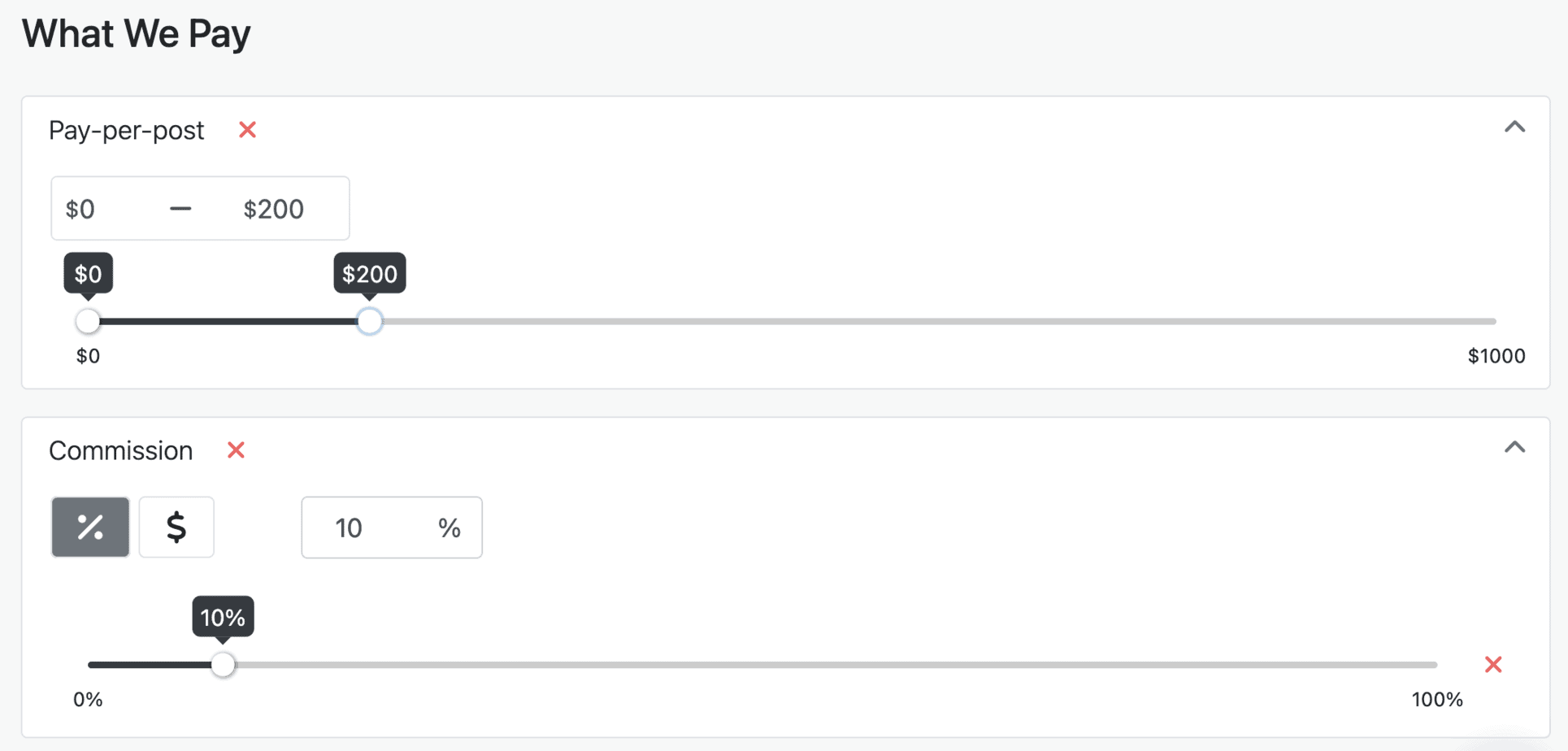
What if you would rather lay your cards on the table and set the budget yourself? Well, with Afluencer, you can! When it comes to setting rates within an Afluencer collaboration, both brands and influencers benefit from a more streamlined and cost-effective approach. One of the major advantages of using Afluencer is that it allows brands to set a budget range for their campaigns. This process can significantly enhance the efficiency and affordability of collaborations.
Brands using Afluencer have the flexibility to establish a budget range that aligns with their marketing goals and financial constraints. By doing so, they attract influencers who are willing to work within these parameters, which leads to more targeted and mutually beneficial partnerships. Here’s an example of how to do that when creating your Collab campaign in Afluencer:
Understanding influencer marketing rates doesn’t have to be complicated! Whether you’re trying to figure out your influencer marketing rates or ready to start negotiating a deal, just remember—fair compensation is the foundation of any strong influencer relationship. With the right approach, you’ll be well on your way to securing great deals and building fruitful collaborations!
Thought we were done? No! Check out our other detailed piece on Influencer Rates. There, we get into the nitty gritty of what to pay. You wanna see dollar signs? You got ‘em!
The post What are Influencer Marketing Rates? A Comprehensive Definition appeared first on AFLUENCER.





