

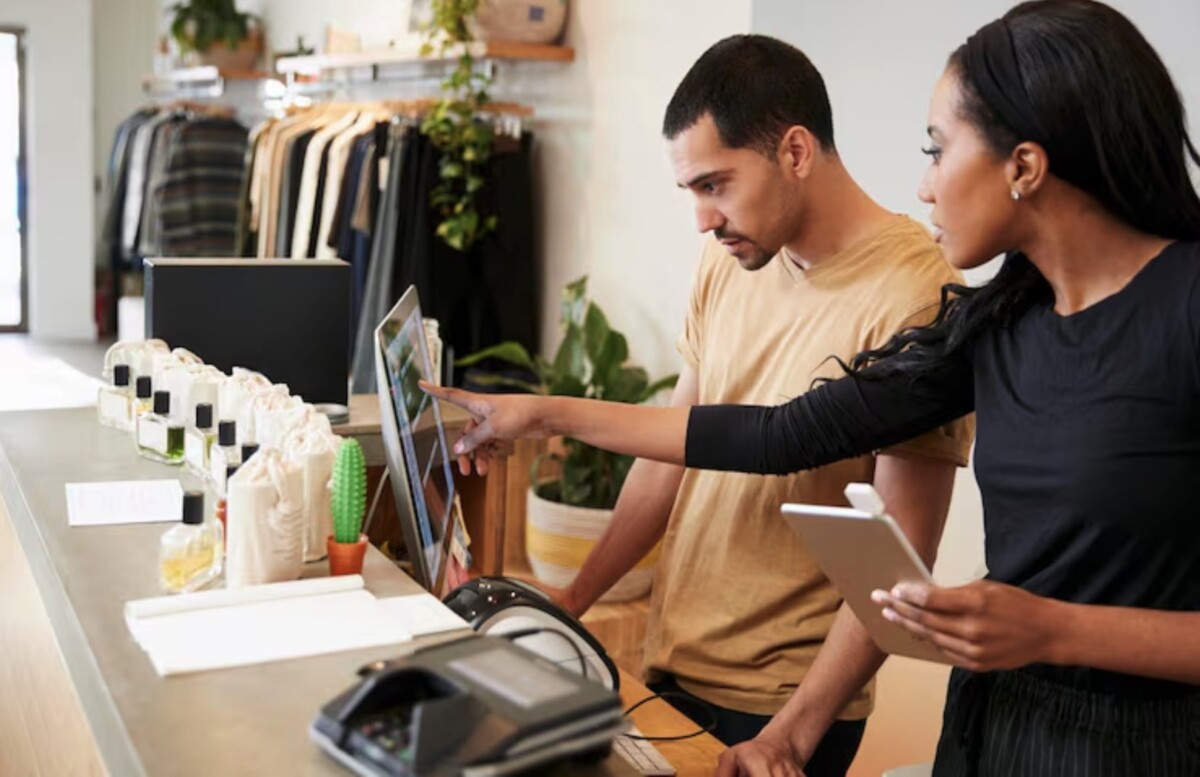
Managing a store these days can feel quite challenging compared to the simpler days of the past.
Back then, all you needed was a sales journal and a calculator to keep track of your daily sales and inventory. However, as customer expectations grow and the variety of products expands, competition intensifies, making manual methods less practical. That’s where retail software becomes such a helpful tool to make things easier.
Retail software is the basis of all modern retail technologies and basically manages the store’s inventory, sales, and reporting, while also providing data that is current data. Working in perfect harmony with their daily routine, business owners can now use software to keep an eye on their sales and growth, which is what really matters to them.
Store management is a stressful job, but things can get out of hand when you need to take stock of your products and sales. The retail software that is designed for retail businesses is really effective in solving these kinds of problems. Part of the sales is automatically done by the software, which also automates and updates the inventory in real-time. Any reports needed can even be obtained with a single click. It is therefore possible to get a big share of your time back from paperwork and error correction and dedicate it to customer service and store management, which are the aspects that really matter.
No one enjoys standing in a long line at the register. Shoppers need fast and effective services. The POS program is designed to accelerate the completion of the purchasing system to a high level. As the goods are scanned, prices are reduced, and payments are made, the cashier can comfortably do all these with the fewest mistakes. Part of the procedure of returning and changing is now a very short time. These simple things lead to positive customer shopping experiences and also decrease the level of employee pressure. Operating under good conditions, customer satisfaction will be their loyalty, and so the business will have more opportunities to develop further.
Reduced Uncertainty numerous store owners, keeping track of inventory can seem like an ongoing struggle. If you order too little, customers leave unhappy; if you order too much, capital is tied up in stagnant stock. Finding the right tools to balance these needs can be important, and businesses can rely on specialized ecommerce and retail software to simplify their operations and sync data across multiple sales channels. Retail software helps to keep track of sales trends, locate the items that have low movement, and give you a warning when the stock is running out. With this information at your disposal, you can make buying decisions that are more informed, you can reduce waste, and make sure that the products that are popular are always available. Unaided by data, you have to say goodbye to guessing and hello to trustworthy data.
Every transaction reveals valuable insights. Retail software gathers these details and changes them into usable data. Using POS systems, you are able to understand what your customers buy, at what time they come shopping, and what the usual amounts they spend.
This type of information allows you to:
– Create events that will attract them.
– Develop genuinely rewarding loyalty programs.
When customers get identified and treated with respect, they tend to be loyal and thus, the chances that they will come back to you are higher.
Shopping behaviours are changing really fast. Mobile payments, online ordering, and digital receipts have made these modern comforts expected of consumers. Companies that accept these technologies not only meet the requirements of customers but also enhance their image and reputation in the market. What is more, even small businesses can offer customers the same level of convenience that used to be their brands’ privilege, thus sending a clear message that the customer’s experience matters and that the business is a future-proof one.
Manual processes are quite slow and, in most cases, result in errors. Financial loss and confusion may be the consequences of one incorrect number or an overlooked entry. Through retail software, repetitive tasks are simplified, so employees can focus on customer service rather than the completion of administrative work. Less time spent on fixing errors means more time to grow your business, and lowering the risk of errors will make your business function more effectively.
Growing the business of your dreams is simply awesome, and at the same time, it can be challenging. Examples of these changes that can make things more complex for you are new products, additional stock, or having a second location. Without strong systems in place, things can quickly become chaotic.
Retail software is designed to grow with your business. At the end of the day, up is up as you’re growing, whether it’s extending a physical store, opening an online sales channel or rolling out new stores; the software should accommodate that. That way, you can grow, and it can be easier to manage instead of a cause for stress.
Almost every aspect of store management comes down to choosing (what products to bring in, pricing strategy, and the time for promotion). These decisions made without data are just guesses.
However, with POS software, they become well-informed choices. Reports serve the purpose of offering insights into what kinds of products yield the most considerable profit, how good a promotion is, and what the possibilities of losses are. It doesn’t really matter whether you are running a small family-owned business or a large franchise; the appropriate retail solution is essential for your business to maintain its upward trend.
Running a store today is complex, but retail software turns chaos into a clear, repeatable system. It centralizes sales, inventory, and reporting, so you move from guesswork to decisions based on fresh data. The payoff shows up fast: shorter lines, fewer mistakes at checkout, accurate stock levels, and staff freed up to serve customers.
Point-of-sale software is the engine. As items scan, inventory updates in real time, returns process faster, and reports are a click away. This trims errors and speeds service, which builds trust and loyalty. With better inventory controls, you spot slow movers, prevent stockouts on best-sellers, and buy smarter. That means less waste, higher turns, and steady cash flow.
Customer data is a quiet advantage. Every transaction tells you what people buy, when they shop, and how much they spend. Use those insights to run targeted events, personalize offers, and design loyalty rewards that actually feel rewarding. When shoppers feel seen and respected, they come back.
Modern features are now expected, not optional. Mobile payments, online ordering, and digital receipts make the experience faster and cleaner for both customers and staff. Stores that adopt these tools stay current and scale more smoothly, because the processes are already built into the software.
Retail software is no longer a nice-to-have; it’s the operating system for a modern store. It speeds checkout, keeps inventory accurate, and turns raw transactions into insights you can act on. Start with your biggest bottleneck, roll out features in short sprints, and review a simple weekly dashboard. When you use software to reduce friction and personalize service, you earn loyalty and unlock growth.
Curated and synthesized on September 2025
📋 Found these stats useful? Share this article or cite these stats in your work – we’d really appreciate it!





