


With over 65% of Google searches ending without a single click, the way ecommerce brands connect with customers is rapidly changing.
This trend, known as zero-click marketing, signals a shift where searchers no longer rely on visiting websites to find what they need. Instead, they interact with content directly on platforms like Google and social media.
For ecommerce businesses, this presents both challenges and opportunities. How can your brand stay visible and relevant when website traffic is no longer guaranteed? This blog will outline actionable strategies to make your products discoverable in a platform-driven ecosystem while highlighting the benefits of adapting to this new marketing approach.
For insights into adjusting your SEO strategy, check out Zero-Click Searches: Adapting Your SEO Strategy For Featured Snippets. For more on how AI is shaping these trends, explore Website Traffic Crisis 2025: AI Search Revolution & 4 Ways.
Watch this YouTube video on why zero-click marketing is the future.

The way customers search, discover, and interact with content online has undergone a fundamental shift. With over 65% of internet searches ending without a single click, businesses need to rethink their strategies. Zero click marketing prioritizes engaging audiences where they are, offering content directly through platforms like Google, Instagram, and even voice assistants. This method allows customers to gather the information or make purchase decisions without ever leaving the platform they’re using.
Zero click marketing is all about meeting your audience where they already spend their time. Instead of focusing solely on drawing traffic to your website, this strategy creates valuable, actionable content that lives directly within search engines, social platforms, and other ecosystems. Imagine a customer searching for a product and finding everything they need—like price, reviews, and availability—displayed prominently in a Google knowledge panel. That’s the essence of zero click marketing.
For ecommerce brands, this extends to social commerce features like Instagram’s in-app shopping. Customers can browse, engage, and purchase directly on the platform without navigating away. This strategy not only improves convenience for customers but also enhances your visibility and reach across fragmented digital touchpoints.
To stay ahead, it’s crucial to tailor your strategies for platforms that allow users to engage and buy without visiting your website. You’re not eliminating clicks—you’re optimizing for zero traditional web visits. For more on leveraging evolving trends, check out Ecommerce Trends: Revolutionizing Online Shopping.
To illustrate the potential of zero click marketing, here are some practical applications that ecommerce brands are already embracing:
Here’s how to enhance performance through this strategy:
To dive deeper into the concept of creating content that thrives independently, explore resources like What Is Zero-Click Content and Why Should You Create It?.
As ecommerce evolves, brands are learning to thrive in a space where customers often find what they need without ever clicking through to a website. Zero click marketing is a proactive approach that focuses on being visible and engaging directly within the platforms where customers are already active. For ecommerce brands, adapting to this trend is not optional—it’s essential for growth and maintaining relevance.
The rapid rise of mobile usage and voice-assistants like Alexa and Google Assistant has fundamentally transformed how people search for information. Modern users expect convenience; they want answers fast, and they’re often satisfied with the information that appears directly in search results or within apps.
Here are some driving factors behind zero click behavior:
This user preference benefits ecommerce brands in several key ways:
If you’re wondering how to adapt to this trend, take a look at Winning Without the Click: A Deep Dive into Zero-Click Marketing for strategies to boost visibility.
Additionally, check out this actionable resource, Multi-Channel Selling: Marketing Strategies For Data-Driven Merchants, for tips on maximizing your presence across platforms.
Traditional marketing strategies—focused solely on website visits—are no longer sufficient in today’s ecommerce environment. Customers are making decisions based on what they see in search results, social media feeds, or even voice-assisted answers. Shifting your focus to zero click marketing can provide several competitive advantages:
For example, Instagram’s shoppable posts allow potential buyers to view and purchase a product without leaving the app. Similarly, voice-assisted shopping is becoming a reality, where products need to be optimized for spoken queries and long-tail keywords.
Want to dig deeper? Why Do We Need Zero Click Marketing? explains why focusing on zero-click strategies is critical for modern ecommerce success.
For brands exploring new approaches to audience engagement, Zero-Party Data provides excellent guidance on how to work smarter by leveraging customer insights.
This section makes it clear: zero click marketing isn’t about abandoning clicks entirely. It’s about optimizing for purchase and engagement pathways that don’t prioritize traditional clicks.
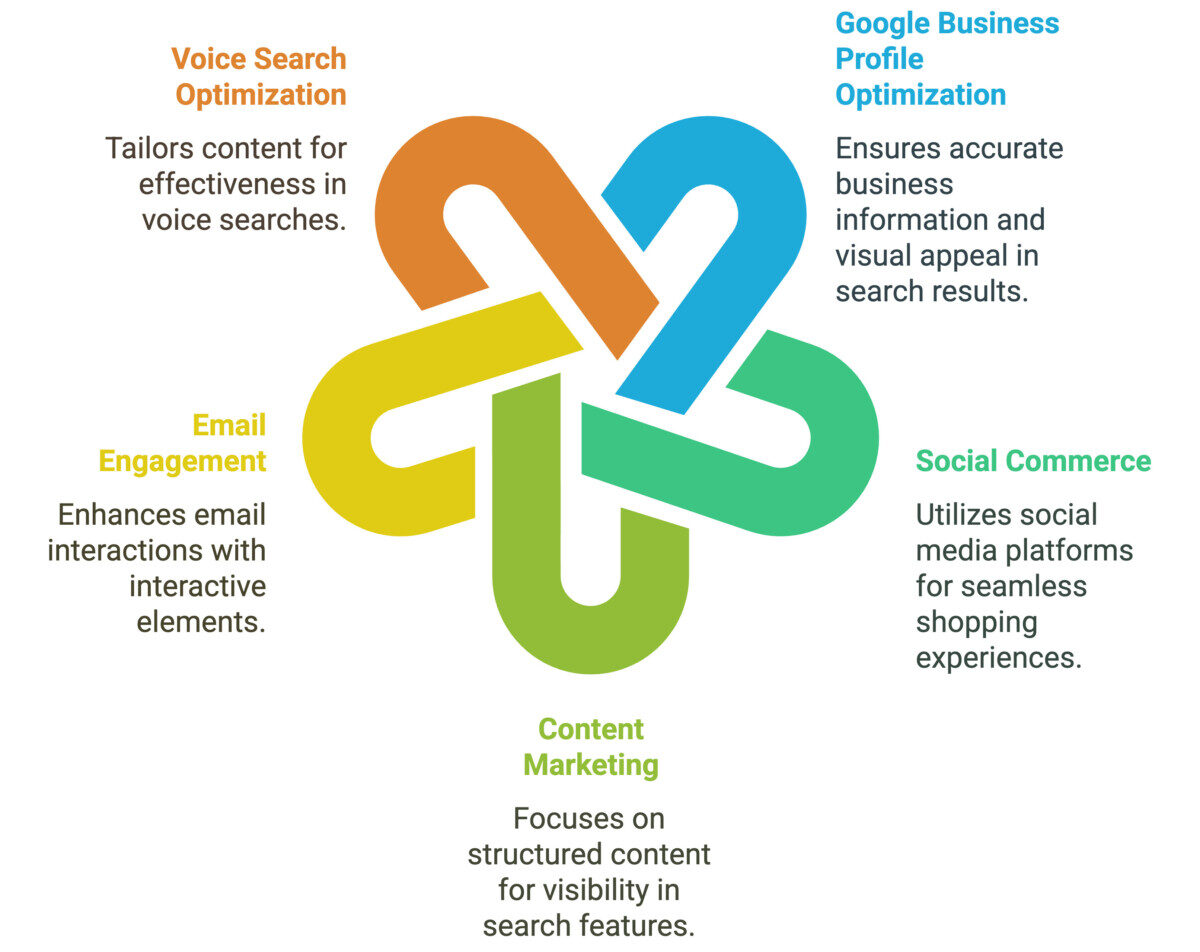
In the rapidly evolving digital landscape, ecommerce brands must find innovative ways to connect with customers beyond the traditional website model. Zero click marketing focuses on visibility where customers are already active—platforms like search engines and social media. Below are actionable strategies to help ecommerce businesses excel in this no-click ecosystem.
Your Google Business Profile acts as a digital storefront visible in search results and Google Maps. Keeping it updated ensures that potential customers can access crucial business information without leaving the search interface.
To optimize:
Explore How to Encourage Google Reviews From Your Customers to learn how to make your profile even more impactful for local SEO.
Social media platforms have transformed into complete shopping ecosystems, eliminating the need for customers to visit websites. Social commerce tools like Instagram Shopping and Facebook Shops are paving the way.
Key steps to implement:
For deeper insights, check out What Is Social Commerce And Why Is It Important?.
Creating structured, optimized content is essential for appearing in prominent SERP features like rich snippets and “People Also Ask” sections. By answering common questions or offering tutorials, you can increase visibility within search results without requiring clicks.
Tips to make it work:
Consider reading How To Use Content Marketing To Boost Your Ecommerce Brand for actionable tactics.
Emails are still one of the most effective channels for customer interaction. With AMP (Accelerated Mobile Pages) technology, you can create interactive emails that allow users to take actions—like browsing products or responding to surveys—within their inboxes.
Strategies to optimize email engagement:
Learn more in the guide, 5 Creative Ways To Increase Klaviyo Email Engagement.
With the increasing popularity of voice-enabled devices like Google Home and Alexa, optimizing for conversational queries is critical. Voice searches often revolve around specific questions, necessitating content tailored accordingly.
Best practices include:
By taking these steps, your ecommerce business can thrive in a zero-click environment, cementing your brand’s presence whether customers click through or not.
Measuring the impact of zero click marketing requires a different perspective than traditional approaches. In this evolving digital environment, metrics like website traffic alone no longer paint a full picture. Instead, the focus needs to shift toward platform-based interactions and user engagement to track progress effectively.
Tracking the success of zero click marketing efforts often involves looking beyond clicks. To gauge how well your brand is performing, consider monitoring the following metrics:
Focusing on these metrics enables brands to adapt and optimize campaigns based on user behavior where it matters most.
The methodologies for tracking marketing success have evolved alongside the digital ecosystem. Tools such as Facebook Insights and Google My Business analytics offer detailed information on in-platform interactions.
These tracking strategies are crucial for building an accurate picture of your zero click marketing efforts, allowing for smarter decision-making in the future. To optimize these interactions and refine processes, explore resources like How To Optimize For Zero-Click Results: Tips And Strategies.
Tracking success in zero click marketing demands a shift in mindset, but with a focus on actionable metrics and evolving analytics approaches, ecommerce brands can thrive in today’s dynamic marketing landscape.
Zero click marketing presents a significant shift in how brands interact with their audience, requiring ecommerce businesses to rethink traditional strategies. While the potential benefits are enormous, there are challenges that need careful consideration. Addressing critical hurdles like balancing platform reliance with maintaining website control and staying adaptable in the face of algorithm changes is key to succeeding in this landscape.
For ecommerce brands, relying solely on third-party platforms such as Google, Instagram, or Amazon can lead to a loss of control over how customers engage with the brand. At the same time, ignoring these zero-click channels is not an option if you want to stay relevant. The solution? A hybrid strategy.
Ecommerce entrepreneurs can look at shoppable Instagram features as a perfect complement to a robust website. By blending engaging on-platform activity with website-specific services such as rich blog content or loyalty programs, your business can stay agile and visible. To further refine your understanding of strategic marketing and avoid common pitfalls, explore 10 SEO Mistakes To Avoid For Your E-Commerce Website.
Adapting to algorithm updates is a reality for any digital-first strategy. Platforms like Google often tweak their search features to dictate what businesses need to prioritize. For instance, new updates might favor interactive search results like FAQs or video snippets over standard web pages. So, how do you stay ahead?
For ecommerce brands aiming to retain adaptive resilience, here is an excellent resource that dives deeper into leveraging diverse marketing channels: Winning Without the Click: A Deep Dive into Zero-Click Marketing.
By proactively managing the balance between on-platform presence and website alignment, while also preparing for algorithm tweaks, you can set your business for long-term success in the zero-click economy. This strategy isn’t just about playing catch up—it’s an opportunity to excel in new, user-driven ecosystems.
The rise of zero-click marketing signals a pivotal shift in ecommerce, as customers increasingly find what they need directly on platforms like Google, Instagram, or through voice search without visiting a website. For businesses, this presents both challenges and tremendous opportunities. By embracing a zero-click approach, you can position your brand where potential buyers already are, reducing friction in the customer journey while increasing visibility. Platforms like Instagram Shopping and Google Business Profiles allow everyday interactions to lead seamlessly to conversions.
To stay competitive, prioritize platform optimization. Update your Google Business Profile with accurate details and compelling visuals, leverage social commerce features for in-app purchases, and craft clear, value-packed content to dominate snippets and voice search results. These actions ensure that your brand remains discoverable in a world of fragmented digital touchpoints. Use structured data to enhance search visibility, and embrace actionable insights like natural language for voice search optimization to stay ahead of emerging behaviors.
The key is shifting your mindset—zero-click doesn’t mean zero impact. Instead, it means meeting customers on their terms, whether they’re scrolling Instagram, using a smart assistant, or typing on Google. Focus on creating frictionless, meaningful connections through engaging visuals, direct answers, and simplified purchase paths across platforms. By doing so, you not only improve visibility but also build trust and loyalty.
As ecommerce continues evolving, adapting to this zero-click world is no longer optional—it’s a must for growth. Start by optimizing one platform today, track interactions beyond traditional website metrics, and stay ahead by consistently testing new strategies. Dive deeper into advanced tactics with resources tailored to zero-click insights and make sure your brand thrives in this seamless, tech-driven shopping landscape.
Adapting to zero-click marketing is no longer optional for ecommerce brands; it’s an essential evolution in how customers want to engage with products online. By focusing on optimizing in-platform visibility—whether through Google’s rich results, Instagram’s shoppable posts, or voice search—your brand can thrive in a world where clicks are no longer the central metric of success.
This approach requires a shift in strategy: prioritize creating value directly within the ecosystems where your audience already spends their time. From structured data for search engines to enabling seamless in-app purchases on social platforms, zero-click marketing is an opportunity to meet your customers on their terms while enhancing brand authority.
To explore more actionable insights, check out How To Future-Proof Your Affiliate Strategy With Zero And First Party Data or refine your approach with Digital Marketing Trends 2024.
Zero-click marketing focuses on connecting with customers directly on platforms like Google, Instagram, and voice devices without requiring visitors to click on a website. With over 65% of Google searches ending without clicks, brands that embrace this strategy can stay visible and relevant where their customers already spend time.
Optimizing your Google Business Profile is essential for zero-click visibility. Update it with accurate business hours, engaging photos, and positive reviews. This ensures potential customers see the most important information immediately in search results, leading to direct actions like calls or in-store visits.
Social commerce tools, like Instagram Shopping and Facebook Shops, allow customers to discover, browse, and purchase products without ever leaving the app. By enabling features like product tagging and offering visually appealing content, brands can increase engagement and streamline purchasing.
Zero-click marketing shifts SEO focus toward visibility on search platforms rather than website visits. Strategies like optimizing for featured snippets, using structured data, and answering common questions directly in search results become critical to capturing attention.
No, zero-click marketing complements traditional websites rather than replacing them. While platforms handle discovery and fast conversions, your website remains vital as a hub for in-depth product details, brand storytelling, and unique offers.
A common myth is that zero-click marketing eliminates the need for clicks altogether. In reality, it redirects the focus to actions like calls, purchases, or interactions on platforms, shifting importance to engagement over traffic.
To succeed in voice search, use natural language that matches how people speak and focus on long-tail keywords. Creating conversational content and optimizing for local searches helps your brand appear in voice assistant responses like Alexa or Google Home.
Start by updating your Google Business Profile with accurate and engaging details, focusing on information customers need at a glance. This single step can significantly improve your search visibility and drive more direct actions.
Traditional website metrics are less relevant, so focus on measures like impressions in search results, social media engagement, and in-platform purchases. Analytics tools from platforms like Google Business Profile and Instagram Shops can track user interactions effectively.
Zero-click marketing is not just about visibility—it’s about creating seamless, frictionless experiences that match user intent. Brands that prioritize convenience, such as quick product info or one-tap purchases, build trust and win over more customers in competitive markets.





