


If you did not plan early in September, you are not alone. With 15 days left to BFCM, treat this as triage.
You will not rebuild your stack, you will remove friction and ship what matters. Here is a simple 80/20 plan that prioritizes high-impact tasks by effort: Must-do in under 2 hours, Should-do in 2 to 8 hours, Nice-to-have in 8+ hours.
Mobile is the center of gravity. Across Cyber Week, phones account for roughly 70% of orders and more than 80% of traffic, yet mobile conversion trails desktop by a wide margin. The desktop conversion rate is approximately 6.5%, while the mobile rate is around 3.3%. Additionally, desktop baskets are approximately 47% larger. The fastest gains come from a ruthless mobile checkout audit, with fewer taps and fewer surprises.
Welcome to 2025. Paid ads cost more, iOS tracking is complicated, and randomness can hurt profits. Shift your focus to owned channels, website optimization for site conversion, and supply clarity. Whether you are a solo founder or leading a team, this plan scales to your stage and bandwidth.
The quickest wins sit where money already flows. Pull the last 60 to 90 days using Shopify analytics, then compare to last year’s BFCM. Find the top products and pages, see where buyers get stuck on mobile, then double down on two channels you trust.
For a broader operational lens, pair this quick triage with the practical checklists inside the 4-week BFCM operations playbook.
Pull a simple list. Top 10 SKUs by revenue, top 5 landing pages by revenue. Add AOV and margin. Star anything with deep stock or fast replenishment. These get the best offer placement, the bigger ad budget, and the freshest creative. Skip low-stock heroes unless you have a waitlist and a clear restock date.
Your top 10 SKUs and top 5 landing pages typically drive over 60% of BFCM revenue. Prioritize those assets for offers, budget, and creative, and deprioritize low-stock items without a waitlist plan. This approach sets you up for Black Friday success and beyond.
Quick workflow:
If you need structure for the rest of your plan, this Black Friday ecommerce strategy for 2025 gives a helpful setup.
On your phone, buy a hero product using Apple Pay or Shop Pay. Time each step. Anything that slows you down is a must-fix to boost mobile-friendliness.
A 10-minute phone test finds most conversion blockers before your customers do. Shop at your own store on mobile, track your purchase time, and fix anything that adds taps or surprises.
Checklist:
For deeper mobile fixes, scan this step-by-step guide on making Shopify sites mobile responsive.
You cannot scale six channels in two weeks. Choose two winners. For most Shopify stores in 2025, the safe bet is email and SMS, since tracking is reliable and returns are predictable. Keep paid social or paid search on maintenance unless your ROAS is strong and stable. Affiliates and creators can stay live, just avoid heavy new builds. Focus here to maximize your BFCM impact.
Pick the two channels with proven returns and pause the rest. In 2025, email and SMS usually win on speed, control, and reliability.
Simple rule:
Guardrails protect your margin and sanity when volumes spike. Include policies on maximum discounts to avoid eroding profits.
Define floors and caps before you scale. Set discount floors by margin, stock-based promo rules, shipping cutoff dates, and daily spend caps. Share a one-page plan with everyone touching pricing, ads, and CX. These steps ensure smooth BFCM execution.
Guardrail template:
For a thorough readiness sweep, use this Shopify Black Friday preparation checklist.
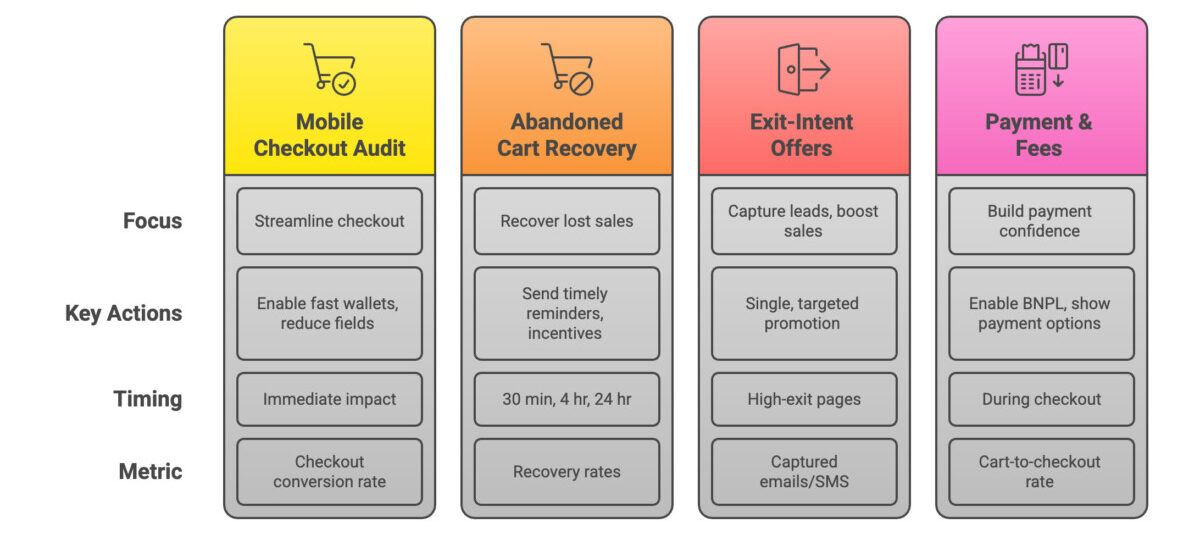
These moves lift conversions fast. Emphasize mobile, speed, and clarity. Tie each to a metric so you can see impact within 24 to 48 hours.
Enable fast wallets, reduce form fields, remove roadblocks. You will feel the lift in hours.
Enable Shop Pay, Apple Pay, and Google Pay, remove forced account creation, show taxes and shipping early, and compress images. Goal: fewer taps, fewer surprises.
Checklist to implement now:
Metric to monitor: checkout conversion rate, time to checkout, and error rate.
Cart recovery is your fastest path to found money. Mobile-first copy and tight timing win.
Send cart recovery at 30 minutes, 4 hours, and 24 hours. Add short copy, a product thumbnail, social proof, and a timed incentive. Trigger browse abandonment at 45 minutes with a helpful nudge using retargeting.
Suggested flow:
Leverage email marketing for this sequence to maximize recovery rates. If you need a deeper blueprint, pull ideas from these effective abandoned cart recovery strategies and this complete guide to Shopify cart recovery.
One clean offer beats three messy ones. Keep it simple and targeted.
Show a single, clean sales promotion on high-exit pages. Use 10% off for email or SMS capture, or a gift with purchase above target AOV. Cap frequency and never stack discounts by default.
Execution tips:
Metric to monitor: captured emails and SMS, acceptance rate, blended margin.
Payment confidence improves the customer experience and increases conversion, especially on mobile.
Turn on BNPL in checkout, show payment logos near add to cart, remove surprise fees, and display a clear free-shipping threshold. Add delivery estimates by country or region.
Why it works:
Metric to monitor: cart-to-checkout rate and checkout completion rate.
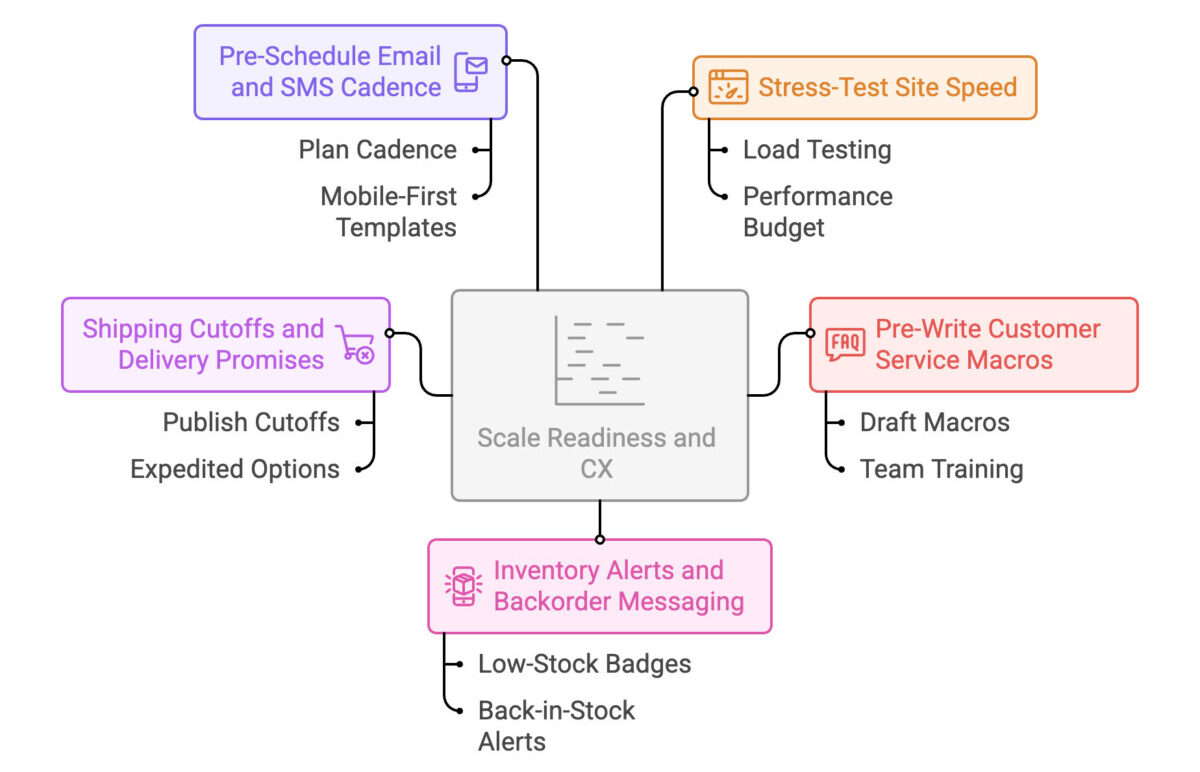
These projects stabilize revenue during peak. Block a half day or a full day, batch the work, and schedule ahead where possible.
Traffic will spike. Prepare for it.
Run a lightweight load test on your homepage, key collections, PDPs, cart, and checkout. Remove heavy apps and scripts. Set a performance budget and a rollback plan as part of your contingency plans. Test checkout on three phones and two networks.
Action list:
Metric to monitor: mobile page load times, error rates, and bounce rates.
Fast answers protect revenue and reviews.
Draft ten short macros for shipping times, order changes, returns window, promo rules, price adjustments, out-of-stock, size or fit, gift receipts, split shipments, and warranty. Link to policies. Train the team on tone and escalation to enhance customer support.
Tip for solo founders: Pin macros in your help desk or notes app. Copy, paste, personalize, send.
Metric to monitor: first response time and resolution time.
Stock clarity drives trust and conversions.
Turn on low-stock badges at thresholds as part of effective inventory management, show per-variant stock, enable back-in-stock alerts, and display delivery windows for backorders. Tie deeper promos to surplus items and protect heroes that will sell out.
Metric to monitor: sell-through rate by SKU, oversell occurrences, and waitlist signups.
Clear delivery info keeps carts from dying.
Publish shipping cutoff dates by region as a key part of your shipping strategy, offer a paid expedited option with honest timelines, add delivery estimates in cart and checkout, and validate addresses.
Metric to monitor: pre-purchase support tickets about shipping, failed deliveries, refund rate.
Set the tempo now so you can focus on monitoring later.
Plan a simple cadence for your marketing campaigns, Early Access, Black Friday, Saturday social proof, Sunday last chance, Cyber Monday, and a post-Cyber restock or extension. Use short subject lines and mobile-first templates. Tag all UTMs.
Pro tip: Create plain text variants for deliverability and speed.
If you want a broader prep lens, use this Shopify Black Friday preparation checklist as a backup sanity check.
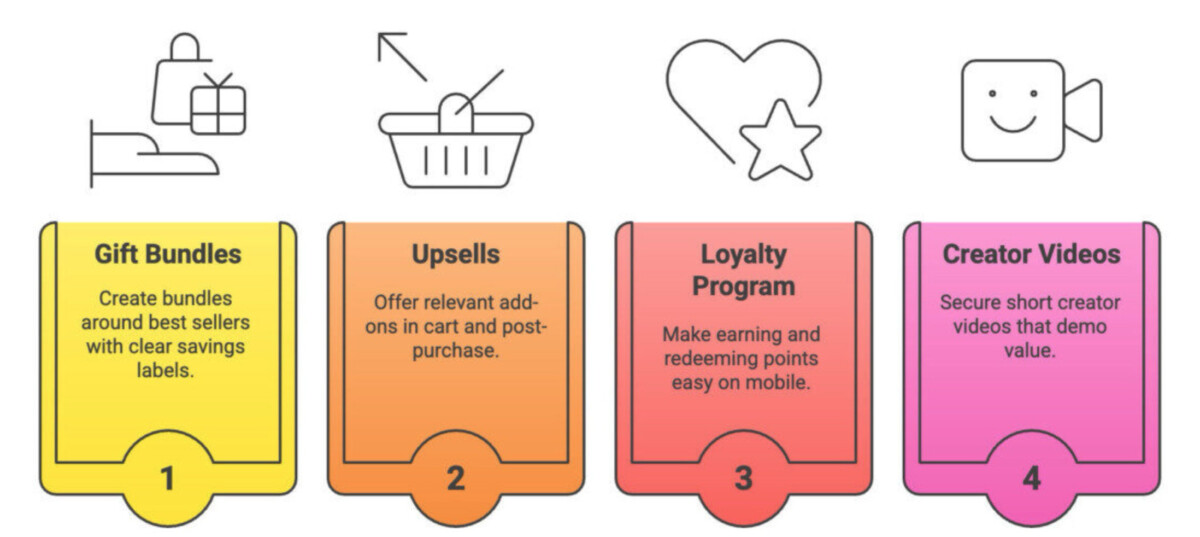
Do these only after the must-do and should-do items are live. Ship small versions first.
As a sales promotion, create simple bundles around best sellers, Starter, Best Value, and Premium. Price to protect margin and beat your average discounts. Use clear savings labels and comparison bullets.
Execution tips:
Offer one relevant add-on in cart or drawer, plus a one-click post-purchase offer that ships with the original order. Keep choices tight and copy simple.
Metric to monitor: AOV lift and uptake rate on each upsell.
To boost customer retention, make earning and redeeming points easy on mobile in your loyalty programs, promote double points during Cyber Week, and add a simple referral reward that is easy to explain and redeem. Plan a post-BFCM points bonus to trigger a December return.
Metric to monitor: repeat purchase rate and points redemption rate.
Secure two short creator videos that demo value and show outcomes. Repurpose to PDPs, emails, ads, and social media. Use captions for sound-off viewers and clear CTAs.
Metric to monitor: PDP conversion change and time on page.
This 15-day pre-BFCM preparation action plan lays out small, finishable tasks. Do a daily mobile QA, inventory check, and quick readout on email, SMS, and paid. Keep it tight so you actually finish it.
After reviewing dozens of Shopify checkouts and holiday dashboards, the pattern is clear: brands that enable fast wallets, remove forced account creation, and show shipping and tax costs up front see mobile checkout conversion lift by 12 to 23% within 14 days. Add a three-touch cart recovery cadence at 30 minutes, 4 hours, and 24 hours, and total recovered revenue typically rises another 8 to 15% before Cyber Monday ends.
Fix mobile checkout, enable fast wallets, and tighten cart recovery flows for BFCM. These three usually drive a measurable lift within 48 hours.
In 2025, email and SMS are the safest bets for reliable returns. Add paid search or paid social only if your ROAS is stable.
Set a margin floor per product or collection, use deeper discounts on slow movers and lighter ones on heroes, and avoid stacking offers. Average holiday discounts hover near the high twenties, keep yours honest to your P&L and factor in your shipping strategy.
Yes if your AOV is above $50 and your audience is mobile-heavy, boosting customer retention. BNPL adoption continues to grow, and most BNPL purchases happen on mobile.
Mobile checkout conversion, cart starts, error rates, site speed performance on PDP and checkout amid traffic surges, inventory levels for top SKUs, and CX response times.
Keep the 80/20 mindset front and center. Fix mobile friction, make checkout fast, set clear offers, protect site stability. Phones now drive most BFCM traffic and a large share of sales, so small improvements in mobile-friendliness deliver outsized gains. Build a simple daily ritual, check site speed, inventory, and recovery flows, then double down on what is working. Close the weekend strong, then document what worked so you roll into Q1 with clarity and momentum.




