The right AI messaging platform for Shopify depends on where customers message you. SleekFlow and Zoko suit WhatsApp-led stores, Gorgias and Intercom suit email-heavy support teams, Klaviyo fits existing Klaviyo users, Postscript fits U.S. SMS, and Tidio or free Shopify Inbox fit smaller stores.
The platform with the smartest AI is the wrong choice if it lives on a channel your customers never use. Start with where the messages come from, then compare the AI.
At midnight a shopper sends a WhatsApp message asking about sizing. Another texts back to ask whether a product is being restocked, a third asks a question in Instagram DMs, and a fourth opens the chat window on a product page. Each of those messages is either a sale or a support case for a Shopify store, and answering them one at a time stops scaling quickly.
AI messaging platforms for Shopify put an AI agent in that inbox. Using live data from your Shopify store, the agent answers questions, checks orders, suggests products and routes the hard conversations to your team. Whether you run a new store answering chats yourself or a support team handling thousands of tickets a month, this guide covers four kinds of platform: omnichannel tools centered on WhatsApp and Instagram, AI helpdesks, SMS-first tools and free on-site chat. The eight platforms are not ranked; the comparison grid and the fit section below match each one to a specific store situation.
An AI messaging platform for Shopify brings customer conversations from WhatsApp, Instagram, Facebook Messenger, SMS, email and website chat into one inbox, connects to your store, and lets an AI agent answer many of them. The useful ones can see your products, orders and customers, and can act on them: send an order update, recommend a product or share a checkout link.
That is different from a standard chat widget, which sits only on your website. An AI messaging platform follows customers into the apps they already use, keeps each conversation in a single inbox, and lets the AI and your team work the same conversation.
We chose these eight platforms because each one connects natively to Shopify and puts an AI agent to work on real customer conversations. Every platform was judged against the same four criteria: a native Shopify connection (a Shopify app or built-in integration that gives the AI access to store data), AI that does real work (it answers customer questions or completes tasks rather than only suggesting replies), at least one channel where shoppers message brands (WhatsApp, Instagram, SMS or website chat), and published pricing on the Shopify App Store or the vendor’s website. Popular messaging tools without a direct Shopify connection were considered and left out, and so were tools whose AI only drafts suggested replies for an agent to send. Channels, features and prices come from each vendor’s Shopify App Store listing, website or help documentation as of October 2026; we did not run hands-on tests. Prices change often, so check the current listing before you sign up.
The eight platforms split by channel: SleekFlow and Zoko are built around WhatsApp, Gorgias and Intercom are helpdesks, Klaviyo and Postscript extend marketing platforms, and Tidio and Shopify Inbox cover on-site chat for smaller budgets. Pricing is as of October 2026.
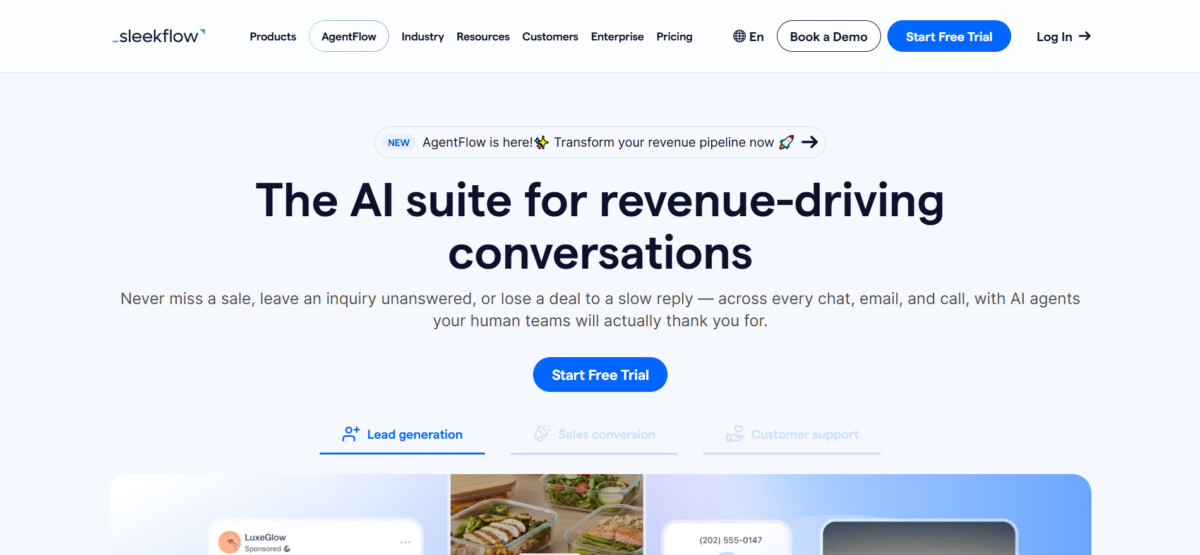
SleekFlow is an AI-powered conversation platform that brings WhatsApp, Instagram, Facebook Messenger, SMS, and website live chat into one inbox, connected to your Shopify store.
SleekFlow is a strong fit for brands whose customers prefer messaging apps, particularly in markets where WhatsApp is the default way to contact a business. SleekFlow’s AI agents learn from your website, documents and custom answers, and the Shopify setup gives them access to your store’s customers, orders and carts so they can answer common questions and help shoppers find products. Customers, orders and abandoned carts sync from Shopify, products can be shared from your catalog, and prebuilt flows cover abandoned cart recovery, order updates, post-delivery feedback, post-purchase upsells, new customer follow-ups and loyalty invitations.
Pricing (as of October 2026): SleekFlow’s website lists plans from US$49 a month billed annually, with AI agents included from the Pro plan at US$109 a month billed annually. On the Shopify App Store, the Pro AI plan is listed at $199 a month. Meta charges separately for some WhatsApp messages.
Standout strengths: SleekFlow’s AI agents can transcribe voice notes and pull information from screenshots, receipts and photos, which matters on WhatsApp, where many customers send voice notes and pictures instead of typing. Handoff to your team triggers on sentiment, topic or task completion and passes along a summary, so customers do not repeat themselves, and your team can review every response, action and line of reasoning while testing before go-live, then audit each decision through full execution traces. In the inbox, staff can share products from the Shopify catalog, send Shopify checkout or Stripe payment links, see purchase history beside each conversation, and build WhatsApp or SMS retargeting campaigns from Shopify customer data. SleekFlow reports that NNIO, a Singapore electronics and home appliance brand, uses its AI agents as the first layer of a shared WhatsApp, Instagram, Facebook and live chat inbox to answer after-hours inquiries, recommend products and collect details for handover, with up to 30% of inquiries handled by AI, 40% faster response times and 20% more completed checkouts; Loft Home, a Singapore furniture retailer, reports a 40% cut in daily manual operations time after moving order confirmations and shipping updates to WhatsApp and email. Those are single-brand results reported by the vendor, not typical outcomes.
Honest limitations: SleekFlow’s AI agents are not included in the entry-level Essential plan, so the real starting price for AI is the Pro plan. If most of your support happens over email, SleekFlow is not built as an email helpdesk, and you may need to pair it with one. WhatsApp costs also sit outside the plan price, because Meta bills some messages separately.
Best fit: Shopify stores that sell and support customers across WhatsApp, Instagram and other messaging apps, especially in WhatsApp-first markets.
Skip if: Nearly all of your customer contact is email and your shoppers rarely use messaging apps.
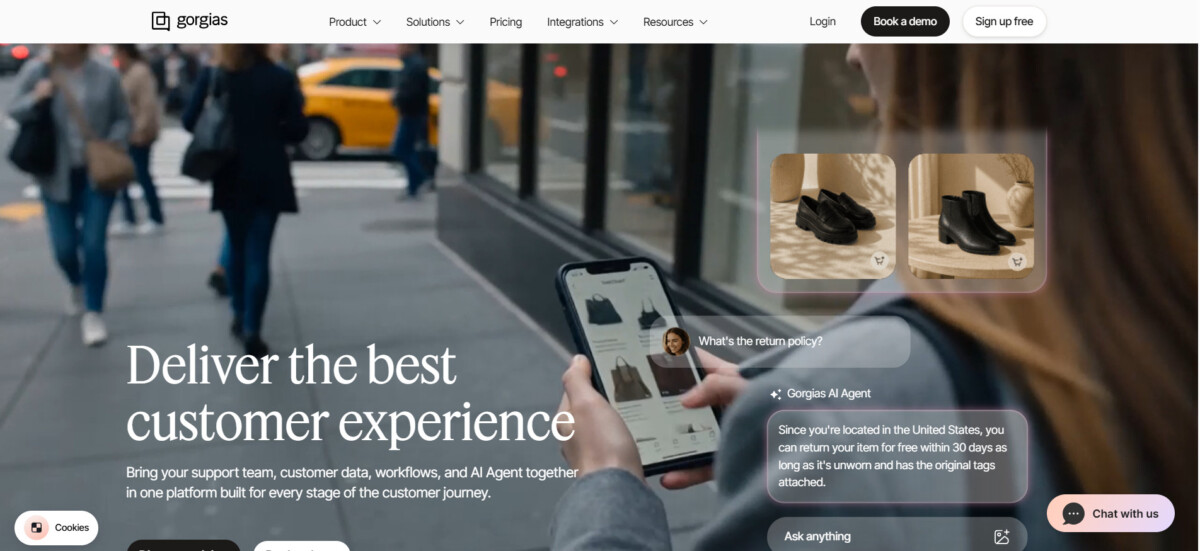
Gorgias is an ecommerce helpdesk whose AI Agent resolves support tickets across email, chat and other channels and routes high-impact conversations to your team.
Gorgias AI Agent resolves tickets end to end and learns from your Shopify data, store website and help center content. Through Actions, it connects to other tools to complete tasks such as editing, canceling or partially refunding an order, and an AI Shopping Assistant recommends products and guides shoppers in real time. Inside the helpdesk, Gorgias can view Shopify products and edit customers, orders (including returns) and discounts, and several Shopify stores can connect to one account.
Pricing (as of October 2026): Gorgias helpdesk plans start at $10 a month for 50 tickets (three agents on the Shopify App Store listing). AI Agent is an add-on billed per resolved conversation; the rate depends on your plan, so check it in your Gorgias account before you budget.
Standout strengths: Gorgias is the strongest fit here for email-heavy support, because the helpdesk, the order editing and the AI Agent live in one place. Actions let AI Agent finish the job (edit, cancel or partially refund an order) rather than just answer, and multi-store support suits brands running more than one Shopify storefront.
Honest limitations: Gorgias combines ticket-based helpdesk pricing with per-resolution AI fees, so costs climb quickly in peak season; model your expected volume first. Gorgias is also built around the helpdesk ticket, so stores whose customers live in WhatsApp may find a messaging-first platform a better match.
Best fit: Stores with large ticket volumes, especially where email is still a major support channel.
Skip if: Most of your conversations happen on WhatsApp or Instagram and email is a minor channel.
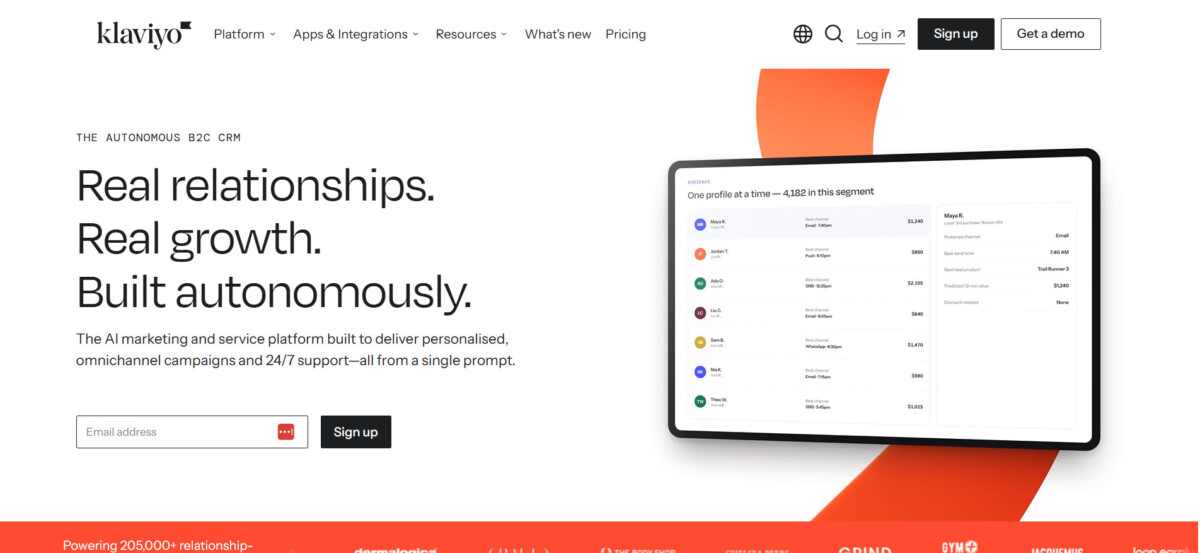
Klaviyo is best known for email and SMS marketing, and its Customer Agent extends the platform into AI customer service on the same channels.
Klaviyo Customer Agent answers shoppers in web chat, email, two-way SMS and WhatsApp, with social channels listed as coming soon. Pre-built skills (Klaviyo’s Academy lists nine) cover order tracking, product and brand questions, product recommendations, returns and exchanges, and subscriptions and loyalty, and you can create custom skills. The agent detects and replies in each customer’s language and passes conversations that need a person to your team. Customer Agent ingests information from your Shopify store, and order tracking turns on when you connect Shopify. Some skills rely on other apps, such as Loop or AfterShip for returns, Recharge or Skio for subscriptions, and Yotpo or Smile.io for loyalty.
Pricing (as of October 2026): Klaviyo’s Customer Agent page lists 50 free resolutions, with a tier of 1,000 AI resolutions a month at $700. Klaviyo says customer data is never used to train large language models.
Standout strengths: Klaviyo keeps service and marketing in one customer profile, so a brand already running Klaviyo flows does not have to sync data into a second platform. The 50 free resolutions let a store test the agent on real conversations before paying, and multilingual replies help brands selling across borders.
Honest limitations: Klaviyo’s resolution-based pricing adds up at high volumes, and Instagram and Messenger are not supported yet. Several skills also depend on connected apps for returns, subscriptions and loyalty, so the agent can only do as much as your stack allows.
Best fit: Brands that already run marketing in Klaviyo and want AI support in the same platform.
Skip if: You do not use Klaviyo for marketing, or Instagram and Messenger carry a large share of your conversations today.
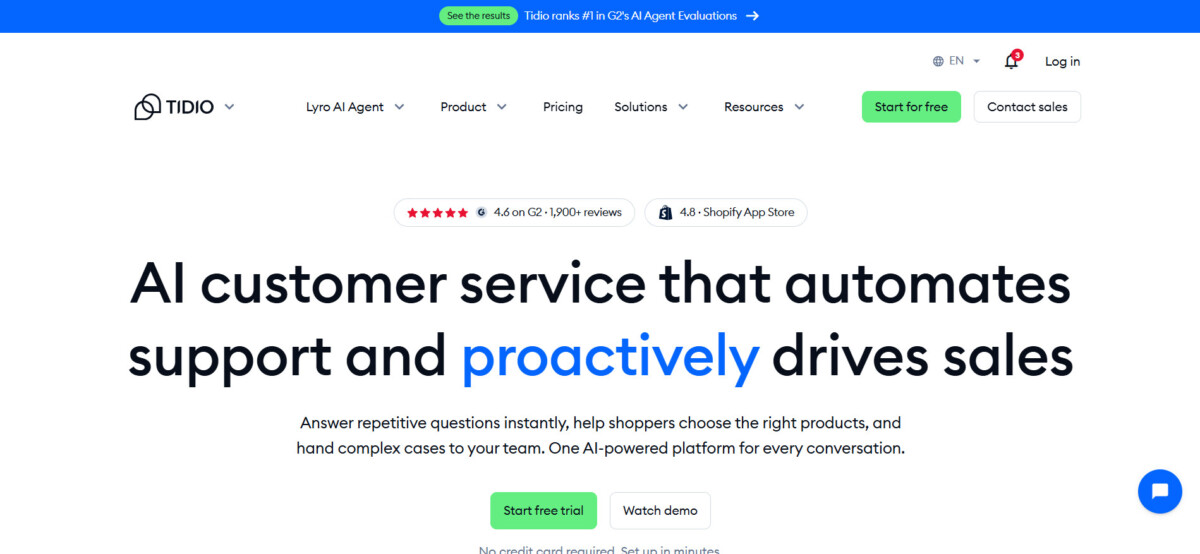
Tidio combines live chat, a shared inbox and Lyro, an AI agent that can act on Shopify orders, at a price that suits smaller stores.
Tidio’s Lyro AI agent handles order status, refunds, cancellations and order edits within rules you set. It can also start conversations on product pages, compare products, make recommendations and add items to the cart, while an AI reply assistant helps your team write replies faster. When someone on your team takes over a conversation, they see the customer’s orders and live cart and can send products, discounts or order updates from the Tidio inbox.
Pricing (as of October 2026): Tidio’s free plan covers live chat conversations with up to 50 users a month. Customer Service plans start at $29 a month for 100 conversations, and the Lyro AI Chatbot plan starts at $39 a month for up to 200 Lyro conversations, with a 7-day free trial.
Standout strengths: Tidio gives a small store AI order actions (refunds, cancellations, edits) from its $39 a month Lyro plan as of October 2026, and proactive product help means Lyro can sell as well as support. The free live chat plan lets a store start before paying for AI at all.
Honest limitations: Tidio’s Lyro is capped by conversation volume and pauses when you reach your limit, so busy stores need a higher tier. Its entry pricing is built for smaller volumes, so the cost advantage narrows as conversations grow.
Best fit: Small and mid-sized stores that want affordable AI chat across the website and social channels.
Skip if: Your monthly conversation volume already runs well above the entry Lyro allowance and you cannot risk the agent pausing in peak season.
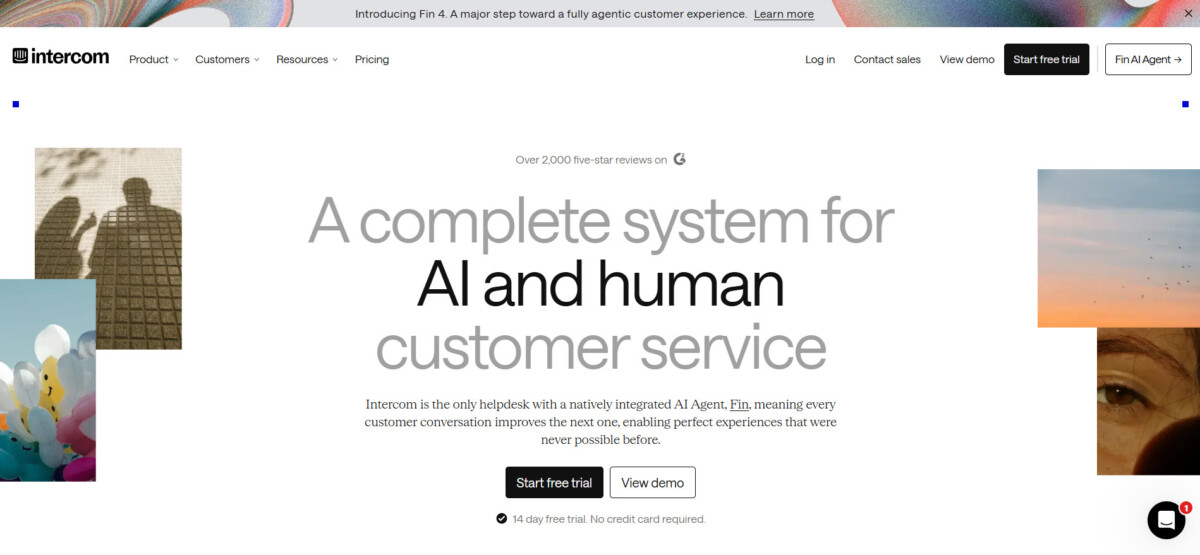
Intercom is a customer service platform whose Fin AI Agent resolves customer questions, with a Shopify app that brings order data and actions into Intercom.
Intercom’s Fin AI Agent helps shoppers find products, answers questions and resolves order queries using real-time data. The Shopify app lets your team edit shipping information, issue refunds and create orders from inside Intercom, track Shopify events to trigger targeted messages, and see orders, shipping and customer data in one view. Multiple Shopify stores can connect to one workspace.
Pricing (as of October 2026): Fin is charged from $0.99 per outcome. Intercom seats start at $39 a month on the Essential plan, $99 a month on Advanced and $139 a month on Expert when billed monthly (the Shopify App Store listing), or $29, $85 and $132 billed annually on intercom.com, with a 14-day free trial.
Standout strengths: Intercom suits teams that want an advanced AI agent and a full helpdesk in one product, with Shopify order actions available to human agents and event-triggered messaging for proactive outreach. Multi-store workspaces help brands running several regional storefronts.
Honest limitations: Intercom combines per-seat and per-outcome charges, so costs rise as both your team and your volume grow. Check how your preferred messaging channels connect before committing, because channel setup varies.
Best fit: Larger brands with dedicated support teams that want an advanced AI agent and helpdesk in one.
Skip if: You are a solo founder or two-person team watching every dollar; per-seat pricing is built for staffed support.
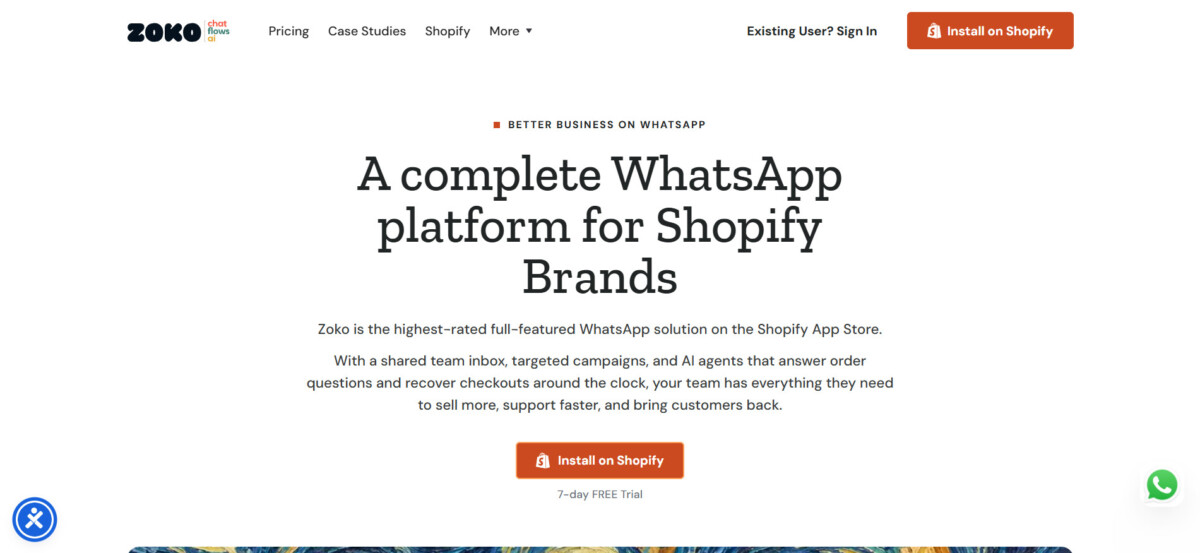
Zoko is a WhatsApp marketing and chat platform built for Shopify stores, with Instagram available as an add-on.
Zoko’s AI chatbots handle WhatsApp sales, order tracking and FAQs using your Shopify data, with staff taking over when needed. Prebuilt flows cover abandoned cart recovery, order notifications, cash-on-delivery verification, shipping alerts and review requests, and your Shopify catalog syncs to WhatsApp so customers can browse and buy without leaving the chat.
Pricing (as of October 2026): Zoko plans start at $49.99 a month, with a 7-day free trial. The Starter plan adds a $0.015 Zoko fee per conversation, while higher plans include conversation allowances. Instagram costs $9.99 a month extra, and AI chatbots are a paid add-on from $24.99 a month per bot, plus usage fees on Zoko’s site ($0.09 per resolution for its support bots after the first 100, or 3% of order value for its sales bot after the first 100 orders). Meta’s WhatsApp rates also apply.
Standout strengths: Zoko is purpose-built for selling inside WhatsApp, with catalog sync and checkout in the chat. Cash-on-delivery verification is a practical flow for markets where COD is common and failed deliveries are expensive.
Honest limitations: Zoko’s AI costs extra on top of the plan, and channel coverage is limited to WhatsApp and Instagram. Stacked fees (plan, per-conversation, Instagram, each bot, and Meta) make the real monthly cost harder to predict than the headline price.
Best fit: Stores that sell mainly through WhatsApp and want ready-made Shopify automations.
Skip if: You need email, SMS or website chat handled in the same inbox.
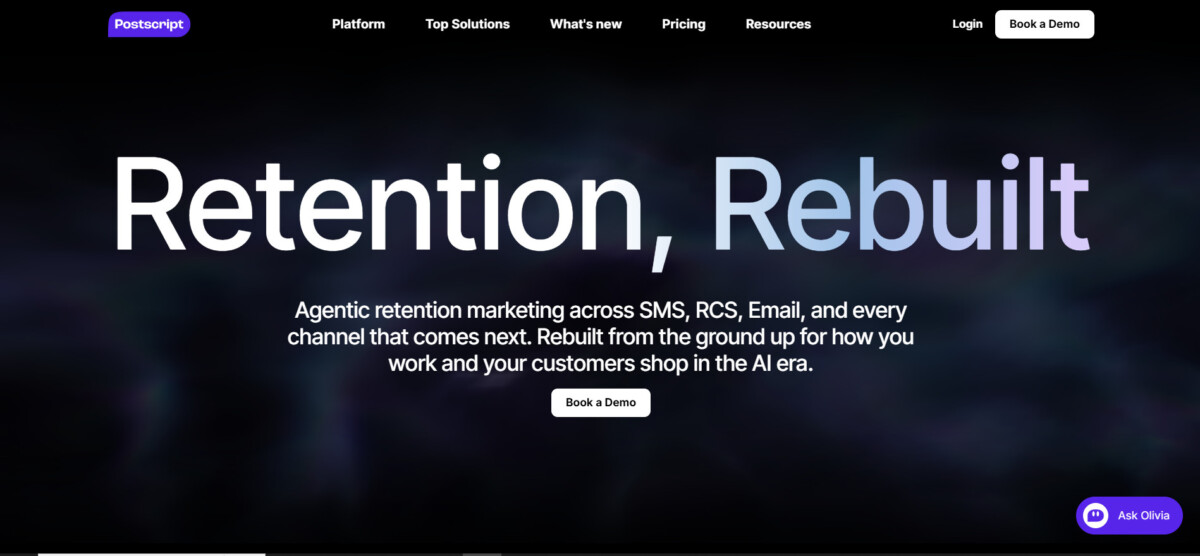
Postscript is an SMS marketing platform for Shopify, with AI features for conversational selling and message testing.
Postscript’s Shopper is an always-on AI shopping assistant that chats with subscribers by text, and Brand Center and Infinity Testing are part of Postscript AI, which Postscript says is designed to keep messaging on brand. Postscript uses your historical Shopify data to personalize messages, works with Shopify Checkout, customer accounts and the Shopify admin, and connects with Gorgias, Klaviyo and Zapier.
Pricing (as of October 2026): Postscript’s Starter plan is free to install with a $49 monthly minimum spend, at $0.009 per SMS and $0.045 per MMS plus carrier fees. Growth is $100 a month and Professional is $500 a month, with lower per-message rates.
Standout strengths: Postscript turns an SMS list into a two-way sales channel, with Shopper answering subscribers in the same thread that marketing messages arrive in. Integrations with Gorgias and Klaviyo let it sit alongside an existing helpdesk and email stack rather than replace them.
Honest limitations: Postscript is built around SMS and MMS, with pricing in USD, so it is less suited to brands whose customers prefer WhatsApp or Instagram. Per-message and carrier fees add up with large lists.
Best fit: U.S.-focused Shopify brands that rely on SMS for marketing and want AI-driven text conversations.
Skip if: Most of your customers are outside the U.S. or prefer messaging apps over text.
Shopify Inbox is Shopify’s free chat app for your online store, with an AI agent that automatically connects to your catalog, inventory and policies.
Shopify Inbox’s AI agent covers FAQs, greetings, product recommendations, order updates and discounts. You can rate chats to improve its answers, and for shoppers signed in with Shop, the agent can draw on their purchase history from across Shopify. Because Inbox is built into Shopify, there is no separate integration to set up, and it reports on the orders it helped close.
Pricing (as of October 2026): Shopify Inbox is free.
Standout strengths: Shopify Inbox is the fastest way to put AI chat on a store, with no integration work and no per-conversation cost. Shop-based personalization gives it data a third party chat tool cannot see.
Honest limitations: Shopify Inbox focuses on chat in your online store, so it will not cover channels such as WhatsApp or SMS. As with any AI, check its answers regularly, because the agent replies to shoppers directly once it is switched on.
Best fit: New and small stores that want free AI-assisted chat on their website.
Skip if: Your customers reach you mostly on WhatsApp, Instagram or SMS.
Choose an AI messaging platform by starting with where your customers message you, then checking what the AI can do with Shopify data, how it charges, and how it hands off to your team. If a large share of customers contact you on WhatsApp or Instagram, choose a platform built for those channels. If most contact is email and website chat, an AI helpdesk is a better match. If SMS marketing drives your revenue, look at SMS-first tools.
Next, check what the AI can actually do with Shopify data. Some agents only answer questions; others can view, edit, refund or discount orders and add items to carts. List the top five questions your team receives and confirm whether each platform’s AI can resolve every one of them without a person.
Then look at the pricing model, which matters as much as the headline price.
On top of platform fees, WhatsApp messages can carry Meta fees and SMS messages carry carrier fees, so estimate costs for a peak month, not an average one.
Messaging rules belong in the decision too. Businesses need opt-in before messaging customers on WhatsApp and must use approved WhatsApp message templates for messages sent outside the 24-hour customer service window. In the U.S., the Telephone Consumer Protection Act (TCPA) requires prior express written consent before sending marketing texts. Choose a platform that makes opt-ins, templates and unsubscribes easy, and plan the conversation itself as carefully as the tool; our piece on ecommerce customer messaging that actually converts covers timing, replies and opt-out tracking.
Finally, plan the handoff and test before you trust it. Even the best AI cannot solve every problem, and the support problem Shopify brands notice too late is usually an unfinished conversation or a broken handoff rather than a slow answer, so check how each platform passes a conversation to a person, whether your team sees a summary and the customer’s order history, and whether you can review what the AI said. Use free plans and trials to test the AI on real questions from your inbox, in your customers’ languages, and switch on full automation only once its answers are reliably correct. Our guide to setting up an AI chatbot on your Shopify store without losing customer trust covers the test questions and review routine worth running first.
The platform that fits your store is the one built for your busiest channel at your current volume, not the one with the longest feature list. If you are a new store answering a few chats a day, start with Shopify Inbox, which is free and needs no setup, or Tidio if you want the AI to handle refunds and order edits too. Upgrading before conversation volume justifies it is a common way to pay for capacity you do not use.
If customers mainly message you on WhatsApp and Instagram, SleekFlow covers both alongside Messenger, SMS and live chat in one inbox, while Zoko is the narrower choice if WhatsApp selling is all you need. The trade off is fee layering: Meta’s WhatsApp charges sit on top of either plan, and Zoko adds separate fees for Instagram and each AI bot.
If support runs mainly through email and website chat, Gorgias is built for ecommerce helpdesk volume, and Intercom suits larger teams that want a full service platform with per-seat pricing. If your marketing already runs in Klaviyo, Klaviyo Customer Agent keeps service and marketing on one customer profile, as long as you can live without Instagram and Messenger for now. If SMS drives your revenue and most customers are in the U.S., Postscript turns that list into a two-way channel.
Whichever you choose, pick one platform per channel rather than stacking several AI agents on the same conversations, and test it on your own top five questions before you switch on full automation.
AI messaging platforms take routine questions off your team, but they do not replace judgment on the conversations that matter most. Every platform here hands complex or sensitive cases to a person, and the AI is only as accurate as the store data, policies and connected apps behind it. There is no single best AI messaging platform for every Shopify store, which is why this list is not ranked: SleekFlow and Zoko serve WhatsApp-first shoppers, Gorgias and Intercom serve email-heavy helpdesks, Klaviyo and Postscript extend marketing platforms you may already use, and Tidio and Shopify Inbox make AI chat affordable for smaller stores. Match the platform to your channels and volume, model a peak month of fees, and keep a person reviewing the AI’s answers until you trust them.
There is no single best AI messaging platform for Shopify; the right one depends on which channels your customers use. SleekFlow is a strong choice for stores that sell and support customers on WhatsApp, Instagram, Messenger, SMS and live chat from one inbox. Gorgias and Intercom suit email-heavy support teams, Klaviyo Customer Agent suits brands already marketing in Klaviyo, Postscript suits U.S. SMS programs, Tidio suits smaller stores, and Shopify Inbox is a free option for website chat. The fit section above maps each one to a specific store situation.
Yes, AI can answer WhatsApp messages for a Shopify store through platforms such as SleekFlow, Klaviyo and Zoko. These connect Shopify to WhatsApp so an AI agent can answer product questions, share order updates and recover abandoned carts using live store data. You will need a WhatsApp Business account set up through the platform, and Meta charges separately for some messages on top of the platform’s own pricing. Messages sent outside WhatsApp’s 24-hour customer service window also need approved templates, so check that the platform makes templates easy to manage.
Yes, Shopify Inbox is a free AI chat option for Shopify stores. Its AI agent connects automatically to your catalog, inventory and policies and handles FAQs, product recommendations, order updates and discounts in website chat, with no separate integration to set up. Tidio also has a free plan for live chat, though its Lyro AI agent requires a paid plan starting at $39 a month as of October 2026. Neither free option covers WhatsApp or SMS, so stores whose customers message on those channels will need a paid platform.
AI messaging platforms charge per team seat, per AI resolution or outcome, per conversation, per message, or through a flat plan that includes AI from a certain tier. As of October 2026, Intercom combines $39 per seat with fees from $0.99 per Fin outcome, Gorgias charges per resolution on top of ticket-based plans, Tidio and Zoko price by conversation allowances, Postscript charges per text, and SleekFlow includes AI agents from its Pro plan. WhatsApp messages may also carry Meta fees and SMS messages carry carrier fees, so estimate a peak month rather than an average one.
Some AI agents can process refunds and order changes in Shopify, but not all of them. Tidio’s Lyro handles refunds, cancellations and order edits within rules you set, Intercom’s Shopify app lets your team issue refunds and edit shipping information with Fin resolving order queries, and Gorgias AI Agent can edit, cancel or partially refund orders through Actions. Check exactly which actions each platform supports for your store, and set clear rules for when the AI should hand a conversation to a person instead of acting on its own.
Yes, you need customer consent before messaging shoppers on WhatsApp or sending SMS marketing. WhatsApp requires opt-in before businesses message customers, and messages outside the 24-hour customer service window must use approved templates. In the U.S., SMS marketing requires prior express written consent under the Telephone Consumer Protection Act. Most AI messaging platforms include tools for collecting opt-ins and handling unsubscribes, but you remain responsible for compliance, so confirm how your platform records consent before you launch a campaign.
Yes, every AI messaging platform in this list lets your team take over conversations from the AI. The better handoffs pass along a summary and the customer’s order history so shoppers do not have to repeat themselves; SleekFlow, for example, escalates on sentiment, topic or task completion and includes a summary, and Tidio shows the customer’s orders and live cart when an agent takes over. Test the handoff during a trial, because a clumsy transfer can undo the time the AI saved.