Free every Thursday · 60,261 Readers
Fastlane Insider Newsletter: What's working for Shopify in the AI era?
Free every Thursday · 60,261 Readers
Fastlane Insider Newsletter: What's working for Shopify in the AI era?

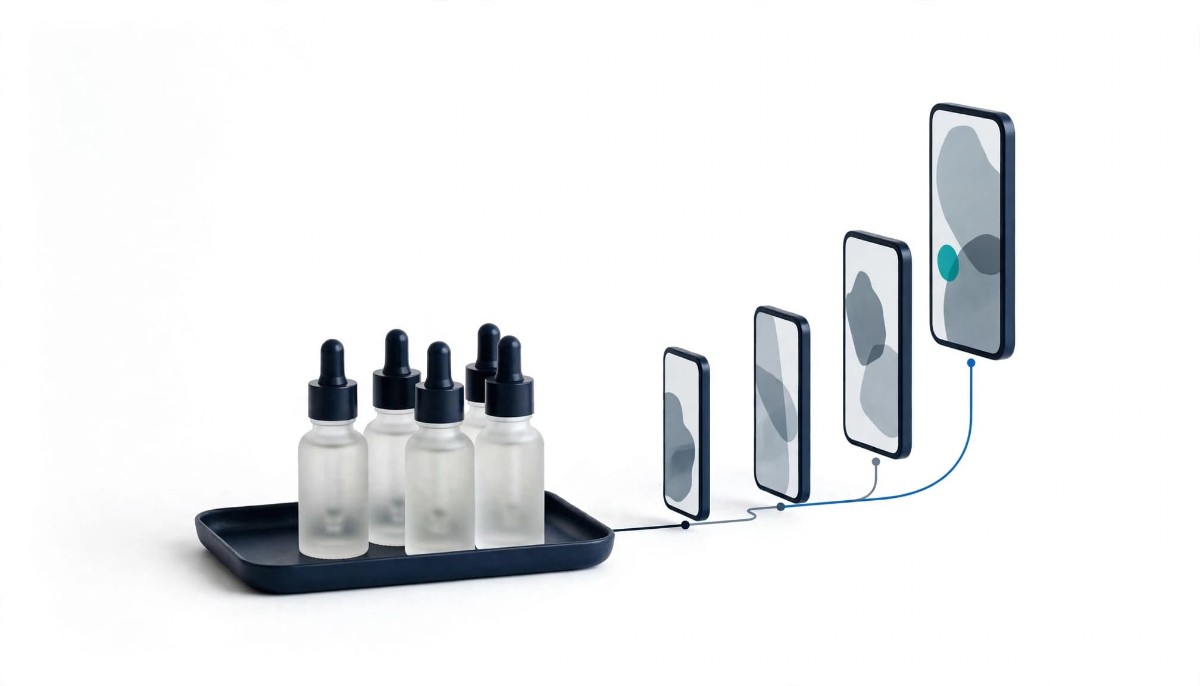
For most beauty brands under $2M a year, influencer collaborations work best as a steady program of small creators who receive product, sign usage rights, and disclose properly, with paid boosting reserved for posts that already earned organic traction. Celebrity and macro deals come later, if at all.
The beauty brands that win with creators rarely find one perfect influencer. They send a lot of product to people who already care about the category, own the content that comes back, and only then spend money on reach.
Picture a skincare founder who sends twenty units of a new serum to twenty people with between 3,000 and 30,000 followers. Twelve post. Three of those posts do well without any help. One keeps getting comments asking where to buy it. Put that one post behind a modest ad budget with the creator’s permission, and it can do more for the business than a four or five figure fee paid to a single account with half a million followers. The numbers are illustrative; the pattern is the point.
That pattern is the whole argument of this guide. Beauty was one of the first categories where influencer marketing took hold, and it is still a category where buyers most want to see a product on a real face, real skin, or real hair before they spend money. That makes creators valuable. It also makes the category crowded, expensive at the top, and full of agencies selling access to names.
If you are pre launch or doing your first $10K months, read this as a plan for what to build first. If you are past $500K and already spending on creators, read it as an audit of what to keep. The approach changes with stage, and the last sections show how.
A beauty influencer program buys three things: distribution to someone else’s audience, content you can reuse, and visible proof that real people use the product. Most small brands pay for the first and get the other two by accident. The order should be reversed, because content and proof keep working long after a post’s reach has faded.
Distribution is the part everyone pictures. A creator posts, their followers see it, some of them buy. It is real, but it is also the part that decays fastest. A post’s reach is mostly spent within days, and the price of reach rises steeply with follower count. When a brand pays a flat fee for distribution alone, it is renting attention for a weekend.
Content is the part that compounds. A thirty second video of someone applying a tinted moisturizer in bad bathroom light, saying what they think of the finish, is often a better ad, a better product page asset, and a better email visual than anything from a studio shoot. It only compounds if the brand has the right to use it, which is a contract question, not a creative one. I come back to that below.
Proof is the quietest of the three. A beauty buyer comparing two serums wants to know whether people with skin like theirs have used it and what happened. A steady flow of creator posts, tagged product photos, and reviews from people who received product answers that question across search, social, and increasingly in AI assistants that summarize what people are saying about a brand.
The practical consequence is simple. When you plan the program, write down which of the three you are buying from each collaboration. If the honest answer is distribution only, the deal should be small, short, and measured hard. If the answer is content and proof, you can work with more creators at a lower cost each, and judge the program over months rather than per post. The separation between those two jobs is covered in more depth in this guide to funding UGC creators and influencers as separate budget lines.
Small creators usually beat big names for beauty brands under $2M because their recommendations read as genuine, their audiences are tighter, and a brand can afford enough of them to find the few posts that take off. A single large deal is one bet. Fifty small collaborations are fifty bets, and short form feeds increasingly surface a post on its engagement rather than on its creator’s follower count.
William Gasner, co-founder and CMO of Stack Influence, made this case on episode 462 of the eCommerce Fastlane podcast. His point was that product as the only upfront payment filters for people who actually like the category: “But when an upfront incentive is actually simply a product, no one’s going to do something that they don’t actually care about.” For beauty, that filter matters more than usual. A creator who already writes about sensitive skin or curly hair routines carries far more weight with their followers on a new cleanser than a lifestyle account that posts about everything.
The mechanism is called product seeding: sending product to creators in exchange for an honest post, with no fee or a small one. William’s company runs a version where creators buy the product from the brand’s store and are reimbursed only after a qualifying post goes live, with the platform charging a flat fee per successful post. He described that fee as ranging from $20 to $40. Treat those numbers as a vendor describing its own model, because that is what they are. The structure is still worth copying even if you run seeding yourself: you want to pay for posts that happen, not for boxes that disappear.
Here is the arithmetic to run before you start. Illustrative example, assuming a product with a $12 landed cost, $8 to ship, and half of the creators who receive it actually posting: twenty units cost about $400 and produce around ten posts, or roughly $40 per post. If two of those ten are good enough to reuse as ads, the real cost is about $200 per usable asset. Compare that with the fee for one sponsored post from a large account, and with what a studio would charge for two pieces of usable vertical video. Your numbers will differ. The habit of calculating cost per usable asset, not cost per post, is the part that matters.
One cost the arithmetic leaves out is time. Finding creators, shipping, chasing posts, collecting rights, and reviewing claims is close to a part time job at forty creators a month, which is why founders often run the first rounds themselves and growing brands move to a seeding platform or a dedicated coordinator. Big names still have a place. A launch with a firm date, a retail entry that needs a recognizable face, or a brand already spending heavily on paid social can justify a larger deal. For most brands below $2M, those are exceptions to plan for later, not the starting point.
The best use of paid media in a beauty creator program is to boost posts that have already performed organically, with the creator’s permission, rather than paying up front for reach you cannot predict. Organic performance is a free test. Ad money placed behind a proven post buys more reach for content the audience has already approved.
Breanna Greenberg, then vice president of marketing at the science led skincare brand Stratia, described doing exactly this on episode 354 of the podcast. Going into 2023, her team had a few TikTok videos go viral, some creators had posted about the brand on their own, and the account still had fewer than 4,000 followers. Rather than drop the platform, she took over the ads and ran engagement campaigns: “I was basically boosting the posts that were doing well organically to a wider audience that had not heard of us.” She reported that the account went from just under 4,000 to over 60,000 followers in a couple of months, that Shopify showed a lift in new customer sales, and that TikTok became the top answer in their post purchase surveys for how people heard about the brand. She also noted that the content they boosted showed what makes the brand distinct, the science of skin, products being made in the lab, the team, rather than polished product shots, and that it attracted a better audience. That is one brand’s result, reported by the person who ran it, but the sequence is the lesson: let organic posts reveal the winners, then pay to widen them.
The tools for this exist on both major platforms. On TikTok, Spark Ads let a brand run a creator’s original post as an ad with an authorization code from the creator, so the engagement and the creator’s handle stay attached. Meta offers a comparable arrangement on Instagram and Facebook for running ads through a creator’s account. Both require the creator to grant access, which is why the agreement has to cover it before the product ships.
That brings back usage rights. William’s advice on the episode was direct: “you should absolutely ahead of time try to negotiate those rights with influencers because that content itself may provide an amazing ROI just by repurposing it.” In practice, a one paragraph clause in the creator brief covers most of it: permission to repost on brand channels, to use the content in paid ads for a stated period, and to authorize the post for Spark Ads or Meta’s equivalent creator ad format. Some creators will ask for a fee for paid usage. That is reasonable, and it is still usually cheaper than producing the content yourself.
Breanna also described Stratia bringing its influencer, affiliate, and social agency work in house, partly for consistency: “No matter how consistent you try to be with brand visuals, it’s not going to look as cohesive as if it’s all coming from the brand itself.” For a small brand that is not an argument against ever hiring help. It is an argument for keeping the creator relationships and the boost decisions close to the people who know the product.
Beauty creator programs carry three sets of rules a brand should manage, not leave to the creator: clear disclosure of any material connection, product claims that stay within what a cosmetic is allowed to say, and reviews that are not bought or steered. Getting any of them wrong turns a growth channel into a liability.
Disclosure comes first. The FTC’s guide Disclosures 101 for Social Media Influencers treats free product as a material connection, the same as payment. A gifted serum still needs a clear disclosure in the post itself, in words a viewer will see, not buried in a pile of hashtags or only in a profile bio. The brand should put that requirement in the brief and check posts against it; the FTC’s answers to common Endorsement Guides questions expect advertisers to have a reasonable program for training and monitoring the people who promote them.
Claims are the beauty specific trap. Under U.S. rules, what a product claims to do can change what it legally is. The FDA’s explainer on whether a product is a cosmetic, a drug, or both explains that claims to treat or prevent disease, or to affect the structure or function of the body, can make a product a drug. A creator saying your moisturizer “cured my eczema” is making a claim your brand could not make on its own label. The brief should list what creators may say about results and what they should not, and the brand should ask for edits when a post crosses the line.
Reviews are the third. The FTC’s final rule banning fake reviews and testimonials, announced in August 2024, prohibits offering compensation or incentives conditioned on a review expressing a particular sentiment. Asking seeded creators for an honest review is fine. Asking for five stars, or only sending product to people who promise a positive one, is not.
None of this needs a legal department at a small brand. It needs a one page brief that covers disclosure wording, the claims list, usage rights, and posting expectations, sent with every box. If you are paying creators fees as well, it is also worth checking audiences before you pay; this walkthrough on spotting inflated Instagram audiences before you sponsor a creator covers what to look at.
For a skincare store doing about $40K a month on two paid retainers, I would cut the agency list and one retainer, add a monthly seeding round with usage rights, a post purchase survey, and a small boost budget, and hold off on affiliate platforms. The store is a composite, built from patterns I hear repeatedly in conversations with beauty founders on Shopify, not a single real store, and every figure in it is illustrative.
It sells a small line of clean skincare to mostly first time buyers from paid social. Its creator program looks like many I hear about. It pays two mid sized beauty influencers, each with a few hundred thousand followers, a flat monthly fee to post twice a month with a discount code. It works with an agency that pitches new names from a list of top beauty influencers. It has no usage rights in any agreement, so none of the creator videos can be run as ads. And the only measurement is discount code redemptions, which are low, so the founder suspects the program does not work but cannot say why.
What I would cut first is the agency list approach. A list of the biggest beauty accounts on TikTok, Instagram, and YouTube is useful for understanding the category and close to useless for picking partners at this size. The people on it are expensive, booked, and rarely a fit for a niche product. I would also end one of the two retainers, keeping whichever creator’s posts have produced the most comments asking about the product, not the most views.
What I would add is a monthly seeding round: twenty to forty creators between roughly 3,000 and 50,000 followers who already talk about the skin concern the product addresses, each sent product with the one page brief and a usage rights clause. I would add a post purchase survey question on the order confirmation page, using a tool such as Fairing or KnoCommerce, asking where the buyer first heard about the brand. And I would hold back a small ad budget, used only on the two or three posts each month that perform best organically, run through Spark Ads with the creator’s permission.
What I would not add yet is an affiliate platform with tiered commissions, a creator community app, or a second agency. Those are useful once there are dozens of active creators and a part time person to manage them. At $40K a month they are complexity that arrives before the problem it solves. The call you could disagree with: I would spend less on creators in the first two months than this store does now, and expect more usable content from it.
The program should grow in layers: seeding and organic proof first, paid boosting of proven posts second, and affiliate commissions, ambassadors, and selective larger partnerships only once the brand has the volume and staff to manage them. Each layer depends on the one before it working.
At the earliest stage, the founder is usually the best outreach person the brand has. A personal note explaining why you made the product, sent to a creator who already posts about that concern, gets a better response than an agency template. The goal at this stage is not sales from creators. It is a library of honest content and a first read on which messages land.
In the middle band, seeding becomes a monthly routine and boosting becomes a budget line. This is also where tracking creator sales through a Shopify native tool starts to make sense. Shopify Collabs lets merchants invite creators, send gifts or discount codes, and track affiliate sales and payouts from the Shopify admin, which is enough for most brands at this size. Check its current setup requirements before you plan around it, because Shopify changes how creators join from time to time.
Above $2M, a brand can support recurring ambassadors who post monthly, tiered affiliate commissions, and the occasional larger name for a launch or retail push, with someone whose job is managing the relationships. Even here, the rule from the start of the guide holds. Pay for reach only when you also get rights to the content and a way to measure it.
One honest caveat. Creator marketing is not the right lead channel for every beauty brand. Some founders find their buyers in communities instead; this profile of a skin care CEO who chose Reddit over influencers is a useful counterpoint before you commit a budget.
Measure a beauty creator program with a post purchase survey, affiliate or code tracking, and a count of usable content assets, read together over at least 30 days. Discount codes alone undercount creator influence, because many buyers see a post, search for the brand later, and never use a code.
The survey does the heavy lifting. One question on the order confirmation page, such as where did you first hear about us, with TikTok, Instagram, YouTube, a friend, search, and other as options, gives a rough share of new customers by channel. It is self reported and imperfect, but it captures the buyer who watched three creator videos over two weeks and then typed the brand name into Google. That buyer never shows up in code redemptions, and in beauty, that is a common path to purchase.
Breanna’s team, on the same episode, also read in platform numbers and Shopify data alongside a third party dashboard, and watched the month over month change rather than any single month’s figure. That habit is worth copying at any size.
Codes and affiliate links still matter. They show which specific creators drive direct sales, which tells you who to send the next product to and who might be worth a paid relationship. Just do not judge the whole program on them.
The third number is content. Each month, count how many creator posts you have the rights to reuse and how many of those were good enough to run as an ad, use on a product page, or put in an email. That count is the clearest signal of whether the program is building an asset or just generating posts.
Read all three monthly and adjust one thing at a time: the creators you seed, the brief, or the posts you boost. A program judged after one seeding round is judged too early. A program that has run for three months with no survey movement and no reusable content is telling you something, and the honest response is to change the targeting or cut the spend.
A small beauty brand should start with a product budget rather than a fee budget, sending enough units each month to reach twenty to forty relevant creators. The real cost is landed product cost plus shipping, plus a small ad budget for boosting the best posts. Calculate cost per usable content asset, not cost per post, because only some creators post and only some posts are worth reusing. Most brands under $250K a year do not need paid retainers or an agency at all. Add paid partnerships once seeding has shown which creators and messages actually move buyers, and once your post purchase survey shows creators contributing to new customer acquisition.
Free product is enough for many small creators, especially those who already post about your product category and genuinely want to try it. Product only collaborations tend to attract people who care about the category, which makes their posts more credible. Expect to pay when you want guaranteed posting dates, multiple deliverables, paid ad usage rights for an extended period, or work from creators with larger audiences. Paying a fee is reasonable in those cases. Whatever you pay, put disclosure, claims guidance, and usage rights in writing before the product ships, because gifted product still counts as a material connection that must be disclosed.
A beauty influencer agreement should include disclosure requirements, guidance on product claims, usage rights, and posting expectations. Disclosure means the post clearly states the product was gifted or paid for. Claims guidance lists what creators should not say, such as claims that the product treats a skin condition, which can make a cosmetic look like a drug. Usage rights cover reposting on brand channels, running the content in paid ads for a stated period, and authorizing the post for Spark Ads or Meta’s equivalent creator ad format. Posting expectations cover timing and format. For small brands, a clear one page brief signed or accepted by email usually covers all four.
You know beauty influencer marketing is working when your post purchase survey shows social or creator channels bringing in new customers and you are collecting reusable content each month. Add a where did you first hear about us question to your order confirmation page and watch the share of TikTok, Instagram, or YouTube answers over at least 30 days. Pair it with affiliate links or codes to see which creators drive direct sales. Discount codes alone undercount the impact, because many shoppers see a creator post, search for the brand later, and buy without a code.
Yes, Spark Ads are worth using once a creator post has performed well organically and the creator has agreed to authorize it. Spark Ads run the creator’s original post as an ad, keeping their handle and engagement attached, which usually reads as more authentic than a brand ad. The safest approach is to boost only posts that already earned strong organic engagement, because that performance is a free test of the content. Get the authorization and paid usage terms agreed in the creator brief before shipping product, so you are not negotiating after a post has already taken off.