Free every Thursday · 61,308 Readers
Fastlane Insider Newsletter: What's working for Shopify in the AI era?
Free every Thursday · 61,308 Readers
Fastlane Insider Newsletter: What's working for Shopify in the AI era?
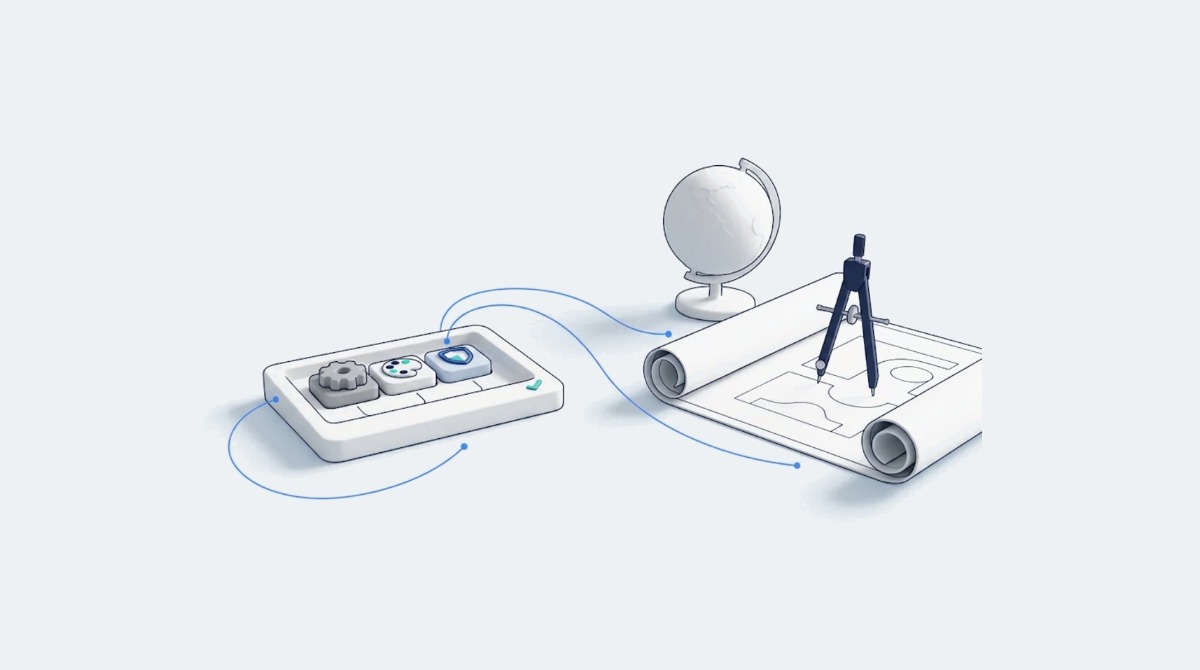
The sketching moved into Shopify. The decisions did not.
Shopify’s case study on Olivia & Kate, a fashion brand from Haarlem in the Netherlands, tells a small story with a large implication. Return rates run high in women’s fashion, and the brand wanted to stop customers with consistently high return rates from using a deferred payment option. Building that rule would have meant a development quote of roughly €1,200. Co-owner Steffen Boskma asked Sidekick whether the flow was possible instead. “It asked, ‘Shall I build it for you?'” he says in the case study. He said yes, and the workflow went live.
That story is a good lens for Shopify Editions Fall ’26, released on October 28, 2026 under the name Exponential with more than 150 updates. A striking number of them do work merchants used to buy from an agency. Sidekick prepares changes and asks you to approve a plan. Canvas redesigns a store in conversation. SimGym tests a page on AI shoppers. Agentic checkout puts your products in Google AI Mode and the Gemini app without a developer in the loop.
So the question founders are asking is fair: do you still need a Shopify agency? The short answer is that the agency job did not disappear. It moved. The work that was easy to productize has been productized, and what remains is harder, more consequential and, for a brand with real integrations, real volume or real international ambition, still worth paying for. Ecommerce Fastlane’s earlier checklist for choosing the right agency covered whether to hire one at all. This piece is about what has changed since.
Shopify now covers routine store changes, first draft design, pre-launch test filtering, baseline fraud screening and the setup for selling inside AI agents, and each tool comes with published limits that decide where a partner still earns a fee. The detail below is what to read before you cancel a retainer.
The rebuilt Sidekick behaves like a junior operator who drafts a plan before touching anything. Ask it to rewrite every product description in a collection in your tone of voice and it shows the plan first; approve once and it executes. It can now run calculations, write code for store tasks, search the web and remember what you teach it, and every change still needs your approval. The limit is judgment: a plan takes seconds to approve, and a bulk edit still deserves a read before it goes live.
Canvas shows your whole store on one surface. Zoom into a page, click a section or ask Sidekick for a change, and the real theme code updates in front of you. Shopify says stores go from no theme to live 20% faster with it. Read Shopify’s Canvas requirements before you commit. A theme edited in Canvas opens only in Canvas afterward, no longer receives theme updates and cannot be downloaded; third party themes are not supported; translations, market specific customization, app blocks and app embeds are not available in Canvas yet. That rules it out as the main editor for most established stores. As a place to try three homepage directions on a duplicated theme, it is excellent. Fastlane’s breakdown of what Canvas makes cheap and what it makes expensive goes deeper on that trade.
SimGym runs one or two theme versions past AI shoppers and reports back with recommendations. It charges per simulation once any included credits run out, so check the current price inside the app. Shopify is explicit that AI shoppers can behave differently from your buyers, so treat a simulation as a filter and a Rollouts experiment, a random split of real visitors, as the proof. Experiments need the Grow plan or higher, and hands-on reviews report no built-in targeting by customer segment or device.
Shopify Protect now blocks near-certain fraud before authorization. The separate Rule Builder app lets you set your own block, 3D Secure and review rules, previews them against your last 90 days of orders first, and costs $0.07 per screened transaction (as of November 2026). Count last quarter’s chargebacks before you add it.
For buyers in the United States, Canada and Australia, eligible products can now be found and bought inside Google AI Mode and the Gemini app with a direct checkout, and the orders land in your admin. The requirements are administrative: a Merchant Center account matched to your store, products that qualify for Shopify Catalog, and complete store policies. Shopify lists exclusions, including product bundles and some checkout customizations. Direct checkout switches on by default once you qualify; if you are not ready, turn it off under Sales channels > Agentic. Make sure those orders are counted in your reporting, a point Fastlane’s guide to what to prepare for agentic commerce covers in detail.
The Knowledge base that feeds agents holds up to 1,000 facts about your brand. Store policies and contact details publish by default, so an outdated return policy is exactly what an agent will repeat. None of this needs a developer. All of it needs someone who owns it.
Four kinds of agency work did not shrink in Fall ’26: data and integrations, checkout code, replatforms and new markets, and brand. Each is where a wrong decision costs months rather than minutes, and none of them is something Sidekick can be held accountable for.
An agent does not see your storefront. It reads data: product attributes, availability, policies, prices, reviews. Behind that data sit your ERP, your warehouse system and, for larger catalogs, a PIM. Olivia & Kate’s workflow is the clean example: Sidekick built the rule quickly, but it only works because returns, payment methods and customer data were already flowing correctly. Someone built those pipes, and someone keeps them clean. Add the attribution gap that agentic checkout opens, and measurement becomes design work again.
Shopify Scripts stopped accepting edits on April 15, 2026 and stopped running on June 30, 2026, and checkout.liquid is gone. The replacements are Shopify Functions for discount, shipping and payment logic and checkout UI extensions for everything the customer sees. On Shopify Plus, extensions on the information, shipping and payment steps and Functions inside custom apps are where the real customization lives. This is code, deployed through an app, and Sidekick does not write it. Fastlane’s guide to which checkout customizations are worth making is a useful filter before you brief anyone.
Moving a catalog, customers and order history from another platform, mapping a 301 for every old URL, keeping rankings intact, and setting up Markets with the right currencies, languages, payment methods and hreflang: none of that got easier in Fall ’26. It remains the most expensive place to be wrong, because the structure you choose for the first market sets the cost of every market after it.
Canvas can produce three homepage directions in an afternoon. It cannot decide what the brand is. That matters more now, not less: when an agent summarizes your store as text, the brand a customer names in the prompt is the one that does not have to compete. Positioning, a design system that survives a redesign, photography and tone are where the better agencies moved, because no edition will ever ship that part of the work.
If you are in the Growing stage, roughly $10K to $100K a month, most of this list is not yours yet; keep the stack simple and revisit it before a second market. If you are Scaling, from $100K to $1M a month, at least one of the four is usually live on your roadmap, and that is where a partner’s fee belongs.
The least exciting items in Editions Fall ’26 are the ones that will cost the most if missed, and every one of these dates is published by Shopify:
The script tag deprecation requires a look at every app and every piece of custom code on your store. Ask your app vendors now whether they will be ready, and ask whoever maintains your theme what still depends on a script tag. A Knowledge Base check takes less time: Fastlane’s self-test for what AI agents say about your policies shows what to fix before January.
For a store under roughly $100K a month with a handful of App Store apps, this audit is often an afternoon of emails to vendors. For a Plus store with custom apps, private integrations and years of theme edits, it is a scoped project, and it is the clearest test of whether your current partner is paying attention.
The right answer depends on where you sell, and the Dutch market shows how much. In the first half of 2026, 73% of Dutch online purchases were paid with iDEAL | Wero, a bank transfer method with no card chargebacks, according to the latest Thuiswinkel Markt Monitor from NielsenIQ. That changes the Protect math entirely. Direct agentic checkout, per Google’s own Merchant Center documentation, covers the United States, Canada and Australia, so a Dutch brand’s first agentic sales come from abroad.
Amsterdam-based Webfluencer, which describes itself as an Official Shopify Plus Partner that has launched more than 200 Shopify stores and runs a second studio in New York, works on both sides of that divide. Founder Jaron Romijn puts it this way: “Sidekick took over the ticket work, and that is a good thing. What remains is the work where a wrong decision costs you a year: the data model, the checkout, the markets and the brand. Nobody should pay an agency for a Flow rule anymore. They should pay for the decisions Sidekick cannot be held accountable for.”
For a US brand expanding into Europe, the platform work is the same everywhere. The payment behavior, VAT inclusive pricing and delivery expectations are not, and no edition ships local knowledge. The reverse holds for a European brand selling into North America, where card chargebacks, sales tax and agentic checkout all arrive at once.
An agency that has kept up with Fall ’26 can answer all six of these questions with specifics from live stores, not slides. Ask them in the first call.
If you are still deciding between a freelancer, an agency and an in-house hire for the technical side, Fastlane’s guide on when to hire a Shopify developer sets out where each one fits.
If your store is a well chosen theme, a handful of public apps and a single market, the honest answer in 2026 is probably not, at least not on retainer. Sidekick handles the rules, Canvas handles the sketching, Protect handles the baseline, and your own time handles the facts an agent will read.
If your store has integrations, a Plus checkout, a replatform ahead, a second market or a brand that needs to be named rather than found, the answer is still yes, but for different work than two years ago. The agencies worth hiring in 2027 are the ones that will tell you, unprompted, which half of your list they are not needed for.
Sidekick can replace a developer for workflows, bulk edits, reports and draft orders, but not for checkout code or integrations. Olivia & Kate avoided a development quote of roughly €1,200 by letting Sidekick build a returns rule, which is the kind of job it now handles well. It does not build Shopify Functions, checkout UI extensions or ERP and warehouse integrations, and it is not accountable for the result. Every change it makes still needs your approval, so someone on your team has to read the plan before it runs. Treat it as a fast junior operator, and keep a developer or agency for anything that touches checkout logic, data pipelines or code that has to survive the next platform change.
Canvas is not ready to replace the theme editor for most established stores. A theme edited in Canvas opens only in Canvas afterward, stops receiving theme updates and cannot be downloaded. Third party themes are not supported, and translations, market specific customization, app blocks and app embeds are not available inside Canvas yet. Those limits matter most for stores selling in more than one market or relying on apps that add blocks to the storefront. Canvas is still worth using: duplicate your theme, try a few homepage directions in an afternoon, and use the result as a brief for the theme you keep editing the normal way.
You need Shopify Plus for some Scripts replacements but not all of them. Public apps built on Shopify Functions bring discount, shipping and payment logic to stores outside Plus, so many former Scripts use cases can be covered by an App Store app. Functions inside a custom app, and checkout UI extensions on the information, shipping and payment steps, require Shopify Plus. Scripts stopped running on June 30, 2026, so any store that relied on them should already have a replacement live. If yours does not, list the logic each old Script handled and check whether an existing app covers it before commissioning custom work.
The Shopify deadlines to plan for before April 2027 are January 1, January 15, March 1 and April 1. On January 1, 2027, public apps that have not moved to expiring offline tokens are delisted and cannot be installed, and their old tokens stop working on April 1. On January 15, the standalone Knowledge Base app is no longer available, and stores with more than 1,000 facts need to re-add the ones they want to keep. On March 1, Shopify stops loading script tags on storefronts entirely. Custom apps are exempt from the token change. Ask each app vendor for their migration date now and audit any custom code for script tag use.
Most eligible Shopify stores need to do very little to sell through Google AI Mode and Gemini, because direct checkout switches on by default once a store qualifies. Eligibility depends on a Merchant Center account matched to your store, products that qualify for Shopify Catalog, and complete store policies. Direct checkout currently covers buyers in the United States, Canada and Australia, and Shopify lists exclusions such as product bundles. If you are not ready, turn it off under Sales channels > Agentic and shoppers are sent to your own store instead. Before leaving it on, check that your return policy is current and that these orders show up in your reporting.