Free every Thursday · 61,308 Readers
Fastlane Insider Newsletter: What's working for Shopify in the AI era?
Free every Thursday · 61,308 Readers
Fastlane Insider Newsletter: What's working for Shopify in the AI era?
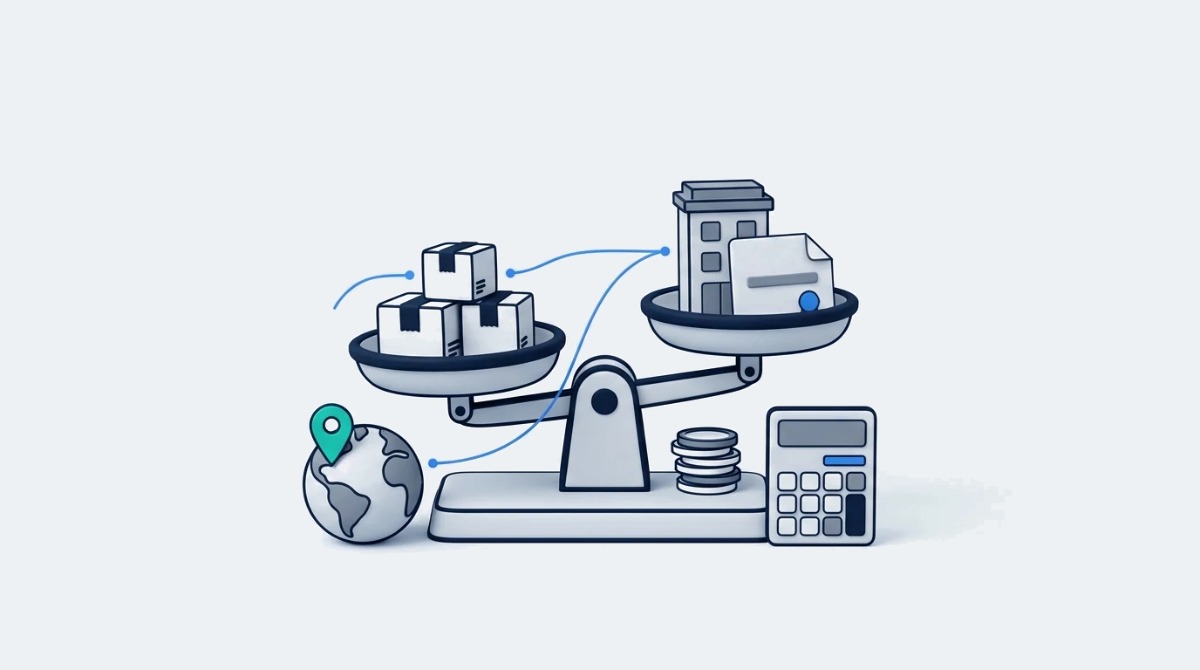
A Dubai licence is an operating decision, not a tax shortcut. If your Gulf orders cannot pay for the entity, the entity is just overhead with a nice address.
Running an online store across international markets involves more than selling products. Payment processing, shipping costs, supplier agreements and local regulation all shape profitability, and as a business grows into new regions, some founders start asking whether a company in another country would support the plan. Dubai comes up often, because its trade links, logistics infrastructure and range of company structures make it relevant to e-commerce businesses expanding into the Middle East.
The first thing to get straight is what kind of company you are actually looking at. Founders researching Offshore Companies in Dubai should know that offshore incorporation is a different thing from a mainland or free zone trading licence: an offshore company is mainly an ownership or holding vehicle, not a way to sell to UAE customers. That distinction decides most of what follows.
Incorporating also does not automatically bring lower taxes, cheaper delivery or better banking. Those outcomes depend on the structure you choose, where your customers are, and whether the regional volume is there to carry the fixed costs. The sections below take each piece in turn and end with a simple break even test you can run on your own store data.
Dubai appeals to e-commerce businesses because it sits between Asia, Europe and Africa, with the ports, airports and logistics providers to move physical products across all three. For a brand that sources from one region and sells into another, that position can shorten supply chains and bring inventory closer to Gulf customers.
Picture a Shopify merchant buying products from manufacturers in Asia and selling to customers across the Gulf. Today every Gulf order might ship from a warehouse in another continent, with long transit times and delivery charges that show up late in checkout. Holding stock in Dubai could change both, and that is the kind of concrete operational reason that makes a UAE entity worth investigating.
Dubai also has a deep bench of fulfilment companies, payment service providers and business administration specialists. For a growing retailer managing several markets, having those services in one place can simplify regional operations once the volume justifies them.
The appeal is conditional, though. An online retailer whose customers are almost entirely in North America gains little from a UAE company without a specific commercial reason, and the entity becomes one more set of renewals, filings and bank relationships to manage. Before thinking about a company at all, many brands first serve the Gulf from their existing store and watch what demand actually looks like. Fastlane’s comparison of Shopify Markets versus separate expansion stores covers how to sell into a new region from one store before committing to local infrastructure.
If your Gulf orders are a rounding error today, the honest answer is that Dubai can wait. If they are a steady and growing share of revenue, the rest of this article helps you decide whether a local entity improves the numbers or only adds cost.
A mainland company fits a store selling directly to UAE customers, a free zone company fits eligible online retail and international trading, and an offshore company generally does not fit UAE retail at all. Each option has different licensing requirements, operating permissions and administrative obligations, so the choice follows from where you sell and where you hold stock.
Mainland companies suit retailers that plan to trade directly inside the UAE. The UAE government’s official e-commerce licensing guidance explains that selling online on the mainland needs a commercial licence that includes an e-commerce activity, issued by the emirate’s economic department, while free zone companies are licensed by their free zone authority to operate within the zone and internationally.
Free zone businesses can work well for international operations, but reaching mainland customers has traditionally needed extra arrangements. That picture is shifting: in October 2025, Dubai’s Department of Economy and Tourism launched a Free Zone Mainland Operating Permit intended to let eligible free zone companies operate on the mainland. Check the current conditions for your activity before assuming either way.
Offshore structures generally support international ownership or holding activity rather than ordinary UAE retail. Whichever option you look at, confirm three things first: where products will be sold, where inventory will be stored, and which activities the proposed licence legally permits.
A UAE company can apply for Shopify Payments, because Shopify lists the United Arab Emirates among its supported countries, but registering a company does not guarantee approval. As of November 2026, the UAE appears on Shopify’s list of countries where Shopify Payments is supported, and the business still has to pass identity verification, banking and operational checks.
That matters because reliable payment processing is the part of the stack customers notice first. They expect familiar payment options, a straightforward checkout and dependable refunds. If the entity you set up cannot get approved for the processor you planned around, the rest of the regional plan stalls while you look for an alternative.
Depending on the structure, merchants may need to provide registration documents, information about how the business operates, and an eligible UAE bank account. Opening that bank account can itself take time, so build it into the timeline rather than treating it as a formality after the licence is issued.
Before incorporating, confirm with the payment provider that your proposed structure meets its eligibility conditions. Then compare the details that change your margin: transaction fees, payout timing, supported currencies and the cost of refunds and chargebacks, set against what you pay through your existing payment setup. A Dubai entity that adds a second processor, a second payout schedule and a second reconciliation process has to earn that complexity.
If you are still at the Growing stage and the Gulf is a secondary market, it is worth checking whether your current processor and store setup already let you sell there well enough. A local entity for payments alone is rarely the first move; it usually follows once fulfilment or supplier relationships already justify being there.
Dubai fulfilment saves money only when the delivery saving per Gulf order is larger than the extra storage, handling, inbound freight and entity costs it creates. Shipping costs influence buying decisions, especially when customers meet unexpected delivery charges at checkout, so regional stock can help conversion as well as cost. The saving still has to be calculated rather than assumed.
Here is an illustrative example, using made up figures to show the method rather than real quotes. Assume a store ships 500 Gulf orders a month and a Dubai fulfilment arrangement cuts delivery cost by AED 20 per order. That is AED 10,000 a month in gross delivery savings, which is where most back of the envelope cases stop.
Now add what that saving does not cover. Assume regional storage and pick and pack add AED 5 per order beyond what you pay today, and moving stock into the UAE (inbound freight, import duty and clearance) adds AED 3 per order. The net saving falls to AED 12 per order, or AED 6,000 a month. Then assume the entity itself (licence, registered address or flexi desk, accounting, bank fees and one residency visa) costs AED 60,000 a year, or AED 5,000 a month. The monthly benefit is now AED 1,000.
On those assumptions, the break even point is about 417 orders a month (AED 5,000 of fixed cost divided by AED 12 of net saving per order). At 500 orders, the arrangement works, but a slow quarter or a 20% dip in Gulf demand would turn it into a loss. Returns, slow moving stock tied up in a second warehouse and the cost of managing inventory across two locations would push the break even point higher still.
To replace the illustration with real numbers, request quotes from several fulfilment providers using the same shipment volumes, product dimensions and delivery destinations, and compare delivery reliability alongside total cost. It is also worth asking providers what they need from a seller that has no UAE entity yet. Fastlane’s guide to choosing between in-house fulfilment, a 3PL or a switch covers what tends to break first when you add a warehouse.
A UAE company pays 0% corporate tax on taxable income up to AED 375,000 and 9% above that, and a free zone company gets a 0% rate only on qualifying income when it meets specific conditions. Assumptions about automatic exemptions are where expensive mistakes start, so it helps to read the rules from the source.
The UAE government’s corporate tax overview sets out the general regime: 0% on taxable income up to AED 375,000 and 9% on taxable income above it, rates in force since June 2023 and current as of November 2026. A Dubai company is not a zero tax company by default.
Free zone businesses can qualify for 0% on qualifying income, but only as a Qualifying Free Zone Person. The Ministry of Finance’s free zone decisions explain that income from excluded activities, or other income that is not qualifying, can disqualify a free zone person from the regime. PwC’s UAE tax summary adds that the conditions include maintaining adequate substance in the free zone, and that a free zone person that fails them is taxed at the 9% rate for a minimum of five tax years. Sales to mainland consumers need particular care here, so get advice on how your revenue would be classified.
The UAE also charges VAT at a standard 5%. Under the Federal Tax Authority’s VAT registration rules, a business must register when its taxable supplies and imports exceed AED 375,000, and the authority notes that this threshold does not apply to foreign businesses, which follow different rules.
If you keep operations, staff or inventory outside the UAE as well, the tax position in those countries matters just as much as the UAE one. Get professional advice on your specific structure before you incorporate, not after the first filing is due.
Registering in Dubai costs more than the advertised incorporation package, because the real total includes recurring licence, office, compliance, banking and residency costs every year. Before choosing a registration provider, list both the one time and the recurring costs so you can compare like with like.
The one time costs start with company registration fees, which vary with the jurisdiction and structure you choose, and the first business licence for your e-commerce or trading activity. Many setups also need a physical office, a flexi desk or a registered address arrangement, depending on what the licence requires, and the cost of that space ranges widely between mainland and free zone options.
Then come the costs that keep running. Banking and payment setup can bring account charges, transaction fees and processing costs. Accounting and tax compliance means bookkeeping, financial reporting and any corporate tax or VAT filings that apply. Owners or employees who need UAE residency add visa and residency permit costs. And every year there are renewal fees for the licence, the registration and the administrative arrangements that keep the company in good standing.
The recurring costs are the ones that decide whether the entity pays for itself, because they arrive whether or not Gulf orders grow. A package that looks inexpensive in year one can carry a meaningful fixed cost in years two and three. Ask each provider for a three year view that separates setup fees from renewals, and confirm what is excluded, such as visas, office upgrades or audit fees.
Treat that recurring total as the fixed cost line in the break even test in the next section. It is also a fair question to ask what else the same money could do. Fastlane’s framework for deciding where your next growth dollar should go is a useful check on whether a new entity beats fixing conversion, retention or margin in the markets you already serve.
Decide on a Dubai company by comparing the extra gross profit or savings it would create against its full fixed cost, using your own order data rather than general claims about the region. If you cannot see a realistic path to that break even point, international expansion is probably premature.
Start with demand. Pull the share of orders coming from the UAE and surrounding markets over the last twelve months, and look at the trend rather than a single good month. Then review the numbers that shape regional profit: average order value, gross profit, delivery cost, customer acquisition cost and return rate for those orders.
Next, name the measurable improvements a local entity would bring. These might be lower delivery costs through regional fulfilment, access to payment services that convert better with local customers, or stronger supplier relationships. Each one needs a number attached, even a cautious one, so it can go into the forecast.
Then build the forecast. Add the recurring entity costs from the previous section as your fixed cost, estimate the extra gross profit or savings per order, and divide one by the other to get the monthly order volume you need to break even. Compare that target with what your store does today. In the illustrative fulfilment example above, the gap between break even and actual volume was only about 80 orders a month, which is a thin cushion for a fixed commitment.
If the target is far above your current Gulf volume, the cheaper path is to keep growing the market from your existing setup and revisit the decision when the orders are there. Fastlane’s guide to scaling into international markets profitably makes the same point for ad spend: validate one market and its landed costs before adding infrastructure. A Dubai entity makes the most sense when it supports a clear commercial objective and delivers benefits that justify its ongoing costs.
No, you do not need a Dubai company simply to sell to UAE customers from an overseas store, but you do need a UAE licence that includes e-commerce activity if you want to trade online from inside the UAE. Many brands ship Gulf orders from their existing setup first and watch demand before registering anything. A local company becomes relevant once you want regional inventory, local payment services or a supplier and fulfilment base in the region. At that point, the licence type matters: a mainland licence suits direct UAE trading, while a free zone licence suits international trading and may need extra approval to reach mainland customers.
No, a free zone company in Dubai is not automatically tax free; it gets a 0% corporate tax rate only on qualifying income and only while it meets the conditions to be a Qualifying Free Zone Person. Those conditions include adequate substance in the free zone and income that comes from qualifying rather than excluded activities. Income that falls outside those rules is taxed at 9%, and failing the conditions can mean the 9% rate applies for a minimum of five tax years. Because e-commerce revenue can be classified in different ways, especially sales to mainland consumers, get professional advice on your specific structure before relying on the 0% rate.
An offshore company in Dubai is generally not the right vehicle for running an online store that sells to UAE customers, because it does not ordinarily permit direct trading inside the UAE. Offshore structures are mainly used for international ownership and holding purposes. If your goal is to sell to customers in the UAE or hold inventory there, a mainland company or a free zone company with the right e-commerce or trading activity is the structure to look at. An offshore company can still sit above an operating company as a holding layer, but that is a separate decision from how the store trades.
A Dubai fulfilment centre pays off when the delivery saving per Gulf order, minus extra storage, handling and inbound freight, multiplied by your monthly Gulf orders, is larger than the fixed cost of the entity and the arrangement. To test it, get like for like quotes from several UAE fulfilment providers, subtract the new per order costs from the delivery saving, and divide your monthly fixed costs by that net saving. The result is the number of orders you need each month to break even. If your current Gulf volume sits close to or below that number, the arrangement is likely premature.
The UAE charges VAT at a standard rate of 5%, and a UAE resident business must register once its taxable supplies and imports exceed AED 375,000. The Federal Tax Authority notes that this mandatory threshold does not apply to foreign businesses, which follow different registration rules, so a seller based outside the UAE should check its own position rather than assume the threshold protects it. Registration brings filing and record keeping obligations, so include VAT compliance in the recurring cost of any UAE setup. Rates and thresholds were confirmed as of November 2026.