Free every Thursday · 59,694 Readers
Fastlane Insider Newsletter: What's working for Shopify in the AI era?
Free every Thursday · 59,694 Readers
Fastlane Insider Newsletter: What's working for Shopify in the AI era?
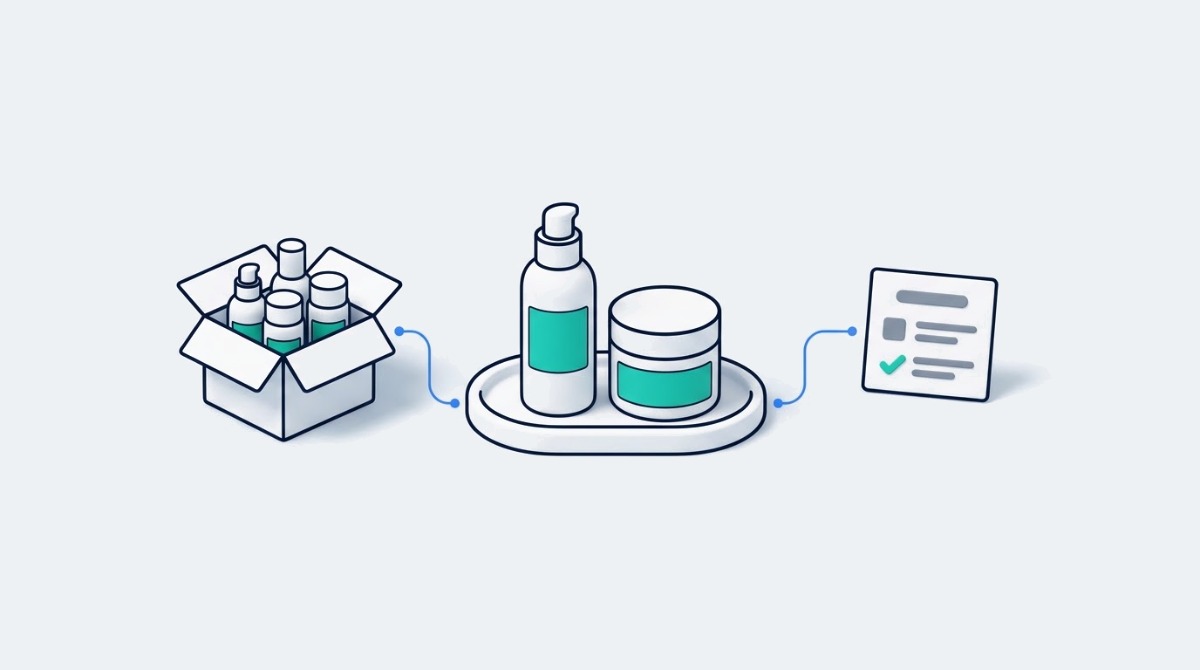
The smallest possible first order is not the goal. The goal is a first order you can sell through, measure and reorder without guessing.
Launching a skincare brand does not have to mean ordering thousands of units before you know what customers want. A low minimum order quantity (MOQ) lets a founder test a focused product range, gather feedback and keep working capital free for marketing and replenishment. But a low MOQ is only one part of the decision. Formulation quality, packaging costs, labeling and reliable replenishment decide whether a launch is commercially viable.
This guide walks through how to define your skincare brand, choose a private label skincare manufacturer, build a small initial product line, meet the basic US label requirements and prepare for online sales. The goal is not simply to place the smallest possible order. It is to launch products you can support, sell and reorder with confidence. If you are still pre-launch, read every section in order. If you already sell other products and are adding skincare, the manufacturer, labeling and reorder sections will matter most.
A skincare brand vision starts with one clear customer and one specific skincare need, written down before you choose a single formula. Are you serving customers who prefer fragrance free basics, a simple daily routine, or products designed for a particular lifestyle? A focused promise helps you select formulas, packaging, price points and marketing messages that work together instead of pulling in different directions.

Photo: cosmetic products on a sink, via Pexels
Review competing products, customer reviews, ingredient preferences and realistic retail prices. Look for what buyers keep praising and where existing brands keep disappointing them: a texture complaint that repeats across reviews, a routine that asks for too many steps, a price gap between drugstore and prestige. Use that research to write a short positioning statement of two or three sentences that names the customer, the need and the reason to choose you. Do this before you select products or pay for packaging, because the statement is what you will check every later decision against. Fastlane’s guide to settling one brand position before paying for a new look covers why the words come before the logo.
Decide early whether you will sell through a Shopify store, marketplaces, salons or physical retailers. Each channel has different margin, fulfillment, photography and packaging requirements. A salon or retail buyer may expect a carton and a barcode on every unit, while a direct to consumer store can start with a well labeled bottle and a clean shipper box.
Set an initial budget that includes inventory, samples, labels, freight, website setup and marketing, not just the manufacturing invoice. Founders who budget only for the first production run often find they cannot afford the photography, ads or reorder that make the first run worth anything. If you are pre-revenue, hold back at least as much for marketing and replenishment as you spend on the first order itself, and treat that split as a starting assumption to adjust once real sales data arrives.
The right low MOQ manufacturer is the one whose minimums for formula, size and packaging all fit your launch budget, not only the one with the smallest headline number. Ask prospective manufacturers for the MOQ per formula, per size and per packaging configuration. A supplier may offer a low product MOQ while requiring a much larger run of custom printed labels or cartons. Clarify whether stock formulas and stock packaging can reduce the first order commitment.
Skincare brands compare suppliers on sample availability, lead times, batch consistency, quality documentation, labeling support and reorder terms. Ask what changes the price at 50, 100 or 500 units per SKU, and whether different products can share packaging components. A suitable private label skincare manufacturer should be able to explain these trade offs before you commit to production.

Photo: beauty products on a table, via Pexels
The questions below are the ones that most often separate a genuinely low commitment from a low number on a quote.
If a supplier’s quote bundles everything into one figure, ask for the breakdown. Fastlane’s explainer on how suppliers set MOQs and how buyers negotiate them covers staggered deliveries and component substitutions you can raise at this stage.
A first skincare launch works best with one to three complementary products that serve the same customer, rather than a broad catalog. For example, a gentle cleanser and a moisturizer can form a clear everyday routine; a serum can be added later if demand supports it. Choose products that can be explained together in one sentence, and that you can describe without making unsupported performance claims.
A narrow hero line reduces the number of labels, product photos, listings and inventory forecasts you have to manage. Every extra SKU adds its own packaging minimum, its own photography, its own product page and its own reorder decision. Two products at 100 units each give you a far cleaner read on demand than eight products at 25 units each, because each product has enough units in the market for its sales, returns and reviews to mean something.
Track sell through, returns, reviews and reorder timing before adding more SKUs. Sell through tells you whether the product moves at your price. Returns and reviews tell you whether it delivers on the positioning statement from Step 1. Reorder timing tells you whether customers come back for a second bottle, which is the signal that a skincare product has earned a place in someone’s routine.
Low MOQ is useful for testing, but it has a cost. Frequent small reorders can raise unit costs and shipping expense, because fixed costs such as freight and setup are spread across fewer units each time. The worked example in the reorder section below shows how much that can move your margin. The practical rule is to use small orders to learn what sells, then move a proven hero product to a larger, steadier run as soon as the data supports it.
If you are tempted to launch with a full routine of six or more products, ask which two the customer from Step 1 would buy first. Launch those, and let customer requests decide the third. Fastlane’s breakdown of what DTC brands get wrong about their first manufacturing order covers the SKU count mistake in more depth.
A quality online presence for a new skincare brand makes the product range easy to understand and gives a shopper every fact they need to buy without emailing you. Use accurate ingredient lists, clear directions, consistent photographs, transparent shipping and return policies, and product descriptions that explain the intended cosmetic benefits without promising medical outcomes.
For ecommerce, invest in mobile friendly product pages, fast loading times and an uncomplicated checkout. Plan for shoppers to meet your brand on a phone, often from a social post, so the first screen of each product page should show the product, the price, the size and the one sentence promise. Show the actual packaging and the product texture where possible: a close photo of a cream on a fingertip answers a question that a paragraph of copy cannot.
Put the details shoppers check before buying beside the add to cart button rather than at the bottom of the page: who the product is for, how to use it, the full ingredient list, the size and how long it lasts, and the return policy for opened products. Fastlane’s guide to fixing beauty product page gaps on Shopify walks through where those details belong on the page.
With a hero line of one to three products, the whole site can be small. A home page, a product page for each hero product, a page that explains the routine, and clear policy pages are enough to launch. Resist adding a quiz, a loyalty program and a subscription option before you have sales to learn from; each one is another system to maintain while you are still finding out whether the core products sell.
Collect customer feedback after launch and use it to improve descriptions and future inventory decisions rather than relying on promotional language alone. A short post purchase email asking how the product felt after two weeks of use will surface the words real customers use, and those words usually make better product copy than anything written before launch.
Custom packaging for a low MOQ launch should fit both your brand identity and your launch economics, which usually means stock containers with professionally designed labels first. Custom molds and printed cartons may be better suited to larger volumes, once you know which products will sell enough to justify their minimums.
Check component compatibility, dispensing performance, shipping durability and the space available for required labeling. A pump that clogs with a thick cream, a jar lid that loosens in transit or a bottle too small to fit the ingredient list in legible type are all problems that show up after you have paid for a run. Request packaging samples, fill them with the actual formula, and ship a few to yourself before approving.
Confirm minimums separately for containers, labels and cartons. Packaging is where a low product MOQ most often turns into a large cash commitment, because a carton printer or decorated bottle supplier may require far more units than the formula run. If the carton minimum is several times your product order, you either carry unused cartons for months or skip the carton for launch and ship in a branded mailer instead.
Keep the visual system consistent across your initial products: the same label shape, type and color logic on the cleanser and the moisturizer makes two products look like a brand. But avoid spending so much on presentation that little budget remains for customer acquisition or replenishment. Packaging that wins a design award does not help if there is no money left to tell anyone the product exists.
Make sure product labeling is reviewed for applicable US cosmetic requirements before sale. The next section covers what those requirements include, because they affect label size and layout, and changing a label after printing means paying for the run twice.
A skincare product sold in the US must carry a compliant cosmetic label, and its marketing claims must stay on the cosmetic side of the line between cosmetics and drugs. The FDA’s summary of cosmetics labeling requirements lists the core elements: a product identity and net quantity of contents on the principal display panel, an ingredient declaration in descending order of predominance, the name and place of business of the manufacturer, packer or distributor, and any required warnings. Private label products also need wording such as “Manufactured for” or “Distributed by” when the brand on the label did not make the product.
The Modernization of Cosmetics Regulation Act of 2022 (MoCRA) added more. The FDA’s guidance on registration and listing of cosmetic product facilities and products notes that cosmetic labels must include a domestic address, domestic phone number or electronic contact, such as a website, through which the brand can receive adverse event reports. The same guidance covers the small business exemption: businesses with average US cosmetics sales under $1 million a year over the previous three years, adjusted for inflation, are generally exempt from facility registration and product listing. The FDA’s MoCRA overview notes that the exemption does not apply to certain products, such as those that regularly contact the mucous membrane of the eye or are intended to alter appearance for more than 24 hours, and that serious adverse events must be reported within 15 business days whatever the company’s size.
Claims matter as much as labels. Under the FDA’s explanation of cosmetics and US law, certain claims can make a product a drug even if it is marketed as a cosmetic. A moisturizer that “hydrates and softens skin” is describing a cosmetic benefit; a cream that claims to treat acne or repair skin cells is making a drug claim. Keep product pages, ads and influencer briefs to cosmetic benefits.
None of this is legal advice. Ask your manufacturer what labeling support it provides, and have a regulatory specialist review the final label before you print at volume.
A successful first launch is a controlled test of your product, positioning and supply chain, and it is only a success if you can afford to reorder what sells. Estimate the landed cost per unit, set a retail price that leaves room for marketing and fulfillment, and agree on quality checks and reorder lead times with your manufacturer before the first order ships. Fastlane’s explainer on what landed costs include and how to calculate them covers the cost lines in detail.
Illustrative example, assuming a cleanser with a $6.00 product cost, a $0.50 label per unit, one $300 freight shipment per order covering two SKUs, and a $28 retail price. These figures are hypothetical and exist only to show the arithmetic.
Halving the order size did not change the product price or the label, yet it added $1.50 to every cleanser because the same freight bill was spread over half as many units. Five margin points can be the difference between profitable ads and unprofitable ones. Run the same calculation with your real quotes, and add fulfillment, payment fees and a defect allowance before you set the price.
Leave room in the budget for unexpected costs and product improvements. Start with a clearly defined customer, a small hero product line and a manufacturing partner whose minimums match your cash flow. Verify formula and packaging details, prepare accurate labels and measure demand before expanding. With this approach, low MOQ private label skincare can provide a practical path from an initial product test to a sustainable beauty business.
A good first MOQ is the smallest order that still gives each product enough units in the market to produce meaningful sales, returns and review data, within a budget that leaves money for marketing and a reorder. There is no single right number, because minimums vary by manufacturer, formula and packaging. Ask for prices at several order sizes, such as 50, 100 and 500 units per SKU, and check the minimums for containers, labels and cartons separately, since packaging minimums are often higher than the formula minimum. Then work backward from your cash: the first order, samples, freight, photography and launch marketing all need to fit, with enough left to reorder your best seller quickly if it sells through.
The cost of starting a private label skincare brand is the sum of inventory, samples, packaging and labels, freight, website setup, photography and launch marketing, not just the manufacturing invoice. The total depends heavily on how many products you launch, your order size and whether you use stock or custom packaging. Keeping the launch to one to three hero products in stock containers with designed labels keeps most of those lines small. Get written quotes for each line before you commit, calculate the landed cost per unit, and budget for at least one reorder of your best selling product, because running out after a successful launch wastes the demand you paid to create.
Many small skincare brands do not need to register a facility or list products with the FDA, but the exemption has conditions and some obligations apply to everyone. Under MoCRA, businesses with average US cosmetics sales under $1 million a year over the previous three years, adjusted for inflation, are generally exempt from facility registration and product listing. The exemption does not cover certain products, such as those that regularly contact the mucous membrane of the eye or are meant to alter appearance for more than 24 hours. Every brand still needs a compliant label, including contact information for adverse event reports, and must report serious adverse events within 15 business days. Confirm your status with your manufacturer or a regulatory specialist.
You can make cosmetic claims about how a product cleanses, moisturizes, softens or improves the appearance of skin, but claims that a product treats a condition or changes how the body works can make it a drug under FDA rules. The FDA decides whether a product is a cosmetic or a drug by its intended use, and that intended use is judged partly from your marketing. A claim that a cream treats acne or repairs skin cells points to a drug, which brings much stricter requirements. Keep product pages, ads, emails and influencer briefs to cosmetic benefits, and ask your manufacturer or a regulatory specialist to review any claim you are unsure about before launch.
Most first launches are better served by stock bottles or jars with professionally designed labels, because custom molds and printed cartons usually carry higher minimums and longer lead times. Stock components let you order close to your product MOQ and keep cash available for marketing and reorders. Custom packaging makes more sense once a product has proven demand and you are ordering at volumes that justify the extra minimums. Whichever route you choose, request samples, fill them with your actual formula, test them in shipping, and confirm there is enough label space for the required ingredient list and contact details in legible type.