
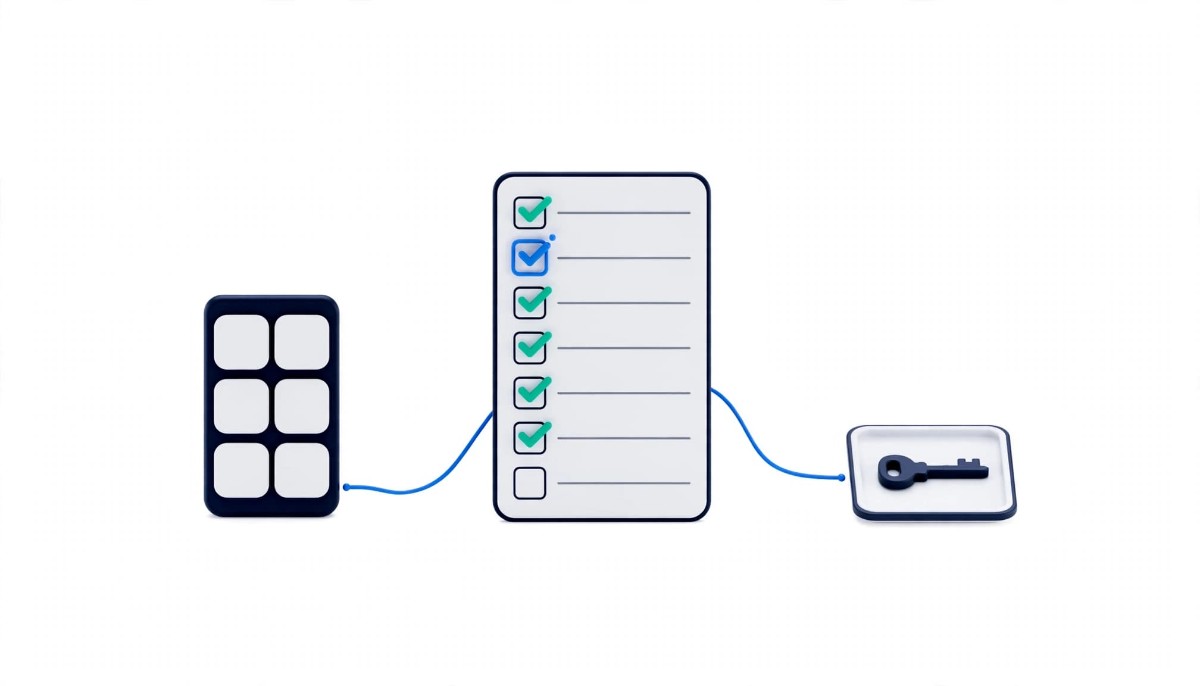
Before hiring a social media agency, ask how they would build your strategy, which results match your goals, who works on your account, what the fee includes, what they need from you, how they measure results, how they handle underperformance, and who owns your accounts afterward.
A sales call shows you an agency at its most polished. The questions that matter are about month four, when the pitch is over and the work has to stand on its own.
Hiring a social media agency can, at times, feel like handing someone the keys to your shop and hoping they know what they’re doing. They become your brand’s voice, spend your budget, and put your products in front of thousands of people every week, so it’s worth knowing exactly who you’re handing those keys to.
For a Shopify brand, the stakes are concrete. The retainer and the ad spend it manages often sit among the highest monthly costs outside inventory and fulfillment, and a poor fit can take a full quarter to reveal itself. By then you may have paid for three months of content that never quite connected to sales.
The good news is that you can learn an awful lot about an agency before signing anything, provided you ask the right questions. A good set of questions uncovers how they think, how experienced your day-to-day team will be, how communication will flow, and whether their case studies translate to your business. We’ve picked eight questions that get into the parts of the relationship that matter once the proposals and sales calls are over. If you’re doing $20K months, questions three, four, and eight protect you most. If you’re past $500K months and spending seriously on paid social, weigh questions six and seven most, because measurement mistakes get expensive at scale.
A good agency answers this by describing how it would learn your business first, including your products, customers, margins, and what you already run, before it recommends a single platform or posting schedule. Asking this question shows you what their actual next steps would be if you go ahead. They may need more information or an audit period before giving a detailed answer, which is perfectly reasonable. In fact, someone promising a complete social media masterplan ten minutes into the first call is probably getting a little ahead of themselves.

You want to hear how they would learn about your products, customers, industry, goals, and current activity before deciding where your time and budget should go. For a Shopify store, good follow-up questions from their side sound like this: which products drive repeat orders, which ones have the margin to support paid promotion, and what your customers say in reviews and support tickets. Those details decide which campaigns are most likely to produce results, so it’s vital that the agency puts real effort into this stage. The best case is hearing why certain platforms or types of content make more sense for your business, and which ones they would deliberately leave alone.
If you haven’t yet decided whether social media is the right place for your next marketing dollar, work that out before the agency calls. A framework for deciding where your next growth dollar should go will make this conversation far more productive.
Pay attention to how specific the conversation becomes. If their answer could be copied and pasted into a proposal for a completely different business, you haven’t learned much. A useful strategy should feel like it has your fingerprints on it.
The most useful case studies come from clients whose goals look like yours, not necessarily from your exact industry, and they explain what caused the result and how big it was. If you run a dental clinic, reading a case study from another clinic tells you a great deal about what is on the other side of the contract. If you sell supplements on Shopify, a case study from another brand that needed first orders to turn into subscriptions will tell you far more than a big-name client that hired the agency for brand awareness.
That doesn’t mean they need experience in your exact niche. If your main goal is generating first purchases from cold audiences, a strong example from another direct-to-consumer brand with a similar price point may be more relevant than one from your own category with a very different budget.
Ask what the client wanted to achieve and what changed while the agency was working on the account. A graph that shoots dramatically upwards looks lovely in a presentation, but you need enough context to know what actually caused it. Paid ad spend may have doubled during the same period, the client may already have had a large audience, a product may have gone viral on its own, or the agency may genuinely have knocked it out of the park. Useful follow-ups include the starting point, the budget during the period, the timeframe, what the agency specifically changed, and whether you can speak to that client directly.
You’re looking for evidence that they understand how their work connects to a business goal. If they can explain that clearly, their past results become much easier to judge.
You should know by name who will handle your account day-to-day, and ideally speak with them before you sign, because the people in the pitch aren’t always the ones doing the work. It’s an important but underrated question. Talking to your account lead early tells you about their experience, approach, and communication style, which is most of what you’re buying.

Some agencies have separate specialists for content, paid campaigns, and design, while smaller teams may have one person wearing several hats. Either setup can work perfectly well. What matters is knowing what you’re paying for and whether the people doing the work have the experience you were sold on. Two follow-ups are worth asking directly: how many other accounts will your main contact manage, and what happens to your account if that person leaves the agency?
It’s also useful to ask how much access you’ll have to the wider team. If every question has to travel through several layers before reaching the person who can answer it, even small changes, like swapping a product image before a sale goes live, can become a game of telephone. For a Shopify brand running time-sensitive promotions, that delay costs real revenue.
A good agency should be happy to show you who’s behind the curtain.
Get a written list of what the monthly fee covers, including content volume, design, video editing, community management, and paid campaign management, along with how anything outside it is priced, because the retainer is rarely the only cost. Software subscriptions, freelance support, and outsourced production can all show up as charges you didn’t expect when you signed, so it’s worth asking about them up front.
How many posts, stories, or videos will they create each month? Does the price include design and video editing? Will they reply to comments and direct messages, or does community management cost extra? Paid social is another one to pin down, because the agency’s management fee and the actual advertising budget are usually separate pots. Ask how the management fee is calculated too. A flat fee and a percentage of ad spend create different incentives, and it helps to know which one you’re agreeing to.
It’s worth getting fairly specific here. You don’t want to discover halfway through the month that a product shoot, an extra round of revisions, or a new Black Friday campaign comes with another invoice attached.
This doesn’t mean the agency needs to bundle everything into one enormous package. Sometimes paying separately for work you only need occasionally makes far more sense. For stores under roughly $100K a month, a narrow scope done well (one or two platforms, a realistic content volume) usually beats a broad package spread thin across every channel. You need a clear picture of what your monthly fee buys, what falls outside it, and how those extras are charged.
Expect the agency to need regular input from you, including post approvals, account access, product news, and sometimes people on camera, so ask for that list and the expected turnaround times before you sign. With most agencies, it’s not enough to pass the ball and stop thinking about it. The most successful partnerships are usually the ones where the business understands how to make the best use of the agency’s skills.
Your social media agency may need several different things from you: approving posts, granting account access and permissions, keeping billing details up to date, and sharing company news. For a Shopify brand, that list should also include your promotional calendar, upcoming product launches, and stock levels, because nothing undermines a campaign faster than driving traffic to a product that just sold out. If they’re creating videos, they may also need people from your business to get in front of a camera from time to time.
None of this is a problem when you know about it beforehand. It becomes frustrating when you thought social media was fully handled and suddenly six posts are waiting for approval while you have a million other things to do.
The fix is simple and worth agreeing on day one: name one person on your side for final approval, and agree on a turnaround time, such as two working days. When several people weigh in on every post, the work slows down regardless of how good the agency is. The same principle shows up in how growing brands handle ad production, where one written brief and one final approver often fix more than an extra hire would.
A good agency ties its reporting to the business goals you agreed on at the start, combining platform data with GA4, your Shopify sales data, and consistent tracking rather than reporting impressions and clicks on their own. Social media gives agencies an enormous pile of numbers to report on, and some of them are far more useful than others.

Ask which metrics they will actually use to judge your account, and whether they are tied to the goals you discussed earlier. For ecommerce or lead generation, that may mean combining platform data with GA4, CRM data, and consistent UTM tracking rather than relying on impressions or clicks alone. Ask to see their UTM naming convention, and make sure it matches what your store already tracks.
A good agency should also be able to explain why figures differ between platforms. Meta, for example, credits purchases to an ad when they happen within a set number of days after someone sees or clicks it, while GA4 applies its own attribution models and lookback windows. The two numbers will rarely match, and an agency that reports only the more flattering one isn’t giving you the full picture.
Ideally, you should agree on the main KPIs before work starts, using metrics like click-through rate (CTR), cost per thousand impressions (CPM), and engagement to diagnose performance rather than treat them as the final business result. It is also worth asking whether they look beyond the platforms themselves. Google Search Console can now show how your Instagram, TikTok, and YouTube posts perform in Google Search, which adds a view of social content most reports leave out.
Ask how the agency diagnoses a drop before it changes anything, because a strong team can tell you which metric points to which problem and how much data it needs before acting. Sooner or later, something will underperform. A post you expected to fly may barely leave the runway, or a paid campaign might spend happily and generate no sales.
Their answer tells you a lot about how agile they are. You want to hear how they work out why performance dropped and what they would change before throwing more budget at the problem. Sometimes the creative needs adjusting. In other cases, the audience or the offer isn’t landing.
More important than how often they check the dashboard is how they diagnose a problem. Rising CPMs may point to audience saturation or auction pressure, such as the weeks around Black Friday when competition for ad space peaks. A weak CTR usually suggests a creative problem. Strong click-through rates followed by poor conversions may mean the offer or the landing page needs attention. For a Shopify store, that often means reviewing the product page, price, or shipping costs revealed at checkout rather than in the ad itself.
A strong agency should be able to explain what triggers a change, what they would test first, and how they avoid reacting to normal day-to-day fluctuations before there is enough data to make a useful decision. If they manage spend across more than one platform, ask how they compare channels. Judging every platform on return on ad spend alone can mislead, because a cheaper ad channel can still need a higher break-even ROAS once your own costs per order are counted.
Your business should own its social profiles, ad accounts, pixels, audiences, and creative files, and grant the agency partner access, so you can leave with your history and assets intact. Don’t just ask who owns the social profile. Find out who controls the underlying business assets too, including ad accounts, billing access, tracking assets, and audience data.
Wherever possible, your business should own its core accounts and add the agency as a partner, rather than having everything built inside an agency-owned setup. On Meta, that means you create a business portfolio in Meta Business Suite under your company and give the agency access. TikTok works the same way, letting you add an agency as a partner in TikTok Business Center without handing over ownership.
Ask exactly what happens during offboarding and whether you will retain campaign history, audiences, reporting access, and the assets needed to keep running the account without the old agency involved.
Content deserves a closer look too. Find out whether you can keep using the posts, graphics, and videos they created for you after the contract ends, whether you receive the original files, and what happens to any customer or campaign information they hold.
None of this makes for the most exciting part of an agency pitch, but a clean handover can save you an enormous headache later. If you ever switch agencies or bring social media in-house, you want to carry your work out the front door, not try to climb back in through a window.
Compare agencies by asking each one the same eight questions in the same order, then noting for each answer whether it was specific to your business, backed by evidence, and something they would put in writing.
How you weight the scores depends on your stage. Under about $50K a month, the fee, the team, and ownership questions carry the most risk, because a mismatch there costs you money you can’t easily spare and assets you’ll need later. Above about $500K a month, measurement and underperformance carry more weight, because every week of misread data compounds across a much larger ad budget. At any stage, an agency that resists the ownership question should drop to the bottom of your list.
A good social media agency should leave you feeling clearer about what happens after you sign, not just excited by the pitch. By the time you’ve worked through these questions, you should have a pretty good picture of how each agency thinks and what they’re actually like to work with.
You’ll know who will be handling your account, where your money goes, and how much of your time the relationship will likely require. Just as importantly, you’ll have seen how comfortable they are talking about the less glamorous parts, from campaigns that flop to what happens if you eventually part ways.
There probably won’t be one perfect answer to every question. Different agencies work differently, and that’s fine. You’re looking for a setup that makes sense for your business, and an agency that can explain its choices without hiding behind marketing jargon.
That makes choosing one a lot easier.
Talk to three social media agencies before hiring one. Two rarely gives you enough contrast to see what a strong answer looks like, and more than four turns the process into a part-time job that delays the decision by weeks. Ask all three the same eight questions in the same order, take notes during each call, and score the answers the same day while they are fresh. If one agency is clearly ahead on specificity, team transparency, and account ownership, you have your answer. If two are close, ask both for a short written proposal based on what they learned from you, and compare how much of your own business shows up in each document.
Your business should own the Meta ad account, and the agency should be added as a partner with the access it needs. Create a business portfolio in Meta Business Suite under your company, keep your own payment method on the ad account, and own the pixel and custom audiences there too. When an agency builds everything inside its own setup, you can lose campaign history, audiences, and reporting access if the relationship ends. A good agency will suggest this arrangement itself. If an agency resists, treat that as a serious warning sign, no matter what else it offers.
A social media agency should report the business metrics you agreed on at the start, usually revenue or orders attributed to social, new customers acquired, and cost per acquisition, along with diagnostic metrics that explain why those numbers moved. Diagnostic metrics include click-through rate, cost per thousand impressions (CPM), engagement rate, and landing page conversion rate. The report should combine platform data with GA4 and Shopify order data, tracked through consistent UTM parameters, and clearly explain why platform numbers and store numbers differ. A useful report ends with the decisions the agency made based on the data, not just the data itself.
A reasonable contract with a social media agency is either month-to-month or a short initial term of around three months with a clear exit clause. Social media results often need a few months of testing to show a trend, so a short commitment can be fair to both sides. Long minimum terms protect the agency more than they protect you, especially before you have seen how they work. Whatever the length, ask what notice period applies, what happens to unfinished work and scheduled content when you leave, and confirm in writing that your accounts, assets, and data stay with your business.
A Shopify store is usually too small for a full social media agency retainer while it is still testing which products sell and which customers buy them. At that stage, posting yourself or hiring a freelancer for specific tasks teaches you more per dollar because you learn firsthand what resonates. An agency starts to make sense once you have a product with steady demand, a budget that covers both the management fee and enough ad spend to test properly, and someone on your side with time to approve content and share news. Hiring before those pieces exist tends to add cost and complexity without adding learning.




