Free every Thursday · 61,308 Readers
Fastlane Insider Newsletter: What's working for Shopify in the AI era?
Free every Thursday · 61,308 Readers
Fastlane Insider Newsletter: What's working for Shopify in the AI era?
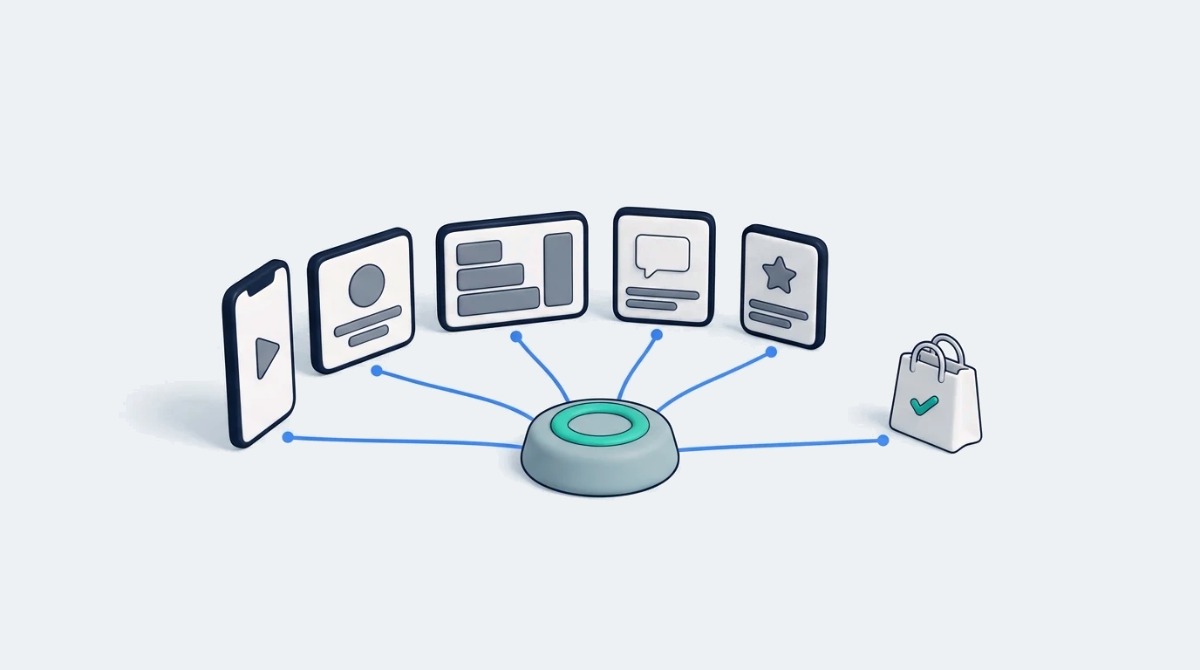
Ten edits of the same ad give Meta one idea to work with. Ten genuinely different ideas give it ten chances to find a buyer.
If you have run Meta ads for more than a few years, you have felt the ground move. Detailed targeting options have been trimmed, Advantage+ automation is now the default path for many campaign types, and tactics that carried accounts in 2021 now quietly drain budget.
At Flighted, a New York Meta ads agency that manages over $6 million a month across DTC and B2B brands, we see the same pattern in nearly every account audit: the brands that scale are not the ones with cleverer targeting. They are the ones that treat creative and the landing page as part of the media strategy.
This guide covers what is working on Meta right now, what to stop doing, and a weekly cadence your team can run starting this week. If you are in the Growing stage, focus on the creative matrix and the tracking checklist first. If you are Scaling, the account structure and measurement sections are where most of your budget is leaking.
Meta now chooses which ads to consider before it ranks them, so the variety in your creative decides how often your ads get into the running at all. Ad delivery used to depend heavily on audiences the advertiser defined. Today, the system first narrows tens of millions of candidate ads down to a few thousand, then ranks those. Meta’s engineering team describes this retrieval stage in its write-up on Meta Andromeda, the retrieval engine behind Advantage+ automation.
Two things from that post matter for advertisers. First, retrieval is the first gate: if your ads look interchangeable, you give the system little to work with at the exact stage where it decides which ads are even considered. Second, Meta expects creative volume to keep growing. Andromeda was built to handle exponential growth in the number of eligible ads, and Meta reports it delivered a 6% recall improvement in retrieval and an 8% improvement in ads quality on selected segments (Meta’s figures, December 2024).
Meta’s business team makes the advertiser takeaway explicit in The Creative Advantage: Unlocking the Power of Diversification with Meta Andromeda (April 2025), which says “the focus has shifted from niche targeting to creative diversification” and presents diversification as the best lever for reaching the most relevant audiences. eCommerce Fastlane’s earlier explainer on the Meta Andromeda update covers the creative packs side of the same shift.
What this means in practice: your creative strategy now does the job audience stacking used to do. The table below shows how far the playbook has moved.
Creative diversification means varying the message, theme and visual of each ad, not producing more copies of one idea. The most common mistake we see is confusing volume with diversity. Ten edits of the same ad (a new headline, a different color) do not give the system ten different things to match to ten different people; they tend to behave like one ad.
Meta describes creative diversification as making “a wide range of ad creatives with different themes, messages, and visuals to cater to diverse audience segments.” The practical question is how to produce that range without burning out a small team.
Start with a simple grid that separates the dimensions you can vary:
A practical starting framework is 3 angles x 3 formats x 2 hooks = 18 distinct creatives. That is enough to give the algorithm real options without overwhelming your production team. A Growing stage brand with one editor can build that set over two or three weeks; a Scaling brand should be able to refresh a third of it every week.
The strongest angles rarely come from brainstorms. Mine them from product reviews (look for phrases customers repeat), post purchase surveys (“What almost stopped you from buying?”), customer support tickets, and competitor reviews and Reddit threads in your category. This is the approach we use at Flighted: run messaging tests, use survey analysis to understand what customers actually care about, then have editors build creative tied to those value propositions.
Volume with real diversity can scale. Meta’s own article quotes Dribbleup’s head of ecommerce describing a ramp from 3 to 4 new creatives a week to almost 50 on average. Treat that as the far end of the range, not a target: what matters is that each new concept says something the others do not.
Short form, native feeling video continues to outperform polished brand spots for most DTC categories, mainly because it fits the feed and builds trust fast. The first three seconds decide whether anyone sees the rest, so that is where the work goes.
Open on the problem, a bold claim or social proof, never on a logo. Build for sound off viewing with captions and on screen text, because many viewers never turn the sound on. Shoot and edit vertically for Reels and Stories placements. And favor authenticity over polish for cold audiences, where lo-fi often wins; polished creative still earns its place in retargeting and brand building. If production speed is the bottleneck, Fastlane’s guide to creating Meta and TikTok product video ads faster covers turning existing product photos and clips into small, testable batches.
The example lines are illustrations of each hook type. Any claim you put in a real hook, such as a customer count, needs to be true and supportable for your brand.
Fewer campaigns and ad sets work better on Meta because each ad set needs enough conversions to finish learning. Over segmented accounts split budget and data across too many ad sets, so none of them learn well. Meta’s learning phase documentation states an ad set usually exits learning after about 50 results in the week after its last significant edit.
Here is how that plays out for one budget. The worked example below uses a $350 a day ad set, an illustrative case from Theory Road’s learning phase breakdown, which assumes the CPA shown for each optimization event:
The math is simple: $350 a day is $2,450 a week, which buys about 24 purchases at a $100 CPA, well short of 50. If your CPA is high relative to budget, you have three moves: consolidate ad sets so the budget pools, increase budget per ad set, or optimize for a higher funnel event temporarily while you build volume. For a Growing stage brand, consolidation is usually the first and cheapest of the three. Splitting that same $350 across four audience ad sets would leave each one with roughly six purchases a week, and none would ever finish learning.
Advantage+ sales campaigns use automation for targeting, bidding and placement. Meta reports that advertisers see a 9% lower cost per action on average with the streamlined setup (Meta’s figure from its 2025 announcements, which will not apply uniformly to every account).
Our practical guidance is to test Advantage+ sales campaigns alongside, not instead of, your proven manual campaigns. Feed them a diversified creative set; Meta notes that automated tools like these are “fueled by an advertiser’s creative diversification strategy.” And judge them on blended results and new customer acquisition, not platform ROAS alone, since automated campaigns can lean toward existing customers if you do not set guardrails.
Meta’s automation can only optimize toward the signal you send it, so conversion tracking quality sets the ceiling on everything else in this guide. With browser based tracking losing data to privacy changes and ad blockers, server side signals matter more every year.
Your baseline checklist runs in this order:
If you change nothing else this quarter, audit this first. It is the least glamorous item on the list and often the most profitable, because every creative test and every Advantage+ campaign learns from these events. A Growing stage brand on Shopify can usually cover steps one to four with Meta’s native Shopify integration. Step five is a Scaling stage project, worth the effort once you have enough purchase history for margin or lifetime value to change what Meta optimizes toward.
Event Match Quality is worth checking monthly rather than once. Checkout changes, consent banner updates and new apps can quietly drop customer parameters from your events, and the score will tell you before your CPA does.
A landing page that repeats the ad’s promise lowers CPA without changing a single setting in Ads Manager. Most Meta optimization advice stops at the ad, but if the click lands on a generic homepage, you pay for the traffic and lose the sale.
Start with message match. The headline, offer and imagery on the page should mirror the ad that earned the click; if the ad promises “the 5-minute morning routine,” the page should say so above the fold. Build dedicated landing pages for your key angles, because one page per major angle or offer beats sending everyone to a product page. Design mobile first, since the large majority of Meta traffic arrives on phones: check load speed, tap targets and a sticky call to action. And keep A/B testing. Treat the page as a living asset, and if you want to narrow which variant deserves traffic before you pay for it, Fastlane’s guide to testing landing pages and product concepts before ad spend lays out a pre-launch workflow.
This is why we put landing page optimization on equal footing with media buying and creative at Flighted. The arithmetic is direct: CPA is spend divided by conversions, so a 25% lift in conversion rate cuts CPA by the same 20% that a 20% drop in CPM would. The difference is control. You cannot negotiate Meta’s auction prices, but you can rewrite your page this afternoon.
For a Growing stage brand, one dedicated page for your best performing angle is enough to start. At the Scaling stage, matching a page to each of your top three or four angles is usually where the next CPA gain sits.
The fastest wins on most Meta accounts come from stopping habits that fragment data or reset learning, before adding anything new. These are the six we see most often:
Meta’s own peak season guidance, You Don’t Beat The Auction. You Brief It., points the same direction: clear optimization goals, deliberate bidding and attribution settings, and fewer disruptive account changes.
The ROAS row deserves extra attention at the Scaling stage, where platform numbers start to overlap. Fastlane’s case study on how Origin tested a Meta ROAS in the twenties before scaling spend shows what happens when a brand compares each platform’s claimed revenue against what the store actually sold.
A fixed weekly rhythm keeps creative fresh and changes batched, which is what lets delivery stabilize between decisions. Here is the cadence we recommend teams start with:
A lean Growing stage team can compress Monday and Thursday into one review and launch fewer concepts each week; the rhythm matters more than the volume. Scaling teams usually split the work, with a media buyer owning the reviews and an editor owning the launches.
The winning Meta strategy today is less about finding the perfect audience and more about building a system: diverse creative that gives the algorithm options, clean data that lets it learn, a simple structure that lets it stabilize, and landing pages that convert the traffic you paid for.
The order matters when time is short. Fix tracking first, because every other change learns from it. Consolidate the account second, so new creative lands in ad sets that can finish learning. Then build the messaging matrix and the matched landing pages, and run the weekly cadence on top.
A good first step: audit your last 90 days of creative against the messaging matrix above. If most of your ads share the same angle and format, you have found your biggest opportunity, whether you build the system with your own team or with a paid media partner.
Diversified creative, a simplified account structure, accurate conversion tracking through the Conversions API, and landing pages that match the ad’s message are what work best on Meta Ads right now. Meta itself says the focus has shifted from niche targeting to creative diversification, because its Andromeda retrieval system picks a few thousand candidate ads out of tens of millions before ranking them. Ads that look interchangeable give that system little to work with. In practice, the brands seeing the best results launch distinct concepts every week, consolidate ad sets so each one can exit learning, pass hashed customer data through the Conversions API, and send each major angle to a page that repeats its promise.
Targeting still matters on Meta Ads, but much less than it used to. Broad and Advantage+ audiences combined with differentiated creative generally let Meta’s delivery system find buyers more efficiently than narrow manual audiences, because the creative itself now tells the system who an ad is for. Targeting still has a job in specific cases: excluding existing customers from acquisition campaigns, setting geographic limits for where you ship, and meeting compliance rules in regulated categories. What has stopped working is stacking interests and splitting budget across many narrow audiences, which fragments the data each ad set needs to learn.
A good starting point for Meta is 15 to 20 distinct creatives built from a messaging matrix, such as 3 angles x 3 formats x 2 hooks, which gives 18. There is no universal number, and genuine variety in message and format matters far more than count: ten edits of one idea behave like one ad. Size the batch to your production capacity and budget. A lean team can build the 18 over a few weeks and then launch 3 to 5 new concepts weekly. Meta’s Dribbleup example describes a ramp to almost 50 new creatives a week, which is the far end of the range rather than a target for most brands.
Advantage+ sales campaigns are worth testing for most DTC brands, as long as you run them alongside your proven campaigns rather than replacing them. Meta reports an average 9% lower cost per action with the streamlined Advantage+ sales setup, but that is Meta’s own figure and results vary by account. Give the campaign a diversified creative set, since Meta says these automated tools are fueled by creative diversification. Then judge it on blended results and new customer acquisition, not platform ROAS alone, because automated campaigns can lean toward existing customers unless you set guardrails.
An ad set typically exits the Meta Ads learning phase after about 50 optimization events in the week following its last significant edit, according to Meta’s Business Help Center. That makes the real constraint budget relative to CPA. At $350 a day and a $100 CPA, an ad set gets about 24 purchases a week and will likely show “Learning limited.” If your budget cannot generate 50 events, consolidate ad sets so budget pools, raise budget per ad set, or optimize for an earlier funnel event such as initiate checkout while you build volume. Avoid significant edits during learning, since they restart the count.
You should not measure Meta performance using platform ROAS alone. Platform ROAS is useful for comparing ads and campaigns inside Meta, but it can over credit retargeting and view through conversions, so it often claims sales that would have happened anyway. Pair it with blended marketing efficiency ratio (MER), which divides total revenue by total ad spend, and with new customer CAC, which shows what you actually pay to acquire a first time buyer. Review all three together each week. Once your spend is large enough for small misreads to cost real money, add incrementality tests to confirm what Meta is truly driving.