


In 2025, mobile commerce will not only dominate the charts but also set the new baseline for Shopify brands.
With over 70% of Shopify store visits now happening on mobile and $710 billion in projected mobile sales, the numbers tell a blunt story: a mobile-friendly website won’t cut it.
Today’s top-grossing DTC merchants aren’t only adapting — they’re making mobile apps a core part of growth plans.You don’t have to be a billion-dollar brand to see massive returns from investing in a mobile app. Data shows that 87% of Shopify merchants are already using apps to drive performance, and more than 70% of orders on Shopify now come through mobile. The Shopify App Store itself hosts over 11,900 solutions, with a whole segment dedicated to turning stores into high-converting native apps—without code, huge budgets, or delays.
Over my nine years of interviewing successful founders on the Ecommerce Fastlane podcast, a consistent theme has emerged: brands that adopt mobile apps see an edge in repeat purchases, engagement, and retention. It’s not just about sending push notifications—think in-app exclusives, direct customer relationships, and frictionless shopping experiences that outperform mobile web. Case studies from fastest-growing stores reinforce the shift. For example, brands using app-first strategies have reported 3x higher order values and significant jumps in customer lifetime value.
This guide will break down the current reality of m-commerce, show why app adoption is scalable for brands of any size, and offer tactical advice on choosing the right tools and partners for your needs. For a deeper dive into using your app as an additional sales channel, see this practical analysis: How to Leverage your Mobile App as an Additional Sales Channel.
You’ll also get real-world examples, feature comparisons from Shopify’s top mobile app builders, and a playbook for maximizing mobile-driven retention—making sure your brand is ready for what’s next.
Brands betting on mobile growth in 2025 see a clear pattern: users engage more, purchase more, and return more often when interacting through a mobile app instead of a browser. While a mobile-friendly website is now table stakes for any Shopify or DTC business, it simply can’t compete with a truly native experience. This isn’t hype—it’s backed by countless metrics, hard data from app builders, and stories from hundreds of ecommerce leaders I’ve interviewed on the Fastlane podcast. The best brands now treat their app as a primary channel, not a side project. Below, I break down why this shift matters and what the numbers reveal.
Data-driven decision makers care about one thing: outcomes. Mobile apps outperform mobile web in nearly every customer metric that actually moves the revenue needle.
For founders looking to benchmark against the best, resources like the 15+ Mobile App Engagement Benchmarks by Industry 2025 are worth reviewing for targeted goals in your vertical.
Anyone who manages ecommerce knows that every second and every hurdle in the buying process costs real money. Apps win because they offer both a technical and psychological edge over mobile browsers:
For Shopify store owners looking to make the most of these capabilities, learn more about how to increase customer engagement with an omnichannel experience.
In interviews for ecommerce Fastlane, I’ve heard from DTC leaders who’ve seen their mobile app growth outpace all other channels. They stress that the ability to test and deploy new features (from AI to live shopping) in an app environment keeps shoppers returning and builds long-term loyalty that web alone rarely matches.
If you’re serious about scaling for 2025 and want to see real, measurable lift in your core metrics, treating your mobile app as your audience’s main shopping channel is the proven play.
If you want to future-proof your brand, stop outsourcing your audience relationships to third parties. Owning your customer connection is the true ROI of mobile apps. During my interviews on ecommerce Fastlane, I’ve spoken with founders who regret how much they let algorithms and rented media define their reach. When you build direct, persistent connections through your app, you avoid those costs—and keep the margin advantage.
Owning your app means you decide when, where, and how to interact with buyers. No platform changes, no sudden fee hikes, no overnight algorithm shifts. Instead, you’re able to nurture high-retention customer segments and drive loyalty without intermediaries. Here’s why that advantage matters heading into 2025.
Push notifications give you the most reliable channel to get in front of your best customers—instantly. In recent years, brands have seen open rates above 50% with creatively timed, targeted notifications, compared to low double-digit email performance. In fact, a 2025 report found that apps using regular push campaigns saw up to 92% higher retention rates compared to apps that didn’t according to industry research.
You’re not just competing for attention; you’re building a rhythm of engagement. Effective strategies include personalized promotions, back-in-stock alerts, and exclusive drops. The key is context—send messages that actually serve your customer, not just broadcast noise. From my experience coaching Shopify brands, the most successful see push notifications as a retention flywheel. One brand shared on podcast episode 128 that behavior-driven triggers—such as reminders for abandoned carts or wish lists—have driven a 20%+ lift in their app repurchase rate.
For a hands-on guide, see “Web Push Notifications 101: How To Use Notifications To Boost Your Sales” on our site, which breaks down tactical steps any Shopify merchant can implement for stronger recapture and reactivation: using push notifications to boost sales.
Here’s what works:
This isn’t a theory-driven channel. It’s direct, measurable action that consistently brings customers back.
Owning your app means owning your data. You have access to real behavioral insights that you simply can’t get from third-party marketplaces or paid social. App events—logins, search queries, cart activity—feed directly into your analytics. That lets you move fast with experimentation, quickly spot patterns, and adjust campaigns in real time.
Brands maximizing this direct connection are deepening their loyalty programs with in-app perks only. In fact, the growth of app-enabled rewards and exclusive access is one of the primary ways stores are raising lifetime customer value as mobile app adoption matures. According to the latest loyalty program trends for e-commerce in 2025, omnichannel rewards with real-time engagement are outperforming basic point systems.
Key tactics that drive revenue and cement brand loyalty:
Several podcast guests have stressed that integrating loyalty with app analytics closes the feedback loop. You can reward high-value actions instantly, spot gaps in engagement, and steer users to repeat behavior.
For best practices on building digital-first retention strategies, see our guide to setting up digital loyalty programs for success.
Take full control of your customer relationship by making your brand the home screen destination—and own both the conversation and the data that power your growth.
Selecting the right mobile app builder is a make-or-break decision for growth-oriented Shopify brands. The right tool has to go well beyond simple drag-and-drop features—it should drive higher retention rates, unlock advanced data, and scale as your business grows. After hundreds of conversations with founders, I see brands consistently coming back to a handful of top Shopify app builders. Each platform brings something unique, from no-code design to advanced analytics.
Let’s break down how industry leaders stack up and what sets each one apart in 2025.
When your priority is personalization at scale, Plobal Apps wins points for its deep segmentation and analytics features. During one of my consulting calls with a high-volume beauty brand, their tech team singled out Plobal’s built-in CRM features as a shortcut to power highly targeted push campaigns—no separate software required.
If you care about omnichannel marketing, this platform connects touchpoints efficiently without adding friction. For a step-by-step guide on app selection, don’t miss 5 ways to turn your Shopify store into a mobile app.
Tapcart dominates conversations among DTC brands focused on maximizing retention and engagement. What sets Tapcart apart is its deep focus on rich push notifications and dynamic content. In my chat with a DTC health brand CEO (Fastlane podcast, episode 143), Tapcart’s actionable dashboard and out-of-the-box integrations emerged as game changers for marketers who want results—not just a pretty storefront.
According to Shopify’s 2025 app rankings, Tapcart consistently gets top marks for speed and reliability. For founders aiming to use direct customer communication as a retention engine, Tapcart stands out.
Shopney is the go-to for brands needing to launch apps quickly without sacrificing features or multi-lingual support. From my experience coaching both established and newer Shopify merchants, Shopney’s most-loved feature is how it balances customization with a gentle learning curve—even teams without tech skills find quick wins.
A client of mine in the fashion space praised Shopney’s pre-built automation for flash sales and app-only exclusives. Their results: a 28% increase in LTV after launching an app—primarily by converting one-time web shoppers into loyal mobile buyers. Comprehensive reviews and comparisons are available in this StoreLab builder roundup for 2025.
Vajro holds the edge when you want integrated live selling, advanced product discovery, and detailed reporting under one roof. On a recent Fastlane episode, a founder in home décor shared how Vajro’s live video tools made event-driven sales seamless—think flash drops or Q&A sessions for VIPs.
Vajro fits brands eyeing social commerce without third-party apps. For tips on merging mobile-driven sales with smart automation, see our piece on using automation to create seamless Shopify experiences.
Visual engagement is now a primary factor in app retention rates, especially for lifestyle and fashion products. SimiCart stands out for its WYSIWYG builder that makes design changes simple—even for teams that aren’t design pros. StoreLab, another fast-riser, is gaining traction with AI-driven personalization and seamless Shopify integration, making both strong options in 2025’s reviews.
When brands choose an app builder, they need more than just attractive templates—they need partners that support advanced marketing, data-driven personalization, and easy scaling. Shopify’s app ecosystem is maturing, giving brands the chance to differentiate on mobile like never before. Explore our full overview on building secure and scalable Shopify apps if you need a technical checklist for implementation. The choices above represent the platforms I see driving the best results for merchants ready to own their mobile channel in 2025.
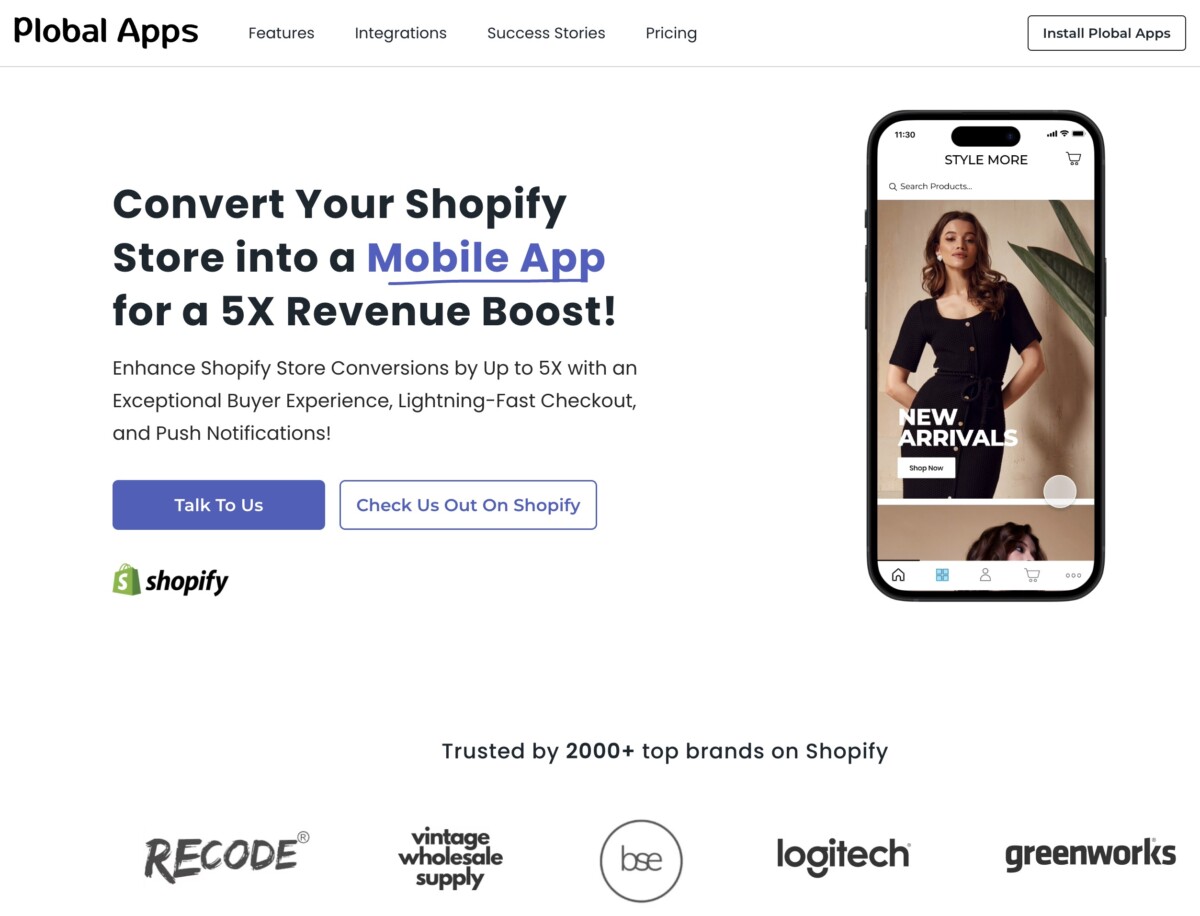
For Shopify merchants entering the mobile app space, cost concerns and platform complexity can be real hurdles. Plobal strips away these worries, making mobile app adoption practical for growth-stage brands and those testing the waters for the first time. In conversations with founders on the Fastlane podcast, I’ve noticed a common theme: teams want straightforward rollouts, not new layers of technical overhead. Plobal meets this need by bringing an accessible, no-code solution that still delivers advanced personalization, robust analytics, and growth tools at a fair price.
Building a mobile app for your Shopify store shouldn’t require a developer or extra headcount. Plobal’s interface is designed for Shopify users who value speed and clarity. Merchants can launch apps without writing code, thanks to pre-built templates and a drag-and-drop editor. From my direct experience coaching DTC merchants, this setup gives marketing departments full control over updates and promotions, taking IT bottlenecks out of the equation.
A number of brands I’ve worked with have gone from concept to live app in days instead of months—an outcome that fits the move-fast-and-test culture that Shopify encourages.
Affordability matters, especially when every dollar is counted against repeat purchase rates and acquisition cost benchmarks. Plobal’s pricing is transparent, often cited as a top reason by merchants for choosing it over more expensive alternatives. Unlike some platforms that lock advanced features behind upper-tier pricing, Plobal provides core conversion tools and integrations—even at entry levels.
Several Fastlane guests noted that investing in app development only pays off if it doesn’t wreck your budget for ads and CRM. Plobal’s approach—giving smaller teams access to powerful features—encourages early testing and faster ROI analysis.
Plobal keeps its promise of simplicity, but doesn’t skimp on features. Merchants get access to deep audience segmentation, push notifications, and integrations with leading loyalty and review platforms. This supports strong retention strategies and enables real personalization without extra tools. For those interested in connecting loyalty programs seamlessly, Plobal now integrates with LoyaltyLion for unified rewards management—a move discussed in our coverage of LoyaltyLion and Plobal Apps partnership.
Key features driving user engagement include:
Based on experience working with beauty and wellness brands, having these options in one dashboard streamlines campaigns and encourages team adoption.
What sets Plobal apart for data-driven brands is its focus on transparent analytics and actionable reporting. Brands can see real numbers on sign-up rates, repeat purchases, and campaign performance. This data clarity helps justify app spending—vital for founders presenting results to leadership or investors.
In one Fastlane interview, a merchant who grew subscriptions by 30% cited Plobal’s segmentation tools as the main driver for personalized campaigns. This hands-on feedback from the field aligns with our broader observation—merchants seeking tools that offer both depth and ease of use, instead of one at the expense of the other.
Plobal’s direct approach puts mobile app creation within reach for small and scaling Shopify merchants. It’s a strong option for teams who need quick results, reasonable costs, and advanced marketing features wrapped in an easy interface—no compromises required.
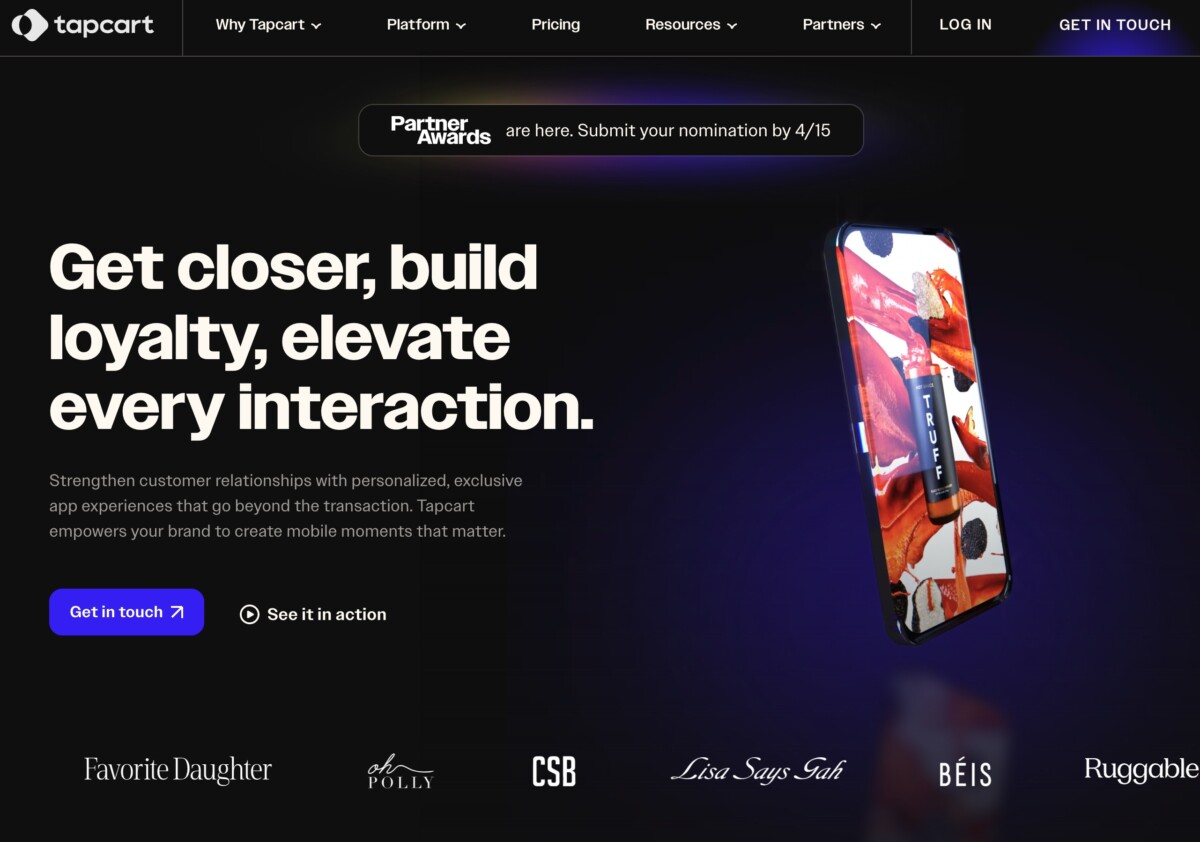
When a brand is ready to move from “me too” to market leader status in mobile, generic out-of-the-box templates only get you so far. Tapcart now positions itself as an enterprise-grade mobile app builder, trusted by major Shopify merchants who want both the speed of a no-code platform and the depth to deliver a unique in-app experience. In hands-on conversations with leading direct-to-consumer founders, what stands out is this: for brands that run on high AOV, strong community, or subscription models, Tapcart’s deeper customization tools aren’t optional—they’re critical for pushing retention, engagement, and sales above industry norms.
Enterprises need full creative direction, not cookie-cutter layouts. Tapcart recently rolled out its App Studio, a toolkit designed specifically for ambitious teams needing pixel-level design choice and the power to build complex, scalable features without outside devs. This shift gives marketers and product leads a blank canvas mindset while removing tech bottlenecks that usually slow enterprise roadmaps.
Key insights from top brands using Tapcart’s enterprise stack:
Many guests on the Fastlane podcast have shared that these features mean teams can launch highly targeted, mobile-only activations in days, not quarters. In episode 268, a seven-figure skincare brand described how Tapcart’s new design freedom let them run timed mystery drops and update mobile UI for each campaign—leading to measurable lifts in app retention and LTV. For more detail on how Tapcart’s customization fits into your tech stack, the breakdown in 16 Apps You Need In Your Shopify Tech Stack is worth reviewing.
Enterprise growth doesn’t happen by luck. Winners in 2025 are building mobile apps that act as “owned channels” for personalized engagement. Tapcart’s latest update streamlines this at scale: push quick adjustments to product widgets or personalize banners to hit high-value segments—all in a graphical interface purpose-built for speed.
Things that used to require dev support now happen instantly:
In previous consulting work, I found that this instant update capability let brands react to real-time trends—canceling irrelevant promos or doubling down on what’s moving—faster than any web update cycle. The result? Mobile app users always see the most relevant content, pushing conversion rates above session averages seen in the browser experience. For proof that these kinds of updates drive bottom-line results, see Tapcart’s feature spotlights on their own App Studio’s Role in Empowering Brands.
Elite marketers refuse to guess. Tapcart’s enterprise app stack now includes built-in A/B testing, granular analytics, and push notification workflows so teams can optimize every element of the mobile experience. From my experience hosting ecommerce Fastlane, I’ve seen DTC and subscription brand teams integrate Tapcart analytics with in-house BI tools for a complete picture of mobile LTV, CAC, and retention. When you have direct app data, you can iterate faster and justify every creative decision.
A few ways brands are driving growth using these data features:
The focus on data isn’t just operational—it shapes creative, too. Brands regularly share how app analytics influence not just marketing, but merchandising and even product development. For a closer look at how mobile data feeds the rest of your dashboards, don’t miss this episode of the Fastlane podcast where Tapcart’s real-world capabilities for enterprise teams are discussed in depth.
Tapcart’s push toward enterprise is more than an internal shift; it’s now spotlighted across industry awards and customer success metrics. At the recent 2025 Tappy Awards, top-performing mobile apps built on Tapcart were recognized for innovations in design, retention, and personalized commerce—validating that these customization features aren’t just nice-to-haves but proven differentiators.
What’s often missed by teams evaluating mobile vendors is the value of ongoing support and shared expertise. Tapcart’s dedicated enterprise account managers offer technical support, growth planning, and access to a broad network of app success data, helping brands avoid guesswork and stay a step ahead in the crowded m-commerce field.
Brands planning for their next leap will benefit from:
If you’re after a platform that will let you push creative boundaries while meeting demanding scale and security requirements, Tapcart’s enterprise-grade customization should be at the top of your shortlist.
For teams who want more tactical advice on scaling a custom mobile app, the expert take here—How to leverage your mobile app as a sales channel—is a strong next step.

If you want results quickly, Shopney stands out as a top mobile app builder for Shopify merchants who don’t have endless time or deep technical resources. Over the past year, I’ve talked with many founders who needed to launch a mobile app in days, not months. Shopney is often the first name they mention—and with good reason. It enables brands to go live fast, meet customers on their phones, and drive up engagement with a native feel.
From my interviews on Ecommerce Fastlane, I’ve seen Shopney’s strengths surface in two areas: rapid deployment and the flexibility to match any brand, whether you sell in one country or across the globe. This section breaks down how Shopney’s unique mix of speed, usability, and market reach helps both new and established brands compete for mobile buyers, regardless of size or scale.
Shopney’s biggest draw is clear: you can launch a professional-grade mobile app fast—often within a week. The platform syncs directly with your Shopify store, auto-importing product information, images, and collections. Merchants don’t need code or a technical background to customize their app.
Key reasons Shopney stands out for speed:
In my coaching sessions, I’ve seen smaller teams—sometimes just a founder and one assistant—roll out app launches in record time using Shopney. This heads-down approach means you reach customers where they shop most, before slower competitors even leave the starting line.
For a look into Shopney’s impact from the source, check out this deep-dive: 7 Mobile Commerce And Loyalty Questions With Shopney.
Quick launch doesn’t come at the cost of flexibility. Shopney supports a wide range of themes, layout options, and brand colors—crucial for DTC brands that don’t want a cookie-cutter look. Its dashboard allows easy editing, so you can test offers, run flash sales, and update banners anytime.
You can scale up your toolkit as you grow:
A founder I interviewed from a fashion brand saw measurable results—28% higher customer lifetime value—after converting web-only shoppers into repeat mobile buyers using Shopney’s early-access offers and app-only rewards.
If app flexibility is a must, you can compare how Shopney stacks up against other solutions on this curated Shopify app builder category listing.
Shopney isn’t just for small shops. Enterprise-level stores use it to roll out multi-country apps with localization built in. Shopney assists with app store approval, handles compliance requirements, and offers reliable support. The ability to localize language and payment options has helped brands expand into new markets without hiring new development talent.
Brands see a fast pathway from launch to global reach, removing roadblocks that often slow scaling. For merchants evaluating expansion opportunities, expert recommendations for growth often mention Shopney as a trusted launchpad.
Explore how Shopney fits bigger loyalty and engagement strategies through insights from their partners.
In real-world feedback from DTC operators and agency partners, Shopney’s value isn’t just about going live quickly—it’s about immediate, trackable gains. You get faster deployment with a measurable bump in engagement, repeat purchases, and app-driven conversions. Its fast onboarding and intuitive dashboard help lean teams win on speed, even when budgets are tight.
If you’re looking for a mobile app builder that combines speed, flexibility, and proven ROI, Shopney’s no-code platform is an option that delivers. For more details and direct access to Shopney’s platform, visit the Shopney Mobile App Builder page.
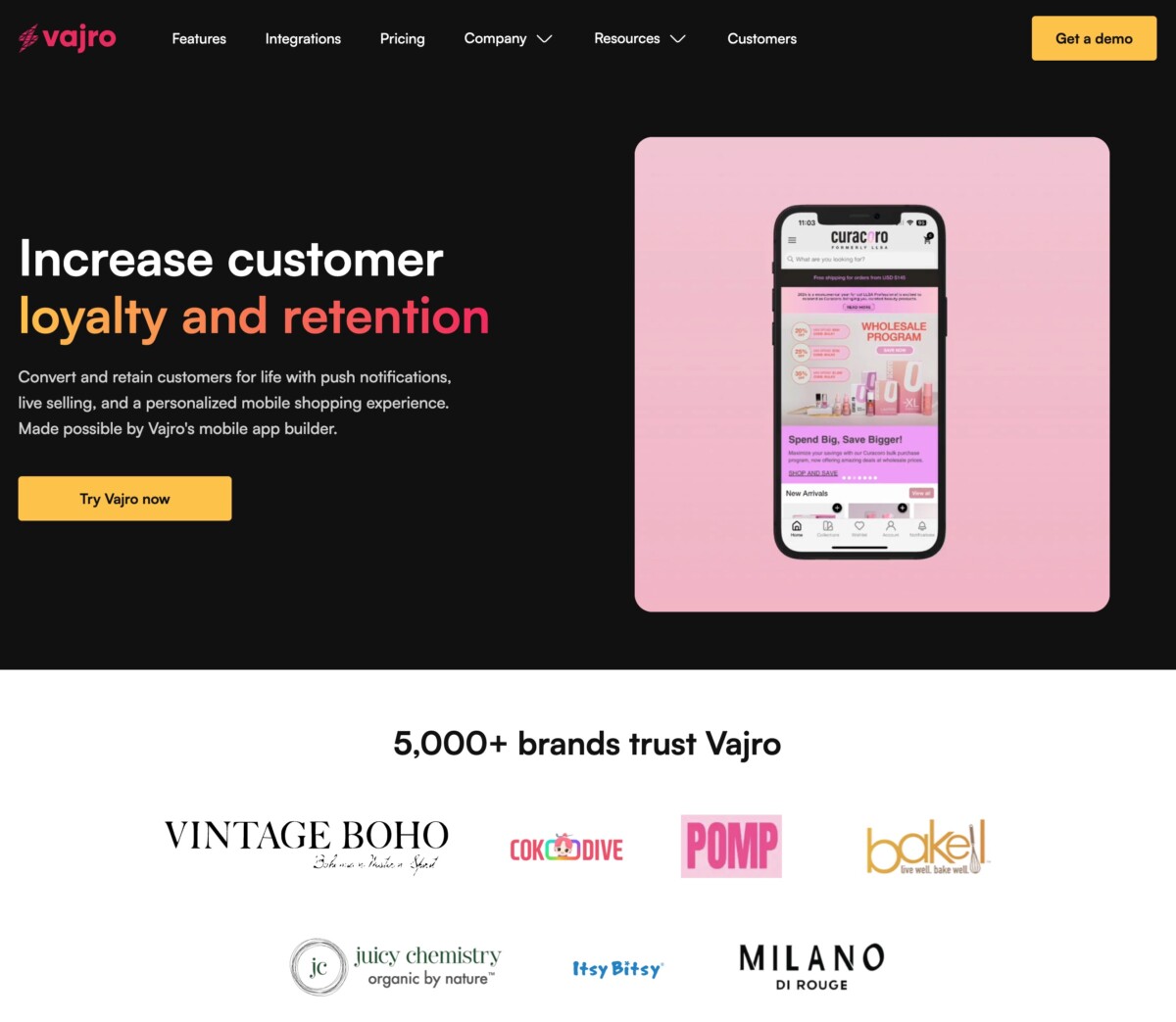
For Shopify brands focused on scaling, Vajro has made a name for itself as a purpose-built solution for driving high retention and deeper customer loyalty through mobile. Unlike generalized app builders, Vajro treats retention as the bedrock of mobile app growth. This approach is visible not only in its feature set, but also in how real brands use Vajro to increase repeat purchases and build community—elements that make a real difference for high-growth DTC stores.
Mobile retention is no longer a buzzword. In my podcast chats with DTC founders, particularly those managing 6- and 7-figure Shopify stores, app retention is cited more than any other metric when tracking ROI. It’s not about flashy installs or vanity download numbers—it’s about creating an environment where customers want to come back, interact, and buy again. Vajro’s architecture supports this goal with a set of specialized tools built for today’s retention-driven strategies.
What separates Vajro is a product philosophy that puts returning customers first. Their architecture isn’t just about features, but about how those features connect to proven retention drivers. For example, Vajro’s mobile app retention framework relies on:
Having spoken with brands on Ecommerce Fastlane who moved to Vajro after outgrowing basic app builders, the feedback is clear: smarter retention tools mean less chasing and more reactivating. Brands have shared stories of doubling DAU/MAU ratios and improving repeat purchases by up to 30% within a quarter—driven by Vajro’s ability to keep the app front-and-center on customers’ devices.
If you want step-by-step advice, Vajro breaks down practical retention tactics with real store data in their guide on how to improve app retention.
Retention is stronger when it’s tied to visible rewards. Vajro’s architecture makes loyalty simple for both marketers and customers, without piling on new platforms or trying to bolt loyalty onto non-native systems. The platform supports:
From my own consulting work, I’ve seen brands combine Vajro with LoyaltyLion to award points for everything from social actions to in-app lifestyle quizzes. This synergy not only improves engagement, but also shortens the gap between one-time buyers and loyalty members.
Vajro makes it easy to run live selling sessions and flash events, bringing a QVC-style playbook into the mobile app experience. For DTC brands, this isn’t just a nice add-on—it’s a major retention lever. Live events trigger notifications, segment customers on actual interest, and keep conversations flowing in real time.
The app’s integration with advanced messaging supports:
These tools mean your mobile channel isn’t static—it adapts to each interaction. In recent episodes, guests shared how going live in-app led to 2-3x spikes in same-day app engagement, without added ad costs. Vajro isn’t just checking boxes for features—it’s stitching together a retention loop that works on autopilot.
To dig deeper into loyalty-driven app retention and the specific workflows winning brands use, check out Vajro’s resource on customer retention strategies.
Vajro gives merchants access to dashboards covering not just installs, but active use, repeat sessions, and conversion attribution per campaign. You can compare segment engagement, measure AOV changes after loyalty launches, and test push notification timing for real results. This means teams can iterate fast, use data to course-correct, and scale what’s working without guesswork.
These detailed analytics put retention at the center of decision-making—no more relying on gut feel or surface-level reports. Instead, retention becomes a visible, quantitative asset driving actual revenue growth. This level of reporting is what lets DTC brands justify scaling paid campaigns, or double down on loyalty features, with confidence.
Vajro’s approach to retention-first app building is about more than delivering features—it’s about building a foundation where meaningful, repeat interactions become the norm. By focusing on retention from day one, brands position themselves for higher LTV, lower churn, and measurable long-term gains.
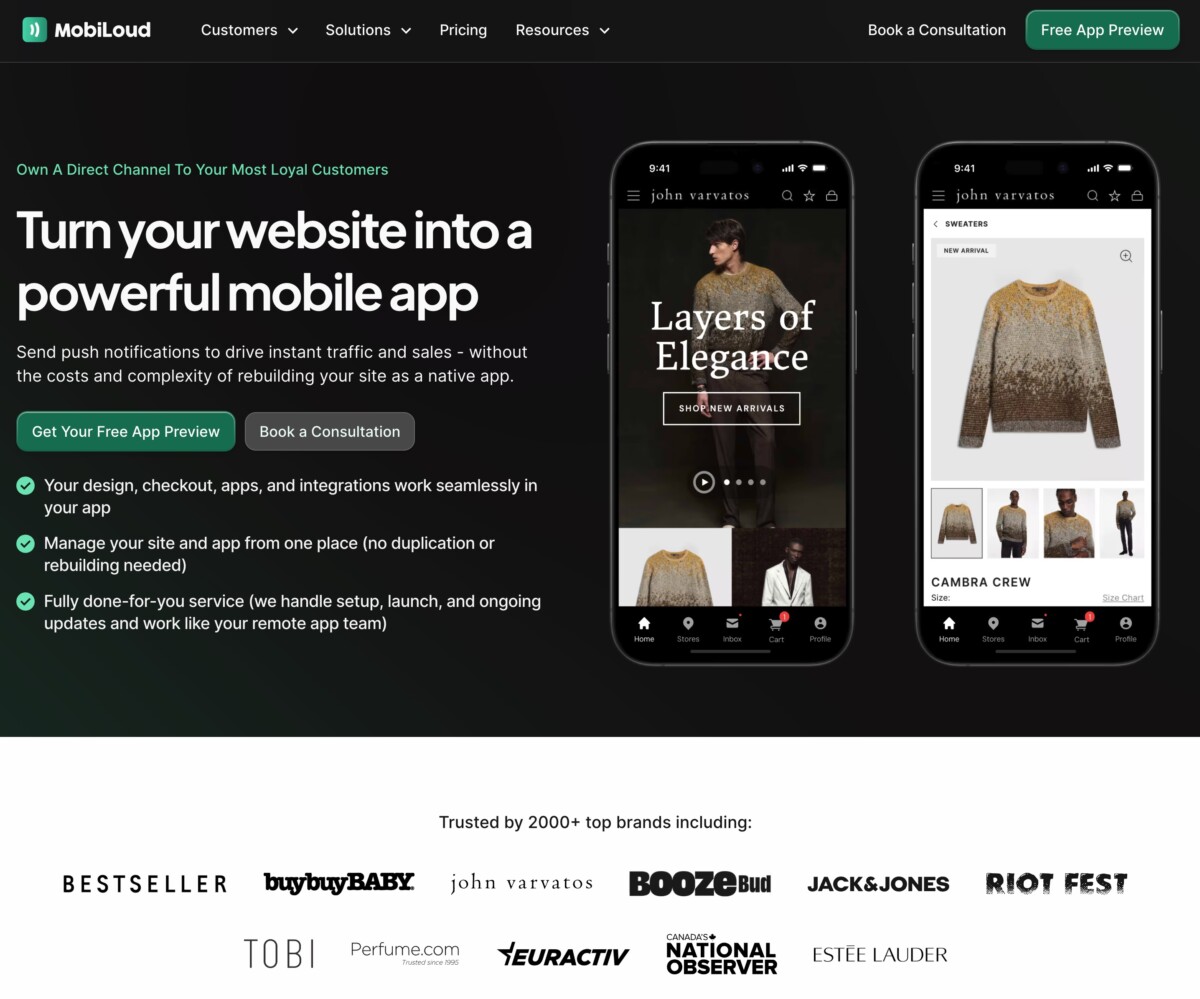
Cutting through the noise of mobile app builders calls for real-world experience—not just feature checklists. After years hosting the ecommerce Fastlane podcast, I’ve seen founders struggle with costly rebuilds, slow launches, and keeping apps in sync with ever-evolving websites. MobiLoud answers these concerns with a no-fuss approach: your site becomes the foundation of your mobile app—design, content, and features sync automatically, while you gain direct access to powerful native tools. For Shopify merchants hungry for results, not headaches, MobiLoud stands out as a reliable and resource-friendly partner. Let’s drill into why this platform works, especially if you want fast, scalable, and high-ROI app deployment in 2025.
One of the biggest pain points I hear from brands is the redundancy of duplicating site content or managing parallel codebases. MobiLoud’s greatest draw is that it sidesteps all this by using your current website as the single source of truth for your app. When you make updates to your store, they’re reflected in the app instantly—no extra dev work, no missed product launches, and no outdated UX.
With over 2,000 apps launched and more than a decade serving ecommerce, publishers, and membership platforms, MobiLoud knows what it takes to streamline the mobile leap without compromising on function. Their process shrinks time-to-launch: most brands see their app hit the App Store and Google Play in just weeks, not months. As outlined here, this means you skip lengthy rebuilds and still land a native, high-converting mobile experience. It’s an immediate win for lean teams—focus on your site, let the tech handle the translation.
Most no-code app builders promise “DIY in minutes” but stop supporting you the moment you run into complexity. MobiLoud flips this. Their team acts as your remote app development department—configuring, optimizing, and even publishing the app for you. You start with an onboarding call, hand over assets, and their experts build, tailor, and submit your app to both major platforms.
This approach shines in two ways:
For those evaluating the real ROI of a “done-for-you” service, listen to episode 131 of ecommerce Fastlane where a retailer shared how leaning on MobiLoud’s team kept their focus on growth, not software troubleshooting.
If you want a comparative look at how MobiLoud fits among other top no-code options, this resource from Ecommerce Fastlane, No-Code E-Commerce App Builders, explains the differences in both approach and outcome.
Many app projects collapse when brands realize the maintenance burden: two codebases, divergent user flows, and constant testing snafus. MobiLoud fixes that with its synced structure. Every product update, site promo, or campaign goes live in your app at the same time as your online storefront. This means:
In practice, this approach gives small teams the ability to compete with enterprise-level mobile execution, without the price tag or time sink. Reflections from Fastlane guests often circle back to operational simplicity as the strongest factor in mobile channel ROI.
While your app reflects your website’s features and content, MobiLoud layers in must-have native elements to supercharge engagement:
This stack isn’t just technical window-dressing. In episode 202, a fashion merchant described how switching to MobiLoud turned their “mobile web” audience into high-frequency app users—resulting in a 10% revenue bump in under a quarter, mainly because push notifications re-activated dormant buyers.
For more on how to make the most of omnichannel features and integrate mobile strategies into your core stack, see How To Increase Customer Engagement By Creating An Omnichannel Experience.
Not every store runs on Shopify or a straightforward template—many high-growth brands come with custom tech, unique payment gateways, or complex integrations. MobiLoud supports nearly any platform, from Magento to headless builds, and their team is skilled at handling advanced features or integrations. You don’t have to rip out custom features or simplify your funnel just to fit a mobile template.
This flexibility is especially relevant for brands targeting international expansion, unique workflows, or personalized account experiences. Brands can apply app-only optimizations, dynamic design tweaks, or even deliver entirely different experiences in-app with the aid of JavaScript and CSS.
If you’re looking for benchmarks and expert tips on the most robust mobile app builders in the field, MobiLoud features consistently in roundups such as 7 Best Mobile App Builders to Build Native Apps in 2025.
MobiLoud’s approach—site-centric, service-driven, and deeply practical—gives Shopify and direct-to-consumer brands the blueprint for building a mobile channel that matches web performance and engagement without stretching internal resources. For store owners chasing mobile growth next year, solutions that “just work” while backing your brand’s ambitions will deserve a closer look. For more details or to see the solution in action, check out the MobiLoud team and their real-world case studies at MobiLoud – Convert Your Website to Native Mobile Apps.
Choosing the right mobile app platform is the moment where ambition meets reality. Whether you go with a SaaS app builder or spring for a fully custom build will drive your cost structure, technical agility, and long-term ROI more than any branding decision or new sales channel alone. Over the past nine years, I’ve interviewed dozens of founders on ecommerce Fastlane wrestling with this decision. The right choice is rarely about what’s “best” on paper—it’s about what fits your use case, cash flow, and roadmap for growth.
Smart brands now ask: Where does SaaS speed and affordability beat custom depth? At what revenue milestone does building from scratch start to look less risky than ongoing SaaS fees? These answers depend on factors from product complexity and integration needs to how quickly you need to get to market. Below I share what I’ve learned from hundreds of DTC launches, agency builds, and live founder feedback.
Let’s get clear on stakes first. SaaS platforms like Shopney, Tapcart, Vajro, and Plobal have democratized app creation for Shopify merchants. With them, you get a no-code or low-code setup, fast deployment, fixed monthly fees, and routine updates managed by someone else. Many growth-stage brands see a working V1 in less than a month—sometimes in under a week.
But here’s the real question: does a subscription-based platform help or hurt your bottom line in year two and beyond? In my experience interviewing DTC brands on ecommerce Fastlane, here’s the cost-benefit pattern that stands out:
Industry research from Flograte breaks it down: SaaS delivers higher ROI when time-to-market, rapid iteration, and cost stability lead, while custom becomes favorable when brand-specific needs, flexible integrations, and higher scale demand deeper control.
From my own consulting work, I’ve seen brands double down on custom after outgrowing SaaS, but the upfront technical debt—planning, testing, compliance, maintenance—is real. You’ll also need a team who can own changes, security, and upgrades. For most DTC teams under $20M/year, SaaS almost always wins on simplicity; custom is for those with unique needs, robust workflows, and resources for ongoing builds.
To compare how these cost decisions shape long-term app strategy, dive into our analysis of how to set up pricing plans for your Shopify app.
Once you’ve narrowed down your provider list, digging into the right questions can reveal pitfalls or hidden strengths before you sign. Over years of podcast interviews and agency builds, these are the questions I recommend every Shopify brand put to SaaS vendors or custom teams—before money changes hands.
These questions, inspired by this practical list from Perpet.io, will help you protect your app investment. They also help surface how each platform or vendor thinks about customer success—an early preview of your day-to-day relationship.
For more industry-driven advice from builders and founders, check our deep-dive with nine Shopify app developers on real-world costs and decision points in Building Shopify Apps: 9 App Developers’ Experiences.
Retail tech moves fast. Your choice now can make or break your brand’s ability to experiment and compete over the next two years. Get the questions right, and the ROI will follow.
Creating a winning mobile app in 2025 means going far beyond launch day hype. Your download numbers will only start to mean something once you’ve built real engagement and steady repeat usage. I’ve seen dozens of Shopify and DTC brands hit the App Store with promising apps, only to lose steam when installs fizzle and users fail to stick around. The difference isn’t luck—it’s the strategy behind how you get customers to install the app and, more importantly, return often. This section draws on a decade of hands-on work with Shopify founders and my podcast interviews on Ecommerce Fastlane. I’ll share hard-won lessons and the adoption tactics that actually move the needle in today’s mobile-first world.
A successful app launch is never a single “big bang” moment. It’s a coordinated sprint—a blend of marketing, incentives, and timed communication. The best-performing ecommerce apps use a mix of on-site prompts, exclusives, and value-driven messaging to turn their existing audience into early adopters and, in many cases, in-app VIPs.
Here are core tactics tested by both leading brands and high-growth Shopify stores:
For detailed blueprints and practical examples, see these resources for in-depth launch strategy advice:
What’s often missed is just how many “touches” it takes for a download. Brands that treat adoption as a persistent campaign, not a set-and-forget page, see steady month-over-month growth in installs and app-driven revenue.
Once customers have downloaded your app, the real test begins. Retention is won by reinforcing value, reducing friction, and building habits. On Ecommerce Fastlane, I’ve spoken to founders who uncovered 20%+ month-over-month LTV growth by focusing on these core tactics—not just chasing vanity downloads.
Rock-solid retention starts with:
In episode 168 of Ecommerce Fastlane, a DTC founder outlined how their retention doubled after prioritizing push notification strategy, onboarding, and referral rewards—while ignoring one-size-fits-all tactics their competitors favored.
Retention is a science of consistent, thoughtful engagement. If you invest in these tactics and measure the impact of each, app revenue will become steady and predictable—not just a post-launch spike.
For ongoing strategies and expert interviews on mobile retention, see Iconic App Marketing Strategies And What We Can Learn From Them. Real progress happens when you treat each user as a long-term subscriber, not a one-time download.
2025 isn’t about riding the tail end of industry buzzwords; it’s about capturing the opportunities that are actually changing how brands sell, engage, and serve customers—especially on mobile. The brands pulling ahead are those willing to test and adopt new channels and experiences as soon as the data shows results. From conversations I’ve had with founders on the Ecommerce Fastlane podcast, and after deep-dive reviews with tech leads and marketers across Shopify’s ecosystem, the next wave isn’t theoretical. AI-driven personalization, immersive AR, voice ordering, and IoT integration are already changing what shoppers expect. If your brand wants to outpace competitors, build retention, and protect your margins through whatever comes next—these are the shifts you can’t afford to ignore.
Let’s talk about what real brands are seeing. AI and AR are not science fiction—they’re known ROI drivers and will only multiply their influence by 2025. Shoppers now expect tailored recommendations, instant replies, and the chance to “try before buying,” all from their phone. Brands applying AI algorithms to product sorting, search, and recommendation engines see measurable lifts in AOV and retention. For example, recent data shows that personalized app experiences can increase conversion rates by up to 30%. During a recent Fastlane interview, a founder explained how integrating AI-driven recommendations inside their Shopify mobile app led to their highest-ever repeat purchase month.
AR is reshaping how brands handle high-intent buying, especially in sectors like beauty, apparel, and home goods. With AR, shoppers can see how a shade of lipstick looks or if a chair fits their living room—all before tapping add to cart. According to a Forbes Tech Council analysis, AR demos are now pushing conversion rates higher, and brands offering true-to-life AR try-ons are seeing app install growth as customers seek out immersive shopping.
There’s more: Shopify app builders like Tapcart, Plobal, and Shopney are rolling out APIs and turnkey features that let even midsize brands add AI-powered personalization and AR galleries. No massive dev budget required. From my consulting work, brands deploying these in-app see engagement spikes following updates. If you want a tactical playbook for where this trend is heading, review our deep dive on mobile commerce trends for 2025, which breaks down both consumer shifts and technical requirements.
Brands not investing in AI and AR for their mobile apps are already giving up share to those that do. The bar is rising.
The way customers interact with tech is changing fast, and voice is at the center of it. Voice search and shopping are shifting from “nice-to-have” to must-have, with estimates suggesting that by 2025, nearly 40% of mobile commerce searches will start with a spoken phrase. Customers now expect to ask their phone for product reviews, reorder their favorite supplements, or add to wish lists by speaking—especially with voice assistants tied into Google and Apple ecosystems.
I recently spoke with a DTC founder whose subscription business saw a 20% lift in retention after enabling voice reordering through their mobile app. The effort? An investment of two sprints with their app provider, yielding permanent gains in convenience and repeat business. This lines up with recent voice and IoT forecasts, which show that IoT-connected devices—from smart fridges to wearables—are already producing actionable ecommerce events brands can act on.
The other big story: IoT integration means your app isn’t just another icon on a phone. Smart home devices, fitness trackers, and connected appliances feed data and can trigger recommendations, subscription offers, or re-stocking reminders. This deeply personalized experience keeps your brand top-of-mind even outside direct shopping sessions.
What’s actionable now for Shopify brands:
Shopify Plus stores are already piloting these integrations, and tutorials on building IoT touchpoints for ecommerce are starting to circulate across agency Slack channels. Want more detailed predictions about what’s next? Review the latest 2025 ecommerce trend reports for strategies on voice commerce and IoT adoption in Shopify.
For readers who want tactical frameworks and a look at leading edge tactics, our post on top ecommerce trends shaping 2025 gives more examples from brands using voice and IoT in app-driven shopping.
As a final prompt for reflection, ask yourself: is your store’s mobile app ready to deliver the frictionless, connected experience your future customers will expect—or is it already playing catch-up? Getting ahead on these trends will set your brand apart as the market matures.
Mobile apps have moved from “nice to have” to business requirement for brands that want stability, scale, and real ownership of their customer relationships. Direct control over data, messaging, and brand experience gives merchants advantages that third-party channels can’t match. Top-performing brands today are using mobile apps not just for repeat business, but to set up stronger loyalty loops, richer personalization, and higher profit margins.
The next step: review the latest app platform scorecards, compare tools against your needs, and map out a 90-day adoption plan—don’t wait for the trend to become the baseline. For actionable frameworks on choosing technology, see our page on how to choose a right mobile app development partner. If you’re keen to maximize revenue from the channel once you’re live, start with guidance on monetizing your mobile app.
For founder discussions and firsthand advice, subscribe to the Ecommerce Fastlane podcast or explore our expert playbooks for even more ways to set your brand’s mobile strategy apart.
If you’ve found new insight here or started thinking about what your brand could do differently, share your feedback or ask your toughest mobile commerce questions—your next competitive edge might come from a single conversation.
Launching a mobile app gives your brand a direct line to customers and can triple your order values compared to just using a mobile website. Studies show app users are about twice as likely to buy, spend longer shopping, and return more often—a huge win for engagement and profits.
Mobile apps outperform mobile web by delivering up to 157% higher conversion rates and increasing average order value by up to three times. They also help brands see 35% greater retention, thanks to features like push notifications and in-app exclusives that keep shoppers returning and spending.
A mobile-friendly site is now just the starting point, not the finish line. With over 70% of Shopify store visits on mobile but native apps driving far higher purchase rates, the brands that invest in mobile apps gain a lasting competitive edge and higher customer lifetime value.
Smaller brands can expect meaningful returns without needing huge budgets because app builders now offer affordable, no-code solutions. Even new brands are seeing quick wins in repeat purchase rates, customer engagement, and higher average order values, proving that mobile apps are scalable for all business sizes.
Push notifications allow brands to reach customers with targeted messages, leading to open rates above 50%—much higher than traditional email or SMS. They’re ideal for flash sales, back-in-stock alerts, and promoting app-only offers, which can boost retention by up to 35%.
Yes, builders like Tapcart, Shopney, and Plobal let you create high-performing mobile apps with drag-and-drop tools and live previews, so you don’t need to hire developers. These platforms are already powering thousands of Shopify brands and support features like loyalty programs, customer reviews, and in-app chat.
Mobile apps provide a frictionless, personalized shopping experience where users stay logged in and see curated offers. Advanced app features like AI-driven recommendations and fast in-app merchandising make shoppers feel like VIPs and keep them coming back for more.
Focus on meaningful data like conversion rate, session length, repeat purchase rate, retention, and push notification open rates. For example, app sessions often last three times longer and can deliver repeat purchase rates 25–35% higher than the web, so tracking these numbers shows exactly where your app performs best.
Absolutely. With a mobile app, you control the customer relationship more directly by offering loyalty rewards, exclusive access, and a branded experience. This direct connection helps you avoid relying on third-party algorithms or changing ad costs, increasing your brand’s value over time.
Start by picking a reputable app builder that fits your needs and budget, then customize your app with your brand colors and top features. Promote your app through your website, email marketing, and social channels, and encourage downloads with exclusive in-app offers and early VIP access to new products.




