Free every Thursday · 61,308 Readers
Fastlane Insider Newsletter: What's working for Shopify in the AI era?
Free every Thursday · 61,308 Readers
Fastlane Insider Newsletter: What's working for Shopify in the AI era?
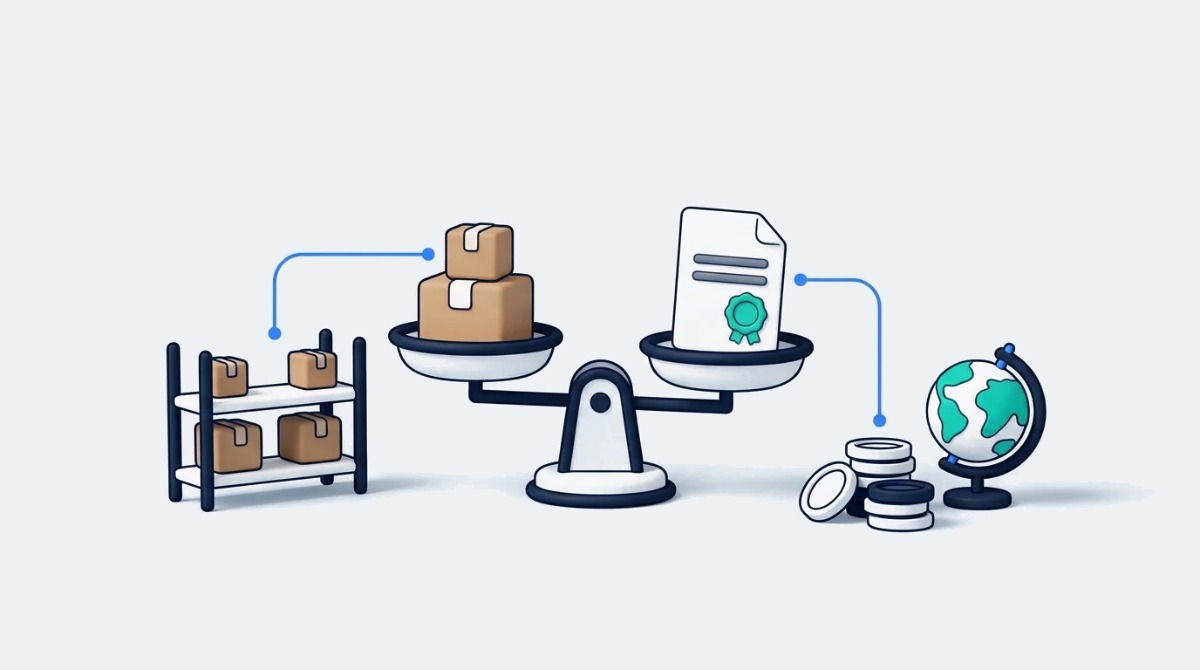
The £100 filing fee is the cheapest part of a UK company. The real cost is everything the company has to keep doing after the certificate arrives.
Selling to UK customers and running a UK business are two different things. A Shopify store in Toronto, Austin or Sydney can take UK orders tomorrow, but building operations that live in the UK (stock in a local warehouse, contracts with UK suppliers, a business UK partners can look up) needs a structure behind it. For entrepreneurs researching company formation in the U.K., the first decision is not which form to file. It is whether the business is at the point where a UK company does a job the existing business cannot.
The UK has real advantages for that decision: an established legal framework, a large consumer market used to buying online, and one of the simplest company registration systems anywhere. It also has rules that catch overseas sellers out, most of them around VAT. This guide walks through both, so the decision follows a commercial plan rather than coming before one.
The UK appeals to ecommerce entrepreneurs because it pairs a mature online shopping market with a fast, low cost company system that does not require directors to live in the country. Those two things together make it one of the more practical first international entities for a growing store, provided the demand is already there.
UK consumers are used to buying clothing, beauty products, electronics, home accessories and most other consumer goods through websites and mobile apps. That familiarity lowers one barrier, but it raises another: UK shoppers already have plenty of local options, quick delivery and easy returns. Entering the market takes more than switching on a UK storefront. Retailers should research demand for their specific products, the competing sellers, delivery expectations and pricing before they invest in anything local.
The sensible order is to test before you build. A clothing retailer, for example, could prove UK demand through international shipping first, then decide whether a local warehouse or distribution partner makes financial sense. Fastlane’s guide to international ecommerce logistics in 2026 covers how to run that test with duty inclusive pricing and the right carrier for each destination.
A UK company can make some commercial relationships easier to set up with local suppliers, logistics providers and fulfilment businesses. Every registered company gets an official company number, and anyone can check it, along with the company’s officers and filing history, on the public Companies House register. For a partner deciding whether to extend credit or sign a contract, that public record is reassuring.
Registration is not a guarantee, though. It does not automatically win supplier approval, a business bank account or payment processing. Banks and payment providers run their own checks, and some will look at where the directors live and where the business is really run. Compare each provider’s eligibility requirements before settling on a structure, not after the company exists.
A UK limited company changes the legal and financial shape of the business: it becomes a separate entity with its own records, contracts and liabilities. That separation becomes more useful as operations grow and the money flowing through the UK side gets harder to track inside the parent business.
A private limited company has a legal identity separate from its owners. That clarifies who owns what, who signs contracts, whose name sits on supplier agreements and which liabilities belong to the business. It is a different arrangement from trading as an individual, where the business and the owner are the same legal person.
Limited liability offers real protection, but it is not absolute. Directors can still be personally responsible where they give personal guarantees (common with leases and some supplier credit), act improperly or breach their legal duties as directors. A new company with no trading history will often be asked for exactly those guarantees.
There is also a second route for a business that already has a company at home. An overseas company can register a UK establishment instead of forming a new subsidiary, though the parent then stays liable for everything the UK operation does. eCommerce Fastlane’s walkthrough on setting up a UK branch of an overseas company explains the trade off between the two.
Separating personal and business finances matters more as online sales grow, and a separate UK company forces that separation for the UK side. Revenue, supplier payments, marketing spend and accounting records all sit in one place, which makes it far easier to see whether UK sales are actually profitable after shipping, duties, returns and fees.
For Shopify merchants, connecting sales reports to accounting software is what makes those records reliable, because it tracks transaction fees, refunds, shipping costs and taxes line by line instead of treating the net payout as revenue. Fastlane’s breakdown of ecommerce accounting for Shopify covers which numbers to reconcile at each stage, and its guide to separating payouts, sales tax and idle cash applies just as well to a UK account.
Registering a UK private limited company online costs £100 as of November 2026, and the process asks for a company name, a UK registered office address, details of the people involved and a verified identity for every director. The filing itself is quick; the ongoing obligations are what deserve the budgeting.
The online incorporation fee doubled from £50 to £100 on 1 February 2026, and the annual confirmation statement rose to £50 at the same time, according to the official Companies House fees list. Paper filing costs more, and same day incorporation through software costs £156.
Before starting the application, have these ready: a suitable company name, a UK registered office address, details of the directors, shareholders and people with significant control, identity verification for each director, and the company’s share structure and incorporation documents.
Directors do not have to live in the UK. The registered office does have to be a real UK address where documents sent to the company will be seen, so a PO box on its own does not qualify, and many overseas founders use a formation agent or accountant’s address. Identity verification is now a legal requirement too: Companies House made identity checks mandatory from 18 November 2025, so new directors must verify before the company can be incorporated. Verifying directly through GOV.UK One Login is free and can be done from abroad.
Registering a UK company adds tax and reporting obligations rather than removing any, and the VAT position for overseas sellers is often already set before a company exists. Understanding both sides is what keeps a UK entity from becoming an expensive surprise.
UK limited companies generally have to keep accounting records, file annual accounts with Companies House, submit a confirmation statement every year and file Corporation Tax returns with HMRC. Corporation Tax is charged at 19% on profits of £50,000 or less and 25% on profits over £250,000, with marginal relief for profits in between. Where the founder lives matters as well: depending on the home country’s rules, profit in a UK company owned from abroad can still be taxed at home, which is a question for an accountant who knows both countries.
The standard UK VAT registration threshold is £90,000 of taxable turnover, but that threshold is for businesses established in the UK. Under HMRC’s VAT Notice 700/1, a non established taxable person (an overseas business with no UK establishment) must register as soon as it makes any taxable supply in the UK, whatever the value.
Low value parcels follow their own rule. For goods outside the UK that are sold directly to customers in Great Britain in consignments of £135 or less, HMRC’s guidance on overseas goods sold directly to UK customers says UK VAT is charged at the point of sale, which means the seller registers and accounts for it. When the sale goes through an online marketplace, the marketplace usually handles that VAT instead.
The practical point for a Shopify store selling direct is that UK VAT registration may already be required, company or no company. Whether a new UK company counts as UK established for VAT depends on where the business is actually run, so get that answer in writing from an adviser before assuming the £90,000 threshold applies.
Moving stock into a UK warehouse brings import VAT and, for goods above £135, customs duty that depends on the product and its origin, as set out on the GOV.UK page on tax and duty on goods sent from abroad. Product safety regulations and UK consumer protection rules, including returns rights, apply whether or not the seller has a UK company. Showing duties and taxes at checkout, as covered in Fastlane’s guide to guaranteed duties and taxes in Shopify checkout, is often the first fix before any entity decision.
UK registration makes business sense when the fixed cost of running the company is clearly smaller than what local operations earn or save, and that usually requires steady, proven UK demand. Before registering, compare a UK company against simply continuing to sell internationally through the existing business.
Start by comparing projected UK revenue with operating costs: expected sales, product margins, shipping, payment fees, accounting, and customer acquisition. Then ask whether local registration would genuinely help with suppliers, inventory or distribution, or whether it would only add paperwork.
Illustrative example, assuming a store outside the UK selling £6,000 a month to UK customers at a 30% contribution margin after shipping, duties and fees, and an accountant who quotes £1,500 a year for UK accounts and tax returns (replace that figure with real quotes). UK sales contribute about £21,600 a year. The company’s fixed running costs come to roughly £1,550 a year, plus the £100 setup, before any warehouse or 3PL fees. The entity only pays for itself if local stock lifts conversion or cuts delivery costs by more than that, and at this volume the sharper move is usually better checkout pricing and faster international shipping.
Change the assumption to £40,000 a month of UK sales with a UK 3PL quote in hand, and the picture flips. Faster delivery, cheaper returns and local supplier terms can each outweigh the company’s running costs, and a UK entity becomes part of operating the business properly rather than an extra layer.
Stage changes the answer. If you are in the Growing stage, prove UK demand through shipping first and keep the structure simple. If you are Scaling with steady UK volume, a UK company plus local fulfilment is worth modelling seriously. Sellers comparing the UK with other jurisdictions can use eCommerce Fastlane’s look at the best country to incorporate an ecommerce business, which sets the UK against Hong Kong, Singapore, the US and Estonia.
Registering a business in the UK is a practical step for ecommerce entrepreneurs who already have UK demand and a plan for local operations, and an unnecessary cost for those who do not. A formal legal structure, a public company record for partners and a base for UK stock can all support long term plans.
Company registration should follow a clear commercial strategy rather than come before one. Research demand, confirm the VAT position for your situation, and calculate what the company will cost to run each year. If the numbers still work after that, a UK company is likely the right next step for the business. If they do not, the UK market is still open to you from home.
Yes, you can register a UK private limited company without living in the UK, because directors and shareholders do not need UK residence. What you do need is a UK registered office address where official documents will be seen, which many overseas founders get through a formation agent or accountant. Every director must also verify their identity with Companies House before the company can be incorporated, and that can be done online from abroad through GOV.UK One Login at no cost. Banking can be the harder part: some UK banks and payment providers apply extra checks to companies run from overseas, so confirm their requirements before you register.
Registering a UK private limited company online costs £100 in 2026, after Companies House doubled the fee from £50 on 1 February 2026. Paper filing costs £124, and same day incorporation through software costs £156. The annual confirmation statement costs £50 online. Identity verification through GOV.UK One Login is free. Those are only the government fees: most overseas founders also pay for a registered office address service and an accountant to prepare annual accounts and Corporation Tax returns, and those costs vary by provider, so get quotes before you compare the UK with other options.
Many overseas ecommerce sellers need to register for UK VAT from their first UK sale, because the £90,000 threshold only applies to businesses established in the UK. HMRC treats an overseas business with no UK establishment as a non established taxable person, which must register as soon as it makes taxable supplies in the UK. Separately, when goods outside the UK are sold directly to customers in Great Britain in consignments of £135 or less, the seller charges UK VAT at the point of sale. Sales through an online marketplace usually shift that VAT to the marketplace. Confirm your own position with a UK tax adviser.
A UK limited company protects your personal assets in most situations, because the company is a separate legal entity responsible for its own debts. That protection has limits. Directors can be personally liable if they sign personal guarantees, which landlords, lenders and some suppliers ask new companies for, or if they act improperly or breach their legal duties as directors. Overseas parent companies that open a UK branch instead of a subsidiary get no separation at all, since the parent stays liable for the branch. Treat limited liability as real but conditional, and read any guarantee carefully before signing it.
An online store should set up a UK company when steady UK sales justify local stock, a UK fulfilment partner or UK supplier relationships, and the savings or extra sales clearly exceed the company’s yearly running costs. Below that point, shipping from home with duties and taxes shown at checkout is usually cheaper and simpler. A useful test is to model twelve months of UK orders, your margin after shipping and duties, and real quotes for accounting and fulfilment. If local operations only break even on paper, keep testing the market from home and revisit the decision when UK volume grows.